
 By
By Arthritis Joint Stiffness is one of the most common and frustrating symptoms experienced by millions of people worldwide. Whether it occurs first thing in the morning or after sitting for extended periods, joint stiffness can make everyday activities more difficult and uncomfortable. From tying shoelaces to climbing stairs, reduced flexibility may significantly affect a person’s quality of life.
Many individuals describe arthritis as simply joint pain, but stiffness is often equally troublesome. Morning stiffness can last for several minutes or even hours, depending on the type and severity of arthritis. It frequently accompanies swelling, tenderness, and mobility issues that interfere with normal movement.
Understanding why arthritis causes joint stiffness can help people recognize symptoms early and adopt lifestyle strategies that support joint health. Although arthritis affects individuals differently, inflammation, cartilage damage, and reduced joint lubrication are among the primary reasons stiffness develops.
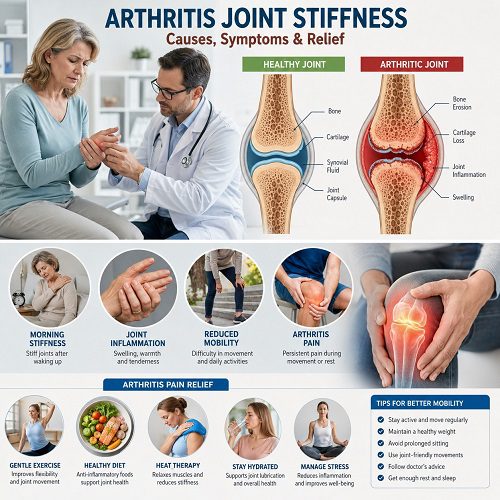
Understanding Arthritis Joint Stiffness
Joint stiffness refers to difficulty moving a joint comfortably through its normal range of motion. People with arthritis may notice their joints feel tight, swollen, or difficult to bend after resting.
Common arthritis symptoms include:
- Difficulty getting out of bed
- Morning stiffness lasting several minutes or hours
- Reduced flexibility
- Arthritis pain during movement
- Swollen joints
- Limited mobility
- Joint tenderness
- Fatigue associated with inflammatory arthritis
Stiffness can affect virtually any joint, including:
- Hands
- Fingers
- Knees
- Hips
- Ankles
- Shoulders
- Neck
- Spine
The severity of symptoms often depends on the type of arthritis involved.
Why Does Arthritis Cause Joint Stiffness?
Several biological changes contribute to Arthritis Joint Stiffness. These changes may occur gradually or appear during inflammatory flare-ups.
Inflammation Inside the Joint
Inflammation is among the most significant causes of stiffness. In inflammatory forms of arthritis, the immune system mistakenly attacks healthy joint tissues.
Inflammation can cause:
- Swelling
- Pain
- Warmth
- Reduced joint movement
- Tissue irritation
Inflamed joints often feel especially stiff after periods of inactivity because fluid accumulates within the surrounding tissues.
Cartilage Damage
Healthy cartilage acts as a cushion between bones. Arthritis gradually damages this protective tissue.
When cartilage wears down:
- Bones move less smoothly
- Friction increases
- Movement becomes painful
- Flexibility decreases
Cartilage deterioration is particularly common in osteoarthritis, which develops gradually over time.
Reduced Joint Lubrication
Synovial fluid lubricates joints and supports smooth movement. Arthritis may alter the production or quality of this fluid.
Poor joint lubrication contributes to:
- Morning stiffness
- Arthritis pain
- Reduced mobility
- Difficulty performing routine activities
Movement helps circulate synovial fluid throughout the joint, which explains why stiffness often improves after gentle exercise.
Muscle Weakness
Arthritis vs Joint Pain frequently leads people to reduce physical activity. Unfortunately, inactivity contributes to muscle weakness surrounding affected joints.
Weak muscles provide less support, causing:
- Increased stiffness
- Poor balance
- Reduced flexibility
- Greater mobility issues
Maintaining muscle strength remains an important component of arthritis management.
Why Is Morning Stiffness So Common?
Morning stiffness is one of the hallmark symptoms of arthritis.
Many people report:
- Difficulty making a fist
- Stiff knees when standing
- Trouble climbing stairs
- Pain when walking after waking
Symptoms occur because joints remain inactive throughout the night. During prolonged rest:
- Joint fluid circulation slows.
- Muscles relax and stiffen.
- Inflammatory chemicals may accumulate.
- Swelling becomes more noticeable.
Gentle movement often helps restore flexibility.
Morning Stiffness in Different Types of Arthritis
Morning stiffness usually lasts:
- Less than 30 minutes
Symptoms commonly improve with movement throughout the day.
Morning stiffness may persist:
- More than one hour
- Occasionally several hours
Inflammatory arthritis frequently produces more severe stiffness than degenerative arthritis.
Psoriatic Arthritis
Symptoms may include:
- Swollen fingers
- Painful joints
- Significant morning stiffness
Ankylosing Spondylitis
Individuals often experience:
- Lower back stiffness
- Reduced spinal flexibility
- Improvement after physical activity
The duration of morning stiffness can provide helpful clues during diagnosis.
How Arthritis Pain Leads to Mobility Issues
Pain and stiffness frequently occur together.
When joints become painful, people naturally limit their movement. Reduced activity may worsen stiffness over time.
Mobility issues may include:
- Walking difficulties
- Trouble standing from chairs
- Difficulty opening containers
- Limited grip strength
- Problems exercising
- Reduced endurance
The relationship between pain and mobility creates a cycle:
- Arthritis causes pain.
- Pain reduces movement.
- Reduced movement increases stiffness.
- Increased stiffness causes greater mobility issues.
Breaking this cycle often requires maintaining regular movement whenever possible.
Which Joints Are Most Commonly Affected?
Hands and Fingers
Symptoms include:
- Swollen finger joints
- Difficulty gripping objects
- Reduced flexibility
- Morning stiffness
Daily tasks such as writing or buttoning clothing may become challenging.
Knees
Knee arthritis frequently causes:
- Difficulty climbing stairs
- Pain after inactivity
- Joint stiffness
- Walking problems
Hips
Hip stiffness may cause:
- Groin discomfort
- Limited mobility
- Difficulty standing
- Reduced range of motion
Spine
Arthritis affecting the spine may produce:
- Neck stiffness
- Lower back pain
- Difficulty bending
- Reduced flexibility
Early recognition can help improve symptom management strategies.
Factors That Make Arthritis Joint Stiffness Worse
Several lifestyle and health factors may aggravate symptoms.
Inactivity
Remaining sedentary for prolonged periods often worsens stiffness.
Regular movement supports:
- Joint lubrication
- Muscle strength
- Flexibility
- Circulation
Excess Weight
Additional body weight places greater stress on weight-bearing joints.
Affected areas include:
- Knees
- Hips
- Lower back
- Ankles
Maintaining a healthy body weight may improve mobility issues and reduce arthritis pain.
Weather Changes
Some individuals report worsening symptoms during:
- Cold weather
- Humid conditions
- Changes in barometric pressure
Scientific explanations remain under investigation, but weather-related symptom changes are commonly reported.
Stress
Chronic stress may contribute to:
- Increased inflammation
- Poor sleep
- Greater pain perception
Stress management techniques may provide additional support for overall well-being.
Can Exercise Help Joint Stiffness?
Yes. Appropriate physical activity is among the most effective strategies for maintaining mobility.
Gentle exercises may help:
- Improve flexibility
- Strengthen muscles
- Support joint function
- Reduce stiffness
- Increase endurance
Examples include:
Walking
Walking supports:
- Joint movement
- Circulation
- Muscle conditioning
Stretching
Daily stretching may improve:
- Range of motion
- Flexibility
- Morning stiffness
Swimming
Water-based exercise offers:
- Reduced joint stress
- Improved mobility
- Comfortable movement
Yoga
Yoga may support:
- Flexibility
- Balance
- Stress reduction
- Mobility improvements
Exercise programs should be adapted to individual needs and physical abilities.
Lifestyle Strategies for Managing Arthritis Joint Stiffness
Practical lifestyle habits may help improve daily comfort.
Stay Physically Active
Simple activities include:
- Walking
- Gentle stretching
- Light strengthening exercises
- Swimming
Avoid Prolonged Sitting
Taking movement breaks every 30 to 60 minutes may help reduce stiffness.
Prioritize Quality Sleep
Healthy sleep supports:
- Recovery
- Pain management
- Immune system function
Maintain Healthy Nutrition
Balanced nutrition supports:
- Overall health
- Healthy body weight
- Physical activity goals
Use Heat Therapy
Warm showers or heating pads may temporarily improve:
- Flexibility
- Circulation
- Morning stiffness
Practice Gentle Morning Movement
Morning routines may include:
- Stretching exercises
- Walking indoors
- Slow joint movements
- Range-of-motion exercises
Consistency often provides the greatest benefit.
When Should Joint Stiffness Be Evaluated?
Medical evaluation is advisable when symptoms:
- Persist for several weeks
- Continue worsening
- Limit mobility
- Interfere with daily activities
- Occur alongside significant swelling
- Affect multiple joints
Additional symptoms requiring assessment include:
- Fatigue
- Fever
- Unexplained weight loss
- Severe pain
- Progressive loss of movement
Early Arthritis diagnosis may improve long-term outcomes.
Supporting Long-Term Joint Health
Although arthritis cannot always be prevented, several habits support healthier joints.
Helpful strategies include:
- Maintaining regular physical activity
- Managing body weight
- Following arthritis treatment recommendations
- Staying hydrated
- Protecting joints during exercise
- Practicing proper posture
- Managing stress effectively
Developing sustainable routines can improve both flexibility and overall quality of life.
Best Supplements for Arthritis Support
Finding the Best Supplements for Arthritis Support can be an important step in maintaining joint health and improving daily comfort. Arthritis often causes joint stiffness, discomfort, and reduced mobility, making nutritional support a valuable addition to a healthy lifestyle. Many people seek natural options that may help support flexibility and overall joint function.
Several supplements are commonly used for arthritis support. Glucosamine and Chondroitin for Arthritis are well-known for supporting cartilage health and joint mobility. Turmeric for Arthritis, which contains curcumin, is widely appreciated for its antioxidant properties and is frequently included in Natural Remedies for Arthritis Support. Omega-3 fatty acids found in fish oil may also help support normal inflammatory responses and promote joint comfort.
Boswellia extract is another popular ingredient used in Joint Support Herbal Supplement for Arthritis formulations because of its traditional use in supporting healthy joints. Additionally, collagen supplements may contribute to maintaining connective tissue health and joint flexibility.
While supplements are not intended to cure arthritis, they may complement a balanced diet, regular physical activity, and healthy lifestyle choices. Choosing high-quality products and consulting a healthcare professional can help ensure that supplements align with your individual health needs.
Supporting your joints naturally may help you stay active and maintain better mobility over time.
Frequently Asked Questions
Does Arthritis Joint Stiffness improve with movement?
Yes. Gentle movement often improves stiffness by increasing circulation and supporting joint lubrication.
How long should morning stiffness last?
It varies by arthritis type. Osteoarthritis commonly improves within 30 minutes, while inflammatory arthritis may last considerably longer.
Can inactivity worsen arthritis symptoms?
Yes. Remaining inactive for extended periods frequently contributes to stiffness and reduced mobility.
Is morning stiffness always caused by arthritis?
No. Other medical conditions may also cause stiffness. Persistent symptoms should be evaluated appropriately.
Conclusion
Arthritis Joint Stiffness develops because of inflammation, cartilage changes, reduced joint lubrication, and muscle weakness that affect normal movement. Morning stiffness, arthritis pain, and mobility issues are among the most common symptoms experienced by individuals living with various forms of arthritis.
Although stiffness can interfere with daily activities, maintaining gentle physical activity, supporting joint health, and addressing symptoms early may help preserve mobility and improve overall comfort. Understanding why arthritis causes stiffness is the first step toward making informed choices that support healthier, more flexible joints over time.