
 By
By Reactive Arthritis is a type of inflammatory arthritis that can develop after certain infections. Unlike arthritis caused by bacteria directly infecting a joint, Reactive Arthritis occurs when the body’s immune system responds to an infection and inflammation develops in the joints afterward.
The condition commonly affects the knees, ankles, feet, and other joints of the lower body. Some people may also experience inflammation involving the eyes, urinary or genital tract, skin, or tendons.
Reactive Arthritis can be uncomfortable and sometimes interfere with walking, working, exercising, and everyday activities. However, many people improve significantly with appropriate medical care and recover within several months. In some cases, symptoms can persist longer or return periodically, making ongoing monitoring important.
Understanding the symptoms, causes, diagnosis, treatment options, and recovery process can help people recognize the condition and seek appropriate care.
What Is Arthritis?
What Is Arthritis is a general term used to describe conditions that cause inflammation, pain, stiffness, or swelling in the joints. Because joints connect bones and allow the body to move, arthritis can make everyday activities such as walking, climbing stairs, writing, or gripping objects more difficult.
There are many types of arthritis, with osteoarthritis and rheumatoid arthritis being among the most common. Osteoarthritis occurs when the protective cartilage that cushions the ends of bones gradually wears down, often due to aging, joint injury, or repeated stress. Rheumatoid arthritis is an autoimmune condition in which the immune system mistakenly attacks the lining of the joints, causing inflammation and discomfort.
Arthritis can affect people of different ages and may involve the knees, hips, hands, wrists, feet, or other joints. Common symptoms include joint pain, swelling, stiffness—especially after periods of inactivity—and reduced range of motion.
Treatment depends on the type and severity of arthritis. It may include physical activity, physical therapy, weight management, medications, lifestyle changes, or other medical treatments. Early evaluation can help identify the underlying cause and support better joint function and quality of life.
Although arthritis may be a long-term condition, appropriate management can help reduce symptoms and keep people active.
What Is Reactive Arthritis?
Reactive Arthritis is joint inflammation that occurs after an infection elsewhere in the body. It most commonly develops after gastrointestinal or genitourinary infections.
Common infections associated with Reactive Arthritis include certain infections caused by:
- Chlamydia
- Salmonella
- Shigella
- Campylobacter
- Yersinia
The joint itself is generally not infected by the original organism. Instead, the immune system’s response to the earlier infection contributes to inflammation in the joints. This is an important distinction between Reactive Arthritis and a true joint infection, also known as septic arthritis.
Reactive Arthritis is considered a form of inflammatory arthritis and belongs to a group of conditions called spondyloarthropathies.
Symptoms often begin about one to six weeks after the original infection, although the exact timing can vary. In some cases, the infection may have been so mild that a person does not remember being sick before their joint symptoms appeared.
What Causes Reactive Arthritis?
Reactive Arthritis develops because of an abnormal or exaggerated immune response following an infection.
For example, a person might develop a gastrointestinal infection that causes diarrhea and stomach problems. After the infection improves, their immune system may remain activated. In susceptible individuals, this immune response can contribute to inflammation in the joints.
Similarly, some cases develop following a sexually transmitted infection, particularly Chlamydia.
Researchers believe genetics may also influence susceptibility. The HLA-B27 genetic marker is associated with Reactive Arthritis and may be linked with a greater risk of persistent or recurrent disease, although having HLA-B27 does not mean a person will definitely develop the condition. Likewise, a person can have Reactive Arthritis without having HLA-B27.
The important point is that Reactive Arthritis is usually post-infectious rather than a direct infection of the joint.
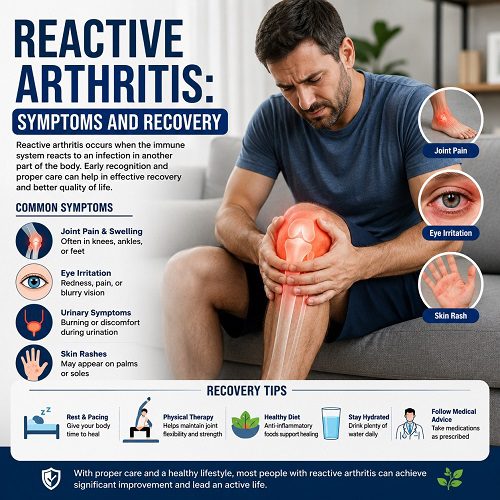
Common Symptoms of Reactive Arthritis
Symptoms can vary considerably from one person to another. Joint symptoms are usually the most noticeable, but Reactive Arthritis can affect other parts of the body.
1. Joint Pain and Swelling
Painful, swollen joints are among the most common symptoms.
Reactive Arthritis often affects larger joints in the lower limbs, particularly:
- Knees
- Ankles
- Feet
The affected joint may become swollen, warm, tender, and difficult to move. Symptoms may develop suddenly and can affect one or several joints.
2. Joint Stiffness
Stiffness may make movement difficult, especially after periods of rest. Some people find that walking or putting weight on an affected leg becomes uncomfortable.
Gentle movement and physical therapy may help maintain mobility as inflammation improves.
3. Heel or Tendon Pain
Reactive Arthritis can cause inflammation where tendons or ligaments attach to bones, a condition called enthesitis.
The Achilles tendon and the bottom of the foot are common areas of discomfort. This can make standing, walking, or exercising painful.
4. Eye Symptoms
Some people develop eye inflammation, including conjunctivitis. Symptoms can include:
- Red eyes
- Watery or sticky eyes
- Eye irritation
- Light sensitivity
- Blurred vision
A painful red eye, especially when accompanied by light sensitivity or vision changes, should be evaluated promptly because inflammation inside the eye can require urgent treatment.
5. Urinary or Genital Symptoms
When Reactive Arthritis follows a genitourinary infection, symptoms may include pain or burning during urination, discharge, or other urinary or genital symptoms.
Because some triggering infections can be sexually transmitted, medical testing and treatment of the infection and appropriate partners may be necessary.
6. Skin and Mouth Changes
Some people develop mouth ulcers or skin changes, particularly on the palms and soles. Nail changes and other skin manifestations can also occur.
7. Fatigue
Fatigue can accompany the inflammatory response. Persistent pain, poor sleep, reduced physical activity, and the underlying inflammatory process can all contribute to feeling tired.
Reactive Arthritis vs. Joint Infection
One of the most important distinctions is between Reactive Arthritis and a joint infection.
Septic arthritis occurs when an infection directly affects a joint. It can be a medical emergency because untreated infection can rapidly damage the joint and potentially lead to serious systemic complications.
Reactive Arthritis, on the other hand, generally involves sterile inflammation in the joint following an infection elsewhere in the body.
Because the symptoms can overlap, a swollen and painful joint should not automatically be assumed to be Reactive Arthritis. Doctors may need to analyze fluid removed from the joint to help rule out septic arthritis and other conditions.
Seek urgent medical attention for a suddenly very painful, hot, swollen joint, particularly if it is accompanied by fever or feeling seriously unwell.
How Is Reactive Arthritis Diagnosed?
There is no single test that confirms every case of Reactive Arthritis. Doctors generally combine the person’s medical history, symptoms, physical examination, laboratory tests, and sometimes imaging.
A healthcare professional may ask about recent:
- Food poisoning
- Diarrhea
- Urinary symptoms
- Sexually transmitted infections
- Fever or other infections
Blood tests may be used to look for inflammation. Tests of urine, genital samples, or stool may help identify a recent or ongoing infection when appropriate.
HLA-B27 testing may provide additional information in selected patients, but it is not required to diagnose Reactive Arthritis and a negative result does not rule it out.
Joint fluid analysis can be particularly important when a doctor needs to distinguish Reactive Arthritis from septic arthritis or crystal arthritis.
X-rays, ultrasound, or MRI may also be used when necessary to evaluate joints, tendons, or other affected areas.
Reactive Arthritis Treatment
The appropriate reactive arthritis treatment depends on the severity of symptoms, the presence of an active infection, and whether symptoms are short-term or persistent.
Treating the Underlying Infection
If an active bacterial infection is still present, antibiotics may be prescribed when medically appropriate.
For example, an identified genitourinary infection such as Chlamydia requires appropriate antibiotic treatment. However, antibiotics do not generally eliminate established joint inflammation caused by enteric infections once the original infection has resolved.
Antibiotics should therefore be used only when indicated and prescribed by a healthcare professional.
Anti-Inflammatory Medicines
Nonsteroidal anti-inflammatory drugs, commonly called NSAIDs, are often used as initial treatment for joint inflammation and pain.
The choice of medication and dose depends on individual factors, including other medical conditions and medications. Patients should follow their healthcare professional’s instructions rather than taking high doses on their own.
Corticosteroids
If inflammation is severe or does not respond adequately to initial treatment, a doctor may consider corticosteroids.
In some situations, corticosteroids can be injected directly into an affected joint. Systemic corticosteroids may be considered for more severe cases when appropriate.
Disease-Modifying Medicines
When Reactive Arthritis becomes persistent or difficult to control, a rheumatologist may consider disease-modifying antirheumatic drugs, or DMARDs.
Sulfasalazine, methotrexate, or other medications may be considered depending on the patient’s circumstances. Biologic medicines can sometimes be used for chronic or treatment-resistant disease under specialist supervision.
Physical Therapy
Physical therapy can be an important part of recovery.
A physiotherapist may recommend exercises designed to:
- Maintain joint flexibility
- Improve muscle strength
- Restore movement
- Reduce stiffness
- Gradually return the person to normal activity
Rest can be useful during periods of significant inflammation, but prolonged inactivity can contribute to weakness and stiffness. A balanced approach involving appropriate movement and rest is generally more helpful.
Herbal Remedies for Arthritis Support
Herbal Remedies for Arthritis Support can be a useful complementary approach for people looking to support joint comfort and overall mobility. While herbs cannot cure arthritis or replace prescribed treatment, some may help support the body’s natural response to inflammation when used appropriately.
Turmeric is one of the most commonly discussed herbs for joint health. Its active compound, curcumin, has antioxidant and anti-inflammatory properties. Ginger is another popular option and may support comfortable movement and general joint wellness. Boswellia, sometimes called Indian frankincense, has also been traditionally used to support healthy inflammatory responses.
For people exploring Natural Remedies for Arthritis Symptoms, herbal teas, spices, and properly formulated Arthritis supplements may be considered alongside a balanced diet, regular low-impact exercise, healthy weight management, and appropriate medical care.
A Joint Support Herbal Supplement for Arthritis may combine ingredients such as turmeric, ginger, or Boswellia. However, supplement quality and dosage can vary, and natural products may interact with medications or may not be suitable for everyone.
Before starting any herbal supplement, especially if you take prescription medicines or have an ongoing health condition, speak with a qualified healthcare professional. Used responsibly, herbal approaches may complement a broader arthritis-support plan focused on healthy joints, mobility, and quality of life.
How Long Does Reactive Arthritis Last?
Recovery time varies.
According to the NHS, Reactive Arthritis usually improves within about six months. Some people recover sooner, while others experience symptoms for longer periods.
Current clinical reviews also note that many patients recover within six to twelve months, while a subset develop persistent or recurrent symptoms.
Several factors can influence the course, including the triggering infection, severity of inflammation, genetic factors, and whether symptoms become chronic.
Having persistent symptoms does not necessarily mean that permanent joint damage will occur, but ongoing symptoms deserve medical evaluation.
Tips to Support Recovery
There is no single home remedy that cures Reactive Arthritis, but healthy habits can support recovery and general joint health.
Stay Physically Active
Gentle movement can help prevent stiffness. During severe inflammation, activity may need to be reduced temporarily, but gradual movement can usually be reintroduced as symptoms improve.
Follow the exercise plan recommended by your healthcare professional or physiotherapist.
Prioritize Sleep
Good-quality sleep supports physical recovery and can make it easier to manage pain and fatigue.
Maintain a consistent sleep schedule and create a comfortable sleeping environment.
Eat a Balanced Diet
A balanced diet rich in vegetables, fruits, whole grains, healthy fats, and adequate protein can support overall health.
Foods such as leafy greens, berries, nuts, fish, whole grains, and other nutrient-dense foods can be part of a healthy eating pattern. Arthritis Diet should complement—not replace—medical treatment.
Avoid Smoking
Smoking can negatively affect overall health and may be associated with poorer outcomes in several inflammatory joint conditions. If you smoke, discuss evidence-based options for quitting with a healthcare professional.
Attend Follow-Up Appointments
Follow-up is important if symptoms continue, return, or become more severe. Persistent inflammation may require changes in treatment or referral to a rheumatologist.
When Should You See a Doctor?
You should seek medical advice if you develop unexplained joint swelling, significant joint pain, or stiffness after an infection.
Prompt evaluation is especially important when symptoms include:
- A very painful or rapidly swollen joint
- Fever with a swollen joint
- Difficulty putting weight on a joint
- A red or painful eye
- Light sensitivity or blurred vision
- New urinary or genital symptoms
- Persistent or worsening joint inflammation
These symptoms can have causes other than Reactive Arthritis, including septic arthritis and other forms of inflammatory arthritis. Proper diagnosis is therefore essential.
Can Reactive Arthritis Come Back?
Yes. Although many people recover completely, Reactive Arthritis can recur.
The risk of recurrent or persistent symptoms can vary depending on the underlying trigger and individual risk factors. Some patients develop chronic inflammatory symptoms requiring longer-term management.
If symptoms return after a period of improvement, it is important to discuss them with a healthcare professional rather than assuming that the original diagnosis explains every new symptom.
Final Thoughts on Reactive Arthritis and Recovery
Reactive Arthritis is an inflammatory condition that can develop after certain gastrointestinal or genitourinary infections. It commonly causes painful, swollen, and stiff joints, particularly in the knees, ankles, and feet, but it can also affect the eyes, skin, tendons, and urinary or genital tract.
The condition is different from a direct joint infection because the joint inflammation generally develops as a response to an infection elsewhere rather than because bacteria are actively infecting the joint.
The outlook is generally good, and many people improve within several months. Treatment may include anti-inflammatory medicines, appropriate treatment of an ongoing infection, corticosteroids, physical therapy, and specialist medications for persistent disease.
Early evaluation is important because Reactive Arthritis can resemble other conditions, including septic arthritis and other forms of inflammatory arthritis. With an accurate diagnosis, appropriate reactive arthritis treatment, rehabilitation, and regular follow-up, many people can gradually return to their usual activities.