 By
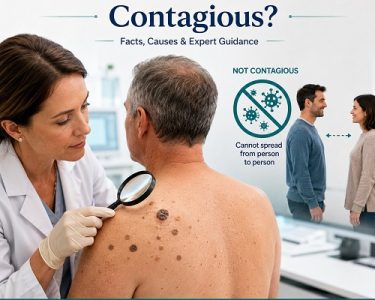
By Seborrheic keratosis is a common, noncancerous skin growth that usually develops as people get older. These growths can appear almost anywhere on the body, although they are particularly common on the chest, back, abdomen, scalp, face, and neck. They often look waxy, rough, scaly, or slightly raised and may range from light tan to dark brown or nearly black.
Although seborrheic keratoses are generally harmless, people sometimes notice changes such as bleeding, soreness, irritation, swelling, or crusting. This can naturally raise concerns about whether something more serious is happening.
So, can seborrheic keratosis bleed? Yes. A seborrheic keratosis can bleed, especially when it becomes irritated, scratched, rubbed by clothing, or accidentally injured. However, bleeding is not something that should automatically be attributed to seborrheic keratosis. A changing or bleeding skin growth should sometimes be examined by a healthcare professional to rule out other conditions, including skin cancer.
Can Seborrheic Keratosis Bleed?
Yes, a seborrheic keratosis can bleed. Although these growths are benign, their raised and sometimes rough surfaces can easily become irritated.
Bleeding may occur when a seborrheic keratosis is:
- Scratched or picked
- Rubbed against clothing
- Caught while shaving
- Accidentally bumped or injured
- Irritated by jewelry or accessories
- Located in an area exposed to repeated friction
A seborrheic keratosis may also develop a crust after minor trauma. Once the surface is damaged, a small amount of bleeding can occur.
Occasional bleeding after obvious irritation is generally less concerning than spontaneous or recurrent bleeding. If a growth starts bleeding without being injured, repeatedly bleeds, or develops other unusual changes, it is important to have it evaluated.
Why Does Seborrheic Keratosis Bleed?
The surface of a seborrheic keratosis can be raised, uneven, and relatively fragile. When the growth is repeatedly rubbed or scratched, the outer layer of skin can break.
For example, a seborrheic keratosis on the waist may rub against clothing throughout the day. One on the neck may be irritated by collars or jewelry. A growth on the scalp may be scratched during washing or brushing.
Once the surface becomes damaged, minor bleeding can occur.
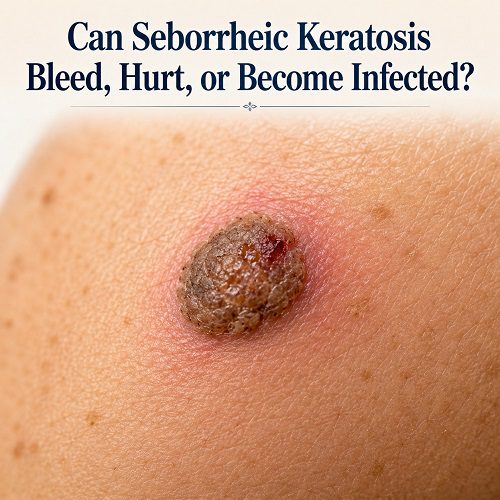
It is also possible for a seborrheic keratosis to become inflamed after irritation. An irritated lesion may appear red, swollen, crusted, or tender. These changes do not necessarily mean that the growth has become cancerous or infected, but they should be monitored.
Can Seborrheic Keratosis Hurt?
Most seborrheic keratoses do not hurt. Many people have them for years without experiencing pain or other symptoms.
However, a seborrheic keratosis can become uncomfortable when it is irritated or injured. Pain may occur when the growth is repeatedly rubbed by clothing, scratched, or accidentally bumped.
An irritated seborrheic keratosis may feel:
- Tender
- Sore
- Sensitive to touch
- Itchy
- Burning or irritated
Pain by itself does not mean that a seborrheic keratosis is dangerous. Mechanical irritation is a common reason for discomfort.
However, persistent pain without an obvious seborrheic keratosis causes deserves medical attention, particularly if the growth is also changing in appearance.
Can Seborrheic Keratosis Become Infected?
A seborrheic keratosis itself is not an infection. It is a benign growth of skin cells.
However, the skin surrounding or covering an irritated seborrheic keratosis can potentially become infected if the surface is repeatedly scratched, picked, or damaged. Breaking the skin creates an opportunity for bacteria to enter.
Signs that may suggest a secondary skin infection include:
- Increasing redness around the growth
- Warmth or swelling
- Increasing pain or tenderness
- Pus or cloudy drainage
- Yellowish crusting
- Redness spreading into nearby skin
- Fever or feeling unwell
A small amount of crust after an injury does not automatically mean the lesion is infected. The overall pattern and progression of symptoms matter.
If you suspect an infection, avoid picking or squeezing the area and seek medical advice.
What Does an Irritated Seborrheic Keratosis Look Like?
An irritated seborrheic keratosis can look different from its usual appearance. It may become red, darker, swollen, crusty, or slightly swollen after being rubbed or scratched.
Some people notice that an irritated lesion appears to have changed overnight. This can happen after accidental trauma.
For example, a growth that normally feels dry and rough may become tender after being caught on clothing. A person may then notice a small amount of blood or a scab.
These changes can be caused by irritation, but it is still important to distinguish a temporarily irritated lesion from a growth that is genuinely changing.
When Is Bleeding More Concerning?
Not every bleeding seborrheic keratosis is an emergency. However, unexplained or persistent bleeding should not be ignored.
Consider having a skin growth examined if:
- It bleeds without being scratched or injured.
- It repeatedly bleeds.
- It changes rapidly in size, shape, or color.
- Its borders become irregular.
- It develops persistent ulceration or an open sore.
- It becomes increasingly painful.
- It develops significant swelling.
- It does not heal after minor trauma.
- You are unsure whether it is actually a seborrheic keratosis.
These signs do not necessarily mean skin cancer is present. Some benign lesions can look unusual or become irritated. The important point is that several skin conditions can resemble one another, so an examination may be necessary.
Can Seborrheic Keratosis Be Confused With Skin Cancer?
Yes. Seborrheic keratoses can sometimes resemble other pigmented or scaly skin lesions.
Certain skin cancers can appear as brown, black, scaly, crusted, or raised lesions. This is one reason healthcare professionals may recommend examining a growth that looks unusual or has changed.
Seborrheic Keratosis vs Melanoma, basal cell carcinoma, and squamous cell carcinoma can have different appearances, and visual inspection alone may not always provide a definitive diagnosis.
A dermatologist may examine the lesion using dermoscopy. If there is uncertainty, a biopsy may be performed to examine the tissue under a microscope.
Therefore, if you have a growth that you believe is a seborrheic keratosis but it begins bleeding or changing unexpectedly, professional evaluation is the safest approach.
What Should You Do If a Seborrheic Keratosis Starts Bleeding?
If the bleeding follows minor trauma, take simple steps to protect the area.
First, gently clean the area with mild soap and water. Apply gentle pressure with clean gauze or a clean cloth if it is actively bleeding. Avoid scratching, picking, or trying to remove the growth yourself.
Once bleeding stops, keep the area protected from additional friction.
You should contact a healthcare professional if the bleeding is heavy, difficult to stop, recurrent, or occurs without an obvious injury.
Do not attempt to cut, burn, scrape, or chemically remove a seborrheic keratosis at home. These methods can cause bleeding, infection, scarring, and skin damage.
Should You Pick or Scratch a Seborrheic Keratosis?
It is best to avoid picking or scratching seborrheic keratoses.
Because these growths can have rough or flaky surfaces, they may be tempting to scratch. However, picking can damage the skin and cause bleeding. It can also increase the risk of infection.
If a lesion is persistently irritated or frequently catches on clothing, discuss treatment options with a dermatologist.
Depending on the lesion and the patient’s circumstances, healthcare professionals may use procedures such as cryotherapy, curettage, or other appropriate removal techniques.
When Should a Doctor Examine a Seborrheic Keratosis?
You should consider professional evaluation when a growth is new, changing, bleeding, painful, or difficult to identify.
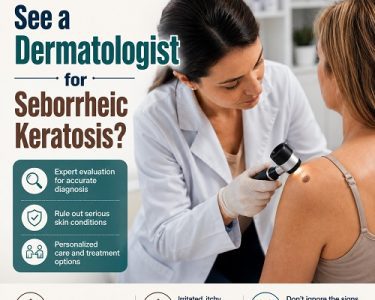
A dermatologist can determine whether the lesion has the typical features of seborrheic keratosis or whether additional testing is appropriate.
Medical assessment is particularly important when a lesion:
- Changes quickly
- Has Multiple Seborrheic Keratosis colors
- Develops an irregular border
- Bleeds repeatedly
- Forms a persistent sore
- Becomes painful without clear irritation
- Looks significantly different from your other skin growths
It is better to have an unusual lesion checked than to assume that every changing growth is a harmless seborrheic keratosis.
Can an Infected Seborrheic Keratosis Heal?
If the skin around an irritated seborrheic keratosis becomes infected, appropriate medical treatment can usually address the infection. Treatment depends on the severity and cause.
The most important step is avoiding additional trauma. Picking, squeezing, or repeatedly scratching the area can make irritation worse and delay healing.
If there is increasing redness, warmth, swelling, pus, significant pain, or fever, contact a healthcare professional promptly.
Do not use leftover antibiotics or prescription medications without medical advice.
How Can You Prevent Irritation?
Although you cannot always prevent seborrheic keratoses from developing, you can reduce irritation.
Helpful measures include:
- Avoid scratching or picking the growth.
- Wear comfortable clothing around lesions that rub against fabric.
- Be careful when shaving near raised growths.
- Avoid repeatedly touching irritated areas.
- Protect injured skin while it heals.
- Seek professional removal if a lesion frequently catches on clothing.
If a seborrheic keratosis regularly becomes irritated, professional removal may be worth discussing.
Can Seborrheic Keratosis Turn Into Cancer?
Seborrheic keratoses are benign skin growths and are not considered precancerous lesions. However, a separate skin cancer can sometimes develop nearby or a cancerous lesion can initially be mistaken for seborrheic keratosis.
That distinction is important.
If a lesion that was previously stable suddenly changes, bleeds, becomes painful, or develops an unusual appearance, do not assume the change is simply part of seborrheic keratosis.
A healthcare professional can determine whether the lesion has features consistent with a benign growth or whether further examination is needed.
Natural Remedies for Seborrheic Keratosis
Natural Remedies for Seborrheic Keratosis may help support comfortable, healthy-looking skin, although they do not medically remove seborrheic keratoses. These common, non-cancerous skin growths often appear as raised, rough or waxy patches and can become irritated by clothing or friction.
Gentle skin care is an important part of Seborrheic Keratosis Home Care. Keep the affected area clean and moisturised, and avoid scratching, picking or rubbing the growth. Fragrance-free moisturisers can help reduce dryness and irritation around the area. Protecting your skin from excessive sun exposure is also a useful general skin-care habit.
Some people explore natural ingredients such as aloe vera or coconut oil to soothe dry or irritated skin. However, evidence that these remedies can remove seborrheic keratosis is limited. Avoid applying strong acids, essential oils or homemade chemical mixtures because they may cause burns, scarring or infection.
Before trying any treatment, it is important to understand How Seborrheic Keratosis Is Diagnosed. A dermatologist can usually identify the growth through a skin examination and may recommend a biopsy if its appearance is unusual.
If a seborrheic keratosis changes rapidly, bleeds, becomes painful or develops unusual colours, seek professional medical advice. A dermatologist can discuss safe removal options when treatment is medically necessary or desired for cosmetic reasons.
Final Thoughts
So, can seborrheic keratosis bleed? Yes. A seborrheic keratosis can bleed when it is scratched, picked, shaved, bumped, or repeatedly rubbed by clothing. It can also become temporarily sore, red, swollen, or crusted after irritation.
Although seborrheic keratoses are generally harmless, unexplained bleeding, persistent pain, recurrent crusting, rapid changes, or signs of infection should be evaluated by a healthcare professional.
The safest approach is to avoid picking or attempting to remove the growth yourself. If a lesion is frequently irritated or you are uncertain whether it is truly a seborrheic keratosis, consult a dermatologist for an accurate diagnosis and appropriate treatment.
Important Note
This article is intended for general educational purposes and does not replace professional medical diagnosis or treatment. Any skin growth that is changing, repeatedly bleeding, painful, infected-looking, or difficult to identify should be evaluated by a qualified healthcare professional.