 By
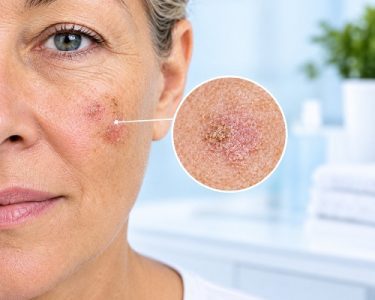
By Actinic keratosis (AK) is a common precancerous skin lesion caused mainly by long-term exposure to ultraviolet (UV) radiation. It often appears as a rough, scaly, or crusty patch on sun-exposed areas such as the face, Actinic Keratosis on the Scalp, ears, forearms, and backs of the Actinic Keratosis on the Hands. Although some lesions remain stable or may disappear, others can persist or progress to squamous cell carcinoma. For this reason, dermatologists commonly recommend treatment, particularly for thicker, symptomatic, or suspicious lesions.
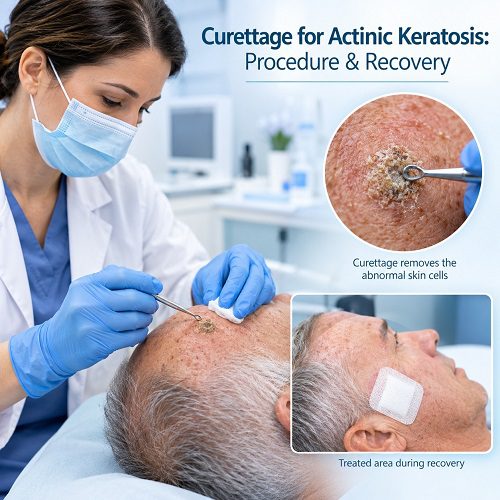
One option is curettage for actinic keratosis, a lesion-directed procedure in which a dermatologist uses a sharp, spoon-shaped instrument called a curette to scrape away abnormal skin. For a thick or hypertrophic AK, curettage may be followed by electrodesiccation or cautery to treat remaining abnormal cells and control bleeding.
If you are considering this treatment, knowing what happens before, during, and after the procedure can make the experience easier to understand. This guide explains the procedure, recovery, possible risks, aftercare, and situations in which another treatment may be more appropriate.
What Is Curettage for Actinic Keratosis?
Curettage for actinic keratosis involves physically removing an abnormal area of sun-damaged skin with a curette. The instrument has a sharp edge designed to scrape superficial abnormal tissue from the skin.
Dermatologists may consider curettage when an AK is particularly thick, raised, or hyperkeratotic. The American Academy of Dermatology notes that curettage may be useful for extremely thick AKs, and the procedure may be combined with electrodesiccation, which uses heat to destroy remaining abnormal cells.
The procedure differs from simply cutting out an entire lesion. Curettage is a superficial scraping technique. Depending on the clinical situation, the removed tissue can also be sent for histological examination. DermNet notes that shave, curettage and electrocautery can be used for hypertrophic AKs and that specimens may be examined under a microscope.
Why Is Curettage Used for Actinic Keratosis?
Actinic keratoses vary considerably in appearance and thickness. A small, flat Actinic Keratosis may respond well to treatments such as cryotherapy or topical medicines. However, a thick lesion can sometimes require a physical removal technique.
The main reasons a dermatologist may consider curettage include:
- A lesion is unusually thick or raised.
- The AK has a substantial hard scale.
- The lesion is localised rather than spread across a large area.
- The dermatologist wants to remove the visible lesion directly.
- The appearance raises enough concern to warrant tissue examination.
- Previous treatment has not adequately cleared the lesion.
Curettage is generally a lesion-directed treatment, meaning it targets individual lesions rather than a large area of sun-damaged skin. Other options, including topical medicines and photodynamic therapy, can be used when multiple AKs or a broader area of sun damage is present.
What Happens Before the Procedure?
Before an Actinic Keratosis procedure, your dermatologist will examine the lesion and the surrounding skin. They may ask when you first noticed it, whether it has changed, and whether it has Actinic Keratosis caused symptoms such as tenderness, bleeding, itching, or persistent crusting.
Your medical history is also important. Tell your doctor about:
- Medicines you take regularly
- Blood-thinning medicines
- Allergies
- Previous skin cancers
- Problems with wound healing
- Conditions affecting your immune system
- Previous reactions to local anaesthetics
Do not stop prescribed medicines on your own before skin surgery. If a medication could affect bleeding or healing, your healthcare professional can advise you about what to do.
Your dermatologist will also determine whether the lesion looks like a straightforward AK or whether a biopsy or another form of lesion removal would be more appropriate.
This distinction matters because some lesions that resemble AK can actually represent squamous cell carcinoma or another skin condition. DermNet notes that biopsy may be necessary when there is concern about squamous cell carcinoma or when treatment has failed.
How Is Curettage for Actinic Keratosis Performed?
Curettage is usually performed as an outpatient procedure. You generally remain awake throughout the treatment.
1. Cleaning the skin
The treatment area is cleaned to reduce contamination and prepare the skin for the procedure.
2. Local anaesthetic
The dermatologist injects a local anaesthetic around the lesion. This numbs the treatment area.
According to DermNet, patients should not feel pain during curettage once the local anaesthetic has taken effect, although they may notice pressure or movement.
3. Scraping the lesion
The dermatologist uses a curette to scrape away the abnormal tissue. The aim is to remove the superficial lesion while preserving as much healthy surrounding skin as possible.
The number of passes and the depth of scraping depend on the lesion and the dermatologist’s assessment.
4. Electrodessication or cautery
In some cases, the dermatologist follows curettage with electrodessication or cautery. This uses controlled heat to destroy remaining abnormal tissue and help control bleeding.
Not every AK requires this additional step. Your dermatologist will choose the technique according to the lesion and clinical circumstances. The AAD specifically notes that curettage for a very thick AK may be followed by electrodesiccation.
5. Tissue examination
If the doctor removes tissue that requires confirmation, it may be sent to a pathology laboratory for histological examination. This can help determine whether the lesion is consistent with Actinic Keratosis or whether another diagnosis is present.
6. Dressing
The resulting wound is usually covered with an appropriate dressing. Your dermatologist will provide instructions about keeping the area clean and protected while it heals.
Is Curettage Painful?
The local anaesthetic is intended to prevent significant pain during the procedure. You may feel the initial injection, followed by pressure or scraping sensations.
After the anaesthetic wears off, the treated area may feel tender or uncomfortable. The level of discomfort depends on the location and size of the wound and whether electrosurgery was also performed.
Most discomfort should gradually improve as the wound heals.
Curettage Treatment Recovery
Recovery after curettage treatment involves allowing the treated area to heal naturally. Unlike an excision, curettage generally does not require stitches.
The wound may initially appear red, raw, or crusted. This does not necessarily mean there is a problem. The appearance can change during healing as new skin develops.
DermNet reports that wounds following curettage commonly take approximately two to three weeks to heal over, although healing varies according to the individual and the location and size of the wound.
Some body areas may take longer to heal. DermNet also notes that wounds following curettage of AKs can take several weeks or longer depending on the treatment site.
How to Care for the Wound After Curettage
Follow the specific instructions provided by your dermatologist because wound-care recommendations can vary.
General care may include:
- Keep the initial dressing in place for the period recommended by your clinician.
- Avoid unnecessary rubbing or picking.
- Keep the wound protected from dirt and irritation.
- Follow instructions about washing and drying the area.
- Avoid strenuous activity if it causes stretching or friction around the wound.
- Replace dressings as directed.
- Do not pick off crusts or scabs.
- Contact your healthcare professional if the wound becomes increasingly painful or shows signs of infection.
DermNet recommends avoiding strenuous exertion and stretching of the treated area initially and provides specific guidance for managing bleeding.
What Does the Skin Look Like During Healing?
Immediately after curettage, the area can look different from the surrounding skin. Depending on the technique used, you may notice:
- Redness
- Mild swelling
- Tenderness
- A crust or scab
- A shallow open wound
- Temporary colour changes
These changes can gradually improve as the skin repairs itself.
If electrocautery is used, there may be additional crusting or a more noticeable treated area.
Do not judge the final cosmetic result during the first few days. Skin can continue to change for weeks or months after the procedure.
Can Curettage Leave a Scar?
Yes. Lesion removal by curettage can leave a scar, particularly when electrocautery is also used.
DermNet describes curettage scars as often being flat and round, with a size similar to the original lesion. Scar colour and appearance can improve over time. Some people are also more prone to raised or hypertrophic scars.
The final appearance can depend on:
- Lesion size
- Treatment depth
- Location
- Use of electrocautery
- Individual healing characteristics
- Previous scarring tendencies
- Sun exposure during recovery
Ask your dermatologist about expected scarring if the lesion is located on a highly visible area such as the Actinic Keratosis on the Face.
What Are the Possible Risks?
Like other minor skin procedures, curettage has potential risks.
These can include:
- Bleeding
- Infection
- Pain or tenderness
- Delayed wound healing
- Scarring
- Changes in skin colour
- Recurrence of the lesion
- Incomplete removal
The risk profile depends partly on the location and size of the lesion and the treatment technique.
If you experience worsening pain, spreading redness, significant swelling, pus, fever, persistent bleeding, or another concerning change, contact your healthcare professional promptly.
How Long Does Curettage Take to Heal?
Many curettage wounds heal within a few weeks. DermNet gives approximately two to three weeks for a typical wound to heal over, but healing can take longer depending on the body site and individual circumstances.
The surface of the wound may heal before the final scar has matured. Redness or raised areas can gradually decrease over subsequent months.
Therefore, recovery has two stages: the wound closing and the scar or colour change gradually settling.
Can Actinic Keratosis Come Back After Curettage?
Yes. Treating one AK does not remove the underlying history of sun damage from the surrounding skin.
A successfully treated lesion may recur, and new AKs can develop elsewhere. DermNet notes that actinic keratoses may recur months or years after treatment and that people treated for AK remain at risk of developing new keratoses and other skin cancers.
This is why follow-up skin examinations can be important, particularly for people who have multiple AKs or substantial cumulative UV exposure.
Curettage Compared With Other Actinic Keratosis Treatments
Curettage is only one option.
Cryotherapy
Cryotherapy uses liquid nitrogen to freeze an AK. It is commonly used for individual lesions and can be completed during an office visit. Crusting or blistering can occur during healing.
Topical Treatments
Prescription creams and ointments can treat visible and sometimes less obvious AKs across a broader area. Options include 5-fluorouracil, imiquimod, diclofenac and tirbanibulin, depending on the individual situation and local prescribing guidance.
Photodynamic Therapy
Photodynamic therapy combines a photosensitising medicine with a specific light source. It may be useful for people with multiple AKs or recurrent lesions.
Excision
Excision involves cutting out the lesion and closing the wound, usually with sutures. It can be considered when a lesion requires complete surgical removal or when there is greater diagnostic concern.
The appropriate option depends on factors such as lesion thickness, number, location, appearance, previous treatments and whether there is concern about skin cancer.
Sun Protection After Curettage
Sun protection remains important after treatment. Having an AK indicates significant previous UV damage and an increased risk of developing additional AKs and skin cancer.
Helpful habits include:
- Use a broad-spectrum sunscreen with an appropriate SPF.
- Reapply sunscreen as directed, especially during prolonged outdoor activity.
- Wear a wide-brimmed hat and protective clothing.
- Seek shade when UV exposure is high.
- Avoid tanning beds.
- Check your skin regularly for new or changing lesions.
Your dermatologist may recommend a personalised skin-check schedule based on your history and risk factors.
When Should You Contact a Dermatologist?
A dermatologist should assess an area that is persistent, changing, thickening, painful, bleeding, or repeatedly crusting.
Seek professional assessment particularly if a treated area:
- Does not heal as expected
- Becomes increasingly painful
- Develops persistent bleeding
- Grows again
- Develops a lump
- Develops significant redness or discharge
- Looks different from the expected healing pattern
A lesion that does not respond to treatment may need further examination or biopsy.
Frequently Asked Questions
Is curettage a common treatment for actinic keratosis?
It is one of the physical Treatment options available for Actinic Keratosis. Dermatologists may particularly consider it for thick or hypertrophic lesions.
Does curettage require stitches?
Usually, curettage creates a superficial wound that heals without stitches. The wound is generally dressed and allowed to heal naturally.
How long does recovery take?
Many wounds heal over in roughly two to three weeks, although healing time varies according to the lesion and treatment site.
Can I prevent another actinic keratosis?
You cannot completely reverse previous UV damage, but consistent sun protection can reduce additional UV exposure and help lower the risk of developing more AKs.
Is curettage suitable for every AK?
No. Treatment selection depends on the appearance, thickness, number and location of lesions, as well as whether there is any concern about skin cancer. Other options may be more appropriate for flat, widespread, recurrent, or diagnostically uncertain lesions.
Final Thoughts
Curettage for actinic keratosis is a practical lesion-directed procedure that can be particularly useful for thick or hypertrophic AKs. A dermatologist numbs the area, scrapes away the abnormal tissue and may use electrodesiccation or cautery when appropriate. The resulting wound generally heals over several weeks, although the final appearance of the scar can continue to improve for longer.
Because actinic keratosis develops in sun-damaged skin, successful curettage treatment does not eliminate the possibility of future AKs. Regular skin checks and consistent UV protection remain important.
Most importantly, a persistent, thickening, bleeding, painful, or changing lesion should be assessed by a qualified healthcare professional rather than treated at home. The appearance of an AK can overlap with other skin conditions, including squamous cell carcinoma, so accurate diagnosis is an important part of safe lesion removal.
Medical Disclaimer
This article is for general educational purposes and does not replace professional medical advice, diagnosis, or treatment. Curettage should only be performed by a qualified healthcare professional after appropriate assessment of the skin lesion. If you have a changing, bleeding, painful, thickened, or non-healing skin lesion, consult a dermatologist.