 By
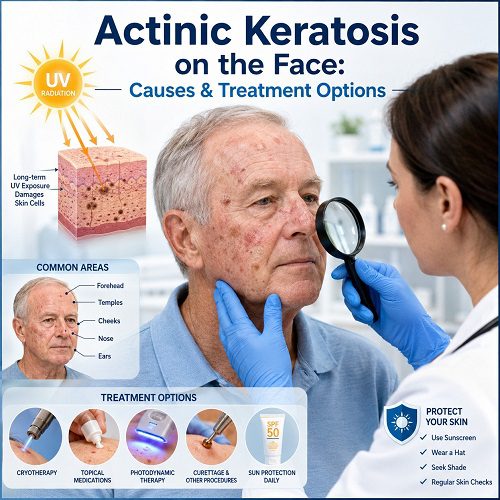
By Actinic keratosis on face is a common skin condition caused primarily by long-term exposure to ultraviolet (UV) radiation from the sun. These rough, dry and scaly patches often develop gradually on areas of the face that receive frequent sun exposure, including the forehead, nose, cheeks, temples and ears.
Although actinic keratosis may initially appear as a small and harmless-looking patch of rough skin, it is important not to ignore it. Dermatologists consider actinic keratosis a precancerous skin condition because some lesions may eventually develop into squamous cell carcinoma, a type of skin cancer.
Early recognition and appropriate treatment can help reduce the risk of progression and improve the appearance and health of sun-damaged skin.
The Actinic Keratosis causes, symptoms, risk factors, diagnosis and available actinic keratosis treatment options for lesions affecting the face.
What Is Actinic Keratosis on the Face?
What Is Actinic Keratosis on the Face? Actinic keratosis, also known as solar keratosis, develops when skin cells become damaged by repeated exposure to ultraviolet radiation. The condition commonly affects people who have spent many years outdoors or have experienced significant cumulative sun exposure.
The face is particularly vulnerable because it is frequently exposed to sunlight throughout life. Unlike areas covered by clothing, the facial skin often receives direct UV exposure during daily activities such as walking, driving, gardening and outdoor work.
Actinic keratosis on face may appear as one lesion or several patches. Some people develop multiple lesions across different areas of the face, especially when there has been extensive long-term sun damage.
The condition is particularly common among older adults, although younger people with significant UV exposure can also develop facial actinic keratosis.
What Does Actinic Keratosis on the Face Look Like?
What Does Actinic Keratosis Look Like? The appearance of actinic keratosis can vary considerably. In many cases, the texture of the lesion is more noticeable than its colour.
Common characteristics include:
- Rough or sandpaper-like skin patches
- Dry and scaly areas
- Flat or slightly raised lesions
- Pink or red patches
- Tan or brown spots
- Skin-coloured rough areas
- Crusty or thickened skin
- Persistent patches that do not heal
- Mild itching or burning
- Tenderness when touched
Some face skin lesions caused by actinic keratosis may be very small and difficult to see. A person may first notice them when washing their face or applying moisturiser because the affected area feels rougher than the surrounding skin.
Lesions can develop individually or appear in clusters.
Common Areas of the Face Affected by Actinic Keratosis
Facial actinic keratosis usually develops on areas that receive the greatest amount of sun exposure.
Forehead
The forehead is regularly exposed to sunlight and may develop multiple rough or scaly patches. People with thinning hair or baldness may have an increased risk because there is less protection from UV radiation.
Nose
The bridge and tip of the nose are highly exposed to sunlight. Persistent rough patches in this area should be assessed by a healthcare professional.
Cheeks
The cheeks frequently receive direct UV exposure and are a common location for actinic keratosis. Multiple small lesions may develop after years of cumulative sun damage.
Temples
The temples can be affected because they are often exposed during outdoor activities and may receive limited protection from hats.
Ears
The tops and outer edges of the ears are frequently exposed to sunlight. Actinic keratosis on the ears is particularly common among people who spend significant amounts of time outdoors.
Around the Eyes
The delicate skin around the eyes can also experience sun damage. However, any suspicious lesion close to the eyes should be evaluated carefully by a dermatologist.
What Causes Actinic Keratosis on the Face?
The primary cause of actinic keratosis on face is cumulative exposure to ultraviolet radiation.
UV radiation damages the DNA within skin cells. Over time, repeated damage can cause abnormal cells to develop and accumulate within the outer layer of the skin.
The two main sources of UV exposure are:
- Natural sunlight
- Artificial UV radiation, such as tanning beds
Sun damage often develops gradually over many years. This means that a person may develop actinic keratosis later in life because of sun exposure that occurred decades earlier.
Even short periods of repeated sun exposure can contribute to cumulative skin damage.
Long-Term Sun Exposure
People who regularly spend time outdoors may have a higher risk. This includes individuals who work outside or frequently participate in activities such as:
- Gardening
- Farming
- Construction work
- Fishing
- Hiking
- Cycling
- Golf
- Outdoor sports
History of Sunburn
Repeated severe sunburns can increase the risk of long-term skin damage. Intense UV exposure may damage skin cells and contribute to the later development of actinic keratosis.
Tanning Beds
Artificial tanning devices also produce UV radiation. Regular use can contribute to premature skin ageing and increase the risk of abnormal skin changes.
Risk Factors for Facial Actinic Keratosis
Several factors can increase the likelihood of developing facial actinic keratosis.
Fair Skin
People with lighter skin tones, freckles or light-coloured eyes may be more vulnerable to UV damage. However, actinic keratosis can occur in people of all skin types.
Increasing Age
The risk generally increases with age because sun damage accumulates over time.
Extensive Outdoor Exposure
People who work or spend large amounts of time outdoors may experience greater cumulative UV exposure.
Previous Actinic Keratosis
Having one actinic keratosis can indicate significant sun damage. People who have previously developed lesions may develop additional ones.
Weakened Immune System
People with weakened immune systems may have an increased risk of developing actinic keratosis and other skin abnormalities.
History of Skin Cancer
Individuals with a history of certain skin cancers should monitor their skin carefully and attend regular dermatological examinations.
Is Actinic Keratosis on the Face Dangerous?
Actinic keratosis is considered a precancerous skin condition. While many lesions may remain stable or change slowly, some can progress to squamous cell carcinoma.
It is not possible to determine simply by looking at every lesion which one may progress. For this reason, persistent or suspicious patches should be examined by a qualified healthcare professional.
Warning Early Signs of Actinic Keratosis that require prompt medical attention include:
- Rapid growth
- Significant thickening
- Persistent bleeding
- Ulceration
- Severe tenderness
- Major changes in colour
- A lesion that does not heal
Early assessment and appropriate treatment are important for protecting skin health.
How Is Actinic Keratosis on the Face Diagnosed?
A dermatologist can often diagnose actinic keratosis through a physical examination.
The doctor will examine the affected area and assess the texture, colour, size and appearance of the lesion. Because actinic keratosis may feel rough, the dermatologist may gently run a finger across the skin to identify subtle lesions.
In some situations, additional testing may be required.
Dermoscopy
A dermatologist may use a handheld magnifying device called a dermatoscope to examine the lesion more closely.
Skin Biopsy
If the lesion has an unusual appearance or there is concern about skin cancer, a small sample of tissue may be removed and examined under a microscope.
A biopsy can help distinguish actinic keratosis from other skin conditions.
Actinic Keratosis Treatment Options
There are several Effective Actinic Keratosis Treatment Options. The best approach depends on factors such as:
- Number of lesions
- Location
- Size
- Thickness
- Extent of sun damage
- Previous treatment history
- Individual health factors
A dermatologist can recommend the most appropriate treatment.
Cryotherapy
Cryotherapy is one of the most commonly used treatments for individual lesions.
During the procedure, liquid nitrogen is applied to the affected area. The extremely cold temperature destroys abnormal skin cells.
The treated area may become red, swollen or blistered before healing.
Cryotherapy is often suitable when a person has a small number of clearly defined lesions.
Topical Medications
Topical treatments may be recommended when multiple lesions or widespread sun damage affect the face.
These medications are applied directly to the skin over a specific treatment area.
Depending on the medication used, treatment may cause temporary:
- Redness
- Peeling
- Crusting
- Irritation
- Inflammation
These reactions can occur because the treatment targets abnormal cells.
Different topical therapies may be used depending on the individual’s condition and dermatologist’s recommendation.
Photodynamic Therapy
Photodynamic therapy combines a light-sensitive medication with a specialised light source.
The medication is applied to the affected skin and allowed to absorb. The area is then exposed to a specific type of light, which activates the medication and helps destroy abnormal cells.
This treatment can be particularly useful for multiple facial lesions or areas of widespread sun damage.
Curettage and Other Procedures
Thicker lesions may require removal using specialised dermatological procedures.
A dermatologist may scrape away abnormal tissue and use additional methods to treat the affected area.
These procedures are generally considered when lesions are particularly thick, persistent or suspicious.
Can Actinic Keratosis on the Face Go Away Without Treatment?
Some lesions may temporarily improve or become less noticeable. However, it is not advisable to assume that a persistent rough or scaly facial lesion will resolve safely without medical assessment.
Actinic keratosis can recur, and new lesions may develop because the underlying sun damage remains.
Regular monitoring and professional evaluation are important, particularly for people with multiple lesions or significant cumulative sun exposure.
Can Natural Remedies Treat Actinic Keratosis?
Some people search for natural approaches to improve skin health. However, there is limited scientific evidence that home remedies can reliably eliminate actinic keratosis.
It is important not to rely on unproven treatments for potentially precancerous skin lesions.
Avoid attempting to:
- Scrape lesions off at home
- Burn lesions
- Apply harsh chemicals
- Use unverified corrosive substances
- Delay professional assessment
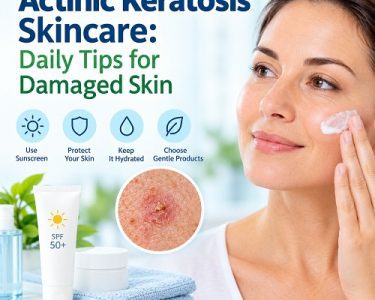
Gentle skincare, moisturising and sun protection can support overall skin health, but they should not replace evidence-based actinic keratosis treatment.
If you are interested in complementary approaches, discuss them with a qualified healthcare professional before using them.
How to Prevent Actinic Keratosis on the Face
Sun protection is one of the most important strategies for reducing further UV damage.
Use Broad-Spectrum Sunscreen
Choose a broad-spectrum sunscreen that protects against both UVA and UVB radiation.
Apply sunscreen to exposed areas of the face, including the:
- Forehead
- Nose
- Cheeks
- Temples
- Ears
- Neck
Reapply according to the product instructions, particularly after sweating or prolonged outdoor exposure.
Wear Protective Clothing
Physical protection can reduce UV exposure. Consider wearing:
- Wide-brimmed hats
- UV-protective sunglasses
- Protective clothing
A wide-brimmed hat can provide useful protection for the forehead, cheeks and ears.
Seek Shade
Limit direct sun exposure when UV intensity is high whenever practical.
Avoid Tanning Beds
Artificial tanning devices expose the skin to concentrated UV radiation and can contribute to long-term skin damage.
Check Your Skin Regularly
Regular skin checks can help identify new or changing lesions.
Pay attention to persistent:
- Rough patches
- Scaly areas
- Crusty spots
- Non-healing sores
- Changing moles
- Unusual growths
A dermatologist should evaluate any suspicious or persistent skin changes.
Living With Actinic Keratosis
Having actinic keratosis does not necessarily mean that skin cancer will develop. However, it does indicate that the skin has experienced significant UV damage.
People with facial actinic keratosis can benefit from developing a long-term skin protection routine.
This may include:
- Daily sunscreen use
- Wearing protective hats
- Avoiding unnecessary UV exposure
- Attending dermatology appointments
- Monitoring existing lesions
- Checking for new face skin lesions
Some people may require repeated treatment because actinic keratosis can recur or develop in new areas.
Long-term follow-up allows dermatologists to monitor changes and identify suspicious lesions early.
When Should You See a Dermatologist?
You should arrange a professional skin assessment if you notice a persistent or changing lesion on your face.
Seek medical advice if a lesion:
- Does not heal
- Continues to grow
- Becomes painful
- Bleeds repeatedly
- Develops a thick crust
- Changes colour
- Becomes raised
- Ulcerates
Early assessment is particularly important because several skin conditions can look similar.
A dermatologist can determine whether the lesion is actinic keratosis, another benign skin condition or a form of skin cancer.
Frequently Asked Questions About Actinic Keratosis on the Face
Is actinic keratosis on the face cancer?
Actinic keratosis is generally considered a precancerous skin condition rather than invasive skin cancer. However, some lesions may progress to squamous cell carcinoma, which is why professional evaluation and treatment are important.
Can actinic keratosis spread?
Actinic keratosis does not spread from person to person because it is not contagious. However, new lesions can develop in other areas of sun-damaged skin.
Can I wear makeup over facial actinic keratosis?
In many cases, makeup can be used, but irritated or recently treated skin may require special care. Ask your dermatologist for advice after treatment.
Does actinic keratosis return after treatment?
Yes. A treated lesion may resolve, but additional lesions can develop because the surrounding skin may also have accumulated sun damage.
What is the best treatment for facial actinic keratosis?
There is no single treatment that is best for everyone. Cryotherapy may be suitable for individual lesions, while topical therapy or photodynamic therapy may be considered for multiple lesions or widespread sun damage.
Conclusion
Actinic keratosis on face is a common result of cumulative UV damage and often appears as rough, dry or scaly patches on sun-exposed areas such as the forehead, nose, cheeks and ears.
Although many lesions may remain stable, actinic keratosis is considered a precancerous condition because some lesions can progress to squamous cell carcinoma. For this reason, persistent or changing face skin lesions should never be ignored.
Fortunately, several effective actinic keratosis treatment options are available, including cryotherapy, topical medications, photodynamic therapy and other dermatological procedures.
The most appropriate treatment depends on the number, location and characteristics of the lesions. Early diagnosis, regular skin monitoring and consistent sun protection can help reduce further damage and support long-term skin health.
Medical Disclaimer
This article is intended for general informational and educational purposes only and does not provide medical advice, diagnosis or treatment. Actinic keratosis and other skin lesions should be assessed by a qualified healthcare professional or dermatologist. Do not use the information in this article as a substitute for professional medical advice. Never delay seeking medical attention because of information you have read online. Treatment options may vary depending on the individual, the location and severity of the lesion, and other health factors. If you notice a persistent, changing, bleeding, painful or non-healing skin lesion, seek prompt medical evaluation.