 By
By Seborrheic Keratosis is one of the most common non-cancerous skin growths seen in adults, especially as they get older. These growths can appear almost anywhere on the body and often look alarming at first because they may be dark, raised, rough, or wart-like. Even though they are usually harmless, many people become concerned when they notice a new patch or bump on the skin, particularly if it changes in size, colour, or texture.
Because Seborrheic Keratosis can sometimes resemble skin cancer or other skin conditions, it is important to understand what it is, why it appears, what symptoms it may cause, and how doctors diagnose it. Many people also want to know whether it can be removed, whether it will come back, and if there are natural ways to support healthy skin.
This guide explains everything you need to know about Seborrheic Keratosis, including its causes, symptoms, diagnosis, treatment options, and natural skin support strategies.
What Is Seborrheic Keratosis?
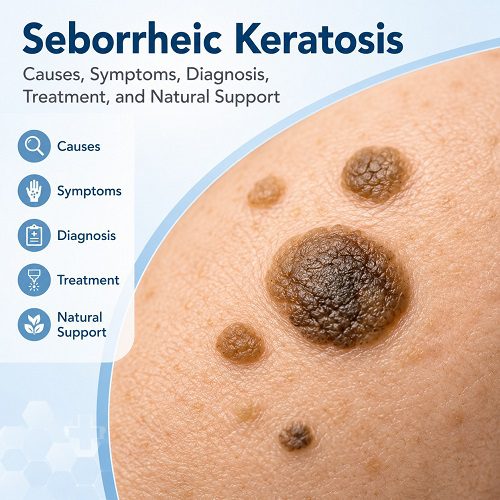
Seborrheic Keratosis is a benign (non-cancerous) skin growth that usually develops in middle-aged and older adults. It often appears as a waxy, rough, slightly raised, or “stuck-on” spot on the skin. These growths can range in colour from light tan to brown or even black. Some are flat, while others become thicker and more elevated over time.
A person may have just one lesion or many. In some cases, dozens of growths can appear over the years. They are most commonly found on the:
- Chest
- Back
- Shoulders
- Face
- Scalp edge
- Neck
- Abdomen
They usually do not appear on the palms of the hands or the soles of the feet.
Although Seborrheic Keratosis is harmless, it can be mistaken for melanoma, actinic keratosis, warts, moles, or other skin conditions. That is why any new, changing, bleeding, or unusual skin growth should be checked by a healthcare professional.
Is Seborrheic Keratosis Dangerous?
In most cases, Seborrheic Keratosis is not dangerous. It is not a skin cancer and it does not usually turn into cancer. However, there are a few important points to keep in mind:
- It can look similar to skin cancer
Some seborrheic keratoses are dark, irregular, or inflamed, which may make them look like melanoma or another concerning lesion. - It may become irritated
If a growth rubs against clothing, jewellery, or a razor, it may itch, become red, bleed, or feel sore. - A new lesion should not always be assumed harmless
Even though many harmless growths appear with age, it is still wise to get a proper diagnosis if something looks unusual.
So while Seborrheic Keratosis itself is generally benign, getting suspicious skin changes assessed is still the safest approach.
Causes of Seborrheic Keratosis
The exact cause of Seborrheic Keratosis is not fully understood. Researchers know that it develops when skin cells in the outer layer of the skin grow in an abnormal but non-cancerous way. However, several factors are believed to contribute.
1. Ageing
Age is one of the strongest risk factors. Seborrheic Keratosis becomes more common in adults over 40 and is especially frequent in older people. As the skin ages, its growth patterns change, making benign skin growths more likely to form.
2. Genetics and Family History
Seborrheic keratoses often run in families. If your parents or close relatives have them, you may be more likely to develop them too. Some people seem genetically prone to forming multiple lesions over time.
3. Skin Cell Overgrowth
These growths happen when certain skin cells multiply more than they should. Unlike cancer, this overgrowth stays localised and does not invade deeper tissues. It simply creates a visible growth on the surface of the skin.
4. Sun Exposure May Play a Role
Seborrheic keratoses often appear on sun-exposed areas such as the face, chest, neck, and back. This suggests that long-term sun exposure may contribute in some people, although they can also appear on covered parts of the body.
5. Hormonal and Biological Changes
Some experts believe that hormonal shifts and age-related skin changes may influence the development of Seborrheic Keratosis. This may explain why lesions often become more noticeable later in life.
6. Friction and Skin Irritation
Although friction is not considered a direct cause, repeated rubbing from clothing or skin folds may irritate existing lesions or make them more noticeable.
Risk Factors for Seborrheic Keratosis
You may be more likely to develop Seborrheic Keratosis if you have one or more of the following risk factors:
- Age over 40
- Family history of seborrheic keratoses
- Fair or ageing skin
- Long-term sun exposure
- History of multiple benign skin growths
- Genetic tendency to skin overgrowths
Having these risk factors does not mean you will definitely develop the condition, but they can increase the likelihood.
Symptoms of Seborrheic Keratosis
The symptoms of Seborrheic Keratosis mainly involve the appearance and feel of the skin growth. Most people do not have serious discomfort, but some lesions can become itchy or irritated.
Common Signs and Symptoms
- A Raised or Flat Growth on the Skin
The lesion may begin as a small rough spot and slowly become thicker or more raised over time.
- Waxy or “Stuck-On” Appearance
One of the classic features of Seborrheic Keratosis is that it can look as though it has been pasted or stuck onto the skin.
- Colour Changes
The growth may be:
- Light tan
- Brown
- Dark brown
- Black
- Yellowish
- Flesh-coloured
Not all lesions are dark. Some are quite pale.
- Rough, Crumbly, or Velvety Texture
The surface may feel rough, bumpy, waxy, or slightly greasy. Some lesions become thick and wart-like.
- Round or Oval Shape
Many seborrheic keratoses are round or oval with well-defined edges.
- Itching
Some lesions itch, especially if they are dry, inflamed, or irritated by clothing.
- Mild Irritation or Bleeding
If scratched or rubbed, the growth may become sore, crusty, or bleed slightly.
- Multiple Growths
A person may develop several lesions at the same time or gradually over many years.
What Does Seborrheic Keratosis Look Like?
The appearance of Seborrheic Keratosis can vary from person to person. Some are tiny and flat, while others become large and thick. They can look like:
- A brown patch with a rough surface
- A black raised bump
- A wart-like lesion with a waxy top
- A dry scaly spot
- A slightly elevated oval plaque
- A crusty growth with a “pasted-on” look
Sizes may range from a few millimetres to over 2–3 centimetres. Some remain unchanged for years, while others gradually enlarge.
Common Areas Where Seborrheic Keratosis Appears
Seborrheic Keratosis most often appears on the trunk and upper body. Common areas include:
- Chest
- Back
- Face
- Neck
- Shoulders
- Scalp margin
- Abdomen
It can appear in skin folds as well, including under the breasts or in areas where the skin rubs.
When to See a Doctor
Even though Seborrheic Keratosis is usually harmless, it is important to see a doctor or dermatologist if:
- A new growth appears suddenly
- The lesion changes colour, shape, or size quickly
- It bleeds without injury
- It becomes painful
- The borders look irregular
- You are not sure whether it is a seborrheic keratosis or something more serious
- Many lesions appear suddenly in a short period
A sudden eruption of many seborrheic keratoses can occasionally be linked with an underlying medical issue, so medical evaluation is sensible in unusual cases.
How Seborrheic Keratosis Is Diagnosed
1. Medical History and Skin Examination
In many cases, a doctor can diagnose Seborrheic Keratosis simply by looking at the lesion and examining its texture, shape, and colour. The “stuck-on” appearance is often a helpful clue.
The doctor may ask:
- When did you first notice it?
- Has it changed in size or colour?
- Does it itch, bleed, or hurt?
- Do you have a family history of similar growths?
- Have you had skin cancer before?
2. Dermoscopy
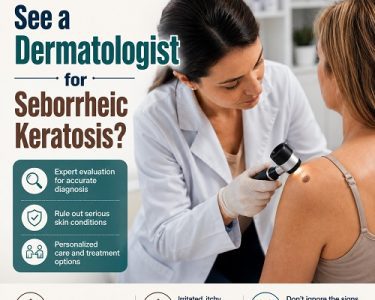
A dermatologist may use a dermoscope, a handheld magnifying device with a light, to examine the lesion more closely. Dermoscopy helps reveal specific patterns that support the diagnosis of Seborrheic Keratosis and helps distinguish it from melanoma or other skin conditions.
3. Skin Biopsy
If the lesion looks unusual or there is any doubt about the diagnosis, the doctor may perform a skin biopsy. This involves removing part or all of the growth and sending it to a laboratory for microscopic examination.
A biopsy may be recommended if the lesion:
- Is very dark or irregular
- Has recently changed
- Is inflamed or bleeding
- Does not have the classic appearance of seborrheic keratosis
- Could be confused with skin cancer
A biopsy is the best way to confirm the diagnosis when there is uncertainty.
Conditions That Can Be Mistaken for Seborrheic Keratosis
Several skin conditions can look similar to Seborrheic Keratosis, including:
Melanoma
This is the most important condition to rule out because it is a serious skin cancer. Some melanomas can look dark, irregular, or raised.
Actinic Keratosis
This is a rough scaly patch caused by sun damage. Unlike seborrheic keratosis, actinic keratosis can be precancerous.
Common Warts
Warts can also be raised and rough, but they are caused by the human papillomavirus (HPV).
Moles (Nevi)
Some moles can be brown, raised, and irregular in appearance.
Basal Cell Carcinoma
Certain forms of this skin cancer may mimic benign skin growths.
Because of these look-alikes, a professional diagnosis is worthwhile when a lesion is new or unusual.
Medical Treatment for Seborrheic Keratosis
Seborrheic Keratosis does not always need treatment. If it is harmless, not causing discomfort, and the diagnosis is clear, many people choose to leave it alone.
However, treatment may be considered if the growth:
- Is itchy or irritated
- Catches on clothing or jewellery
- Bleeds after shaving or friction
- Causes cosmetic concern
- Looks suspicious and needs removal for testing
1. Cryotherapy
Cryotherapy is one of the most common treatments. A healthcare professional applies liquid nitrogen to freeze the lesion. Over time, the growth crusts and falls off.
Benefits:
- Quick office procedure
- No cutting required
- Effective for many small or moderate lesions
Possible downsides:
- Temporary redness or blistering
- Light or dark marks on the skin
- Not always ideal for thicker lesions
2. Curettage
In curettage, the doctor gently scrapes the lesion away using a specialised instrument. This may be done after numbing the area.
Benefits:
- Useful for raised lesions
- Can remove the growth immediately
- Sometimes combined with other methods
3. Electrocautery or Electrodesiccation
This treatment uses an electrical current to burn or dry out the lesion. It is often used together with curettage.
Benefits:
- Good for thicker lesions
- Can help stop bleeding
- Precise treatment in skilled hands
4. Laser Treatment
Some dermatologists use laser therapy to remove Seborrheic Keratosis, especially in cosmetically sensitive areas.
Benefits:
- Can target the lesion with precision
- May be helpful for multiple lesions
- Sometimes preferred for facial areas
5. Shave Removal
A shave excision may be used if the lesion needs to be removed and sent for testing. The doctor shaves the growth off after numbing the area.
6. Hydrogen Peroxide Topical Treatment
In some settings, a specially formulated topical hydrogen peroxide solution may be used for raised seborrheic keratoses. This treatment must be prescribed and applied according to medical guidance.
Can Seborrheic Keratosis Be Removed at Home?
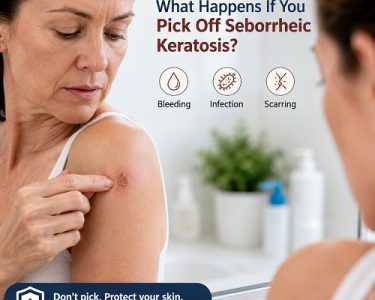
It is not recommended to cut, scrape, burn, or freeze a suspicious skin growth at home without a medical diagnosis. Trying to remove Seborrheic Keratosis yourself can lead to:
- Bleeding
- Infection
- Scarring
- Incomplete removal
- Missing a skin cancer diagnosis
Over-the-counter wart removers are also not ideal because they may irritate the skin and are not designed for every type of lesion. If a growth is bothersome, the safest option is to have it checked by a professional.
Natural Support for Seborrheic Keratosis and Skin Health
Natural support does not replace medical diagnosis or treatment, and there is no guaranteed Natural Cure for Seborrheic Keratosis. However, some habits may support overall skin health, reduce irritation, and help you care for skin that is prone to dryness, roughness, or sensitivity.
1. Keep the Skin Moisturised
Dry skin can make lesions feel rougher and itchier. Using a gentle moisturiser may help reduce dryness around the area.
Look for products with:
- Ceramides
- Glycerin
- Hyaluronic acid
- Oat extract
- Aloe vera
Avoid heavily fragranced creams if your skin is sensitive.
2. Protect the Skin from Excess Sun Exposure
Although sun exposure is not the only cause of Seborrheic Keratosis, protecting the skin is still wise.
Helpful habits include:
- Wearing sunscreen daily
- Using a broad-brimmed hat outdoors
- Avoiding excessive midday sun
- Covering the chest, shoulders, and back when possible
Sun protection also lowers the risk of other skin problems, including actinic keratosis and skin cancer.
3. Avoid Picking or Scratching
Picking at a seborrheic keratosis can cause:
- Bleeding
- Crusting
- Inflammation
- Infection
- Scarring
If a lesion itches, soothing the surrounding skin with moisturiser or asking a doctor for advice is better than scratching.
4. Use Gentle Skin-Care Products
Harsh soaps, scrubs, and strong exfoliants may irritate the skin. A simple routine may help:
- Mild cleanser
- Non-irritating moisturiser
- Fragrance-free products
- Gentle bathing habits
5. Support Skin Health with a Balanced Diet
Good nutrition supports healthy skin repair and immune balance. A skin-friendly diet may include:
- Colourful fruits and vegetables
- Healthy fats such as olive oil, nuts, and seeds
- Protein from fish, eggs, beans, or lean meat
- Foods rich in vitamins A, C, E, and zinc
- Plenty of water
While diet does not remove Seborrheic Keratosis, it may support the skin’s overall resilience.
6. Consider Anti-Inflammatory Foods
A diet rich in natural anti-inflammatory foods may support skin wellness. Examples include:
- Berries
- Leafy greens
- Tomatoes
- Fatty fish
- Turmeric
- Green tea
- Walnuts
- Flaxseeds
Again, this is about general skin support rather than direct removal of lesions.
7. Manage Friction
If a lesion sits where clothing rubs, try:
- Soft breathable fabrics
- Avoiding rough seams
- Reducing rubbing from belts, bras, or straps
- Using protective padding if advised by a doctor
Reducing friction can lower irritation.
Natural Remedies: What to Be Careful About
Many websites promote Natural Remedies for Seborrheic Keratosis, including apple cider vinegar, tea tree oil, hydrogen peroxide, garlic, or other strong substances. It is important to be cautious.
These products may:
- Burn the skin
- Cause severe irritation
- Trigger allergic reactions
- Lead to discolouration or scarring
- Delay proper diagnosis of skin cancer
Natural does not always mean safe, especially on the skin. If you are thinking about using a home remedy, it is better to discuss it with a dermatologist first.
Can Seborrheic Keratosis Come Back?
A treated lesion usually does not come back in the exact same way if it has been completely removed. However, people who are prone to Seborrheic Keratosis often develop new lesions elsewhere over time. This is because the underlying tendency to form these growths remains.
In other words:
- The removed lesion may be gone
- But new seborrheic keratoses may appear later
This is common and does not necessarily mean anything serious is wrong.
How to Monitor Seborrheic Keratosis at Home
Once you have a diagnosis, it can be helpful to keep an eye on your skin.
Self-check tips:
- Look at your skin once a month in good light
- Take clear photos of larger lesions if needed
- Note any sudden change in colour, size, or texture
- Watch for bleeding, crusting, or pain
- Ask someone to check hard-to-see areas such as the back
If a known lesion changes in a way that seems unusual, book a skin review.
Living with Seborrheic Keratosis
For many people, Seborrheic Keratosis is more of a cosmetic concern than a medical one. Some people have only one or two lesions, while others develop many. Living with the condition often involves:
- Understanding that it is usually benign
- Knowing what changes should be checked
- Caring for the skin gently
- Having irritating lesions removed if needed
- Protecting the skin from unnecessary damage
If the appearance of the lesions affects your confidence, speak with a dermatologist about safe removal options.
Prevention: Can Seborrheic Keratosis Be Prevented?
There is no guaranteed way to prevent Seborrheic Keratosis, especially if genetics and age are major factors. However, these habits may support healthier skin:
- Wear sunscreen regularly
- Avoid excessive sun exposure
- Keep the skin moisturised
- Avoid picking at skin growths
- Maintain a balanced diet and hydration
- Get suspicious lesions checked early
These steps may not stop seborrheic keratoses from forming, but they can support overall skin health and help you catch other skin conditions early.
Frequently Asked Questions About Seborrheic Keratosis
Is Seborrheic Keratosis cancerous?
No, Seborrheic Keratosis is usually non-cancerous. However, some skin cancers can look similar, so new or changing lesions should be checked.
Does Seborrheic Keratosis go away on its own?
It usually does not disappear completely on its own. Some lesions stay stable for years, while others slowly grow.
Can Seborrheic Keratosis itch?
Yes. Some lesions itch, especially if they are dry or irritated by clothing.
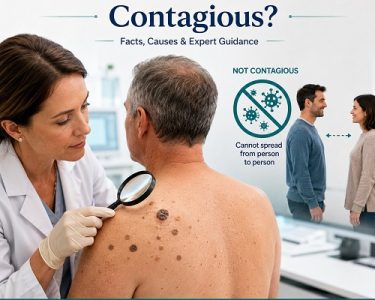
Is Seborrheic Keratosis contagious?
No. It is not an infection and it cannot spread from person to person.
Can I remove Seborrheic Keratosis myself?
It is not recommended. Home removal can cause bleeding, infection, scarring, or delay the diagnosis of skin cancer.
Why do I keep getting more seborrheic keratoses?
Ageing and genetics play a big role. Many people develop more lesions over time, especially after midlife.
Conclusion
Seborrheic Keratosis is a very common benign skin growth that often appears with age. It can look waxy, rough, raised, brown, black, or stuck onto the skin, and it commonly develops on the chest, back, face, neck, and shoulders. While it is usually harmless, it can sometimes resemble more serious skin conditions, which is why proper diagnosis matters.
Understanding the causes, symptoms, diagnosis, treatment options, and natural support strategies for Seborrheic Keratosis can help you make informed choices about your skin health. Medical treatments such as cryotherapy, curettage, electrocautery, laser treatment, and shave removal can remove bothersome lesions when needed. At the same time, gentle skin care, moisturising, sun protection, good nutrition, and avoiding irritation may help support overall skin comfort and wellness.
If you notice a new skin growth or a lesion that changes, bleeds, or looks unusual, it is always best to have it assessed by a qualified healthcare professional. Early evaluation offers peace of mind and helps rule out conditions that need more urgent treatment.
FAQs for Seborrheic Keratosis
1. What is seborrheic keratosis?
Seborrheic keratosis is a common non-cancerous skin growth that often appears in adults over 40. It usually looks waxy, rough, raised, or stuck onto the skin and can range in colour from tan to dark brown or black.
2. Is seborrheic keratosis dangerous?
Seborrheic keratosis is usually harmless and non-cancerous. However, some skin cancers can look similar, so any new, changing, bleeding, or unusual skin growth should be checked by a doctor or dermatologist.
3. What causes seborrheic keratosis?
The exact cause of seborrheic keratosis is not fully known, but ageing, genetics, long-term sun exposure, and changes in skin cell growth are thought to play a role.
4. What are the symptoms of seborrheic keratosis?
Common symptoms include a raised or flat waxy growth, rough or wart-like texture, brown or black colouring, itching, irritation, and a “stuck-on” appearance on the skin.
5. How is seborrheic keratosis diagnosed?
Doctors usually diagnose seborrheic keratosis through a skin examination. In some cases, dermoscopy or a skin biopsy may be used to confirm the diagnosis and rule out skin cancer.
6. Can seborrheic keratosis turn into cancer?
Seborrheic keratosis itself does not usually turn into cancer. However, because it can sometimes resemble melanoma or other skin cancers, medical evaluation is important if a lesion looks suspicious.
7. How is seborrheic keratosis treated?
Treatment options include cryotherapy, curettage, electrocautery, laser removal, and shave removal. Many cases do not need treatment unless the growth is irritated, bleeding, or causing cosmetic concern.
8. Can seborrheic keratosis be removed naturally?
There is no proven natural cure for seborrheic keratosis. Natural skin support such as moisturising, sun protection, gentle skin care, and healthy nutrition may help overall skin health, but suspicious lesions should always be medically assessed.
9. Does seborrheic keratosis itch?
Yes, seborrheic keratosis can sometimes itch, especially if the lesion is dry, inflamed, or irritated by friction from clothing or scratching.
10. Can seborrheic keratosis come back after treatment?
A treated seborrheic keratosis usually does not return if fully removed, but people who are prone to these growths may develop new lesions in other areas over time.