
 By
By Seborrheic keratosis is a common, noncancerous skin growth that often appears as people get older. These growths may look waxy, rough, scaly, or “stuck on” to the skin. They can range from light tan or brown to very dark brown or almost black and may develop on the chest, back, abdomen, face, scalp, or other areas of the body.
Although seborrheic keratoses are usually harmless, it is not always possible to identify a skin growth accurately just by looking at it. Some skin cancers can resemble seborrheic keratosis, particularly when a growth is changing, bleeding, or unusually dark.
Knowing when to see a seborrheic keratosis dermatologist can help you get the correct diagnosis and appropriate treatment. A dermatologist can examine suspicious growths, determine whether treatment is necessary, and remove bothersome lesions when appropriate.
What is Seborrheic Keratosis?
What Is Seborrheic Keratosis? Seborrheic keratosis is a benign growth of the outer layer of the skin. It is not Seborrheic Keratosis contagious and does not usually develop into skin cancer.
These growths commonly have a rough, waxy, or scaly surface. Some are relatively flat, while others become raised and appear attached to the skin’s surface. Their color can vary considerably.
Seborrheic keratoses are especially common in middle-aged and older adults. Having one does not necessarily mean that you will develop more, although some people develop Multiple Seborrheic Keratosis growths over time.
Because seborrheic keratosis can resemble other skin conditions, an unusual or changing lesion should not automatically be assumed to be harmless.
When Should You See a Seborrheic Keratosis Dermatologist?
You should consider seeing a dermatologist whenever you are uncertain whether a growth is actually seborrheic keratosis. Professional evaluation becomes especially important when a lesion changes or develops unusual symptoms.
A seborrheic keratosis dermatologist can examine the growth using visual inspection and, when necessary, dermoscopy or a skin biopsy.
Here are some situations when making an appointment is particularly important.
1. The Growth Is Changing
A seborrheic keratosis may slowly become larger or thicker over time. However, a growth that changes noticeably over a short period deserves professional evaluation.
Pay attention to changes in:
- Size
- Shape
- Color
- Surface texture
- Thickness
- Borders
Rapid or significant changes do not automatically mean cancer, but they should not be ignored.
2. The Lesion Starts Bleeding
Seborrheic keratoses can become irritated by clothing, jewelry, shaving, or scratching. This may cause minor bleeding.
However, unexplained or repeated bleeding should be assessed by a dermatologist. A bleeding lesion may have another cause, including certain types of skin cancer.
Rather than repeatedly covering or treating the growth at home, arrange a professional examination if bleeding continues or occurs without obvious irritation.
3. It Becomes Painful
Most seborrheic keratoses do not cause significant pain. Some may become Seborrheic Keratosis irritated, particularly when located in areas exposed to friction.
If a previously comfortable growth becomes painful, tender, swollen, or unusually sensitive, a dermatologist can determine whether irritation is responsible or whether another condition needs to be considered.
4. The Growth Itches Constantly
Occasional irritation or itching can occur, particularly when a lesion rubs against clothing.
Persistent itching, however, is a reason to have the lesion examined. Scratching can damage the surface, cause bleeding, and increase the possibility of infection.
A dermatologist can also recommend appropriate treatment if the lesion is repeatedly irritated.
5. The Lesion Has an Unusual Color
Seborrheic keratoses can naturally have different colors, including tan, brown, gray, and very dark brown. Color alone does not necessarily indicate a problem.
However, a lesion that is extremely dark, develops multiple unusual colors, or changes color should be evaluated.
Dark pigmentation can sometimes make it difficult to distinguish seborrheic keratosis from melanoma or another pigmented lesion without professional examination.
6. You Are Not Sure What the Growth Is
One of the most important reasons to visit a seborrheic keratosis dermatologist is uncertainty.
Many skin conditions can look similar. Warts, moles, actinic keratoses, basal cell carcinoma, squamous cell carcinoma, and melanoma may sometimes resemble benign growths.
Online photographs and descriptions can provide general information, but they cannot replace an examination by a qualified medical professional.
If you are unsure whether a new growth is seborrheic keratosis, scheduling an appointment is a sensible step.
7. You Have a New or Unusual Skin Growth
A new skin growth does not necessarily mean something is wrong. People can develop new seborrheic keratoses as they age.
Nevertheless, a new lesion that looks different from your other skin growths deserves attention, especially if it is changing or has unusual characteristics.
Dermatologists often use the concept of a “ugly duckling” lesion—one that looks noticeably different from the surrounding growths—as a reason for closer evaluation.
8. The Lesion Is Frequently Irritated
Seborrheic keratoses can appear on areas where clothing, bra straps, collars, belts, or jewelry repeatedly rub against the skin.
Repeated irritation may cause:
- Redness
- Crusting
- Bleeding
- Tenderness
- Itching
If a lesion is constantly being irritated, a dermatologist can discuss whether removal would be appropriate.
9. The Growth Is Affecting Your Quality of Life
Seborrheic keratoses are benign, but that does not mean they must be ignored if they cause significant discomfort or concern.
A growth may become bothersome because it:
- Catches on clothing
- Gets irritated during shaving
- Itches
- Bleeds after scratching
- Causes cosmetic concerns
- Creates anxiety because of its appearance
A dermatologist can discuss treatment options based on the lesion’s size, location, appearance, and symptoms.
How Does a Dermatologist Diagnose Seborrheic Keratosis?
A dermatologist usually begins with a detailed examination of the skin growth. They may examine its color, shape, surface, borders, and overall appearance.
Dermoscopy may also be used. This is a noninvasive technique that allows a dermatologist to examine structures beneath the surface of the skin that may not be easily visible to the naked eye.
In some cases, the dermatologist may recommend a biopsy.
A biopsy involves removing a small sample of tissue so it can be examined under a microscope. This can help determine whether the lesion is benign or whether another skin condition is present.
Not every typical seborrheic keratosis requires a biopsy. The decision depends on the lesion’s characteristics and the dermatologist’s clinical judgment.
Can a Seborrheic Keratosis Be Removed?
Yes. Although seborrheic keratoses are generally harmless and do not always require treatment, they can be removed when they are bothersome or when a dermatologist wants to examine the lesion more closely.
Common removal methods include:
Cryotherapy
Cryotherapy uses extreme cold, commonly liquid nitrogen, to destroy the targeted growth. The treated area may blister or form a crust before healing.
Curettage
With curettage, a dermatologist uses a specialized instrument to remove the growth from the skin. It may sometimes be combined with another treatment technique.
Electrosurgery
Electrosurgery uses electrical energy to destroy or remove the lesion. In some cases, it may be used alongside curettage.
Shave Removal
A dermatologist may use a blade-like instrument to remove a raised lesion from the surface of the skin.
The most suitable treatment depends on the appearance and location of the growth, the patient’s preferences, and the dermatologist’s assessment.
Should You Remove Seborrheic Keratosis at Home?
It is generally best to avoid cutting, scraping, burning, or picking at a suspected seborrheic keratosis yourself.
Home removal attempts can Seborrheic Keratosis causes:
- Bleeding
- Infection
- Scarring
- Skin damage
- Delayed healing
- Incorrect treatment of a lesion that was not actually seborrheic keratosis
This is particularly important because a lesion that appears benign may occasionally resemble a more serious condition.
If removal is desired, professional evaluation provides a safer approach.
What Happens During a Dermatologist Appointment?
A typical appointment may be straightforward.
First, the dermatologist will ask about the growth, including when you noticed it and whether it has changed.
The dermatologist will then examine the lesion. If it appears typical for seborrheic keratosis, no treatment may be necessary.
If the lesion is suspicious or its diagnosis is uncertain, the dermatologist may recommend further evaluation, such as a biopsy.
If the lesion is clearly benign but bothersome, treatment options may be discussed.
Before your appointment, it can be helpful to note:
- When you first noticed the growth
- Whether it has changed
- Whether it bleeds
- Whether it itches or hurts
- Whether it has been repeatedly irritated
- Any previous skin problems you have experienced
Taking a photograph of a changing lesion over time may also help document how its appearance has evolved, although a photograph should not replace professional evaluation.
When Is a Skin Growth an Urgent Concern?
Most seborrheic keratoses are not emergencies. However, certain changes should prompt a timely medical assessment.
Seek professional evaluation if a lesion:
- Changes rapidly
- Develops irregular borders
- Becomes significantly darker
- Contains several unusual colors
- Bleeds without clear irritation
- Forms persistent crusting
- Develops an open sore
- Becomes painful without an obvious cause
- Looks significantly different from your other skin growths
These signs do not prove that a lesion is cancerous. They simply mean that the growth should be assessed rather than assumed to be seborrheic keratosis.
Seborrheic Keratosis vs. Skin Cancer
One reason dermatologist evaluation matters is that benign and malignant skin lesions can sometimes look alike.
Basal cell carcinoma, squamous cell carcinoma, and melanoma can have different appearances, and some may initially resemble benign growths.
Melanoma is particularly important to recognize because it can appear as a dark or changing lesion. Warning signs can include asymmetry, irregular borders, multiple colors, changes in size, or evolution over time.
However, appearance alone cannot reliably diagnose every skin lesion.
A dermatologist is trained to distinguish common benign growths from lesions that require additional investigation.
Do All Seborrheic Keratoses Need Treatment?
No. Typical seborrheic keratoses generally do not need treatment simply because they are present.
If a lesion is harmless, stable, and not bothersome, a dermatologist may recommend observation.
Treatment may be considered if the lesion:
- Is repeatedly irritated
- Causes itching
- Bleeds because of friction
- Is cosmetically bothersome
- Interferes with daily activities
- Has an uncertain diagnosis
Treatment should be selected based on the individual lesion rather than a one-size-fits-all approach.
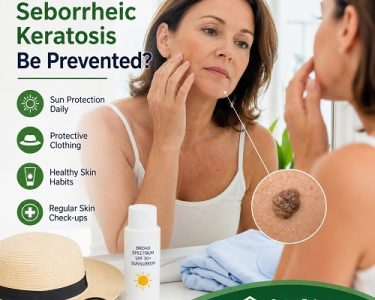
Can Seborrheic Keratosis Be Prevented?
There is no guaranteed way to prevent seborrheic keratoses from developing. They become increasingly common with age, and genetics may also play a role.
Although sun protection is important for overall skin health and reducing the risk of several types of skin cancer, it does not guarantee prevention of seborrheic keratosis.
Good general skin care includes:
- Using broad-spectrum sunscreen
- Avoiding excessive sun exposure
- Wearing protective clothing when appropriate
- Avoiding unnecessary scratching
- Monitoring new and changing skin growths
Regular skin awareness can help you notice changes that deserve medical attention.
How Often Should You Have Your Skin Checked?
There is no single skin-check schedule that is appropriate for everyone.
People with a history of skin cancer, numerous unusual moles, significant sun exposure, or other risk factors may benefit from professional skin examinations more frequently.
Even if you do not require regular dermatologist appointments, becoming familiar with your own skin can help you identify new or changing lesions.
If you notice something unusual, you do not necessarily need to wait for your next routine appointment.
Choosing a Seborrheic Keratosis Dermatologist
When looking for a dermatologist, choose a qualified medical professional experienced in evaluating skin growths and performing appropriate diagnostic procedures.
You may want to ask:
- Does the dermatologist evaluate suspicious skin lesions?
- Is dermoscopy available?
- Can biopsies be performed when necessary?
- What removal options are offered?
- What should I expect during recovery?
- Could the lesion leave a scar?
A consultation can help you understand whether observation, removal, or additional testing is appropriate.
Natural Remedies for Seborrheic Keratosis
Natural Remedies for Seborrheic Keratosis may help support healthy skin and reduce irritation, although they do not reliably remove these common benign skin growths. Seborrheic keratoses are usually harmless and often develop with age. Before trying any home remedy, it is important to have an unusual or changing growth evaluated by a dermatologist.
Gentle Seborrheic Keratosis Home Care can include keeping the affected area clean and moisturized, avoiding scratching or picking, and protecting the skin from excessive sun exposure. A fragrance-free moisturizer may help reduce dryness and irritation. Some people also consider natural ingredients such as aloe vera for soothing irritated skin, but evidence that these remedies can eliminate seborrheic keratoses is limited.
When a growth becomes irritated, bleeds, itches persistently, or changes in appearance, professional evaluation is recommended. Doctors can also discuss appropriate Seborrheic Keratosis Treatment Options, including cryotherapy, curettage, or other procedures when removal is medically appropriate or desired for cosmetic reasons.
Natural approaches should therefore be viewed as supportive skin care rather than a proven cure. Avoid harsh acids, cutting, burning, or attempting to scrape off a growth at home, as these methods can cause infection, scarring, or bleeding.
Final Thoughts
Seborrheic keratosis is usually a harmless skin growth, and many people never need treatment. However, not every unusual skin growth should automatically be labeled as seborrheic keratosis.
Seeing a seborrheic keratosis dermatologist is particularly important when a lesion is changing, bleeding, painful, persistently itchy, unusually dark, rapidly growing, or simply difficult to identify.
A dermatologist can examine the growth, determine whether further testing is needed, and recommend appropriate treatment when necessary. Avoid attempting to cut, burn, scrape, or remove an uncertain skin growth yourself.
When it comes to changing skin lesions, professional evaluation is the safest way to replace uncertainty with a clear diagnosis and appropriate care.
Medical disclaimer: This article is for general educational purposes and is not a substitute for professional medical diagnosis or treatment. If you have a new, changing, bleeding, painful, or otherwise unusual skin growth, consult a qualified healthcare professional or dermatologist.