 By
By If you have noticed a rough, raised, or waxy spot on your skin and wondered whether it is something serious, you may be asking what is seborrheic keratosis. Seborrheic keratosis is one of the most common non-cancerous skin growths seen in adults, especially as people get older. These growths can appear suddenly or slowly over time and may vary in size, shape, and colour. While they can look unusual and sometimes alarming, seborrheic keratoses are usually harmless.
Understanding what is seborrheic keratosis can help reduce worry and guide you on when to seek medical advice. What seborrheic keratosis is, what it looks like, what causes it, how it is diagnosed, and which seborrheic keratosis treatment options may be considered if it becomes bothersome.
What Is Seborrheic Keratosis?
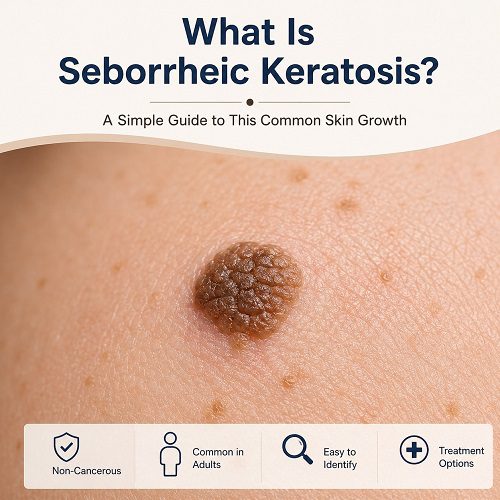
To answer the question what is seborrheic keratosis, it is a benign skin growth that develops on the outer layer of the skin. It often appears as a brown, black, tan, or light-coloured patch or bump with a waxy, scaly, or “stuck-on” look. These growths are not contagious and do not spread from person to person.
Seborrheic keratoses are extremely common and usually develop in middle-aged and older adults. Some people may have only one growth, while others can develop many over time. They are often found on the chest, back, shoulders, face, neck, or scalp, but they can appear almost anywhere on the body except the palms and soles.
Although seborrheic keratosis is harmless in most cases, it can sometimes be confused with skin cancer or other skin conditions. That is why it is helpful to know the common features and warning signs.
What Does Seborrheic Keratosis Look Like?
One reason people ask what is seborrheic keratosis is because these growths can look different from one person to another. Some are small and flat at first, while others become thicker and raised over time.
Common features of seborrheic keratosis include:
- A waxy, rough, or slightly greasy surface
- A raised growth that appears to sit on top of the skin
- Colours ranging from light tan to dark brown or black
- A round or oval shape
- A scaly, crumbly, or wart-like texture
- A “stuck-on” appearance, as if it could be peeled off
- Single or multiple growths in one area
Some seborrheic keratoses may be smooth and flat, while others may become thicker and more textured. Their size can range from a few millimetres to more than a centimetre wide.
Where Does Seborrheic Keratosis Usually Appear?
If you are trying to understand what is seborrheic keratosis, it also helps to know where these skin growths commonly develop. They often appear in areas where the skin is exposed to friction or ageing changes.
Common locations include:
- Chest
- Back
- Face
- Neck
- Shoulders
- Scalp
- Abdomen
They are less common on the arms and legs, and they do not usually develop on the palms of the hands or the soles of the feet.
Who Gets Seborrheic Keratosis?
Seborrheic keratosis is most common in adults over the age of 40, although younger adults may develop it too. The chance of getting these growths tends to increase with age.
You may be more likely to develop seborrheic keratosis if:
- You are middle-aged or older
- Other family members have had similar growths
- You have fair or sensitive skin
- You have had long-term sun exposure
- Your skin naturally develops age-related changes more easily
Men and women can both develop seborrheic keratosis, and it affects people of many skin tones.
What Causes Seborrheic Keratosis?
The exact cause of seborrheic keratosis is not fully understood, but several factors appear to play a role. If you have been wondering what is seborrheic keratosis and why does it happen, the answer often involves a mix of age, genetics, and skin cell changes.
1. Ageing
Seborrheic keratosis becomes more common with age. As the skin changes over time, certain cells in the outer layer of the skin may begin to grow in a harmless but noticeable way.
2. Genetics
Family history appears to be important. If your parents or close relatives have seborrheic keratoses, you may be more likely to develop them as well.
3. Sun Exposure
Sun exposure may contribute to some cases, especially when growths appear on sun-exposed areas such as the seborrheic keratosis face, chest, or shoulders. However, seborrheic keratosis can also appear on areas that get little sunlight.
4. Skin Cell Growth Changes
Seborrheic keratosis happens when skin cells in the epidermis, the top layer of the skin, multiply more than usual. These cells build up and form the characteristic raised growth.
Is Seborrheic Keratosis Dangerous?
A common concern when asking what is seborrheic keratosis is whether it is dangerous or cancerous. In most cases, seborrheic keratosis is completely benign. It does not turn into skin cancer and usually does not pose a serious health risk.
However, you should not ignore a new skin growth that changes quickly, bleeds without reason, develops an unusual shape, or looks very different from your other skin spots. Some skin cancers, including melanoma, can mimic seborrheic keratosis. A doctor or dermatologist can examine the growth and decide whether it needs further testing.
Common Symptoms of Seborrheic Keratosis
Seborrheic keratosis often causes no pain and may only be noticed because of its appearance. Still, some people experience irritation, especially if the growth rubs against clothing or jewellery.
Possible symptoms include:
- A visible raised or flat skin growth
- Mild itching
- Roughness or flaking
- Irritation from friction
- Tenderness if the area is scratched
- Cosmetic concern due to its appearance
If the growth becomes inflamed, bleeds after minor rubbing, or starts to crust repeatedly, it is worth having it checked.
How Is Seborrheic Keratosis Diagnosed?
A healthcare professional can often diagnose seborrheic keratosis by looking at it. The growth has a very characteristic appearance, and experienced doctors can usually identify it during a skin examination.
Physical Examination
The doctor will examine the colour, texture, shape, and location of the growth. They may ask when it first appeared, whether it has changed, and whether it causes itching, pain, or bleeding.
Dermatoscopy
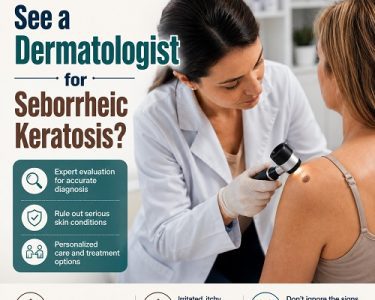
A dermatologist may use a dermatoscope, a special handheld device that allows a closer look at the skin. This helps them see patterns and structures that are typical of seborrheic keratosis.
Skin Biopsy
If the doctor is not sure whether the growth is seborrheic keratosis or something else, they may recommend a skin biopsy. In this test, a small sample or the whole growth is removed and examined under a microscope.
A biopsy is especially helpful when the lesion has unusual colouring, irregular borders, rapid growth, or bleeding.
Conditions That Can Look Similar to Seborrheic Keratosis
Part of understanding what is seborrheic keratosis is knowing that it can resemble other skin conditions. Some harmless skin growths and some serious conditions can look similar at first glance.
Conditions that may be confused with seborrheic keratosis include:
- Moles
- Warts
- Solar lentigines (age spots)
- Actinic keratosis
- Basal cell carcinoma
- Melanoma
Because of this, it is wise to seek medical advice if you are unsure what a growth is or if it looks different from your other skin spots.
When Should You See a Doctor?
Although seborrheic keratosis is usually harmless, there are situations when a medical check is important. You should see a doctor or dermatologist if:
- A new growth appears suddenly and looks unusual
- The spot changes in size, colour, or shape
- It bleeds without being scratched
- It becomes very itchy, painful, or inflamed
- Several growths appear rapidly over a short time
- You are not sure whether it is seborrheic keratosis or another skin condition
Prompt assessment can help rule out skin cancer and provide peace of mind.
Treatment Options for Seborrheic Keratosis
Many people with seborrheic keratosis do not need treatment. If the growth is harmless and not causing discomfort, it can often be left alone. Treatment is usually considered for cosmetic reasons or if the growth gets irritated, itchy, catches on clothing, or causes concern.
Here are the main treatment options:
1. Cryotherapy
Cryotherapy uses liquid nitrogen to freeze the seborrheic keratosis. The frozen growth gradually dries up and falls off. This is a common and fairly quick treatment, especially for smaller lesions.
Benefits:
- Fast treatment
- Usually done in the clinic
- No cutting required
Possible side effects:
- Temporary redness or blistering
- Lighter or darker skin in the treated area
- Mild discomfort during healing
2. Curettage
Curettage involves gently scraping the growth off the skin using a special instrument. It may be done after numbing the area.
Benefits:
- Can remove the lesion immediately
- Useful for thicker growths
Possible side effects:
- Mild bleeding
- Temporary soreness
- Small scar in some cases
3. Electrocautery
In electrocautery, the growth is burned away using a controlled electric current. This may be combined with curettage for better removal.
Benefits:
- Effective for raised or thick lesions
- Helps control bleeding during removal
Possible side effects:
- Redness and crusting while healing
- Risk of minor scarring or colour change
4. Laser Removal
Some dermatologists use laser treatment to remove seborrheic keratosis. This may be considered for cosmetic areas such as the face.
Benefits:
- Precise treatment
- Can improve the appearance of the skin
Possible side effects:
- Temporary redness
- Cost may be higher than other methods
- Healing time varies depending on the size of the lesion
5. Shave Removal
A shave excision removes the raised part of the lesion with a blade after numbing the skin. This can also provide a tissue sample for biopsy if needed.
Benefits:
- Useful when diagnosis is uncertain
- Can remove the visible lesion in one procedure
Possible side effects:
- Mild scabbing
- Small scar or colour change
Can Seborrheic Keratosis Be Treated at Home?
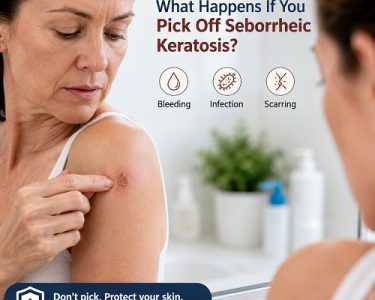
People often search for Natural Remedies for Seborrheic Keratosis after learning what is seborrheic keratosis, but self-treatment should be approached carefully. It is important not to pick, cut, burn, or use harsh chemicals on a skin growth without a proper diagnosis. A growth that looks like seborrheic keratosis may actually be another condition, including skin cancer.
Over-the-counter products marketed for skin growths may not be suitable for everyone and can irritate healthy skin. It is safest to get a medical opinion before trying any home treatment.
Can Seborrheic Keratosis Go Away on Its Own?
Seborrheic keratosis does not usually disappear on its own. Once it develops, it may stay the same for years or slowly become thicker and more noticeable. Some growths remain stable, while others gradually increase in number over time.
Even though they often persist, they do not always need treatment unless they become troublesome or cosmetically unwanted.
Is Seborrheic Keratosis Contagious?
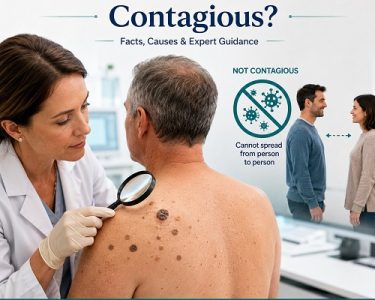
No, seborrheic keratosis is not contagious. You cannot catch it from someone else, and you cannot spread it by touching or scratching the growth. It is a non-infectious skin condition related to skin cell growth, ageing, and genetics rather than bacteria, viruses, or fungi.
Can Seborrheic Keratosis Be Prevented?
There is no guaranteed way to prevent seborrheic keratosis, especially when age and family history are major factors. However, taking good care of your skin may help support overall skin health.
Helpful skin care habits include:
- Wearing sunscreen regularly
- Avoiding excessive sun exposure
- Checking your skin for new or changing growths
- Keeping the skin moisturised
- Avoiding scratching or irritating existing growths
These steps may not stop seborrheic keratosis from forming, but they can help protect your skin and make it easier to notice unusual changes early.
Living With Seborrheic Keratosis
For many people, seborrheic keratosis is mainly a cosmetic issue rather than a medical one. Some people feel self-conscious if the growths are on visible areas such as the face or neck, while others are bothered by itching or friction.
If you have seborrheic keratosis, it can help to:
- Avoid rubbing or scratching the area
- Wear soft clothing if lesions catch on fabric
- Use gentle skincare products on sensitive areas
- Monitor growths for changes
- Ask a dermatologist about removal if they become bothersome
Having a clear diagnosis often makes it easier to manage the condition with confidence.
Key Facts to Remember About What Is Seborrheic Keratosis
If you want a simple summary of what is seborrheic keratosis, here are the most important points:
- It is a very common non-cancerous skin growth
- It often appears as a waxy, rough, raised, or “stuck-on” patch
- It usually develops in adults over 40
- Common colours include tan, brown, and black
- It often appears on the chest, back, face, neck, and shoulders
- It is not contagious
- It usually does not require treatment unless it causes irritation or cosmetic concern
- A doctor should check any growth that changes quickly, bleeds, or looks unusual
FAQ: Questions and Answers
FAQ 1: What is seborrheic keratosis?
Seborrheic keratosis is a common non-cancerous skin growth that often appears as a waxy, rough, raised, or “stuck-on” patch on the skin. It usually develops in adults over the age of 40 and can vary in colour from tan to dark brown or black.
FAQ 2: Is seborrheic keratosis dangerous?
Seborrheic keratosis is usually harmless and does not turn into skin cancer. However, if a skin growth changes in size, shape, colour, or begins to bleed, it should be checked by a doctor to rule out other skin conditions.
FAQ 3: What causes seborrheic keratosis?
The exact cause of seborrheic keratosis is not fully known, but ageing, genetics, and skin cell growth changes are believed to play a role. Sun exposure may also contribute in some people.
FAQ 4: Can seborrheic keratosis go away on its own?
Seborrheic keratosis usually does not go away on its own. Once it appears, it may stay the same, slowly grow, or increase in number over time.
FAQ 5: How is seborrheic keratosis treated?
Seborrheic keratosis can be removed if it becomes irritated or for cosmetic reasons. Common treatments include cryotherapy, curettage, electrocautery, laser removal, and shave removal.
FAQ 6: Can seborrheic keratosis be removed at home?
It is not recommended to remove seborrheic keratosis at home without a proper diagnosis. Some skin growths can look similar to seborrheic keratosis, including skin cancer, so medical advice is important before trying any treatment.
Final Thoughts
So, what is seborrheic keratosis? It is a common, harmless skin growth that often appears with age and may look waxy, rough, scaly, or slightly raised. While its appearance can sometimes be worrying, seborrheic keratosis is usually benign and does not become cancerous. Many people live with these growths without any problems at all.
That said, not every skin lesion is easy to identify at home. If you notice a new growth or an existing spot changes in colour, size, shape, or texture, it is wise to have it examined by a healthcare professional. A proper diagnosis is the best way to make sure the growth is harmless and to decide whether removal is needed.
By understanding what is seborrheic keratosis, its symptoms, causes, and treatment options, you can make informed decisions about your skin health and feel more confident about what to watch for in the future.