 By
By When a new spot appears on your skin, it is natural to feel concerned. Many people notice a brown, black, or rough patch and immediately worry about skin cancer. In some cases, the growth may be harmless, while in others it may need urgent medical attention. One common source of confusion is seborrheic keratosis vs skin cancer. These two skin conditions can sometimes look similar at first glance, but they are very different in terms of cause, risk and treatment.
Seborrheic keratosis is a non-cancerous skin growth that often develops with age. It may look waxy, raised, scaly, or “stuck on” to the skin. Skin cancer, on the other hand, happens when skin cells grow in an abnormal and potentially dangerous way. Some types of skin cancer can spread if not diagnosed and treated early.
Knowing the difference between seborrheic keratosis vs skin cancer can help you decide when to monitor a spot and when to seek professional medical advice. This guide explains what each condition is, how they look, the warning signs to watch for, and when to see a dermatologist.
What Is Seborrheic Keratosis?
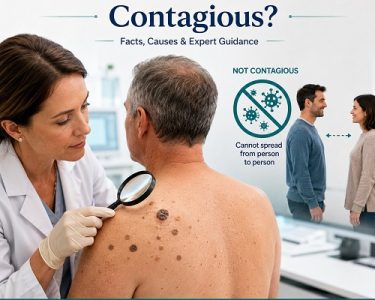
Seborrheic keratosis is a very common benign skin growth. It usually appears in adults over the age of 40, although younger people can develop it too. These growths are not contagious and do not turn into skin cancer.
Seborrheic keratoses can appear almost anywhere on the body, but they are most common on the chest, back, shoulders, face, and scalp. They usually spare the palms of the hands and soles of the feet.
A seborrheic keratosis often has the following features:
- Brown, tan, black, or light brown colour
- Waxy, rough, or wart-like surface
- Raised or slightly elevated appearance
- A “stuck-on” look, as if it is sitting on top of the skin
- Round or oval shape
- One growth or multiple growths
These lesions can stay the same for years, grow slowly, or increase in number over time. Some people have only one, while others may develop dozens.
What Is Skin Cancer?
Skin cancer develops when skin cells become damaged and start growing abnormally. This damage is often linked to ultraviolet (UV) exposure from the sun or tanning beds, although not all skin cancers are caused by sunlight alone.
The three main types of skin cancer are:
1. Basal Cell Carcinoma
This is the most common form of skin cancer. It often appears as a pearly bump, a pink patch, or a sore that does not heal. It grows slowly and rarely spreads, but it still needs treatment.
2. Squamous Cell Carcinoma
This type may look like a red scaly patch, a crusted bump, or a sore that bleeds. It can become more serious if left untreated.
3. Melanoma
Melanoma is the most dangerous type of skin cancer. It may develop in an existing mole or appear as a new dark spot. It can spread to other parts of the body if not caught early.
When comparing seborrheic keratosis vs skin cancer, it is important to remember that skin cancer often changes over time, may bleed or ulcerate, and can pose a serious health risk.
Seborrheic Keratosis vs Skin Cancer: Why They Are Often Confused
Seborrheic keratosis can look alarming, especially when it is dark, raised, thick, or irregular in shape. Some lesions may become irritated from rubbing against clothing or scratching, which can make them look inflamed. This is one reason why people confuse seborrheic keratosis vs skin cancer.
Certain skin cancers, especially melanoma or pigmented basal cell carcinoma, can also appear dark or uneven. Without proper examination, it can be difficult for a person to tell the difference at home.
Even doctors may occasionally use a dermatoscope or skin biopsy if the spot has unusual features.
Key Differences Between Seborrheic Keratosis and Skin Cancer
Here is a closer look at the main differences in the seborrheic keratosis vs skin cancer comparison.
1. Appearance and Texture
Seborrheic Keratosis
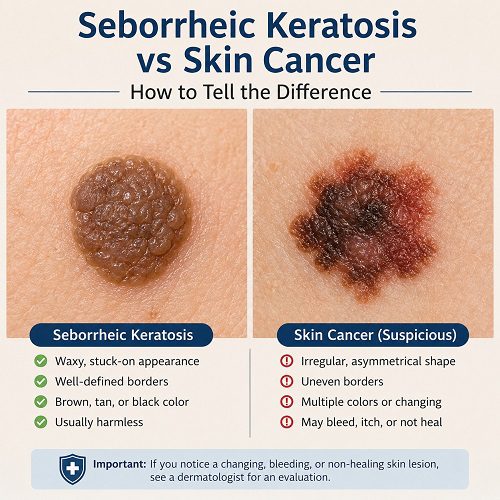
Seborrheic keratosis usually has a waxy, rough, or crumbly surface. It often looks like it has been pasted onto the skin. The edges may appear clearly defined, and the growth may feel slightly raised.
Skin Cancer
Skin cancer can have many appearances depending on the type. It may look shiny, pearly, crusted, ulcerated, scaly, or irregular. Melanoma may appear as a dark patch with uneven borders and mixed colours.
Important clue: A seborrheic keratosis often looks like a harmless growth sitting on the skin, while skin cancer may appear more invasive, irritated, or uneven in structure.
2. Colour
Seborrheic Keratosis
The colour may range from light tan to dark brown or black. The colour is often fairly uniform, although some lesions can have slight variation.
Skin Cancer
Skin cancer can be pink, red, brown, black, flesh-coloured, or even clear. Melanoma often has multiple shades in one lesion, including black, brown, red, white, or blue.
Important clue: If a spot has several colours or a dramatic colour change, it should be checked by a dermatologist.
3. Growth Pattern
Seborrheic Keratosis
These growths often develop slowly over time. Some stay small, while others gradually thicken. People may notice more lesions appearing with age.
Skin Cancer
Skin cancer may grow slowly or quickly, depending on the type. A spot that changes in size, shape, colour, or symptoms over weeks to months deserves medical attention.
Important clue: Rapid change is more concerning for skin cancer than for seborrheic keratosis.
4. Symptoms
Seborrheic Keratosis
Most seborrheic keratoses are painless. Seborrheic Keratosis Symptoms, However, they can itch, become irritated, or catch on clothing. If scratched, they may bleed slightly.
Skin Cancer
Skin cancer may itch, hurt, bleed, crust, or fail to heal. Some skin cancers form open sores or tender patches.
Important clue: A lesion that repeatedly bleeds, forms a sore, or does not heal should never be ignored.
5. Borders and Shape
Seborrheic Keratosis
Seborrheic keratoses often have a well-defined outline and a fairly regular shape, although some can look bumpy or uneven.
Skin Cancer
Skin cancer, especially melanoma, may have irregular, blurred, jagged, or asymmetrical borders.
Important clue: Irregular borders are a warning sign, especially when combined with colour changes.
The ABCDE Rule for Suspicious Skin Lesions
One of the best ways to assess a suspicious mole or dark spot is the ABCDE rule, which is often used to identify possible melanoma.
- A – Asymmetry: One half does not match the other half
- B – Border: Edges are irregular, blurred, or ragged
- C – Colour: Multiple colours or uneven colour distribution
- D – Diameter: Larger than 6 mm, although melanomas can be smaller
- E – Evolving: Changes in size, shape, colour, or symptoms
This rule is especially useful when considering seborrheic keratosis vs skin cancer, because seborrheic keratosis is often stable and less likely to show the warning pattern seen in melanoma.
Common Signs That Suggest Seborrheic Keratosis
A skin growth may be more likely to be seborrheic keratosis if it:
- Looks waxy, rough, or wart-like
- Appears stuck onto the skin
- Has a round or oval shape
- Is tan, brown, or black with a fairly even look
- Develops slowly over time
- Occurs with other similar growths on the chest, back, face, or shoulders
- Does not ulcerate or behave aggressively
Even so, not every harmless-looking lesion is truly benign, which is why professional assessment is still important if there is any doubt.
Warning Signs That May Point to Skin Cancer
A spot may need urgent evaluation if it:
- Changes quickly in size, shape, or colour
- Has irregular borders
- Contains several different colours
- Bleeds without obvious injury
- Crusts, oozes, or forms a sore
- Feels painful or tender
- Does not heal
- Looks very different from your other moles or skin growths
- Appears after heavy sun exposure and continues to grow
These signs do not automatically mean cancer, but they do mean the lesion should be checked promptly.
Can Seborrheic Keratosis Turn Into Cancer?
Seborrheic keratosis itself is considered benign and does not usually turn into skin cancer. However, a person can have seborrheic keratosis and skin cancer at the same time in different areas of the skin. In rare cases, a skin cancer may be mistaken for seborrheic keratosis because it has a similar appearance.
That is why the discussion of seborrheic keratosis vs skin cancer is so important. The concern is not that seborrheic keratosis becomes cancer, but that a cancerous lesion may be overlooked because it resembles a harmless growth.
What Causes Seborrheic Keratosis?
The exact cause of seborrheic keratosis is not fully known, but several factors may play a role:
- Ageing
- Family history
- Genetics
- Long-term skin changes
- Friction in some areas
These growths are not caused by poor hygiene, and they are not contagious.
What Causes Skin Cancer?
Skin cancer is more strongly linked to factors such as:
- Too much sun exposure
- Tanning bed use
- Fair skin that burns easily
- History of severe sunburns
- Weakened immune system
- Personal or family history of skin cancer
- Older age
- Exposure to certain chemicals or radiation
While anyone can develop skin cancer, risk is higher in people with significant UV damage.
How Doctors Diagnose the Difference
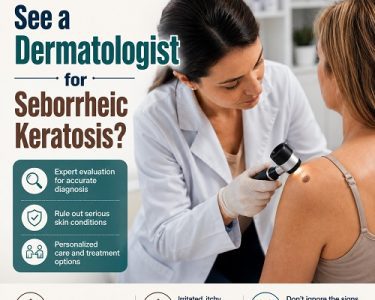
If you are unsure about seborrheic keratosis vs skin cancer, a dermatologist can examine the lesion and decide whether further testing is needed.
Clinical Examination
The doctor will inspect the growth closely, ask when it appeared, and look for suspicious features.
Dermoscopy
A dermatoscope is a handheld tool that magnifies the skin and helps the doctor see structures not visible to the naked eye. This is often very useful in separating seborrheic keratosis from melanoma or other cancers.
Skin Biopsy
If the lesion looks unusual or cancer cannot be ruled out, the doctor may remove part or all of it and send it to a lab. A biopsy is the most reliable way to confirm the diagnosis.
Treatment for Seborrheic Keratosis
Seborrheic keratosis does not always need treatment. If it is harmless and not bothering you, it can often be left alone.
Natural Treatment for Seborrheic Keratosis may be considered if the growth:
- Becomes irritated
- Itches or bleeds due to friction
- Catches on jewellery or clothing
- Causes cosmetic concern
- Looks suspicious and needs removal for diagnosis
Common treatment options include:
Cryotherapy
Freezing the lesion with liquid nitrogen
Curettage
Gently scraping the growth off the skin
Electrocautery
Using electrical current to remove or destroy the lesion
Laser Treatment
In some cases, lasers may be used for removal
How to Remove Seborrheic Keratosis Naturally
Many people search for How to Remove Seborrheic Keratosis Naturally when they notice rough, waxy, or raised skin growths and want a gentle way to care for their skin. Seborrheic keratosis is a common non-cancerous skin condition that often appears with age. These growths can be brown, black, or tan and may develop on the chest, back, face, or shoulders.
If you are wondering How to Remove Seborrheic Keratosis Naturally, it is important to know that home care may help soothe the skin, but it should not replace medical advice for suspicious or changing lesions. Some people use natural ingredients such as aloe vera gel, diluted apple cider vinegar, tea tree oil, or coconut oil to support skin comfort and reduce dryness around the area. Keeping the skin clean and moisturised may also help prevent irritation.
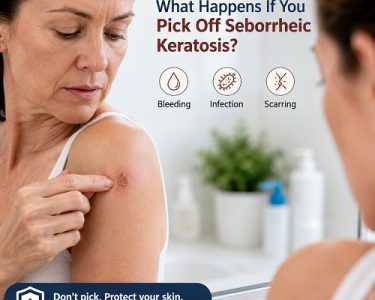
However, you should never scratch, cut, or burn off seborrheic keratosis at home. If a growth becomes painful, bleeds, changes colour, or grows quickly, it is best to see a dermatologist for proper diagnosis.
When exploring How to Remove Seborrheic Keratosis Naturally, focus on safe skin care, gentle natural support, and professional advice when needed. Healthy skin habits and early evaluation are always the safest approach.
It is important not to try cutting or burning off a skin growth at home, especially if you are not sure what it is.
Treatment for Skin Cancer
Skin cancer treatment depends on the type, size, location, and how early it is found. Treatment options may include:
- Surgical removal
- Mohs surgery for certain skin cancers
- Cryotherapy for selected pre-cancerous lesions
- Topical medicines in some cases
- Radiation therapy
- Immunotherapy or targeted treatment for advanced melanoma
Early diagnosis makes treatment simpler and improves the outlook, especially for melanoma.
When to See a Doctor
You should see a doctor or dermatologist if you notice:
- A new skin growth you cannot identify
- A spot that changes quickly
- Bleeding, crusting, or non-healing lesions
- A dark lesion with uneven colour
- A growth that looks different from your usual seborrheic keratoses
- Pain, tenderness, or persistent itching
- Any lesion that makes you worry
In the seborrheic keratosis vs skin cancer discussion, the safest approach is simple: if you are not sure, have it checked.
Tips for Monitoring Your Skin at Home
Regular skin checks can help you spot changes early. Try these simple habits:
Check your skin once a month
Use a mirror to look at your face, chest, back, arms, legs, scalp, and feet.
Take photos of suspicious spots
A photo record can help you notice subtle changes over time.
Learn your normal pattern
If you already have several seborrheic keratoses, become familiar with how they usually look so you can notice anything unusual.
Protect your skin from sun damage
Use sunscreen, wear protective clothing, and avoid intense sun exposure, especially during peak hours.
Seborrheic Keratosis vs Skin Cancer: Quick Comparison
Here is a simple summary of the difference between seborrheic keratosis vs skin cancer:
Seborrheic Keratosis
- Benign and non-cancerous
- Often waxy, rough, or stuck-on in appearance
- Usually slow growing
- Common with age
- May be tan, brown, or black
- Usually harmless, though sometimes itchy or irritated
Skin Cancer
- Abnormal and potentially dangerous cell growth
- May change in size, shape, or colour
- Can bleed, crust, or fail to heal
- May have irregular borders or multiple colours
- Requires prompt diagnosis and treatment
- Some forms, especially melanoma, can spread
FAQ Section
1. How can I tell the difference between seborrheic keratosis and skin cancer?
Seborrheic keratosis is usually a harmless, waxy, rough, or stuck-on skin growth, while skin cancer may change in size, shape, or colour and can bleed, crust, or fail to heal. If a lesion looks unusual or changes quickly, it should be checked by a dermatologist.
2. Can seborrheic keratosis look like melanoma?
Yes, seborrheic keratosis can sometimes resemble melanoma, especially if it is dark brown or black. Because of this, doctors may use dermoscopy or a biopsy to confirm the diagnosis if the lesion looks suspicious.
3. Is seborrheic keratosis dangerous?
Seborrheic keratosis is generally not dangerous and is considered a benign skin growth. It does not usually turn into cancer, but any unusual or changing lesion should still be assessed by a healthcare professional.
4. Does seborrheic keratosis need treatment?
Treatment is not always necessary unless the growth becomes irritated, itchy, catches on clothing, bleeds from friction, or causes cosmetic concern. In some cases, a doctor may remove it to confirm the diagnosis.
5. What are the warning signs of skin cancer?
Warning signs of skin cancer include a lesion that changes in colour, shape, or size, has irregular borders, bleeds, crusts, becomes painful, or does not heal. A dark spot with multiple colours should also be checked promptly.
6. Can skin cancer be mistaken for seborrheic keratosis?
Yes, some skin cancers can look similar to seborrheic keratosis. This is why any new, changing, or suspicious skin growth should be examined by a dermatologist rather than diagnosed at home.
7. What does seborrheic keratosis usually look like?
Seborrheic keratosis often appears as a brown, black, or tan growth with a waxy, rough, scaly, or wart-like surface. It may look as if it is stuck onto the skin.
8. When should I see a doctor about a skin growth?
You should see a doctor if a skin growth changes quickly, bleeds, becomes painful, develops uneven colour, has irregular borders, or simply does not look normal to you.
Final Thoughts
Understanding seborrheic keratosis vs skin cancer is important because these skin lesions can sometimes look alike, yet their significance is very different. Seborrheic keratosis is usually harmless and common in adults, especially as they get older. It often appears as a waxy, raised, stuck-on growth and does not usually require treatment unless it becomes irritated or cosmetically bothersome.
Skin cancer, however, should never be ignored. A spot that changes, bleeds, crusts, grows quickly, or has irregular borders needs proper medical assessment. While online guides can help you understand the differences, they should never replace a professional skin examination.
If you are ever unsure whether a lesion is seborrheic keratosis or skin cancer, book an appointment with a dermatologist. A quick check can provide peace of mind and, if needed, allow treatment to begin early. When it comes to skin health, it is always better to get a suspicious spot checked than to wait and worry.