 By
By Seborrheic keratosis is one of the most common benign skin growths, especially in middle-aged and older adults. These growths can appear as tan, brown, black, or light-colored patches or bumps with a waxy, rough, or “stuck-on” appearance. Although seborrheic keratoses are generally harmless and are not contagious, many people wonder whether there is a way to prevent seborrheic keratosis or reduce the chances of developing more growths over time.
The short answer is that there is no guaranteed method to prevent seborrheic keratosis. Researchers do not fully understand why these growths develop. However, age and family history appear to be important factors, and some research suggests that sun exposure may play a role in certain cases.
While you cannot control your age or genetics, you can take practical steps to protect your skin, monitor changes, avoid unnecessary irritation, and seek professional evaluation when a growth looks unusual.
What is Seborrheic Keratosis?
What is Seborrheic Keratosis? Seborrheic keratosis is a common, noncancerous skin growth that usually develops during adulthood. It can occur almost anywhere on the skin except the palms and soles. Common locations include the chest, back, neck, Seborrheic Keratosis Face Treatment, scalp, and abdomen.
A seborrheic keratosis may begin as a small, rough area and gradually become thicker. Many have a waxy or pasted-on appearance. Their color can range from nearly white to tan, brown, or black.
Some people develop only one growth, while others develop many. The number of seborrheic keratoses often increases with age. They are particularly common after middle age and may become more numerous over the years.
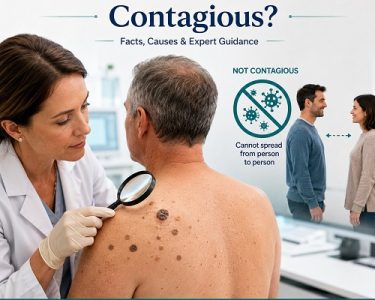
Although they can sometimes look concerning, seborrheic keratoses are benign. They are not contagious and do not spread from person to person.
Can You Prevent Seborrheic Keratosis?
At present, there is no proven strategy that can completely prevent seborrheic keratosis.
This is mainly because the exact cause of these growths remains unclear. Genetics appear to contribute to the tendency to develop them, and getting older is another major risk factor. Some people naturally develop numerous seborrheic keratoses, while others develop very few or none.
DermNet also notes that how to prevent seborrheic keratoses is unknown.
This means it is important to avoid claims that a particular cream, supplement, diet, vitamin, or home remedy can reliably stop seborrheic keratoses from forming.
Instead, the goal should be to support overall skin health and recognize suspicious or changing growths early.
Why Do Seborrheic Keratoses Develop?
Experts have not identified one specific cause of seborrheic keratosis. Several factors appear to be associated with their development.
1. Aging
Age is one of the strongest known associations. Seborrheic keratoses commonly begin appearing during middle age and become more frequent as people get older.
Because aging cannot be prevented, it is not possible to eliminate this risk factor. However, understanding the connection can help people recognize that developing these growths later in life is common.
2. Family History
Genetics may also influence whether someone develops seborrheic keratoses.
The American Academy of Dermatology explains that these growths often run in families, meaning some people may inherit a tendency to develop multiple lesions.
If parents or other close family members have many seborrheic keratoses, you may be more likely to develop them as well.
3. Possible Sun Exposure
The relationship between sunlight and seborrheic keratosis is not completely settled.
The American Academy of Dermatology notes that some studies suggest seborrheic keratoses may develop more frequently on skin that has received substantial Seborrheic Keratosis Sun Exposure. However, these growths can also occur on areas that are usually covered, so more research is needed.
Therefore, it would be inaccurate to say that avoiding sunlight will definitely prevent seborrheic keratosis.
Nevertheless, protecting your skin from excessive ultraviolet exposure is an important part of general skin care and can reduce the risk of sun-related skin damage and skin cancer.
Does Sun Protection Help Prevent Seborrheic Keratosis?
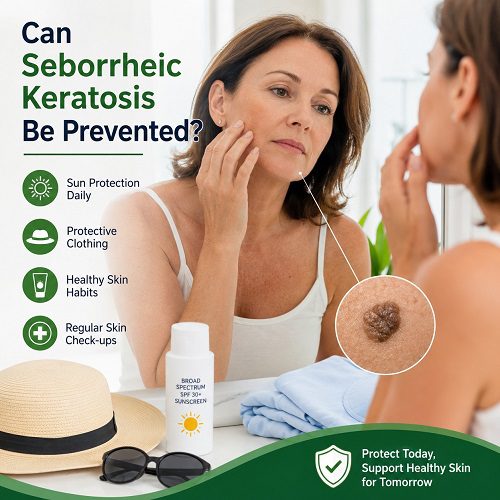
There is no strong evidence that sunscreen can completely prevent seborrheic keratoses.
However, sun protection remains a smart habit because ultraviolet radiation can damage the skin and contributes to several other skin problems, including skin cancer. The American Academy of Dermatology recommends using broad-spectrum, water-resistant sunscreen with SPF 30 or higher, seeking shade, and wearing protective clothing when appropriate.
A practical sun-protection routine can include:
- Applying broad-spectrum SPF 30 or higher when outdoors
- Reapplying sunscreen as directed, especially after sweating or swimming
- Seeking shade during periods of strong sunlight
- Wearing long sleeves and other protective clothing
- Wearing a wide-brimmed hat
- Using UV-protective sunglasses
- Avoiding intentional tanning and tanning beds
These measures should be viewed as general skin-protection strategies, not as a guaranteed treatment or prevention method for seborrheic keratosis.
Can Diet Prevent Seborrheic Keratosis?
There is currently no established diet proven to prevent seborrheic keratosis.
Eating a balanced diet is important for general health and provides nutrients needed for normal skin function, but there is no specific food, juice, herb, or dietary pattern that has been proven to stop seborrheic keratoses from forming.
Be cautious about online claims suggesting that eliminating certain foods or taking specific supplements will remove or prevent these growths.
If you are considering supplements for skin health, discuss them with a healthcare professional, particularly if you take medications or have an underlying health condition.
Can Skin Care Products Prevent Seborrheic Keratosis?
Ordinary moisturizers, cleansers, and cosmetic skin-care products cannot be relied upon to prevent seborrheic keratoses.
A gentle skin-care routine can still be beneficial. Consider using:
- A mild cleanser
- A fragrance-free moisturizer if your skin becomes dry
- Sunscreen during outdoor exposure
- Gentle products that do not cause unnecessary irritation
Avoid aggressive scrubbing or attempting to “burn off” a growth with household products.
A seborrheic keratosis can sometimes resemble other skin conditions, including actinic keratosis or skin cancer. Trying to remove an uncertain growth yourself can delay proper Seborrheic Keratosis diagnosis.
Avoid Picking or Scratching Existing Growths
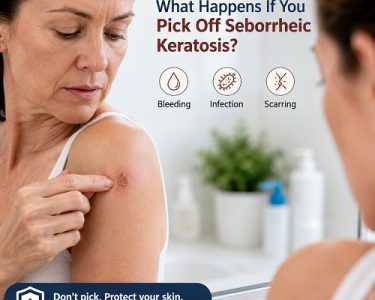
If you already have seborrheic keratoses, avoid repeatedly scratching, picking, cutting, or rubbing them.
Although seborrheic keratoses are harmless, friction from clothing, jewelry, shaving, or scratching can irritate them. An irritated lesion may become sore, bleed, or develop inflammation.
The American Academy of Dermatology advises against trying to remove seborrheic keratoses yourself because doing so can cause complications such as infection.
If a growth regularly catches on clothing or becomes irritated, a dermatologist can determine whether removal is appropriate.
Does Removing One Seborrheic Keratosis Prevent Others?
No.
Removing an existing seborrheic keratosis does not prevent new ones from appearing elsewhere.
Treatment is generally performed because a lesion is irritated, catches on clothing, Seborrheic Keratosis Causes cosmetic concerns, or needs to be examined because its appearance is unusual. Common professional removal methods include cryotherapy, curettage, shaving, and other procedures selected according to the lesion and the patient’s circumstances.
If you have multiple lesions, removing one does not necessarily stop others from developing.
How to Protect Your Skin if You Are Prone to Seborrheic Keratoses
Even though you cannot completely prevent seborrheic keratosis, you can develop habits that promote healthier skin and make changes easier to notice.
Protect Your Skin From UV Exposure
Use sunscreen and protective clothing when appropriate. Sun protection is particularly important for reducing cumulative UV damage and skin-cancer risk.
Perform Regular Skin Checks
Become familiar with the normal appearance of your skin. Check areas such as your face, neck, chest, back, arms, and legs periodically.
If you notice a new growth or an existing lesion that looks significantly different from the others, arrange an evaluation.
Avoid Unnecessary Irritation
Try not to scratch, pick, or repeatedly rub seborrheic keratoses.
If clothing or jewelry continually irritates a lesion, discuss professional removal with a dermatologist.
Don’t Use Home Removal Methods
Internet searches may produce suggestions involving acids, scraping, freezing products, or other home treatments.
These approaches can cause burns, scarring, pigmentation changes, infection, or bleeding. More importantly, an apparently harmless growth may sometimes be another condition that requires medical evaluation.
When Should You See a Dermatologist?
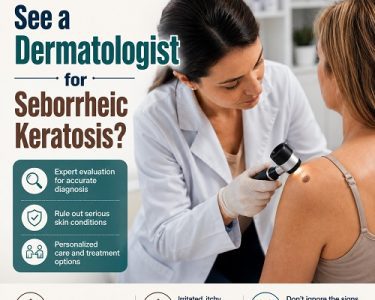
Most seborrheic keratoses do not require treatment. However, a dermatologist should evaluate a growth if it changes noticeably or does not resemble your other lesions.
According to the American Academy of Dermatology, professional evaluation is particularly important if a growth grows quickly, becomes very dark, itches, bleeds, looks different from typical seborrheic keratoses, or appears suddenly along with many other new growths.
Mayo Clinic similarly recommends medical evaluation for suspicious changes, including growths that grow rapidly, bleed, or form sores that do not heal.
Seborrheic Keratosis Symptoms do not automatically mean that the growth is cancerous. They simply mean that it should be examined rather than assumed to be a seborrheic keratosis.
Seborrheic Keratosis vs. Actinic Keratosis
It is useful to understand that seborrheic keratosis and actinic keratosis are different conditions.
Seborrheic keratosis is a benign growth. Actinic keratosis, on the other hand, is a precancerous skin growth associated with accumulated ultraviolet damage and can develop into skin cancer.
Some skin growths can look similar, especially to an untrained eye. A rough or scaly spot that seems unusual should therefore be assessed by a healthcare professional rather than diagnosed at home.
This is one reason regular skin awareness is more useful than trying to prevent every benign growth.
Are Seborrheic Keratoses Dangerous?
In most cases, seborrheic keratoses are harmless and do not require treatment.
They do not spread from person to person, and they are not considered skin cancer.
The main concern is that some seborrheic keratoses can resemble skin cancers or other abnormal growths. When the diagnosis is uncertain, a dermatologist may examine the lesion closely and, when necessary, remove it for microscopic examination.
Therefore, the most important step is not trying to remove every growth but knowing when a lesion needs professional attention.
Natural Remedies for Seborrheic Keratosis
Natural Remedies for Seborrheic Keratosis are often searched for by people who want gentle ways to care for their skin. Seborrheic keratosis is a common, usually harmless skin growth that can appear as a rough, raised, brown, black, or tan spot. Although it generally does not require treatment, proper skin care can help reduce irritation and discomfort.
As part of Seborrheic Keratosis Home Care, keep the affected area clean and moisturized. Avoid scratching, picking, or rubbing the growth because this can cause irritation or bleeding. Using a gentle, fragrance-free moisturizer may help maintain the skin barrier and reduce dryness around the area.
Some people explore natural ingredients such as aloe vera or coconut oil for general skin soothing. However, there is limited scientific evidence that these remedies can remove seborrheic keratosis. Avoid applying strong acids, essential oils, or other irritating substances directly to the growth without professional guidance.
For people seeking removal, Treatment Options for Seborrheic Keratosis may include cryotherapy, curettage, electrosurgery, or other procedures performed by a qualified healthcare professional.
If a growth changes rapidly, bleeds repeatedly, becomes painful, or looks unusual, consult a dermatologist for proper evaluation. Natural skin care can support comfort, but professional assessment is important when a diagnosis is uncertain.
Frequently Asked Questions
Can seborrheic keratosis be completely prevented?
No. There is currently no proven method that can completely prevent seborrheic keratoses. Age and genetics appear to play important roles, and the exact cause remains uncertain.
Does sunscreen prevent seborrheic keratosis?
Sunscreen has not been proven to prevent seborrheic keratoses. However, regular sun protection is strongly recommended for reducing UV-related skin damage and skin-cancer risk.
Can changing my diet stop seborrheic keratoses?
There is no established diet proven to stop seborrheic keratoses from developing. A balanced diet supports general health but should not be considered a specific prevention treatment.
Can I remove seborrheic keratosis at home?
It is best not to remove a suspected seborrheic keratosis yourself. Home removal can cause bleeding, infection, burns, scarring, and other complications. A dermatologist can determine whether removal is necessary and select an appropriate method.
Do seborrheic keratoses become cancerous?
Seborrheic keratoses are benign growths and are not considered skin cancer. However, some suspicious lesions can look similar to skin cancer, so a rapidly changing, bleeding, or unusual growth should be professionally evaluated.
Final Thoughts
If you are searching for ways to prevent seborrheic keratosis, it is important to have realistic expectations. There is currently no guaranteed way to stop these common skin growths from developing. Aging and genetics are important factors, and researchers still do not fully understand their cause.
The most useful approach is to take good care of your skin, practice sensible sun protection, avoid picking or irritating existing growths, and regularly pay attention to changes in your skin. Sun protection is valuable for overall skin health even though it should not be marketed as a proven way to prevent seborrheic keratoses.
If a growth changes quickly, bleeds, becomes unusually itchy, looks different from your other seborrheic keratoses, or simply concerns you, consult a dermatologist. Professional evaluation can help distinguish a typical benign seborrheic keratosis from other skin conditions that may require treatment.