 By
By Many people notice rough, brown skin growths appearing as they get older and wonder whether spending time in the sun is to blame. Since sun exposure is linked to many skin conditions, including wrinkles, sunspots, and skin cancer, it is natural to ask: Can sun exposure cause seborrheic keratosis?
The relationship between seborrheic keratosis sun exposure is more complex than many people think. While these common, non-cancerous skin growths often appear on areas frequently exposed to sunlight, research suggests that ultraviolet (UV) radiation is only one possible contributing factor rather than the direct cause.
What Is Seborrheic Keratosis?
What Is Seborrheic Keratosis? Seborrheic keratosis is a benign (non-cancerous) skin growth that commonly develops in middle-aged and older adults. These growths often look like they are “stuck on” the skin and can vary in:
- Light tan
- Brown
- Dark brown
- Black
They may be:
- Flat or raised
- Smooth or rough
- Waxy
- Wart-like
- Round or oval
Seborrheic keratoses usually develop on the:
- Chest
- Back
- Shoulders
- Face
- Neck
- Scalp
They almost never appear on the palms or soles.
Although harmless, they may become itchy, irritated, or catch on clothing.
Does Sun Exposure Cause Seborrheic Keratosis?
The simple answer is:
No, sun exposure alone is not considered the direct cause of seborrheic keratosis.
However, studies suggest that seborrheic keratosis sun exposure may have an indirect role in some individuals.
Researchers believe seborrheic keratosis develops due to a combination of factors including:
- Aging
- Genetics
- Changes in skin cells
- Long-term UV exposure
- Natural skin aging
Unlike skin cancer, seborrheic keratosis does not develop because of UV damage alone.
Instead, years of sunlight may contribute to skin changes that make these growths more likely to appear.
Why Do Seborrheic Keratoses Often Appear on Sun-Exposed Skin?
One reason people associate these growths with sunlight is that they frequently occur on:
- Face
- Upper chest
- Neck
- Arms
- Shoulders
These body areas receive more UV radiation throughout life.
Scientists believe chronic sun exposure may:
- Accelerate skin aging
- Affect epidermal cell growth
- Trigger abnormal keratin production
- Promote cellular mutations associated with aging
However, seborrheic keratoses also commonly appear on skin that receives very little sunlight, such as:
- Abdomen
- Lower back
- Groin
- Under the breasts
This suggests UV exposure cannot fully explain their development.
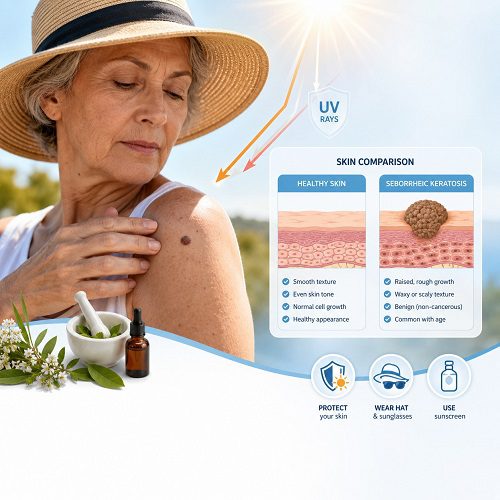
How UV Radiation Affects the Skin
To understand the possible connection, it helps to know what sunlight does to the skin.
Ultraviolet radiation can:
Damage DNA
UV rays damage DNA inside skin cells.
Normally, the body repairs this damage, but years of repeated exposure can lead to lasting cellular changes.
Accelerate Skin Aging
Sunlight breaks down:
- Collagen
- Elastin
This causes:
- Wrinkles
- Sagging
- Age spots
- Uneven pigmentation
These aging changes may create an environment where seborrheic keratoses develop more easily.
Increase Cell Turnover
UV radiation stimulates skin cells to divide more rapidly.
Since seborrheic keratosis results from excess growth of epidermal cells, sunlight may indirectly influence this process.
Cause Pigment Changes
Melanin production increases with UV exposure.
Because seborrheic keratoses often become darker over time, sunlight may make existing lesions appear more noticeable.
What Research Says About Seborrheic Keratosis and Sun Exposure
Current medical research provides mixed findings.
Some studies have found:
- More seborrheic keratoses occur on sun-exposed skin.
- Older adults with lifelong sun exposure may develop more lesions.
- UV radiation may contribute to certain molecular changes.
Other studies found:
- Many lesions occur in protected body areas.
- Genetics appears to play a stronger role.
- Aging remains the most important risk factor.
Overall, dermatologists generally agree that:
Sun exposure may contribute but is unlikely to be the primary cause.
Other Major Causes of Seborrheic Keratosis
1. Aging
Age is the strongest known risk factor.
Seborrheic keratoses become increasingly common after:
- Age 40
- Age 50
- Age 60
Many people eventually develop dozens of these growths.
2. Genetics
Family history is another major contributor.
If one or both parents have numerous seborrheic keratoses, their children are more likely to develop them as well.
Certain inherited genetic mutations appear to influence skin cell growth.
3. Natural Skin Cell Changes
As we age, epidermal cells begin behaving differently.
These cells may:
- Grow faster
- Accumulate pigment
- Form thickened patches
These changes contribute to seborrheic keratosis development.
4. Hormonal Factors
Some people notice new lesions appearing during:
- Pregnancy
- Hormonal changes
- Certain medical Seborrheic Keratosis treatments
Although hormones are not proven causes, they may influence skin growth.
5. Friction
Repeated rubbing from:
- Clothing
- Bras
- Waistbands
- Jewelry
may irritate the skin and contribute to lesion development in susceptible individuals.
Can Sunburn Cause Seborrheic Keratosis?
There is no strong evidence that a single sunburn directly causes seborrheic keratosis.
However:
Repeated severe sunburns increase overall skin damage and premature aging.
This cumulative damage may contribute indirectly over many years.
Does Tanning Increase the Risk?
Artificial tanning beds expose the skin to concentrated ultraviolet radiation.
Frequent tanning can:
- Accelerate skin aging
- Increase pigmentation
- Damage DNA
- Raise skin cancer risk
Although tanning has not been proven to directly cause seborrheic keratosis, avoiding tanning beds is recommended for overall skin health.
Can Existing Seborrheic Keratoses Become Worse in the Sun?
Sunlight does not usually make the growth itself larger.
However, UV exposure can:
- Darken pigmentation
- Make lesions more noticeable
- Increase skin dryness
- Cause temporary irritation
Some people find their lesions itch more after prolonged sun exposure.
Can Sun Exposure Cause Skin Cancer Instead?
This is an important distinction.
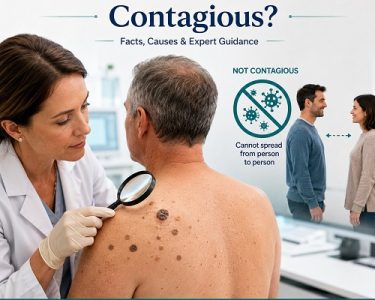
Seborrheic keratosis is not skin cancer.
However, excessive UV exposure significantly increases the risk of:
- Basal cell carcinoma
- Squamous cell carcinoma
- Melanoma
Sometimes early skin cancer resembles seborrheic keratosis.
For this reason, any suspicious new lesion should be examined by a dermatologist.
How to Protect Your Skin from UV Damage
Although sunlight may not directly cause seborrheic keratosis, protecting your skin has many benefits.
Wear Sunscreen
Choose a broad-spectrum sunscreen with:
- SPF 30 or higher
- UVA protection
- UVB protection
Apply:
- 15–30 minutes before going outside
- Reapply every two hours
- Reapply after swimming or sweating
Wear Protective Clothing
Long sleeves, hats, and UV-protective clothing reduce cumulative sun damage.
Wide-brimmed hats help protect:
- Face
- Ears
- Neck
Seek Shade
Avoid direct sunlight between:
10 a.m. and 4 p.m.
when UV radiation is strongest.
Wear Sunglasses
UV-blocking sunglasses protect:
- Eyes
- Eyelids
- Surrounding skin
Avoid Tanning Beds
Indoor tanning exposes the skin to intense ultraviolet radiation and should be avoided.
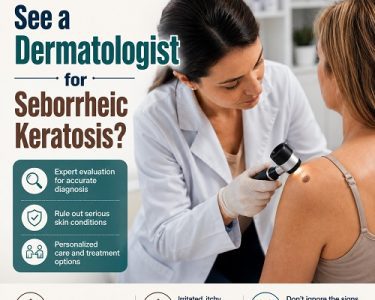
When Should You See a Doctor?
Seborrheic keratoses usually require no treatment.
However, consult a healthcare professional if a lesion:
- Bleeds repeatedly
- Grows rapidly
- Changes color suddenly
- Develops irregular borders
- Becomes painful
- Ulcerates
- Looks significantly different from your other growths
A dermatologist may perform a skin examination or biopsy if there is any uncertainty about the diagnosis.
Can Seborrheic Keratosis Be Prevented?
There is currently no guaranteed way to prevent seborrheic keratosis because aging and genetics play major roles.
However, healthy skin habits may support overall skin health:
- Protect yourself from excessive sun exposure.
- Avoid tanning beds.
- Moisturize regularly.
- Eat a balanced diet rich in antioxidants.
- Stay hydrated.
- Avoid smoking.
- Perform regular skin self-examinations.
While these steps may not completely prevent seborrheic keratoses, they can reduce overall skin damage and help detect concerning skin changes early.
Treatment Options
Most seborrheic keratoses do not require treatment unless they become bothersome.
Common removal methods include:
Cryotherapy
Liquid nitrogen freezes the lesion, causing it to fall off over time.
Curettage
The growth is gently scraped away after numbing the area.
Electrocautery
An electric current removes or destroys the lesion.
Laser Therapy
Certain lasers can remove pigmented or raised seborrheic keratoses with minimal scarring.
Topical Treatments
In selected cases, prescription topical solutions may be used under medical supervision.
Always consult a qualified healthcare provider before attempting to remove a skin growth yourself.
Natural Remedies for Seborrheic Keratosis
Seborrheic keratosis is a common, non-cancerous skin growth that often appears with age. While these growths are generally harmless, many people look for Natural Remedies for Seborrheic Keratosis to help soothe irritation and support overall skin health. It is important to note that natural remedies are not scientifically proven to remove seborrheic keratosis, but they may improve skin comfort and appearance.
One popular approach is applying pure aloe vera gel, which has moisturizing and soothing properties that may help reduce dryness and itching. Coconut oil is another natural option that keeps the skin hydrated and may ease irritation. Some people also use green tea extract because of its antioxidant content, which supports healthy skin.
Maintaining a diet rich in fruits, vegetables, healthy fats, and plenty of water can also promote overall skin wellness. Foods high in vitamins A, C, and E help protect the skin from oxidative stress. Additionally, wearing sunscreen daily can reduce UV-related skin damage and support long-term skin health.
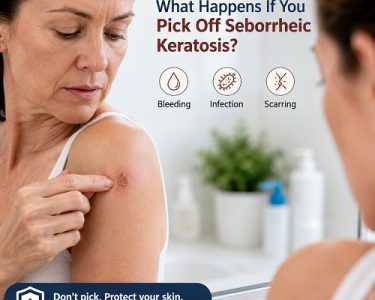
Avoid scratching or picking at seborrheic keratosis, as this can lead to irritation or infection. If a growth changes in size, color, or begins to bleed, consult a dermatologist for proper evaluation. While Natural Remedies for Seborrheic Keratosis may provide supportive care, professional medical advice is recommended for diagnosis and treatment options.
Common Myths About Seborrheic Keratosis and Sun Exposure
Myth: Sun exposure always causes seborrheic keratosis.
Fact: Sun exposure may contribute to skin aging, but aging and genetics are considered the primary Seborrheic Keratosis risk factors.
Myth: Every dark skin growth caused by the sun is seborrheic keratosis.
Fact: Some dark lesions may be skin cancer or other conditions that require medical evaluation.
Myth: Sunscreen completely prevents seborrheic keratosis.
Fact: Sunscreen protects against UV damage but cannot eliminate the effects of aging or inherited risk.
Myth: Seborrheic keratosis turns into skin cancer.
Fact: Seborrheic keratosis is benign and does not transform into skin cancer, though look-alike lesions should be assessed by a dermatologist.
Frequently Asked Questions
Is seborrheic keratosis caused by too much sun?
Not directly. While seborrheic keratosis sun exposure may contribute to skin aging and increase the likelihood of lesions on exposed areas, aging and genetics are believed to be the main Seborrheic Keratosis causes.
Can sunscreen prevent seborrheic keratosis?
Sunscreen helps protect against UV damage and premature aging, but it cannot completely prevent seborrheic keratosis.
Why do I have seborrheic keratosis on areas never exposed to the sun?
This is common and supports the understanding that factors such as genetics and aging are more important than sunlight alone.
Can sunlight make seborrheic keratosis darker?
Yes. UV exposure can increase pigmentation, making existing lesions appear darker or more noticeable.
Should seborrheic keratosis be removed?
Removal is usually optional unless the growth becomes irritated, repeatedly catches on clothing, or there is concern about the diagnosis.
Conclusion
The connection between seborrheic keratosis sun exposure is not as straightforward as many people assume. Although these harmless skin growths often appear on areas that receive years of sunlight, current evidence suggests that sun exposure alone is not the primary cause. Instead, seborrheic keratosis is most strongly associated with aging, inherited genetics, and natural changes in skin cells.
Even so, limiting excessive UV exposure remains an important part of maintaining healthy skin. Wearing broad-spectrum sunscreen, seeking shade, avoiding tanning beds, and performing regular skin checks can reduce cumulative sun damage and support overall skin health. If you notice a new, rapidly changing, bleeding, or unusual skin lesion, seek evaluation from a dermatologist to ensure an accurate diagnosis and appropriate care.