 By
By Seborrheic keratosis is one of the most common non-cancerous skin growths, especially among middle-aged and older adults. Although these growths are harmless, they often cause concern because they can resemble skin cancer or other skin conditions. Understanding seborrheic keratosis symptoms can help you recognise these growths early and know when it is time to seek medical advice.
Seborrheic keratoses usually develop slowly and vary in colour, shape, size, and texture. They may appear anywhere on the body except the palms of the hands and soles of the feet. While most require Treatment for Seborrheic keratoses, changes in appearance or discomfort may warrant a professional evaluation.
What Is Seborrheic Keratosis?
What Is Seborrheic Keratosis? Seborrheic keratosis is a benign skin growth that develops from the outer layer of the skin. These growths are extremely common and tend to appear after the age of 40, although younger adults can develop them as well.
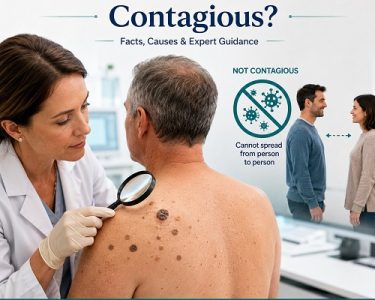
The exact cause remains unknown, but genetics, ageing, and prolonged sun exposure appear to contribute to their development. They are not contagious and cannot spread from one person to another.
Recognising seborrheic keratosis symptoms can help distinguish these harmless lesions from more serious skin conditions.
Common Seborrheic Keratosis Symptoms
The appearance of seborrheic keratosis varies considerably from one person to another. However, several characteristic features make identification easier.
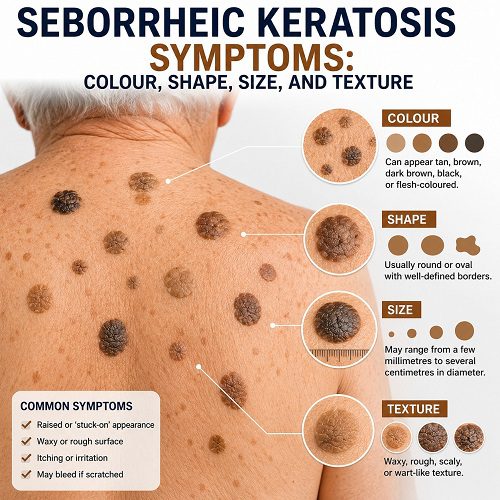
The most common symptoms include:
- Raised skin growths
- Waxy or rough surface
- Brown, black, tan, yellow, or flesh-coloured appearance
- Round or oval shape
- Well-defined borders
- Slight itching
- Mild irritation from clothing
- Gradual enlargement over time
- Single or multiple lesions
Each of these symptoms can differ depending on the individual’s skin type and age.
Colour of Seborrheic Keratosis
Colour is one of the easiest ways to identify seborrheic keratosis.
These growths may appear in several different shades, including:
- Light tan
- Yellow
- Brown
- Dark brown
- Black
- Grey
- Flesh-coloured
It is common for different growths on the same person to have different colours.
Early Lesions
New growths often begin as:
- Light brown spots
- Yellowish patches
- Small tan bumps
At this stage, they may resemble freckles or age spots.
Mature Lesions
As the growth develops, it usually becomes:
- Darker
- Thicker
- More raised
Some lesions become nearly black, which can sometimes resemble melanoma.
Because colour alone cannot diagnose a skin lesion, any rapidly changing or unusually coloured growth should be examined by a healthcare professional.
Shape of Seborrheic Keratosis
Another key aspect of seborrheic keratosis symptoms is the distinctive shape.
Most lesions are:
- Round
- Oval
- Slightly irregular
Their borders are usually:
- Clearly defined
- Well separated from surrounding skin
- Easy to distinguish
Unlike some skin cancers, seborrheic keratoses generally have neat edges rather than blurred borders.
Many people describe them as looking as though they have been “stuck onto” the surface of the skin.
This “stuck-on” appearance is one of their most recognisable features.
Size of Seborrheic Keratosis
Seborrheic keratoses vary greatly in size.
They may be:
- As small as 1 millimetre
- Several centimetres wide
Most commonly they measure between:
- 5 mm
- 2 cm
Some lesions continue growing slowly over many years.
Large growths may become:
- More noticeable
- More raised
- More likely to catch on clothing
Large lesions remain benign in most cases, but sudden rapid enlargement should always be assessed medically.
Texture of Seborrheic Keratosis
Texture is perhaps the most distinctive feature of seborrheic keratosis.
Common textures include:
Waxy
Many lesions have a wax-like appearance that resembles melted candle wax.
Rough
Others feel rough or uneven when touched.
Scaly
Some develop a flaky outer layer that peels slightly.
Velvety
Early lesions may feel soft and velvety.
Wart-Like
Older lesions often become thick and resemble common warts.
Although they may appear alarming, these textures are typical seborrheic keratosis symptoms.
Raised Appearance
Unlike freckles or flat age spots seborrheic keratoses are usually elevated.
The degree of elevation varies.
Some are:
- Slightly raised
- Dome-shaped
Others become:
- Thick
- Bulky
- Prominent
This raised appearance often causes clothing or jewellery to rub against the lesion.
Surface Features
The surface often contains:
- Tiny pits
- Cracks
- Fissures
- Small bumps
Some lesions have a crumbly surface.
Others contain tiny white cyst-like structures that dermatologists can see using a dermatoscope.
These features help distinguish seborrheic keratosis from melanoma and other skin conditions.
Itching
Although many growths cause no symptoms, mild itching is common.
People often notice itching when:
- The lesion becomes dry
- Clothing rubs against it
- Skin becomes irritated
Persistent itching does not necessarily indicate cancer but should still be discussed with a healthcare provider.
Irritation and Tenderness
Seborrheic keratoses can become irritated when located where friction occurs.
Common problem areas include:
- Neck
- Waistline
- Under the breasts
- Back
- Groin
- Shoulders
Friction from:
- Bras
- Waistbands
- Backpacks
- Necklaces
can make the lesion sore.
Inflamed lesions may become:
- Red
- Tender
- Swollen
Bleeding
Normally, seborrheic keratoses do not bleed.
However, bleeding may occur if the lesion:
- Is scratched
- Gets caught on clothing
- Is accidentally shaved
Repeated bleeding without obvious injury should always be evaluated by a doctor.
Multiple Growths
One of the classic seborrheic keratosis symptoms is the appearance of multiple lesions.
Many people develop:
- A few growths
- Dozens of growths
- Hundreds over time
These usually appear gradually over several years.
Common Locations
Seborrheic keratoses can occur almost anywhere except:
- Palms
- Soles
The most common locations include:
- Chest
- Back
- Face
- Neck
- Shoulders
- Scalp
- Abdomen
- Arms
Less commonly they develop on the legs.
How Seborrheic Keratosis Changes Over Time
The growth usually develops slowly.
Typical progression includes:
Stage One
Small:
- Flat
- Light brown
- Smooth spot
Stage Two
The lesion gradually becomes:
- Raised
- Darker
- More noticeable
Stage Three
Eventually it develops:
- Thick waxy surface
- Rough texture
- Well-defined border
This process may take several years.
Symptoms That Are Usually Not Present
Seborrheic keratosis generally does not cause:
- Severe pain
- Fever
- Spreading infection
- Ulceration
- Continuous bleeding
- Deep skin damage
If these symptoms occur, another skin condition may be responsible.
Seborrheic Keratosis vs Skin Cancer
Seborrheic Keratosis vs Skin Cancer, Many people confuse seborrheic keratosis with melanoma because both may appear dark.
However, there are important differences.
| Seborrheic Keratosis | Melanoma |
| Waxy surface | Usually smooth or irregular |
| Stuck-on appearance | Grows within the skin |
| Well-defined borders | Irregular borders |
| Slow growth | Often changes quickly |
| Usually harmless | Potentially dangerous |
Even experienced clinicians occasionally perform a biopsy when the diagnosis is uncertain.
Never attempt to diagnose skin cancer yourself.
When Should You See a Doctor?
Although seborrheic keratosis is harmless, medical evaluation is recommended if a lesion:
- Changes colour rapidly
- Develops irregular borders
- Bleeds repeatedly
- Grows very quickly
- Becomes painful
- Ulcerates
- Looks significantly different from your other growths
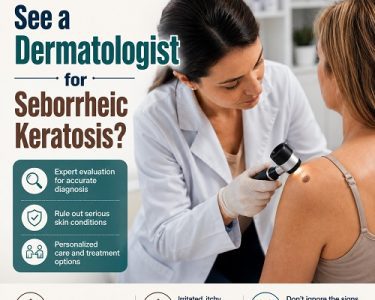
A dermatologist can usually diagnose the condition through a physical examination.
Occasionally, a biopsy is performed to rule out skin cancer.
Diagnosis
Doctors diagnose seborrheic keratosis by examining:
- Colour
- Texture
- Border
- Thickness
- Surface pattern
A dermatoscope often reveals tiny characteristic structures that confirm the diagnosis.
If uncertainty remains, a small skin sample may be removed for laboratory testing.
Treatment
Seborrheic Keratosis Treatment is not medically necessary unless the lesion becomes:
- Irritated
- Symptomatic
- Cosmetically bothersome
Common removal options include:
Cryotherapy
Liquid nitrogen freezes the lesion until it falls off.
Curettage
The growth is gently scraped away after local anaesthesia.
Electrocautery
Electric current removes the lesion while controlling bleeding.
Laser Therapy
Some dermatologists use lasers for cosmetic removal.
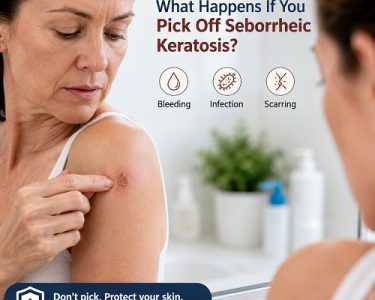
Do not attempt to remove seborrheic keratoses at home, as this can lead to infection, scarring, or delayed diagnosis of a more serious condition.
Can Seborrheic Keratosis Be Prevented?
There is no guaranteed way to prevent seborrheic keratosis because genetics and ageing play major roles.
However, maintaining healthy skin may help reduce overall skin damage.
Helpful measures include:
- Wearing sunscreen daily
- Avoiding excessive Seborrheic Keratosis Sun Exposure
- Performing regular skin checks
- Keeping skin moisturised
- Seeing a dermatologist for new or changing lesions
Living with Seborrheic Keratosis
Most people live comfortably with seborrheic keratoses for decades without complications. Since these growths are benign, they do not become cancerous in the vast majority of cases. If they do not cause discomfort or cosmetic concerns, no treatment is usually required.
Regular self-examinations can help you become familiar with your skin. If you notice a lesion that looks different from your usual seborrheic keratoses or develops unusual symptoms, arrange an assessment with a healthcare professional for reassurance and appropriate care.
Frequently Asked Questions
Are seborrheic keratoses painful?
Most are painless. However, irritation from friction, scratching, or clothing may cause temporary soreness or tenderness.
Can seborrheic keratosis itch?
Yes. Mild itching is a common symptom, particularly if the lesion becomes dry or irritated.
Do seborrheic keratoses continue to grow?
They often enlarge slowly over many years, although the rate of growth varies between individuals.
Can they appear suddenly?
Some people notice several lesions developing over a relatively short period, especially as they age. A sudden eruption of numerous growths should be assessed by a doctor, as it may occasionally be associated with an underlying medical condition.
Are they contagious?
No. Seborrheic keratosis cannot spread from person to person through touch or close contact.
Conclusion
Recognising seborrheic keratosis symptoms is the first step towards distinguishing these common, harmless skin growths from more serious conditions. Typical features include a waxy or rough texture, a well-defined “stuck-on” appearance, colours ranging from tan to black, and slow, gradual growth. They may itch or become irritated but are generally painless and non-cancerous.
While most seborrheic keratoses do not require treatment, any lesion that changes rapidly, bleeds without injury, becomes painful, or looks significantly different from your other skin growths should be examined by a healthcare professional. Early evaluation ensures an accurate diagnosis and provides peace of mind while helping to rule out skin cancer.