
 By
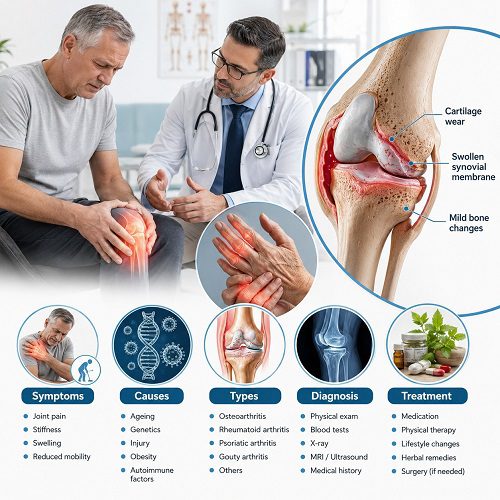
By Arthritis is one of the most common health conditions affecting millions of people worldwide. It is not a single disease but a term used to describe more than 100 different conditions that affect the joints and surrounding tissues. Arthritis can cause pain, stiffness, swelling, and reduced mobility, making everyday activities difficult. Although it is more common in older adults, arthritis can affect people of all ages, including children.
Early recognition of arthritis symptoms and prompt medical care can help slow disease progression, reduce pain, and improve quality of life. Modern treatments, healthy lifestyle choices, and physical therapy enable many people with arthritis to remain active and independent.
What is Arthritis?
Arthritis refers to inflammation or damage within one or more joints. A joint is where two bones meet, allowing movement. When arthritis develops, the protective cartilage, surrounding tissues, or immune system become affected, leading to pain and stiffness.
Some forms of arthritis mainly result from wear and tear, while others occur because the immune system mistakenly attacks healthy joint tissues. Certain types develop following infections or metabolic disorders.
Arthritis may affect:
- Knees
- Hips
- Arthritis Pain in Hands
- Fingers
- Feet
- Ankles
- Spine
- Shoulders
- Wrists
- Elbows
Symptoms may appear gradually over several years or suddenly within days, depending on the underlying condition.
Arthritis Symptoms
Recognising arthritis symptoms early allows treatment to begin before significant joint damage occurs. Symptoms vary according to the specific type of arthritis, but many people experience similar warning signs.
Joint Pain
Persistent joint pain is usually the earliest symptom. Pain may occur:
- During movement
- After activity
- At rest
- During the night
Initially, pain may come and go before becoming more frequent.
Joint Stiffness
Morning stiffness lasting longer than 30 minutes may suggest inflammatory arthritis such as rheumatoid arthritis.
People with osteoarthritis often experience stiffness after sitting for long periods.
Swelling
Inflamed joints may become swollen due to fluid accumulation and tissue inflammation. Swelling can make joints appear larger than normal.
Reduced Range of Motion
People may find it increasingly difficult to:
- Bend knees
- Grip objects
- Climb stairs
- Turn door handles
- Lift items overhead
Reduced flexibility often worsens over time if untreated.
Tenderness
Affected joints may feel painful when touched or pressed.
Redness and Warmth
Inflammatory arthritis often causes skin over the joint to become:
- Warm
- Red
- Tender
Fatigue
Many autoimmune forms of arthritis cause:
- Extreme tiredness
- Low energy
- Difficulty concentrating
Fatigue often results from ongoing inflammation throughout the body.
Muscle Weakness
Pain often leads to reduced activity, causing surrounding muscles to weaken.
Joint Deformity
Advanced arthritis may permanently change joint shape, especially when treatment is delayed.
Arthritis Causes
Understanding arthritis causes helps identify risk factors and improve prevention strategies.
Different forms of arthritis have different causes.
Ageing
Normal wear and tear gradually damages cartilage over many years. This commonly leads to osteoarthritis.
Autoimmune Disorders
In rheumatoid arthritis, psoriatic arthritis, and juvenile idiopathic arthritis, the immune system attacks healthy joint tissue by mistake.
This ongoing inflammation damages cartilage and bone.
Joint Injury
Sports injuries, fractures, or previous accidents increase the likelihood of developing arthritis later in life.
Genetics
Some inherited genes increase susceptibility to autoimmune arthritis or osteoarthritis.
Having a close family member with arthritis raises your risk.
Obesity
Excess body weight places additional pressure on weight-bearing joints such as:
- Knees
- Hips
- Ankles
Obesity also promotes inflammation throughout the body.
Infection
Certain bacterial or viral infections can trigger arthritis.
Examples include:
- Lyme disease
- Septic arthritis
- Viral infections
Metabolic Problems
Gout develops when excess uric acid forms crystals inside joints.
These sharp crystals trigger sudden episodes of severe inflammation.
Occupational Stress
Jobs involving repetitive movements, kneeling, heavy lifting, or prolonged standing may increase arthritis risk.
Smoking
Smoking increases the risk of rheumatoid arthritis and may reduce treatment effectiveness.
Types of Arthritis
More than 100 forms exist, but several account for most cases.
Osteoarthritis
Osteoarthritis is the most common type.
It develops when cartilage gradually wears away.
Commonly affected joints include:
- Knees
- Hips
- Hands
- Spine
Symptoms include:
- Pain during activity
- Mild swelling
- Reduced flexibility
- Joint cracking
Risk factors include:
- Age
- Obesity
- Previous injury
- Family history
Rheumatoid Arthritis
Rheumatoid arthritis is an autoimmune disease.
The immune system attacks the lining of joints, causing chronic inflammation.
Common symptoms include:
- Symmetrical joint pain
- Morning stiffness
- Swollen hands
- Fatigue
- Weight loss
Without treatment, rheumatoid arthritis may damage:
- Bones
- Tendons
- Ligaments
- Internal organs
Psoriatic Arthritis
Some people with psoriasis develop psoriatic arthritis.
Symptoms include:
- Joint pain
- Swollen fingers
- Nail changes
- Skin plaques
- Heel pain
Early treatment helps prevent permanent joint damage.
Gout
Gout occurs when uric acid crystals accumulate inside joints.
It often affects the big toe.
Symptoms include:
- Sudden severe pain
- Redness
- Swelling
- Warmth
Attacks usually begin overnight.
Ankylosing Spondylitis
This inflammatory arthritis mainly affects the spine.
Symptoms include:
- Chronic lower back pain
- Morning stiffness
- Reduced spinal flexibility
Severe cases may cause spinal bones to fuse together.
Juvenile Idiopathic Arthritis
Children under 16 years may develop juvenile idiopathic arthritis.
Symptoms include:
- Swollen joints
- Limping
- Fever
- Rash
- Eye inflammation
Early treatment improves long-term outcomes.
Reactive Arthritis
Reactive arthritis develops after infections involving:
- Urinary tract
- Intestines
- Genital tract
Symptoms may include:
- Joint pain
- Eye irritation
- Urinary symptoms
Septic Arthritis
This serious condition develops when bacteria infect a joint.
Symptoms include:
- Severe pain
- Fever
- Redness
- Inability to move the joint
Emergency treatment is essential.
Risk Factors for Arthritis
Several factors increase the likelihood of developing arthritis.
These include:
- Increasing age
- Female sex (for some types)
- Family history
- Obesity
- Previous joint injuries
- Smoking
- Repetitive occupational activities
- Certain autoimmune diseases
- Metabolic disorders
- Physical inactivity
Having one or more risk factors does not necessarily mean arthritis will develop, but awareness encourages earlier evaluation and healthier lifestyle choices.
Arthritis Diagnosis
Accurate arthritis diagnosis is essential because treatment depends on the specific type of arthritis. Doctors combine medical history, physical examination, imaging, and laboratory tests to identify the underlying cause of joint symptoms.
Medical History
Your healthcare provider will ask about:
- When symptoms started
- Which joints are affected
- Whether symptoms are constant or intermittent
- Morning stiffness
- Previous injuries
- Family history of arthritis
- Other medical conditions
- Current medications
These details help narrow down the possible diagnosis.
Physical Examination
During the examination, the doctor checks for:
- Joint swelling
- Tenderness
- Warmth
- Redness
- Range of motion
- Muscle strength
- Joint deformities
- Walking pattern (gait)
The pattern of affected joints can provide important clues about the type of arthritis.
Blood Tests
Blood tests can help detect inflammation or autoimmune disease. Common tests include:
- Complete blood count (CBC)
- Erythrocyte sedimentation rate (ESR)
- C-reactive protein (CRP)
- Rheumatoid factor (RF)
- Anti-cyclic citrullinated peptide (Anti-CCP)
- Antinuclear antibody (ANA)
- Uric acid levels
These tests support the diagnosis but are interpreted alongside symptoms and examination findings.
Imaging Tests
Imaging allows doctors to assess joint damage and inflammation.
X-rays
X-rays can reveal:
- Cartilage loss
- Bone spurs
- Joint space narrowing
- Bone damage
They are commonly used to diagnose osteoarthritis.
Ultrasound
Ultrasound can detect:
- Joint fluid
- Inflamed tissues
- Tendon problems
- Early inflammation
MRI Scan
MRI provides detailed images of:
- Cartilage
- Ligaments
- Tendons
- Bone marrow
- Soft tissues
It is especially useful for diagnosing inflammatory arthritis at an early stage.
Joint Fluid Analysis
If a joint is swollen, the doctor may remove a small sample of synovial fluid using a needle. The sample is examined for:
- Infection
- Uric acid crystals (gout)
- Inflammatory cells
This test helps distinguish between different forms of arthritis.
Arthritis Treatment
The goal of arthritis treatment is to relieve pain, reduce inflammation, protect joints, improve mobility, and maintain independence. Treatment varies depending on the type and severity of arthritis and often involves a combination of approaches.
Medications
Doctors may prescribe:
- Pain relievers, such as paracetamol
- Non-steroidal anti-inflammatory drugs (NSAIDs)
- Topical pain relief creams or gels
- Corticosteroids for severe inflammation
- Disease-modifying antirheumatic drugs (DMARDs) for rheumatoid arthritis
- Biologic therapies for autoimmune arthritis
- Medicines to lower uric acid levels in gout
Always take medications exactly as prescribed and discuss potential side effects with your healthcare provider.
Physical Therapy
A physiotherapist can design a personalised exercise programme to:
- Improve joint flexibility
- Strengthen muscles
- Reduce pain
- Improve balance
- Increase endurance
Regular therapy helps many people remain active.
Occupational Therapy
An occupational therapist teaches strategies to reduce joint strain during everyday activities. They may recommend:
- Ergonomic tools
- Joint protection techniques
- Assistive devices
- Home or workplace modifications
Regular Exercise
Exercise is one of the most effective long-term treatments for arthritis. Suitable activities include:
- Walking
- Swimming
- Cycling
- Water aerobics
- Tai Chi
- Yoga
- Gentle stretching
Exercise helps maintain healthy joints without placing excessive stress on them.
Weight Management
Maintaining a healthy weight reduces pressure on weight-bearing joints.
Even modest weight loss can significantly reduce knee pain in people with osteoarthritis.
Heat and Cold Therapy
Heat can help:
- Relax muscles
- Ease stiffness
- Improve circulation
Cold therapy can:
- Reduce swelling
- Numb painful areas
- Calm inflammation
Alternating between heat and cold may provide additional relief for some people.
Joint Supports
Braces, splints, shoe inserts, or walking aids may improve stability and reduce pain during daily activities.
Surgery
Surgery may be considered when other treatments no longer provide adequate relief.
Options include:
- Arthroscopy
- Joint realignment (osteotomy)
- Joint fusion
- Partial joint replacement
- Total joint replacement
Hip and knee replacements often provide excellent pain relief and restore mobility for people with severe joint damage.
Natural & Herbal Support
Living with arthritis can make everyday activities more challenging, but natural approaches may help support joint health alongside a healthy lifestyle. A Joint Support Herbal Supplement for Arthritis is designed to provide botanical ingredients that may help maintain joint comfort, flexibility, and mobility. While herbal supplements are not a cure for arthritis, they can complement conventional care when used responsibly.
Many herbal formulations contain ingredients such as turmeric, boswellia, ginger, and ashwagandha, which are known for their antioxidant and anti-inflammatory properties. These herbs may help reduce occasional joint stiffness and support healthy joint function. Choosing a high-quality Joint Support Herbal Supplement for Arthritis made with standardised herbal extracts can provide consistent quality and effectiveness.
In addition to herbal supplementation, maintaining a healthy weight, engaging in low-impact exercise, eating a balanced diet rich in omega-3 fatty acids, and getting adequate rest are all important for long-term joint health. These lifestyle habits work together to promote flexibility and reduce stress on the joints.
Before starting any herbal supplement, it is advisable to consult a healthcare professional, especially if you are pregnant, breastfeeding, taking prescription medications, or managing a chronic medical condition. With the right combination of natural support and healthy habits, many people can better manage arthritis symptoms and improve their overall quality of life.
Lifestyle Changes for Arthritis
Healthy lifestyle habits can complement medical treatment and improve long-term outcomes.
Helpful changes include:
- Staying physically active
- Eating a balanced diet rich in fruits, vegetables, whole grains, and lean protein
- Maintaining a healthy weight
- Getting adequate sleep
- Managing stress through relaxation techniques
- Stopping smoking
- Limiting alcohol intake
- Protecting joints during repetitive activities
Consistency is key, as small daily improvements often lead to meaningful benefits over time.
Can Arthritis Be Prevented?
Although not every type of arthritis can be prevented, certain steps may lower the risk or delay progression.
These include:
- Maintaining a healthy body weight
- Exercising regularly
- Avoiding smoking
- Preventing joint injuries by using protective equipment
- Treating infections promptly
- Following a nutritious diet
- Managing chronic health conditions such as diabetes or high cholesterol
For people with a family history of arthritis, regular medical check-ups may help identify problems early.
When Should You See a Doctor?
Seek medical advice if you experience:
- Joint pain lasting longer than a few weeks
- Persistent swelling
- Morning stiffness lasting more than 30 minutes
- Difficulty performing daily tasks
- Red, hot, or swollen joints
- Fever with joint pain
- Sudden severe pain in a joint
- Progressive loss of movement
Early diagnosis and treatment can help preserve joint function and reduce the risk of long-term complications.
Frequently Asked Questions
Is arthritis a normal part of ageing?
No. While ageing increases the risk of some forms of arthritis, it is not an inevitable part of growing older. Many people age without developing arthritis.
Can arthritis be cured?
Most forms of arthritis cannot currently be cured. However, many treatments can effectively control symptoms, reduce inflammation, and slow disease progression.
Does exercise make arthritis worse?
Appropriate exercise usually improves arthritis symptoms by strengthening muscles and maintaining joint flexibility. High-impact activities may need to be modified depending on the type and severity of arthritis.
Which foods are good for arthritis?
A balanced diet that includes oily fish, vegetables, fruits, whole grains, nuts, seeds, and olive oil may support overall joint health and reduce inflammation.
Can young people develop arthritis?
Yes. Arthritis can affect children, teenagers, and young adults. Juvenile idiopathic arthritis is one example of arthritis that develops during childhood.
Conclusion
Arthritis is a broad group of conditions that can affect people of all ages, causing joint pain, stiffness, swelling, and reduced mobility. Recognising arthritis symptoms early and understanding arthritis causes can help individuals seek timely medical care before significant joint damage occurs.
With more than 100 types of arthritis, an accurate arthritis diagnosis is essential to determine the most appropriate treatment plan. Advances in arthritis treatment, including medications, physical therapy, lifestyle changes, and, when necessary, surgery, have greatly improved outcomes for many people.
Although arthritis often requires ongoing management, early intervention, regular exercise, maintaining a healthy weight, and working closely with healthcare professionals can help reduce pain, protect joint function, and support an active, fulfilling life.