 By
Atrial fibrillation (AFib) is a common heart rhythm disorder that causes the upper chambers of the heart to beat irregularly. Although some people experience symptoms such as a racing heartbeat, fatigue, dizziness, or shortness of breath, others may have atrial fibrillation without noticing any symptoms.
One of the most important complications of this condition is an increased risk of stroke. This is why healthcare professionals may prescribe blood-thinning medications to eligible patients.
Blood thinners for atrial fibrillation help reduce the risk of blood clots forming and traveling to the brain, where they can cause a stroke. These medications are an important part of Atrial Fibrillation stroke prevention, but they are not necessary for every person with AFib. The decision depends on individual stroke risk, bleeding risk, other medical conditions, and the type of medication that is most appropriate. How blood thinners work, which medications are commonly prescribed, their benefits and potential side effects, and how patients can take them safely.
What Is Atrial Fibrillation?
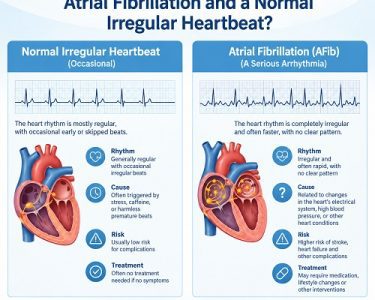
Atrial fibrillation is an abnormal heart rhythm in which the electrical signals controlling the upper chambers of the heart become disorganized. Instead of contracting in a coordinated way, the atria quiver or beat irregularly.
This irregular activity can interfere with the movement of blood through the heart. In some patients, blood may remain relatively stagnant in a small pouch called the left atrial appendage. When blood flow slows, a blood clot may form.
If a clot leaves the heart and travels through the bloodstream to an artery supplying the brain, it can block blood flow and cause an ischemic stroke.
According to the US Centers for Disease Control and Prevention (CDC), atrial fibrillation is associated with approximately five times the risk of ischemic stroke after accounting for standard stroke risk factors. AFib-related strokes can also be particularly serious.
Common risk factors for atrial fibrillation and its complications include:
- Older age.
- High blood pressure.
- Diabetes.
- Heart failure.
- Previous stroke or transient ischemic attack (TIA).
- Vascular disease.
- Certain heart valve conditions.
- Obesity and other cardiovascular risk factors.
Not everyone with atrial fibrillation has the same risk of stroke. Doctors evaluate each patient’s circumstances before recommending preventive treatment.
What Are Blood Thinners Used for in Atrial Fibrillation?
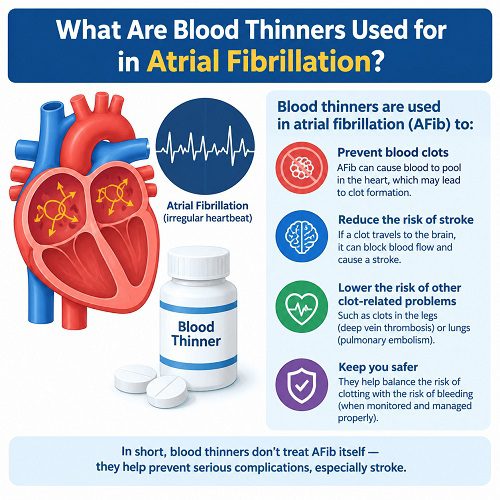
The primary purpose of blood thinners in atrial fibrillation is to prevent blood clots that can cause a stroke or other blood vessel blockage.
Despite their common name, blood thinners do not literally make the blood thinner. Instead, they interfere with the body’s clotting process, making it less likely that a dangerous clot will form.
The main reasons doctors prescribe these medications include the following.
1. Preventing AFib-related strokes
Stroke prevention is the most important reason to prescribe anticoagulants for Atrial Fibrillation.
When a clot forms in the heart and travels to the brain, it may block an artery and damage brain tissue. Anticoagulant medications reduce the likelihood of clot formation and, consequently, lower the risk of many AFib-related ischemic strokes.
The benefit is particularly important for patients with additional stroke risk factors, such as older age, hypertension, diabetes, or a history of stroke.
2. Reducing the risk of systemic embolism
Blood clots originating in the heart can travel to other parts of the body, not just the brain. If a clot blocks an artery elsewhere, it can damage organs or tissues.
Anticoagulants reduce the risk of these events, which are collectively known as systemic embolism.
3. Providing long-term protection
Atrial fibrillation may occur in episodes, persist for extended periods, or become a permanent condition. Blood clot risk is assessed according to the patient’s underlying risk factors rather than simply how often Atrial Fibrillation symptoms occur.
Someone whose AFib comes and goes may still need anticoagulation if their stroke risk warrants it. Similarly, successful Atrial Fibrillation treatment of the heart rhythm does not automatically mean that blood thinners can be stopped.
Current US guidelines recommend regular reassessment of stroke risk, bleeding risk, medication choice, and dosing.
How Do Blood Thinners Work?
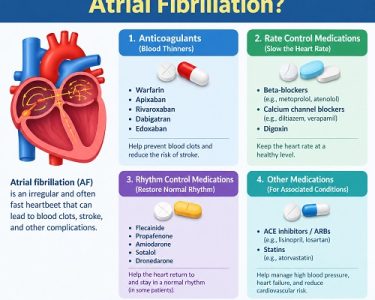
Blood-thinning medications used in atrial fibrillation are generally called anticoagulants. They target specific parts of the blood-clotting process.
There are two main groups of oral anticoagulants.
Direct oral anticoagulants (DOACs)
DOACs act on specific proteins involved in blood clot formation. Some block factor Xa, while another blocks thrombin, also known as factor IIa.
By interfering with these clotting factors, DOACs reduce the blood’s ability to form harmful clots.
They are widely used because they have predictable effects, usually do not require routine INR blood testing, and have fewer food interactions than warfarin.
Vitamin K antagonists
Warfarin is a vitamin K antagonist. It reduces the liver’s ability to produce several clotting factors that depend on vitamin K.
Warfarin is effective for stroke prevention but requires regular blood tests to measure the international normalized ratio (INR). This helps healthcare professionals determine whether its anticoagulant effect is within the prescribed range.
Both groups can help prevent dangerous clots, but they differ in how they work, how they are monitored, and which patients should receive them.
Which Blood Thinners Are Commonly Used for Atrial Fibrillation?
The choice of medication depends on factors such as kidney function, age, other Atrial Fibrillation medicines, bleeding history, heart valve conditions, and affordability.
Common options include the following.
| Medication | Type | Important information |
| Apixaban (Eliquis) | DOAC | Factor Xa inhibitor; usually taken twice daily. |
| Rivaroxaban (Xarelto) | DOAC | Factor Xa inhibitor; the AFib dose is generally taken once daily with food. |
| Dabigatran (Pradaxa) | DOAC | Direct thrombin inhibitor; usually taken twice daily. |
| Edoxaban (Savaysa/Lixiana) | DOAC | Factor Xa inhibitor; generally taken once daily. |
| Warfarin (Coumadin/Jantoven) | Vitamin K antagonist | Requires INR monitoring and attention to medication and dietary interactions. |
Dosing and product availability vary by country and individual circumstances. This table is for general education, not a prescribing guide.
For many patients with AFib who are eligible for anticoagulation, guidelines recommend a DOAC over warfarin. However, warfarin remains important for certain patients, particularly those with mechanical heart valves or moderate-to-severe rheumatic mitral stenosis.
A clinician should determine which medication is suitable and prescribe the correct dose. Patients should never switch anticoagulants or adjust their doses without medical guidance.
Who Needs Blood Thinners for Atrial Fibrillation?
Not everyone diagnosed with Atrial Fibrillation needs anticoagulation. Doctors estimate each patient’s risk of stroke and balance the expected benefit of treatment against the possibility of serious bleeding.
One commonly used assessment is the CHA₂DS₂-VASc score. It considers factors such as:
- Congestive heart failure.
- Hypertension.
- Age, with greater weight given to age 75 or older.
- Diabetes.
- Previous stroke, TIA, or systemic embolism.
- Vascular disease.
- Age between 65 and 74.
- Sex category.
The score helps clinicians estimate stroke risk and guide treatment discussions. Recommendations vary according to the estimated annual risk, the scoring system used, and the patient’s individual circumstances.
Under the 2023 US ACC/AHA/ACCP/HRS guideline, anticoagulation is recommended for patients with AFib whose estimated annual risk of thromboembolism is at least 2%. It is also considered reasonable for some patients at intermediate risk.
Doctors also consider factors that may increase bleeding risk, including previous major bleeding, kidney or liver disease, uncontrolled hypertension, and medications that increase bleeding.
Importantly, a bleeding risk score should not automatically exclude someone from anticoagulation. Instead, it helps clinicians identify modifiable risks and make an informed treatment decision.
Benefits and Risks of Anticoagulants for Atrial Fibrillation
The main benefit of anticoagulation is a reduced risk of AFib-related stroke and systemic embolism. For patients at sufficiently high stroke risk, this benefit can outweigh the risk of bleeding.
However, anticoagulants do not eliminate all stroke risk, and they can cause unwanted bleeding.
Potential benefits
- Lower risk of many AFib-related ischemic strokes.
- Lower risk of systemic embolism.
- Effective long-term stroke prevention when appropriately prescribed and taken.
- Predictable anticoagulation with DOACs for many eligible patients.
- Fewer food interactions and no routine INR monitoring with most DOACs.
Possible risks and side effects
The most important risk is bleeding. This can range from minor bruising or nosebleeds to gastrointestinal bleeding or, rarely, bleeding inside the skull.
Other potential concerns include:
- Heavier menstrual bleeding.
- Blood in the urine.
- Prolonged bleeding from cuts.
- Drug interactions.
- Dose-related complications, particularly when kidney function changes.
- Increased bleeding risk during certain procedures or after injuries.
A doctor can help reduce avoidable risks by reviewing medications, checking kidney function when appropriate, prescribing the correct dose, and arranging follow-up.
Are Blood Thinners Better Than Aspirin for AFib?
Aspirin is an antiplatelet medicine, not an anticoagulant. It works differently from the medications commonly prescribed for AFib-related stroke prevention.
Although aspirin may be prescribed for certain cardiovascular conditions, it is generally not an appropriate substitute for anticoagulation when a patient with AFib needs stroke-prevention treatment.
The 2023 ACC/AHA/ACCP/HRS guideline advises against using aspirin alone, or aspirin combined with clopidogrel, as an alternative to anticoagulation in eligible AFib patients who have no separate indication for antiplatelet therapy.
This does not mean aspirin is never appropriate. Some people need antiplatelet treatment for other reasons, such as particular coronary artery conditions. However, combining aspirin with an anticoagulant may increase bleeding risk, so the combination should be used only when clinically indicated.
Never replace a prescribed blood thinner with aspirin without consulting your healthcare professional.
How Can You Take Blood Thinners Safely?
Taking anticoagulants correctly is essential for effective stroke prevention. The following precautions can help patients reduce complications.
1. Take your medication exactly as prescribed
Follow your prescribed dose and schedule. Some anticoagulants are taken once daily, while others are taken twice daily.
If you miss a dose, follow the instructions provided for your specific medication or contact your pharmacist. Do not double your next dose unless your healthcare professional explicitly instructs you to do so.
2. Tell your healthcare professional about other medicines
Some medicines can increase bleeding risk or interfere with anticoagulants.
These include certain painkillers, nonsteroidal anti-inflammatory drugs (NSAIDs), antiplatelet medications, and some prescription drugs and supplements.
Tell your doctor or pharmacist about all medications, vitamins, herbal products and over-the-counter Natural Remedies for Atrial Fibrillation you use. Do not stop prescribed medicines independently.
3. Attend recommended blood tests and checkups
Warfarin requires regular INR monitoring to keep its effect within the prescribed range.
DOACs generally do not require routine INR monitoring, but patients may still need periodic assessments of kidney function, blood count, liver function when indicated, medication interactions, and overall bleeding risk.
The frequency of follow-up depends on the medication and the patient’s health.
4. Be careful with injuries
Anticoagulants can make bleeding harder to control. Use appropriate protective equipment during activities and discuss contact sports or activities with a high risk of injury with your healthcare professional.
Seek urgent medical assessment after a significant head injury, even if you initially feel well.
5. Inform healthcare professionals before procedures
Always tell your dentist, surgeon, and other healthcare professionals that you take an anticoagulant before surgery, dental treatment, or an invasive procedure.
Some procedures require a temporary change in treatment, while others do not. The decision depends on the procedure, the anticoagulant, kidney function, and the risk of clotting if treatment is interrupted.
Do not stop blood thinners on your own, because doing so may increase the risk of stroke.
6. Follow appropriate dietary guidance
People taking warfarin generally need to maintain a reasonably consistent intake of vitamin K-rich foods, such as spinach, kale, and broccoli. They do not usually need to avoid these foods completely.
Sudden major changes in diet can affect INR levels. Ask your healthcare professional how to manage dietary changes safely.
DOACs do not have the same vitamin K-related dietary interactions as warfarin, although other food and medication instructions may apply.
When Should You Seek Medical Attention?
Because anticoagulants increase bleeding risk, it is important to recognize warning signs.
Seek emergency medical attention for:
- Sudden weakness or numbness, especially on one side of the body.
- Difficulty speaking, confusion, or sudden loss of vision.
- A sudden, severe headache.
- Vomiting blood or material resembling coffee grounds.
- Black, tarry stools or heavy uncontrolled bleeding.
- Fainting or severe dizziness associated with possible bleeding.
- A significant head injury while taking an anticoagulant.
Stroke Atrial Fibrillation symptoms require emergency assessment, even if they disappear after a few minutes. Do not assume that taking a blood thinner rules out a stroke.
Contact your healthcare professional promptly for unexplained bruising, recurrent nosebleeds, blood in the urine, unusually heavy menstrual bleeding, or other new signs of bleeding.
Can You Stop Taking Blood Thinners if Your AFib Symptoms Disappear?
No—not without medical advice.
Atrial fibrillation can occur without noticeable symptoms. Even if medication or a procedure helps restore a normal heart rhythm, the underlying risk of stroke may remain.
The decision to continue or discontinue anticoagulation should be based on an assessment of stroke risk, treatment outcomes, and individual clinical circumstances, rather than symptoms alone.
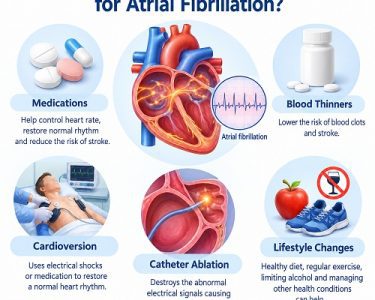
Patients who undergo catheter ablation or another rhythm-control procedure should discuss long-term stroke prevention with their cardiologist. They should not assume that successful rhythm treatment automatically removes the need for anticoagulation.
What If You Cannot Take Blood Thinners?
Some patients have a contraindication to long-term anticoagulation or experience serious bleeding complications.
In selected cases, a doctor may discuss left atrial appendage occlusion (LAAO). This procedure aims to close off the part of the heart where many AFib-related clots develop.
LAAO may be an option for certain patients, but it is not suitable for everyone and involves its own procedural risks and follow-up requirements. Some patients also need antithrombotic medication for a period after the procedure.
A cardiologist can explain whether this approach is appropriate based on the patient’s stroke risk, bleeding history, anatomy, and overall health.
Frequently Asked Questions
1. Do all people with atrial fibrillation need blood thinners?
No. The decision depends on estimated stroke risk, bleeding risk, medical history, and patient preferences. Many patients benefit from anticoagulation, but it is not automatically necessary for every person with AFib.
2. What is the most commonly used blood thinner for AFib?
Common options include apixaban, rivaroxaban, dabigatran, edoxaban, and warfarin. There is no single best choice for everyone. For many eligible patients, DOACs are preferred over warfarin, but specific heart valve conditions may require warfarin.
3. Do blood thinners dissolve existing blood clots?
Anticoagulants primarily prevent new clots from forming and existing clots from growing. They do not directly dissolve clots in the way certain clot-busting medicines do.
4. Can I drink alcohol while taking a blood thinner?
Alcohol can increase bleeding risk in some circumstances and may affect AFib symptoms or interact with medication management. Ask your healthcare professional about an appropriate limit based on your medication, health, and drinking habits.
5. How long do I need to take anticoagulants for AFib?
Some patients need long-term or lifelong treatment. Others may have different recommendations depending on their clinical circumstances. Never discontinue anticoagulation without consulting your treating clinician.
Conclusion
Blood thinners play a vital role in reducing the risk of stroke in people with atrial fibrillation. By interfering with the blood-clotting process, anticoagulants help prevent dangerous clots from forming in the heart and traveling to the brain or other parts of the body.
The most commonly used medications include apixaban, rivaroxaban, dabigatran, edoxaban, and warfarin. Each has specific benefits, precautions, and monitoring requirements. The right choice depends on an individual’s stroke risk, bleeding risk, kidney function, heart valve conditions, other medications, and personal preferences.
Effective Atrial Fibrillation stroke prevention involves more than simply choosing a medicine. It also requires taking medication as prescribed, attending follow-up appointments, managing cardiovascular risk factors, and recognizing warning signs of bleeding or stroke.
If you have atrial fibrillation, speak with your cardiologist or healthcare professional about whether anticoagulants for Atrial Fibrillation are appropriate for you. With an individualized treatment plan and regular review, many patients can reduce their risk of serious complications while managing treatment safely.
Medical Disclaimer
This article, “What Are Blood Thinners Used for in Atrial Fibrillation?”, is intended for educational and informational purposes only. It is not a substitute for professional medical advice, diagnosis, or treatment. The information provided is based on general medical knowledge and reputable healthcare sources, but it may not apply to every individual’s medical condition or circumstances.
Always consult a qualified healthcare professional or cardiologist for advice regarding atrial fibrillation, stroke prevention, and the appropriate use of blood thinners or anticoagulants. Never start, stop, change the dose of, or replace a prescribed medication without consulting your healthcare provider, as doing so may increase the risk of stroke or serious bleeding.
If you experience symptoms of a stroke, severe or uncontrolled bleeding, or other signs of a medical emergency, seek immediate medical attention.
Medical References
The following reputable medical sources support the article’s clinical information. They are suitable starting points for editorial fact-checking and further reading.
- Joglar JA, et al. 2023 ACC/AHA/ACCP/HRS Guideline for the Diagnosis and Management of Atrial Fibrillation. Journal of the American College of Cardiology. 2024;83(1):109–279.
Read the clinical guideline. - American Heart Association and American College of Cardiology. 2023 Guideline for the Diagnosis and Management of Atrial Fibrillation.
Read the guideline overview. - Centers for Disease Control and Prevention (CDC). About Atrial Fibrillation. Information about AFib, stroke risk, symptoms, and treatment.
Read the CDC resource. - American Heart Association. Atrial Fibrillation. Patient education and information about managing the condition and reducing complications.
Explore atrial fibrillation resources. - National Heart, Lung, and Blood Institute (NHLBI). Atrial Fibrillation. Information about diagnosis, treatment, and management.
Read the NHLBI resource.
Editorial recommendation: Have a qualified clinician review the article before publication. Medical guidelines, drug availability, and prescribing recommendations can vary by country and may change over time.