
 By
By Living with arthritis can mean dealing with joint pain, stiffness, swelling and reduced mobility. While food cannot cure arthritis, your everyday diet may influence inflammation, body weight, heart health, and overall well-being. For this reason, knowing which Foods to Avoid with Arthritis can be a useful part of a broader joint-care plan.
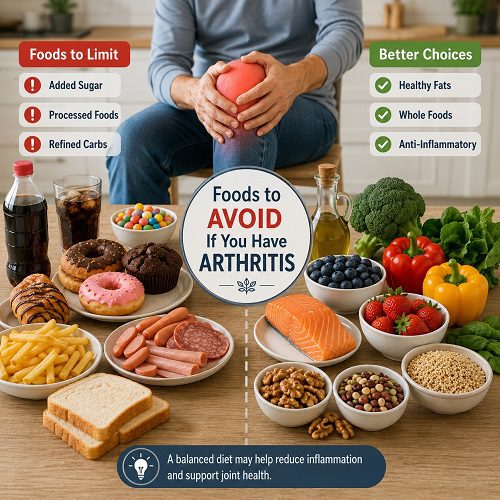
There is no single arthritis diet that works for everyone. Different forms of arthritis, including osteoarthritis, rheumatoid arthritis, psoriatic arthritis, and gout, can have different nutritional considerations. However, experts generally encourage eating more minimally processed foods and reducing foods that are high in added sugars, unhealthy fats, refined carbohydrates, and excess sodium. Mediterranean-style eating patterns are frequently recommended because they emphasize vegetables, fruits, whole grains, legumes, fish, nuts, seeds, and healthy fats.
Why Does Diet Matter for Arthritis?
Arthritis is a broad term covering more than 100 conditions that affect the joints. Some forms are primarily related to cartilage wear and mechanical stress, while others involve autoimmune or metabolic processes.
Diet does not directly cause most types of arthritis, but dietary patterns can influence factors that matter for joint health. Excess body weight, for example, can place additional mechanical stress on weight-bearing joints. A diet high in ultra-processed foods may also provide excessive calories while offering relatively few nutrients.
Research and expert guidance increasingly favor dietary patterns rich in vegetables, fruits, whole grains, legumes, fish, nuts, and healthy fats while limiting highly processed foods, added sugars, and unhealthy fats.
The goal is therefore not to create an extremely restrictive diet. Instead, focus on reducing foods that may contribute to poor overall health and replacing them with nutrient-dense alternatives.
1. Sugary Foods and Drinks
Added sugar is one of the first categories to consider when reviewing Foods to Avoid with Arthritis.
Common sources include:
- Sodas and sweetened soft drinks
- Candy
- Cakes and pastries
- Cookies
- Sweetened breakfast cereals
- Ice cream
- Sweetened tea and coffee
- Energy drinks
- Some packaged fruit drinks
Large amounts of added sugar can make it easier to consume excess calories and may contribute to weight gain. Some research also associates diets high in added sugars and highly processed foods with inflammatory processes.
Instead of completely eliminating every sweet food, consider reducing portions and choosing naturally sweet foods such as berries, apples, oranges, or other whole fruits.
2. Highly Processed Foods
Highly processed foods can be convenient, but eating them frequently may make it harder to maintain a balanced diet.
Examples include:
- Packaged snack foods
- Processed frozen meals
- Instant noodles
- Some fast-food meals
- Packaged pastries
- Processed meat products
- Chips and similar snacks
Many of these products can contain substantial amounts of sodium, added sugars, refined carbohydrates, and unhealthy fats.
The American College of Rheumatology notes that processed foods, processed sugar, and “junk food” can negatively affect health outcomes in people with rheumatic conditions.
A better approach is to build meals around foods that are closer to their natural form, such as vegetables, beans, lentils, whole grains, fish, poultry, nuts, and seeds.
3. Fried Foods
Fried foods are another category worth limiting.
French fries, fried chicken, fried snacks, doughnuts, and other deep-fried foods can be high in calories and unhealthy fats. Frequent consumption may also make weight management more difficult.
Instead of deep-frying, try:
- Baking
- Grilling
- Steaming
- Roasting
- Air-frying with limited oil
- Sautéing with a small amount of olive oil
The cooking method can make a significant difference without requiring you to eliminate nutritious foods.
4. Foods High in Saturated Fat
Saturated fats are naturally present in some animal products, but large amounts are also found in many processed and fast foods.
Examples include:
- Fatty cuts of red meat
- Processed meats
- Full-fat dairy products
- Butter
- Some pastries
- High-fat fast foods
- Certain commercially prepared foods
Arthritis Foundation guidance recommends limiting saturated fats as part of an anti-inflammatory eating pattern.
You do not necessarily need to eliminate all sources of saturated fat. Instead, consider replacing some of them with healthier unsaturated fats from foods such as olive oil, nuts, seeds, and fish.
5. Processed and Red Meats
Processed meats such as sausages, hot dogs, bacon, and some deli meats can contain high amounts of sodium and saturated fat.
Eating large amounts of red and processed meat may also displace foods that are more nutrient-dense, such as vegetables, legumes, and fish.
Consider replacing some meat-based meals with:
- Lentils
- Chickpeas
- Beans
- Tofu
- Fish
- Skinless poultry
- Vegetable-based meals
For people with gout, dietary advice can be different because purine-rich foods can affect uric acid levels. Anyone with gout should discuss individualized dietary recommendations with a healthcare professional.
6. Refined Carbohydrates
Refined carbohydrates have had some of the naturally occurring components of whole grains removed during processing.
Common examples include:
- White bread
- White rice
- Many packaged crackers
- Refined breakfast cereals
- Cakes
- Pastries
- Some highly processed pasta products
These foods can be lower in fiber than whole-grain alternatives and may contribute to rapid increases in blood glucose.
A healthier joint pain diet can include more whole grains such as oats, brown rice, barley, quinoa, and whole-grain bread when appropriate.
Arthritis Foundation guidance specifically recommends choosing whole grains over refined grains as part of an arthritis-friendly eating pattern.
7. Foods With Trans Fats
Artificial trans fats have been associated with inflammation and cardiovascular risks. They may occur in some processed foods made with partially hydrogenated oils.
Check ingredient labels when purchasing packaged foods and avoid products containing partially hydrogenated oils.
Fortunately, many countries have reduced the use of industrial trans fats, but checking labels remains useful, particularly with older or imported packaged products.
8. Excessively Salty Foods
Too much sodium is not a direct cause of arthritis, but excessive sodium intake can contribute to fluid retention and high blood pressure.
This may be particularly relevant for people taking certain medications or those who already have cardiovascular or kidney concerns.
Foods that can be high in sodium include:
- Instant noodles
- Processed meats
- Packaged soups
- Salty snacks
- Pickled foods
- Fast food
- Some sauces
- Processed frozen meals
Try flavoring meals with herbs, garlic, ginger, lemon, black pepper, and other spices rather than relying heavily on salt.
9. Excess Alcohol
Alcohol requires special consideration because it can interact with certain medications and may be particularly problematic for people with specific types of arthritis.
For example, people with gout are often advised to limit or avoid alcohol because it can contribute to elevated uric acid levels and gout attacks.
Alcohol can also add calories without providing substantial nutritional value.
If you take arthritis medications, ask your doctor or pharmacist whether alcohol is appropriate for you and whether there are specific restrictions based on your medication.
10. Foods You Personally Notice Trigger Symptoms
Not everyone reacts to food in the same way.
Some people notice that particular foods seem to coincide with worsening symptoms. However, it is important not to automatically assume that a food is an arthritis trigger simply because symptoms appeared after eating it.
Keep a simple food and symptom diary. Record:
- What you ate
- Portion size
- Time of the meal
- Joint symptoms
- Pain severity
- Swelling or stiffness in Arthritis
- Sleep
- Physical Therapy for Arthritis
Looking at patterns over several weeks may help you identify whether a particular food consistently corresponds with symptoms.
What About Nightshade Vegetables?
Nightshade vegetables are frequently discussed in conversations about Foods to Avoid with Arthritis.
They include:
- Tomatoes
- Potatoes
- Eggplant
- Peppers
Some people believe these foods can worsen arthritis symptoms because they contain compounds such as solanine. However, there is currently limited scientific evidence that nightshade vegetables generally cause arthritis flares. Arthritis Foundation guidance notes that these vegetables are nutritious and that claims about them triggering arthritis are not well supported by scientific evidence.
If you strongly suspect that one of these foods causes symptoms, you can discuss a short elimination and reintroduction trial with a qualified healthcare professional or dietitian rather than permanently removing an entire food group without evidence.
What About Gluten?
Gluten should not automatically be considered one of the universal Foods to Avoid with Arthritis.
People with celiac disease must avoid gluten because it Arthritis causes an abnormal immune response and can be associated with joint symptoms. However, people without celiac disease or gluten sensitivity do not necessarily benefit from avoiding gluten.
Removing gluten unnecessarily can also make a diet more restrictive and may reduce intake of fiber and important nutrients if whole grains are not replaced appropriately.
If you suspect gluten sensitivity, discuss testing and dietary changes with a healthcare professional before starting a strict gluten-free diet.
What About Dairy Products?
Dairy foods are another area where individual tolerance matters.
Some people may experience digestive symptoms after consuming particular dairy products, while others tolerate them without problems.
Dairy products can also provide useful nutrients, including protein and calcium, which are important for maintaining strong bones.
Instead of eliminating all dairy automatically, consider choosing lower-fat or unsweetened options if they fit your nutritional needs. If you suspect dairy is contributing to symptoms, discuss appropriate alternatives with a healthcare professional or registered dietitian.
Foods to Choose Instead
Knowing what to avoid is only half of the equation. A sustainable arthritis diet should focus on what you can add.
Consider emphasizing:
Colorful Fruits and Vegetables
Berries, cherries, oranges, leafy greens, broccoli, carrots, and other colorful produce provide fiber, vitamins, minerals, and antioxidant compounds.
Arthritis Foundation guidance recommends a diet rich in fruits and vegetables as part of an anti-inflammatory eating pattern.
Fatty Fish
Salmon, sardines, tuna, mackerel, and herring provide omega-3 fatty acids.
Omega-3-rich fish are particularly relevant to inflammatory forms of arthritis because research suggests omega-3 fatty acids may influence inflammatory markers and symptoms.
Nuts and Seeds
Walnuts, almonds, flaxseeds, chia seeds, and other nuts and seeds provide healthy fats, fiber, protein, and other nutrients.
Whole Grains
Oatmeal, brown rice, quinoa, barley, and other whole grains can provide more fiber than refined grains.
Beans and Lentils
Beans, chickpeas, and lentils provide plant-based protein and fiber while making it easier to reduce dependence on processed meats.
Olive Oil
Extra-virgin olive oil is a source of monounsaturated fat and is a common component of Mediterranean-style eating patterns.
The Mediterranean Diet and Arthritis
Rather than concentrating exclusively on individual arthritis triggers, consider the overall quality of your diet.
A Mediterranean-style eating pattern emphasizes:
- Vegetables
- Fruits
- Whole grains
- Beans and legumes
- Nuts and seeds
- Fish
- Olive oil
- Moderate amounts of poultry and other protein sources
- Fewer highly processed foods
The American College of Rheumatology and Arthritis Foundation both highlight Mediterranean-style eating as a useful general approach for people with rheumatic or arthritic conditions.
This does not mean that every person with arthritis needs to follow a strict Mediterranean diet. Instead, it provides a practical framework for improving food quality.
How to Build an Arthritis-Friendly Plate
A simple plate can make healthy eating easier.
Try filling approximately half your plate with vegetables, adding a source of protein, and choosing a high-fiber carbohydrate when appropriate.
For example:
Breakfast: Oatmeal with berries, walnuts, and unsweetened yogurt.
Lunch: Grilled salmon or chickpeas with a large vegetable salad and whole-grain bread.
Snack: An apple with a small handful of almonds.
Dinner: Grilled fish or beans with roasted vegetables and brown rice.
Drink: Water, unsweetened tea, or another low-sugar beverage.
The exact foods and portions should be adapted to your health needs, calorie requirements, medications, allergies, and type of arthritis.
How to Identify Your Personal Arthritis Triggers
Food affects everyone differently, so an elimination diet should not be your first step for every symptom.
Instead, begin by improving your overall eating pattern.
Reduce highly processed foods and added sugars for several weeks. Increase vegetables, fruits, whole grains, legumes, fish, nuts, and healthy fats. Then monitor your symptoms.
If you believe one specific food is a trigger, discuss a structured elimination and reintroduction approach with a dietitian or healthcare professional.
This can help distinguish a genuine food-related pattern from normal fluctuations in arthritis symptoms.
Don’t Expect Food to Replace Arthritis Treatment
Diet is an important part of general health, but it should not replace prescribed arthritis treatment.
People with rheumatoid arthritis, psoriatic arthritis, gout, lupus-related joint problems, or other inflammatory conditions may need medication to control disease activity and prevent long-term joint damage.
Healthy eating can support treatment, but it should be considered one component of comprehensive arthritis management.
Speak with your healthcare provider before making major dietary changes, particularly if you have diabetes, kidney disease, cardiovascular disease, food allergies, gout, or take medications that may interact with particular foods or alcohol.
Herbal Remedies for Arthritis Support
Herbal Remedies for Arthritis Support are becoming increasingly popular among people looking for natural ways to support joint comfort and mobility. Arthritis can cause joint pain, stiffness, swelling, and reduced movement, and a healthy lifestyle may help complement conventional treatment.
Several herbs and natural ingredients have been studied for their potential role in supporting joint health. Turmeric, particularly its active compound curcumin, is commonly used because of its antioxidant and anti-inflammatory properties. Ginger is another traditional herb that may help support a healthy inflammatory response. Boswellia is also frequently included in natural joint-support formulas and has been researched for its potential benefits for joint comfort.
When considering the Best Supplements for Arthritis Support, look for products that contain clearly listed ingredients and appropriate dosages. Herbal supplements should complement—not replace—medical treatment prescribed by a healthcare professional.
A Joint Support Herbal Supplement for Arthritis may also contain ingredients such as turmeric, ginger, Boswellia, or other botanical extracts. However, results can vary from person to person, and supplements may interact with certain medications.
Along with herbal support, maintaining a healthy weight, eating a balanced diet, staying physically active, and getting adequate rest can contribute to overall joint health. Always consult a qualified healthcare professional before starting a new herbal supplement, especially if you take prescription medications or have an existing health condition.
Final Thoughts
Knowing which Foods to Avoid with Arthritis can help you make more informed choices, but the goal should not be an unnecessarily restrictive diet.
The strongest general approach is to reduce highly processed foods, added sugars, excessive saturated fat, refined carbohydrates, excess sodium, and other foods that contribute little nutritional value. At the same time, increase vegetables, fruits, whole grains, legumes, nuts, seeds, fish, and healthy fats.
Remember that arthritis triggers vary from person to person. A food that causes problems for one individual may be perfectly well tolerated by another. Rather than eliminating large food groups based on internet claims, track your symptoms and discuss persistent concerns with a qualified healthcare professional.
A balanced joint pain diet cannot cure arthritis, but it can support healthy weight management, cardiovascular health, adequate nutrition, and overall well-being. By focusing on an overall healthy eating pattern rather than searching for one “perfect” arthritis food, you can build habits that are more realistic and sustainable over the long term.