
 By
By Arthritis Mobility Issues are among the most common challenges faced by people living with arthritis. Whether the condition affects the knees, hips, feet, spine or hands, inflammation and joint damage can make even simple activities difficult. Walking, climbing stairs, standing from a chair and carrying groceries may become increasingly challenging over time.
Mobility is essential for maintaining independence, physical health and emotional wellbeing. When arthritis limits movement, it can affect work, family responsibilities, exercise routines and social activities. Many people also experience frustration and reduced confidence because they fear falling or worsening their symptoms.
Although arthritis cannot always be cured, many treatment options and lifestyle strategies can help improve joint function, reduce pain and minimise walking difficulties. Early diagnosis, appropriate treatment and healthy daily habits can significantly improve quality of life.
Arthritis
Arthritis is a group of conditions that cause inflammation, pain, stiffness and damage within the joints. More than one hundred different forms of arthritis exist, but the most common include:
Osteoarthritis
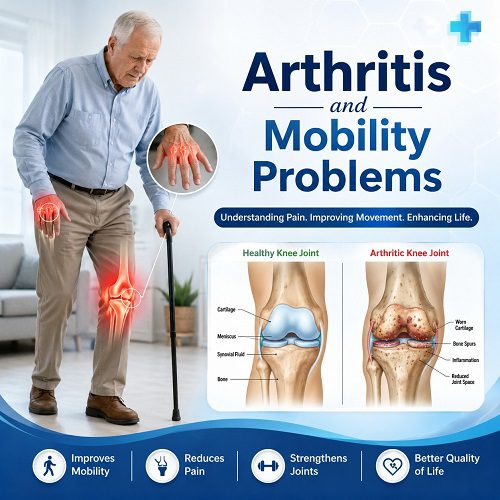
Osteoarthritis develops when the protective cartilage covering the ends of bones gradually wears away. Without smooth cartilage, bones rub against each other, causing pain, stiffness and reduced movement.
Rheumatoid Arthritis
Rheumatoid arthritis is an autoimmune disease. Instead of protecting the body, the immune system attacks the joint lining, leading to inflammation, swelling and long-term joint damage.
Psoriatic Arthritis
This inflammatory arthritis occurs in some people with psoriasis and may affect multiple joints while causing swelling and stiffness.
Gout
Gout develops when uric acid crystals collect inside joints, often causing sudden attacks of severe pain, redness and swelling.
Each type of arthritis can contribute to Arthritis Mobility Issues, although the causes and progression may differ.
How Arthritis Affects Mobility
Healthy joints allow smooth, pain-free movement. Arthritis disrupts this process through inflammation, cartilage damage and changes in surrounding tissues.
Several factors reduce mobility.
Joint Pain
Pain discourages movement. Many people begin avoiding walking or exercise because activity increases discomfort.
Unfortunately, reduced movement weakens muscles and may worsen stiffness over time.
Joint Stiffness
Morning Arthritis Cause Joint Stiffness is common in many forms of arthritis. Some individuals require thirty minutes or longer before joints loosen enough for normal movement.
Stiff joints reduce flexibility and slow daily activities.
Swelling
Inflamed joints often become swollen, warm and tender. Swelling limits the joint’s range of motion and makes bending or straightening difficult.
Muscle Weakness
Pain often causes people to become less active.
As muscles weaken, they provide less support for affected joints. Weak muscles increase stress on painful joints and contribute to instability.
Joint Deformity
Advanced arthritis may gradually change the shape of joints.
Examples include:
- Bent fingers
- Knock knees
- Bowed legs
- Foot deformities
These changes can significantly affect walking ability and balance.
Common Mobility Problems Caused by Arthritis
People experience mobility challenges differently depending on which joints are affected.
Walking Difficulties
Pain in the knees, hips, ankles or feet often causes slower walking.
Individuals may notice:
- Limping
- Shorter steps
- Reduced walking distance
- Frequent rest breaks
- Difficulty walking uphill
These walking difficulties often worsen during arthritis flare-ups.
Difficulty Climbing Stairs
Climbing stairs places additional pressure on knee and hip joints.
People commonly report:
- Knee pain
- Weakness
- Instability
- Fear of falling
Descending stairs may feel even harder than climbing them.
Standing Up
Standing from chairs or toilets requires strength in the knees and hips.
Arthritis often makes this movement slow and painful.
Reduced Hand Function
Arthritis in the fingers and wrists affects grip strength.
Daily tasks become difficult, including:
- Opening jars
- Turning keys
- Holding cups
- Writing
- Buttoning clothes
Reduced hand joint function limits independence.
Balance Problems
Pain changes the body’s natural walking pattern.
Combined with muscle weakness, arthritis may increase the risk of falls.
Older adults face an even greater risk of injury.
Risk Factors for Arthritis Mobility Issues
Several factors increase the likelihood of developing mobility limitations.
Age
Cartilage naturally becomes thinner with age, increasing the risk of osteoarthritis.
Excess Body Weight
Extra weight places significant pressure on weight-bearing joints.
The knees experience several times the body’s weight during walking.
Losing even a small amount of weight may improve mobility.
Previous Joint Injuries
Sports injuries, fractures and ligament damage increase the likelihood of developing arthritis later in life.
Lack of Exercise
Inactive muscles become weaker.
Weak muscles cannot adequately support joints, increasing pain and stiffness.
Chronic Inflammation
Inflammatory arthritis continuously damages joint tissues if left untreated.
Early treatment helps preserve joint function.
Signs That Mobility Is Getting Worse
Mobility often declines gradually.
Watch for symptoms such as:
- Walking more slowly
- Needing support while walking
- Increasing stiffness
- Difficulty standing
- Trouble climbing stairs
- Reduced walking distance
- Frequent joint swelling
- Increased Arthritis Cause Fatigue after activity
- Fear of movement
- Greater dependence on others
Recognising these changes early allows timely intervention before arthritis disability becomes more severe.
Diagnosis of Arthritis-Related Mobility Problems
Healthcare professionals assess mobility using several approaches.
These may include:
- Medical history
- Physical examination
- Joint flexibility assessment
- Muscle strength testing
- Walking analysis
- Balance assessment
- X-rays
- MRI scans
- Ultrasound imaging
- Blood tests for inflammatory arthritis
Identifying the exact cause helps guide the most appropriate treatment plan.
Treatment Options for Arthritis Mobility Issues
The primary goal of treatment is to reduce pain, improve movement and preserve joint function. Most healthcare professionals recommend a combination of medication, physical therapy and healthy lifestyle changes.
Medications
Depending on the type and severity of arthritis, treatment may include:
- Pain-relieving medicines
- Non-steroidal anti-inflammatory drugs (NSAIDs)
- Disease-modifying anti-rheumatic drugs (DMARDs) for rheumatoid arthritis
- Biologic therapies for inflammatory arthritis
- Corticosteroid injections to reduce severe inflammation
Always use Medications for Arthritis under the guidance of a qualified healthcare professional.
Physical Therapy
Physical Therapy for Arthritis Patients is one of the most effective ways to manage Arthritis Mobility Issues. A physiotherapist can design a personalised exercise programme that improves flexibility, strengthens muscles and restores movement.
Benefits of physical therapy include:
- Improved balance
- Better walking ability
- Increased muscle strength
- Reduced stiffness
- Improved posture
- Greater confidence during movement
- Lower risk of falls
Consistent therapy often helps people remain independent for longer.
Exercise and Arthritis
Many people worry that exercise will worsen arthritis. In reality, appropriate physical activity helps protect joints and improves mobility.
Walking
Walking is one of the safest forms of exercise for many people with arthritis.
Benefits include:
- Better circulation
- Stronger muscles
- Improved endurance
- Reduced stiffness
- Better heart health
Begin with short distances and gradually increase your walking time as tolerated.
Swimming
Water supports body weight, reducing stress on painful joints.
Swimming and water aerobics improve flexibility while allowing comfortable movement.
Cycling
Cycling strengthens leg muscles without placing excessive pressure on the knees and hips.
Both outdoor bicycles and stationary bikes can be beneficial.
Strength Training
Building muscle provides additional support for joints.
Simple resistance exercises using light weights or resistance bands can improve stability and reduce pain.
Stretching
Daily stretching helps maintain flexibility.
Gentle stretches improve the range of motion in affected joints and reduce morning stiffness.
Weight Management
Maintaining a healthy weight is one of the most effective ways to improve mobility.
Excess weight places significant stress on weight-bearing joints such as the knees, hips and ankles.
Research shows that even modest weight loss can:
- Reduce pain
- Improve walking speed
- Increase flexibility
- Lower inflammation
- Slow joint damage
Combining healthy eating with regular physical activity offers the greatest benefits.
Nutrition for Healthy Joint Function
Although no single diet cures arthritis, a balanced diet may help reduce inflammation and support overall joint health.
Include foods such as:
- Oily fish rich in omega-3 fatty acids
- Fresh vegetables
- Colourful fruits
- Whole grains
- Nuts and seeds
- Olive oil
- Beans and legumes
Try to limit:
- Sugary drinks
- Highly processed foods
- Excessive salt
- Fried foods
- Saturated fats
Staying hydrated also supports overall health and tissue function.
Assistive Devices That Improve Mobility
Many assistive devices help people remain active while reducing stress on painful joints.
Examples include:
- Walking sticks
- Canes
- Walking frames
- Knee braces
- Orthopaedic shoe inserts
- Hand splints
- Grab rails
- Raised toilet seats
These devices improve stability, reduce pain and help prevent falls.
Home Modifications
Making small changes around the home can make daily activities safer and easier.
Consider:
- Installing handrails on stairs
- Using non-slip mats
- Improving lighting
- Removing loose rugs
- Choosing supportive chairs
- Raising frequently used furniture
- Keeping commonly used items within easy reach
Simple adjustments can reduce strain on affected joints and improve independence.
Managing Arthritis Flare-Ups
Arthritis Symptoms often worsen during flare-ups. During these periods, it is important to balance rest with gentle movement.
Helpful strategies include:
- Applying warm compresses for stiffness
- Using cold packs to reduce swelling
- Taking prescribed medication
- Performing gentle stretching
- Avoiding high-impact activities
- Drinking enough water
- Getting adequate sleep
Do not remain inactive for prolonged periods, as this may increase stiffness.
Emotional Impact of Mobility Problems
Living with reduced mobility can affect mental wellbeing as much as physical health.
People experiencing arthritis disability may feel:
- Frustration
- Anxiety
- Depression
- Social isolation
- Loss of confidence
Support from family, healthcare professionals and arthritis support groups can make a significant difference.
Practising relaxation techniques such as meditation, deep breathing and mindfulness may also help reduce stress.
Preventing Arthritis Disability
Although arthritis cannot always be prevented, early treatment can reduce the risk of permanent disability.
Protect your joints by:
- Staying physically active
- Maintaining a healthy weight
- Avoiding smoking
- Eating a balanced diet
- Wearing supportive footwear
- Following your Arthritis Treatment plan
- Attending regular medical appointments
- Treating flare-ups promptly
- Performing strengthening exercises
Taking action early helps preserve joint function and maintain independence.
When Should You See a Doctor?
Seek medical advice if you experience:
- Persistent joint pain lasting several weeks
- Increasing swelling
- Difficulty walking
- Sudden loss of mobility
- Frequent falls
- Joint deformity
- Severe stiffness
- Fever with swollen joints
- Difficulty performing daily activities
Early diagnosis often leads to better long-term outcomes.
Best Supplements for Arthritis Support
Living with arthritis can make everyday activities more challenging due to joint pain, stiffness and reduced mobility. Alongside a balanced diet, regular exercise and appropriate medical care, Herbal Remedies for Arthritis Support may help promote overall joint health. Many people choose Best Supplements for Arthritis Support to complement their wellness routine and maintain healthy joint function.
Common supplements include Glucosamine and Chondroitin for Arthritis, omega-3 fatty acids, Turmeric for Arthritis, Boswellia serrata, ginger and vitamin D. These ingredients are widely recognised for their potential to support joint comfort, flexibility and normal inflammatory responses. Herbal formulations containing carefully selected plant-based ingredients may also contribute to maintaining healthy cartilage and improving mobility.
A Joint Support Herbal Supplement for Arthritis may provide a natural option for individuals seeking additional support for their joints. High-quality herbal supplements often combine multiple botanicals and nutrients designed to promote joint flexibility, reduce everyday stiffness and support an active lifestyle. However, results can vary from person to person, and supplements should not replace prescribed medical treatment.
When selecting Best Supplements for Arthritis Support, choose products from reputable manufacturers that follow recognised quality standards. It is also important to consult a healthcare professional before starting any new supplement, particularly if you are pregnant, have underlying health conditions or take prescription medications. Combining healthy lifestyle habits with appropriate supplementation can help support long-term joint health and overall wellbeing.
Frequently Asked Questions
Can arthritis permanently affect mobility?
Yes. If left untreated, arthritis may gradually damage joints and reduce mobility. Early diagnosis and appropriate treatment can slow progression and help maintain movement.
Is walking good for arthritis?
For many people, walking is one of the best low-impact exercises. It strengthens muscles, improves circulation and supports joint health. However, activity should be adjusted according to individual symptoms and medical advice.
Can exercise make arthritis worse?
Appropriate exercise usually improves arthritis symptoms. High-impact activities may aggravate painful joints, but low-impact exercises such as walking, swimming and cycling are generally beneficial.
Which joints are most affected?
Arthritis commonly affects the:
- Knees
- Hips
- Hands
- Feet
- Spine
- Shoulders
The pattern depends on the specific type of arthritis.
Can mobility improve after treatment?
Many people experience significant improvements in mobility through medication, physical therapy, exercise, weight management and healthy lifestyle changes.
Conclusion
Arthritis Mobility Issues can have a profound impact on everyday life, affecting walking, balance, independence and overall wellbeing. Pain, stiffness and inflammation often reduce joint function, leading to walking difficulties and, in severe cases, arthritis disability. However, mobility loss is not inevitable.
With early diagnosis, appropriate medical care, regular physical activity, a balanced diet and healthy lifestyle choices, many people can continue to live active and fulfilling lives. Low-impact exercises, weight management, physical therapy and assistive devices all play important roles in protecting joints and maintaining independence.
If you notice persistent joint pain or increasing difficulty with movement, seek medical advice promptly. Early intervention offers the best opportunity to manage symptoms, preserve mobility and improve long-term quality of life.