 By
Atrial fibrillation (AFib) is one of the most common heart rhythm disorders, affecting millions of people worldwide. It occurs when the electrical signals in the heart’s upper chambers become irregular, causing the heart to beat too quickly or unpredictably. Some people experience noticeable symptoms, such as heart palpitations, fatigue, dizziness, and shortness of breath, while others may have no obvious symptoms.
Although medications can help control heart rate and rhythm, they do not work effectively for everyone. Some patients continue experiencing irregular heartbeats despite taking medication. In these situations, doctors may recommend a treatment called catheter ablation for Atrial Fibrillation.
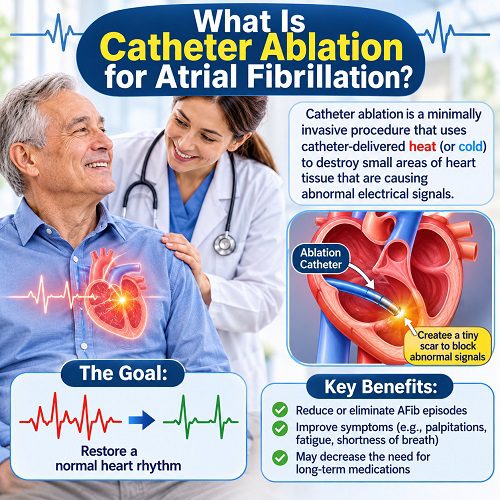
Catheter ablation is a minimally invasive procedure designed to correct the abnormal electrical signals responsible for atrial fibrillation. It involves inserting thin, flexible tubes called catheters into blood vessels and guiding them toward the heart. Special energy is then used to create small areas of scar tissue that block unwanted electrical signals.
But how does the procedure work? Who needs it? Is it safe, and how long does recovery take?
What Is Catheter Ablation for Atrial Fibrillation?
Catheter ablation for Atrial Fibrillation is a minimally invasive heart procedure used to treat abnormal electrical activity that causes an irregular heartbeat.
During the procedure, a cardiologist who specialises in heart rhythm disorders, known as an electrophysiologist, inserts thin, flexible catheters into a blood vessel, usually through the groin. These catheters are carefully guided toward the heart using medical imaging and specialised electrical mapping systems.
Once the catheters reach the heart, the doctor identifies areas responsible for triggering or maintaining atrial fibrillation. Energy is then delivered through the catheter to destroy or isolate small areas of heart tissue responsible for abnormal electrical signals.
The most common approach is called pulmonary vein isolation (PVI).
Pulmonary veins carry oxygen-rich blood from the lungs into the left atrium of the heart. In many people with atrial fibrillation, abnormal electrical impulses originate around the openings of these veins. By creating controlled areas of scar tissue around the pulmonary vein openings, doctors can prevent these unwanted signals from spreading into the heart’s upper chambers.
The goal is to restore a more regular heart rhythm, reduce Atrial Fibrillation episodes, improve symptoms, and enhance quality of life.
It is important to understand that catheter ablation does not guarantee a permanent cure. Some patients may experience recurring atrial fibrillation and require medication or another ablation procedure.
Why Is Catheter Ablation Needed for Atrial Fibrillation?
Atrial fibrillation develops when the heart’s normal electrical system becomes disrupted. Instead of contracting in a coordinated manner, the upper chambers (atria) produce rapid and irregular electrical activity.
This can cause several symptoms, including:
- Rapid or irregular heartbeat.
- Heart palpitations or fluttering sensations.
- Shortness of breath.
- Unusual tiredness or weakness.
- Dizziness or lightheadedness.
- Reduced ability to exercise.
- Chest discomfort.
- Difficulty performing everyday activities.
Atrial fibrillation can also increase the risk of blood clots and stroke. This happens because blood may collect in the atria instead of moving efficiently through the heart.
Doctors may recommend catheter ablation when:
- Medications are not controlling atrial fibrillation effectively.
- Antiarrhythmic medications cause unwanted side effects.
- The patient prefers a procedural treatment after discussing the available options.
- Atrial Fibrillation symptoms significantly affect daily activities and quality of life.
- The patient has symptomatic paroxysmal atrial fibrillation and may benefit from ablation as an initial rhythm-control treatment.
- The patient has persistent atrial fibrillation and needs an alternative treatment strategy.
According to the 2023 American College of Cardiology (ACC), American Heart Association (AHA), and Heart Rhythm Society (HRS) guidelines, catheter ablation is recommended for appropriate patients with symptomatic atrial fibrillation when antiarrhythmic medications are ineffective, contraindicated, not tolerated, or not preferred.
In selected patients, ablation may also be considered as a first-line treatment.
Who Is a Good Candidate for Catheter Ablation?
Not everyone with atrial fibrillation needs catheter ablation. The decision depends on the patient’s symptoms, medical history, type of AFib, heart function, overall health, and treatment preferences.
Patients who may benefit include those with:
1. Symptomatic atrial fibrillation
People experiencing frequent palpitations, fatigue, breathlessness, or other AFib-related symptoms may benefit from ablation.
2. Medication-resistant atrial fibrillation
Some patients continue having AFib episodes despite taking antiarrhythmic medications. Ablation may offer better rhythm control in appropriate cases.
3. Paroxysmal atrial fibrillation
Paroxysmal AFib refers to episodes that start and stop spontaneously, generally lasting less than seven days. Selected patients with this type of AFib may respond particularly well to catheter ablation.
4. Persistent atrial fibrillation
Persistent AFib lasts longer than seven days and generally requires medical intervention to restore normal rhythm. Catheter ablation may help selected patients, although treatment outcomes can vary.
5. Patients with heart failure
Some patients with heart failure and reduced heart function may benefit from catheter ablation, particularly when atrial fibrillation contributes to worsening symptoms or heart function.
An electrophysiologist evaluates each patient individually to determine whether the expected benefits outweigh the potential risks.
Types of Catheter Ablation for Atrial Fibrillation
Different energy sources and technologies can be used during an Atrial Fibrillation ablation procedure. The most appropriate method depends on the patient’s condition, the hospital’s available technology, and the electrophysiologist’s clinical judgment.
1. Radiofrequency Ablation
Radiofrequency ablation uses heat energy to create small, controlled areas of scar tissue in the heart.
The doctor guides a specialised catheter to the targeted area and delivers radiofrequency energy. This damages the selected tissue, preventing abnormal electrical impulses from travelling through it.
Radiofrequency ablation is an established and widely used treatment for atrial fibrillation.
2. Cryoablation
Cryoablation uses extreme cold rather than heat to isolate the pulmonary veins.
A special balloon catheter is positioned near the opening of a pulmonary vein. The balloon releases a cooling substance that freezes the surrounding tissue, creating a small scar that blocks abnormal electrical signals.
Cryoablation is commonly used for pulmonary vein isolation.
3. Pulsed Field Ablation (PFA)
Pulsed field ablation is a newer technology that uses short electrical pulses to destroy targeted heart cells.
Unlike traditional heat-based or freezing techniques, PFA uses an electrical process called irreversible electroporation.
It is designed to selectively affect heart muscle tissue while reducing damage to certain surrounding structures. However, it still carries procedural risks and is not suitable for every patient.
Your electrophysiologist can explain which technique is most appropriate for your condition.
How Does the Atrial Fibrillation Ablation Procedure Work?
Understanding what happens during the procedure can help reduce anxiety and prepare patients for treatment.
Although the exact approach may vary, most catheter ablation procedures follow several steps.
Step 1: Preparation Before the Procedure
Before treatment, the medical team performs a detailed evaluation of the patient’s heart and overall health.
This may include:
- Electrocardiogram (ECG or EKG).
- Echocardiogram.
- Blood tests.
- Heart rhythm monitoring.
- CT scan or MRI when needed.
- Transoesophageal echocardiography in selected patients.
These tests help doctors assess heart structure, identify possible blood clots, and plan the procedure.
Patients receive specific instructions about eating, drinking, and medications. Blood-thinning medication is particularly important because it helps reduce the risk of blood clots and stroke.
Never stop anticoagulant or heart medication without instructions from your treating doctor.
Step 2: Anaesthesia and Catheter Insertion
The procedure takes place in a specialised cardiac electrophysiology laboratory.
Depending on the hospital and treatment plan, patients receive general anaesthesia or deep sedation.
The doctor makes a small puncture in a blood vessel, usually in the groin, and inserts thin catheters through it.
These catheters travel through the blood vessels toward the heart.
Step 3: Mapping the Heart’s Electrical Activity
Once the catheters reach the heart, specialised equipment records electrical signals and helps the doctor understand how the heart’s electrical system is functioning.
An electrical mapping system creates a detailed picture of the heart and identifies areas associated with abnormal electrical activity.
The doctor uses this information to determine where ablation should be performed.
Step 4: Pulmonary Vein Isolation
The electrophysiologist delivers energy around the pulmonary vein openings to create controlled areas of scar tissue.
These areas act as electrical barriers, preventing abnormal impulses from travelling from the pulmonary veins into the left atrium.
This is the central part of most atrial fibrillation ablation procedures.
Step 5: Testing the Results
After ablation, the doctor checks whether the pulmonary veins are electrically isolated.
Additional electrical testing may be performed to confirm the treatment result and assess whether abnormal signals remain.
Step 6: Catheter Removal and Monitoring
Once the procedure is complete, the catheters are removed.
Pressure or a closure device is used to prevent bleeding at the insertion site.
The patient is then transferred to a recovery area for observation.
The procedure commonly takes between two and four hours, although more complex cases may take longer.
What Are the Benefits of Catheter Ablation?
Catheter ablation offers several potential benefits for people with symptomatic atrial fibrillation.
1. Reduction in AFib episodes
One of the primary goals is to reduce the frequency and duration of abnormal heart rhythm episodes.
2. Improved quality of life
Patients who experience fewer AFib symptoms may find it easier to perform everyday activities, exercise, and maintain their normal routines.
3. Reduced dependence on antiarrhythmic medication
Some patients may eventually reduce or discontinue certain rhythm-control medications under medical supervision. However, this is not guaranteed.
4. Better symptom management
Ablation may reduce palpitations, fatigue, dizziness, and breathlessness associated with AFib.
5. Potential benefits for selected heart failure patients
In appropriately selected patients with atrial fibrillation and heart failure, catheter ablation can improve symptoms and may improve heart function and cardiovascular outcomes.
The success of treatment varies depending on factors such as AFib duration, heart structure, other medical conditions, and the ablation technique used.
What Are the Risks and Complications of Catheter Ablation?
Although catheter ablation is generally considered safe when performed by experienced specialists, it is an invasive procedure and carries potential risks.
Possible complications include:
Bleeding or bruising: The catheter insertion site in the groin may develop bruising, swelling, or bleeding.
Blood vessel damage: Catheter insertion can occasionally damage blood vessels or cause vascular complications.
Blood clots or stroke: Blood clots may develop during or after the procedure and can potentially travel to the brain.
Cardiac tamponade: In rare cases, a catheter may damage the heart wall, allowing blood to collect around the heart and interfere with its pumping function.
Pulmonary vein stenosis: Scar tissue can sometimes narrow the pulmonary veins, although severe cases are uncommon with contemporary techniques.
Damage to the oesophagus: The oesophagus is located close to the back of the heart. Rarely, thermal injury can cause a serious complication called an atrioesophageal fistula.
Heart rhythm problems: Some patients may experience new or recurring abnormal heart rhythms after ablation.
Death: Death related to the procedure is extremely rare but remains a possible complication.
The 2024 international expert consensus statement on atrial fibrillation ablation discusses these complications and their reported incidence.
Your doctor should explain your individual risk profile before you agree to treatment.
What Is Ablation Recovery Like?
Understanding ablation recovery is an important part of preparing for the procedure.
Most patients recover without major problems, although the recovery period varies depending on their general health, procedure complexity, and individual healing response.
First 24 Hours After Ablation
After the procedure, patients are monitored for bleeding, changes in heart rhythm, and other complications.
Some patients can go home on the same day, while others may need to stay overnight.
You may experience:
- Mild soreness in the groin.
- Bruising around the catheter insertion site.
- Mild chest discomfort.
- Tiredness or weakness.
- A temporary sore throat if general anaesthesia was used.
These symptoms usually improve with time.
First Week of Recovery
During the first week, patients should follow their doctor’s instructions regarding physical activity.
Most people are advised to avoid heavy lifting, strenuous exercise, and activities that place pressure on the groin until the insertion site has healed.
Light walking is often encouraged when the treating team considers it safe.
Patients should also take prescribed medications as directed.
Two to Four Weeks After Ablation
Many patients gradually return to their usual daily activities during this period.
However, the exact recovery timeline varies.
Your doctor may recommend follow-up appointments, ECG testing, or heart rhythm monitoring to evaluate your progress.
Can Atrial Fibrillation Return During Recovery?
Yes. Some patients experience irregular heartbeats during the early weeks following catheter ablation.
This does not necessarily mean that the procedure has failed.
The heart tissue needs time to heal, and temporary inflammation can contribute to early rhythm disturbances.
Patients should report recurring or concerning symptoms to their healthcare team rather than assuming that the treatment has been unsuccessful.
What Should You Avoid After Catheter Ablation?
Following the correct recovery instructions can help reduce complications and support healing.
Your doctor may recommend avoiding:
- Heavy lifting during the initial recovery period.
- Strenuous exercise until medical clearance.
- Driving for the period specified by your hospital.
- Swimming or bathing that submerges the insertion site until it has healed.
- Missing prescribed medications.
- Stopping blood-thinning medication without medical advice.
- Smoking and excessive alcohol consumption.
Maintaining a healthy weight, controlling blood pressure, managing diabetes, treating sleep apnoea, and limiting alcohol can also support long-term AFib management.
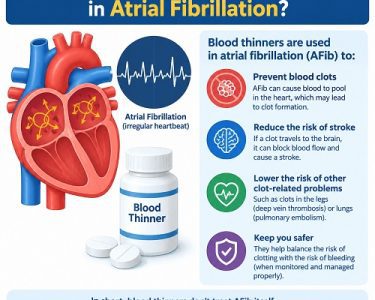
Do You Still Need Blood Thinners After Ablation?
Yes, some patients need to continue taking blood-thinning medication after catheter ablation.
A common misconception is that successful ablation automatically eliminates the need for anticoagulants.
This is not true.
Atrial fibrillation increases the risk of stroke, and that risk may remain even when a patient no longer experiences noticeable AFib episodes.
Doctors determine whether anticoagulation should continue based on individual stroke risk factors, medical history, and current clinical guidelines.
The 2023 ACC/AHA/ACCP/HRS guideline recommends continuing oral anticoagulation for at least three months after catheter ablation, with longer-term treatment determined by the patient’s stroke risk.
The 2024 international expert consensus recommends anticoagulation for at least two months after the procedure, followed by an individualised approach.
The exact duration should therefore follow your treating specialist’s recommendations and the applicable clinical guidelines.
Never stop blood thinners simply because you feel better or your heart rhythm appears normal.
How Successful Is Catheter Ablation for Atrial Fibrillation?
The success rate of catheter ablation varies from patient to patient.
Factors that influence treatment outcomes include:
- Whether AFib is paroxysmal or persistent.
- How long the patient has had atrial fibrillation.
- The size and condition of the left atrium.
- Other heart conditions.
- Obesity and other lifestyle-related risk factors.
- The ablation technique used.
- The experience of the electrophysiology team.
Many patients experience significant improvements in symptoms and a reduction in Atrial Fibrillation episodes following treatment.
However, some people require a second ablation procedure, additional medication, or continued rhythm monitoring.
It is important to understand that successful rhythm control does not necessarily mean that stroke risk has disappeared.
Regular follow-up remains essential.
When Should You Contact Your Doctor After Ablation?
Most patients recover without serious complications. However, certain symptoms require immediate medical attention.
Seek emergency medical care if you experience:
- Severe or persistent chest pain.
- Sudden weakness or numbness on one side of the body.
- Difficulty speaking or sudden vision changes.
- Severe shortness of breath.
- Fainting or loss of consciousness.
- Severe bleeding that does not stop.
- A rapidly worsening condition.
Contact your healthcare provider promptly if you notice increasing groin swelling, redness, fever, unusual pain, or recurring heart rhythm symptoms.
Early medical assessment can help identify complications and ensure appropriate treatment.
Natural Treatment for Atrial Fibrillation
Atrial fibrillation (AFib) is a common heart rhythm disorder that causes an irregular or rapid heartbeat. Although medical treatment is essential for managing this condition, certain lifestyle changes and natural approaches may help improve heart health and reduce AFib triggers.
Natural Remedies for Atrial Fibrillation focus primarily on supporting cardiovascular health and maintaining a healthy lifestyle. These approaches should complement, not replace, treatments recommended by a healthcare professional.
1. Follow a Heart-Healthy Diet
Eat fruits, vegetables, whole grains, nuts, and healthy fats. A Mediterranean-style diet may support cardiovascular health and help manage risk factors associated with AFib.
2. Exercise Regularly
Moderate physical activity, such as walking, swimming, or cycling, can improve heart health. Consult your doctor before starting a new exercise routine.
3. Manage Stress
Stress-management techniques, including meditation, deep breathing, and yoga, may help improve overall well-being.
4. Limit Alcohol and Caffeine
Alcohol can trigger AFib episodes in some people. Monitor caffeine sensitivity and discuss individual triggers with your doctor.
5. Maintain Healthy Sleep
Get sufficient sleep and seek evaluation for sleep apnoea if you experience symptoms.
Frequently Asked Questions (FAQs)
1. Is catheter ablation for atrial fibrillation painful?
Most patients receive general anaesthesia or deep sedation, so they generally do not feel pain during the procedure. Some soreness, bruising, or mild discomfort around the groin may occur afterward.
2. How long does catheter ablation take?
The procedure commonly takes approximately two to four hours. More complicated procedures may take longer.
3. How long does it take to recover from catheter ablation?
Many patients return to light daily activities within a few days. More strenuous activities may need to be avoided for one or more weeks, depending on medical advice.
4. Can atrial fibrillation return after catheter ablation?
Yes. AFib can return after treatment, and some patients may require additional medication or another ablation procedure.
5. Does catheter ablation cure atrial fibrillation permanently?
Catheter ablation can significantly reduce AFib episodes and improve symptoms, but it does not guarantee a permanent cure. Long-term monitoring may still be necessary.
6. Will I need medication after catheter ablation?
Some patients continue taking antiarrhythmic medication or anticoagulants after the procedure. Medication decisions depend on heart rhythm, stroke risk, and individual medical circumstances.
7. Is catheter ablation safer than taking medication?
Both treatments have benefits and risks. Catheter ablation may be more effective for rhythm control in selected patients, but it involves an invasive procedure. The best option depends on individual circumstances and should be discussed with a cardiologist.
Conclusion
Catheter ablation for Atrial Fibrillation is an established treatment option that can help restore a more regular heart rhythm and reduce symptoms associated with AFib.
By targeting abnormal electrical signals, particularly those originating around the pulmonary veins, the procedure aims to prevent irregular impulses from disrupting normal heart activity.
It may be recommended for patients who continue experiencing symptoms despite medication or for selected individuals seeking an initial rhythm-control treatment.
Understanding the Atrial Fibrillation ablation procedure, its benefits, possible complications, and ablation recovery can help patients make informed decisions about their heart health.
Although catheter ablation can significantly improve quality of life, it does not guarantee that AFib will never return or eliminate the need for blood-thinning medication.
If you have atrial fibrillation, consult an experienced cardiologist or electrophysiologist to determine whether catheter ablation is an appropriate treatment option for your condition.
Medical disclaimer
This article is intended for general educational purposes only and should not replace professional medical advice, diagnosis, or treatment. Always consult a qualified healthcare professional regarding your individual medical condition.
Medical references
The following are reputable clinical references that can support the medical accuracy and credibility of your article.
- 2023 ACC/AHA/ACCP/HRS Guideline for the Diagnosis and Management of Atrial Fibrillation
- Published in: Journal of the American College of Cardiology / Circulation
- Covers: AFib management, catheter ablation indications, anticoagulation, and stroke prevention.
- Read the full guideline
- 2024 EHRA/HRS/APHRS/LAHRS Expert Consensus Statement on Catheter and Surgical Ablation of Atrial Fibrillation
- Published in: Europace / Heart Rhythm
- Covers: Ablation techniques, patient selection, procedural preparation, complications, and post-procedure care.
- Read the consensus statement
- American Heart Association – Atrial Fibrillation
- Organisation: American Heart Association.
- Covers: AFib symptoms, risk factors, diagnosis, treatment, and stroke prevention.
- Visit the American Heart Association
- National Heart, Lung, and Blood Institute – Atrial Fibrillation
- Organisation: National Institutes of Health (NIH).
- Covers: Causes, diagnosis, treatment options, and complications of atrial fibrillation.
- Visit NHLBI
- Mayo Clinic – Atrial Fibrillation
- Organisation: Mayo Clinic.
- Covers: AFib symptoms, diagnosis, treatment, and complications.
- Visit Mayo Clinic