 By
By Many people notice rough, waxy, or slightly raised spots appearing on their skin as they grow older. These harmless growths often cause concern because they can resemble more serious skin conditions. One of the most common questions patients ask dermatologists is whether seborrheic keratosis hereditary or whether these skin growths simply develop with age.
Seborrhoeic keratosis is one of the most common benign skin conditions worldwide. Although these growths are not cancerous and rarely become dangerous, they can appear suddenly, increase in number over time, and often run in families. This pattern has led researchers to investigate the genetic factors behind their development.
Understanding whether seborrheic keratosis hereditary is important because it helps explain why some people develop dozens of these growths while others have very few. Genetics certainly plays a role, but it is only one piece of the puzzle. Age, skin type, sunlight exposure, and changes within skin cells also contribute to their formation.
What is Seborrhoeic Keratosis?
Seborrhoeic keratosis is a common, non-cancerous skin growth that develops from the outer layer of the skin (the epidermis). These growths usually appear after the age of 40, although younger adults may occasionally develop them.
They often look as though they have been “stuck onto” the surface of the skin and may vary greatly in colour and appearance.
Common characteristics include:
- Light tan to dark brown or black colour
- Rough, waxy or wart-like surface
- Round or oval shape
- Clearly defined borders
- Slightly raised appearance
- Painless in most cases
The size may range from a few millimetres to several centimetres.
Seborrhoeic keratoses commonly appear on:
- Chest
- Back
- Seborrheic Keratosis Face Treatment
- Neck
- Shoulders
- Abdomen
They almost never develop on the palms or soles.
Is Seborrheic Keratosis Hereditary?
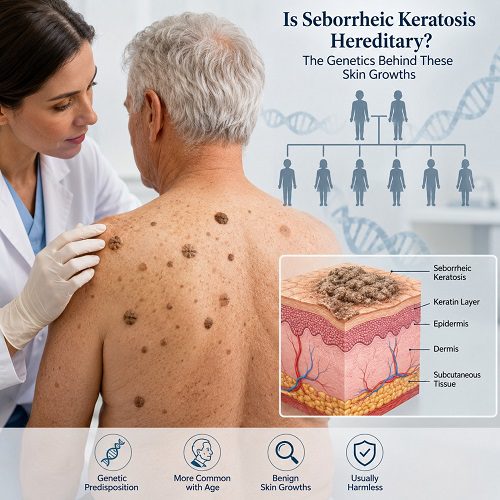
The short answer is yes—genetics appears to play a significant role.
Researchers have found that many individuals with multiple seborrhoeic keratoses have close family members who also develop these benign skin growths. This strong family pattern suggests an inherited genetic tendency rather than simple coincidence.
Although scientists have not identified one single “seborrhoeic keratosis gene,” several genetic mutations have been linked to the condition.
People often notice patterns such as:
- Parents with numerous seborrhoeic keratoses
- Adult children developing similar lesions
- Multiple siblings affected
- Similar age of onset across generations
These observations strongly support the idea that seborrheic keratosis hereditary in many families.
However, inheriting genetic susceptibility does not guarantee someone will develop these growths. Environmental influences and ageing also affect whether they appear.
Understanding the Genetics Behind Seborrhoeic Keratosis
Human skin continually replaces itself through controlled cell growth. Normally, skin cells mature, move towards the surface, and shed naturally.
In seborrhoeic keratosis, this process becomes altered.
Certain skin cells begin multiplying more rapidly than usual while remaining completely benign. Instead of becoming cancerous, they accumulate to form thickened patches of keratin-producing cells.
Researchers have identified several genetic changes that appear more frequently in seborrhoeic keratosis, including mutations involving:
- FGFR3
- PIK3CA
- RAS pathway genes
- AKT signalling pathways
These mutations affect how skin cells grow, divide, and survive.
Importantly, these are somatic mutations, meaning they usually occur in the skin cells themselves rather than being inherited in every cell of the body. However, inherited genetic factors may make certain individuals more likely to develop these mutations during life.
Does Family History Increase Your Risk?
Yes.
People with a first-degree relative who has multiple seborrhoeic keratoses appear more likely to develop them themselves.
Family history may influence:
- Number of lesions
- Earlier age of onset
- Distribution across the body
- Rate at which new growths develop
For example, one family member may develop only five lesions throughout life, while another develops several hundred.
This variation demonstrates that genetics interacts with other influences rather than acting alone.
Why Do They Usually Appear After Age 40?
Age remains the strongest known risk factor.
Even individuals with inherited susceptibility usually do not develop seborrhoeic keratoses until middle age.
Several age-related changes contribute:
- Slower skin repair
- Accumulated DNA mutations
- Reduced immune surveillance
- Long-term ultraviolet exposure
- Cellular ageing
These changes gradually increase the likelihood that genetically susceptible skin cells begin forming benign growths.
Consequently, doctors often describe seborrhoeic keratosis as a normal part of skin ageing rather than a disease.
Can Young People Develop Seborrhoeic Keratosis?
Although uncommon, younger adults occasionally develop seborrhoeic keratoses.
When this occurs, doctors may consider:
- Strong family history
- Genetic predisposition
- Rare inherited skin disorders
- Hormonal influences
Younger patients with numerous rapidly developing lesions may require closer medical assessment to exclude other skin conditions.
Do Sunlight and Environment Matter?
Yes.
Although seborrheic keratosis hereditary is supported by strong genetic evidence, environmental factors also contribute.
Possible triggers include:
Long-term UV Exposure
Years of sunlight may damage skin cells, increasing the chance of benign mutations.
Skin Ageing
Natural ageing changes how skin cells grow and repair themselves.
Friction
Areas exposed to repeated rubbing sometimes develop more lesions.
Hormonal Changes
Some individuals report new lesions appearing during pregnancy or after hormonal shifts.
Skin Type
People with lighter skin often notice lesions more easily, although seborrhoeic keratoses occur in every skin colour.
Symptoms of Seborrhoeic Keratosis
Although seborrheic keratosis hereditary is a common concern, recognising the typical symptoms is equally important. These benign skin growths vary in size, colour, and texture, but they usually share several distinctive features that help dermatologists identify them.
Common Seborrheic Keratosis symptoms include:
- A waxy or “stuck-on” appearance
- Raised or slightly elevated growths
- Smooth, rough, or wart-like texture
- Colours ranging from light tan to dark brown or black
- Round or oval shape
- Clearly defined borders
- One or multiple lesions
The growths may slowly enlarge over time, but they generally remain painless.
Can They Itch or Become Irritated?
Yes. While most seborrhoeic keratoses do not cause discomfort, some may become:
- Itchy Seborrheic Keratosis
- Tender after rubbing against clothing
- Inflamed
- Crusty
- Slightly swollen
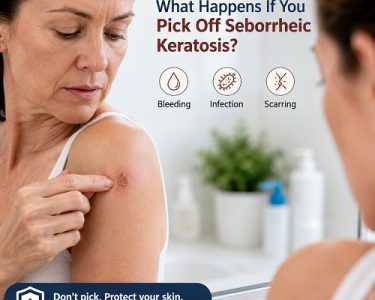
Repeated scratching can sometimes seborrhoeic keratoses causes bleeding or infection, although this is uncommon.
Where Do These Growths Usually Develop?
Seborrhoeic keratoses can appear almost anywhere except the palms of the hands and soles of the feet.
The most common locations include:
- Seborrheic Keratosis on the Face
- Chest
- Upper back
- Shoulders
- Neck
- Abdomen
- Scalp (occasionally)
Many people notice new lesions appearing gradually over several years.
How Is Seborrhoeic Keratosis Diagnosed?
An experienced healthcare professional can usually diagnose seborrhoeic keratosis through a simple skin examination.
Diagnosis often involves:
Visual Examination
Doctors assess:
- Colour
- Texture
- Shape
- Border
- Size
- Location
The classic “stuck-on” appearance often makes diagnosis straightforward.
Dermoscopy
A dermatologist may use a dermoscope, a handheld magnifying device that provides a detailed view of the skin.
Typical dermoscopic features include:
- Milia-like cysts
- Comedo-like openings
- Fissures and ridges
- Sharp borders
- Brain-like surface patterns
These findings help distinguish seborrhoeic keratosis from skin cancers.
Skin Biopsy
If the lesion has unusual features, a small sample may be removed for microscopic examination.
A biopsy is more likely if the growth:
- Bleeds without injury
- Changes rapidly
- Has irregular borders
- Develops multiple colours
- Appears ulcerated
- Looks suspicious for melanoma or squamous cell carcinoma
Fortunately, most seborrhoeic keratoses never require a biopsy.
Conditions That Can Look Similar
Because seborrhoeic keratosis varies in appearance, it can resemble several other skin conditions.
These include:
Melanoma
Melanoma is a dangerous skin cancer that may resemble a dark seborrhoeic keratosis.
Doctors carefully evaluate any suspicious pigmented lesion.
Common Warts
Viral warts have a rough surface but usually lack the characteristic waxy appearance.
Actinic Keratosis
Unlike seborrhoeic keratosis, actinic keratosis develops from sun damage and may become cancerous.
Basal Cell Carcinoma
Some basal cell carcinomas can resemble irritated seborrhoeic keratoses.
Squamous Cell Carcinoma
Inflamed seborrhoeic keratosis or ulcerated lesions may require further investigation to exclude squamous cell carcinoma.
Are Seborrhoeic Keratoses Dangerous?
Are Seborrhoeic Keratoses Dangerous? No.
These growths are considered benign.
They:
- Do not spread to other organs
- Rarely become cancerous
- Usually grow very slowly
- Often remain stable for years
However, any skin lesion that changes rapidly should always be assessed by a healthcare professional.
Treatment Options
Many people seek treatment because the lesions are cosmetically bothersome or become irritated.
Treatment is usually optional.
Cryotherapy
Liquid nitrogen freezes the lesion.
Advantages include:
- Quick procedure
- Minimal recovery time
- Suitable for smaller lesions
Temporary redness or pigment changes may occur afterwards.
Curettage
The growth is gently scraped away after local anaesthetic.
This technique works particularly well for raised lesions.
Electrocautery
Heat generated by an electric current removes the lesion while reducing bleeding.
Laser Therapy
Several laser types can effectively remove seborrhoeic keratoses.
Laser treatment may offer:
- Good cosmetic outcomes
- Reduced scarring
- Precision for facial lesions
Surgical Removal
Large or unusual lesions may require minor surgical excision.
Can They Return After Removal?
The removed lesion usually does not grow back.
However, individuals with a hereditary tendency often develop new seborrhoeic keratoses elsewhere on the body over time.
This explains why people with a strong family history may undergo several Seborrheic Keratosis treatments during their lifetime.
Is There Any Way to Prevent Them?
Unfortunately, there is no proven method to completely prevent seborrhoeic keratoses.
However, maintaining healthy skin may reduce additional skin damage.
Helpful habits include:
- Wearing sunscreen daily
- Avoiding excessive UV exposure
- Performing regular skin self-checks
- Moisturising dry skin
- Attending routine dermatology reviews if you have many lesions
These measures support overall skin health, although they cannot eliminate inherited genetic risk.
Current Research Into the Genetics of Seborrhoeic Keratosis
Scientists continue to investigate why seborrheic keratosis hereditary patterns occur in some families but not others.
Current areas of research include:
- Gene mutations involved in skin cell growth
- Cellular signalling pathways
- Age-related DNA changes
- Molecular markers that distinguish benign from cancerous lesions
- Personalised dermatology treatments based on genetic profiles
Researchers hope these discoveries will improve diagnosis and deepen understanding of why these common skin growths develop.
Common Myths About Seborrhoeic Keratosis
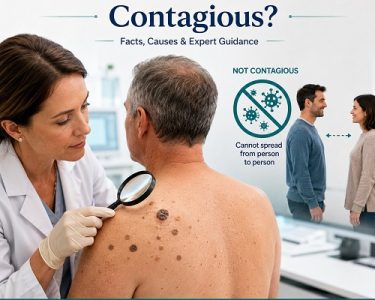
Myth: They are contagious.
Fact: Seborrhoeic keratoses cannot spread from one person to another.
Myth: They always become skin cancer.
Fact: They are benign and only rarely require investigation unless they show unusual changes.
Myth: Poor hygiene causes them.
Fact: Personal hygiene has no connection with their development.
Myth: Everyone inherits them.
Fact: Genetics increases the likelihood, but not everyone with a family history will develop them.
Living with Seborrhoeic Keratosis
Learning that seborrheic keratosis hereditary can be reassuring for many people. While these skin growths may appear suddenly or increase in number over the years, they are typically harmless and do not pose a serious health risk.
Many individuals live with seborrhoeic keratoses without needing any treatment. However, if a growth becomes irritated, catches on clothing, bleeds repeatedly, or causes cosmetic concerns, a dermatologist can recommend safe seborrhoeic keratoses removal options.
It is also important to monitor your skin regularly. Even though seborrhoeic keratoses are benign, new or changing skin lesions should always be assessed by a healthcare professional to rule out conditions such as melanoma or other forms of skin cancer.
Maintaining healthy skin habits can also support your overall skin health. These include:
- Applying broad-spectrum sunscreen when outdoors.
- Wearing protective clothing during prolonged Seborrheic Keratosis sun exposure.
- Avoiding excessive tanning or sunburn.
- Keeping your skin moisturised.
- Performing monthly skin self-examinations.
These practices cannot prevent hereditary seborrhoeic keratoses, but they can help protect your skin and make it easier to notice unusual changes early.
Frequently Asked Questions (FAQs)
Is seborrhoeic keratosis hereditary?
Yes. Research suggests that genetics plays an important role in many cases. People with close family members who have numerous seborrhoeic keratoses are more likely to develop them themselves. However, ageing and environmental factors also contribute.
Can seborrhoeic keratosis skip generations?
It may appear that way. Some people inherit a genetic tendency but never develop noticeable lesions, while others in the same family develop many growths. This variation is influenced by both genes and environmental factors.
Does everyone with a family history develop seborrhoeic keratosis?
No. Having a family history increases your risk but does not guarantee that you will develop these skin growths.
Are seborrhoeic keratoses cancerous?
No. They are benign (non-cancerous) skin growths. However, any lesion that changes rapidly, bleeds without injury, or has an unusual appearance should be examined by a healthcare professional.
Can children inherit seborrhoeic keratosis?
Children can inherit a genetic predisposition, but the growths usually do not appear until adulthood, most commonly after the age of 40.
Can seborrhoeic keratoses be permanently cured?
Individual lesions can be removed using procedures such as cryotherapy, curettage, laser therapy, or electrocautery. However, people with a hereditary tendency may continue to develop new lesions over time.
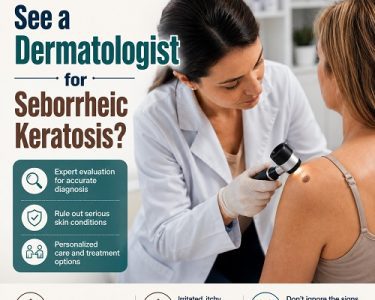
Should I see a dermatologist?
You should seek medical advice if you notice:
- A rapidly growing skin lesion.
- Bleeding or persistent ulceration.
- Significant pain or inflammation.
- Irregular borders or multiple colours.
- Difficulty distinguishing a lesion from melanoma or another skin cancer.
Natural Remedies for Seborrhoeic Keratosis
Natural Remedies for Seborrhoeic Keratosis are often explored by people looking to support healthy skin and reduce irritation caused by these common, non-cancerous skin growths. While seborrhoeic keratoses cannot be removed with home remedies alone, certain natural approaches may help maintain skin health and improve comfort. It is important to remember that these remedies should not replace professional medical advice or treatment.
Keeping the skin well moisturised with natural oils, such as coconut oil or aloe vera gel, may help soothe dryness and irritation around the affected area. Eating a balanced diet rich in antioxidant-containing fruits, vegetables, healthy fats, and adequate hydration also supports overall skin health. Some people choose to include herbal ingredients with anti-inflammatory properties as part of their daily wellness routine, although scientific evidence for their effectiveness in treating seborrhoeic keratoses remains limited.
If you are considering a Natural Treatment for Seborrheic Keratosis, consult a qualified healthcare professional before trying herbal supplements or topical products, especially if a skin growth changes in colour, size, or shape. Any lesion that bleeds, becomes painful, or grows rapidly should be assessed promptly to rule out more serious skin conditions. Combining healthy lifestyle habits with regular skin checks is the safest way to care for your skin and maintain long-term skin health.
Conclusion
The question “Is seborrheic keratosis hereditary?” has a clear but nuanced answer. Current evidence indicates that heredity plays a significant role in the development of these common benign skin growths. Many people with seborrhoeic keratoses have close relatives who are also affected, suggesting that inherited genetic factors increase susceptibility.
However, genetics is only one part of the picture. Ageing, accumulated skin cell changes, sun exposure, and other environmental influences also contribute to their development. Even if you inherit a predisposition, the number, size, and timing of these growths can vary greatly from one person to another.
Although seborrhoeic keratoses are generally harmless, it is essential to monitor your skin for any unusual changes. If a lesion changes in appearance, becomes painful, bleeds, or raises concerns, consult a qualified healthcare professional for an accurate diagnosis.
By understanding the role of genetics and practising good skin care, individuals can manage seborrhoeic keratoses confidently while recognising when medical advice is needed.
Disclaimer:
This article is for educational purposes only and should not replace professional medical advice, diagnosis, or treatment. Always consult a qualified healthcare provider regarding any new or changing scalp or forehead lump.