 By
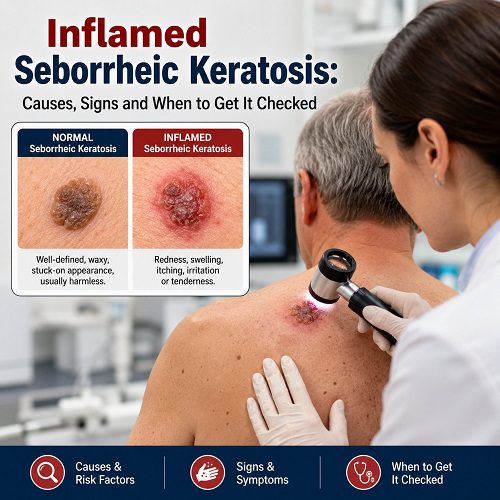
By Inflamed seborrheic keratosis is a common skin condition that occurs when a normally harmless seborrheic keratosis becomes irritated, swollen, or inflamed. Seborrheic keratoses are non-cancerous skin growths that frequently develop with age. They often appear as brown, black, or tan raised patches with a waxy or “stuck-on” appearance. Although these growths are usually painless and harmless, they can occasionally become inflamed due to friction, scratching, injury, or other skin irritation.
When inflammation develops, the growth may become red, itchy Seborrheic keratosis, tender, or even bleed. These changes can be alarming because inflamed seborrheic keratosis may resemble skin cancer or other serious skin conditions. Understanding the Seborrheic keratosis causes, symptoms, diagnosis, and treatment options can help you recognise when a lesion simply needs monitoring and when it should be evaluated by a healthcare professional.
What Is Inflamed Seborrheic Keratosis?
Seborrheic keratosis is one of the most common benign skin growths in adults over the age of 40. These growths develop from skin cells in the outer layer of the skin and are not contagious or cancerous.
An inflamed seborrheic keratosis develops when one of these growths becomes irritated. Inflammation may happen suddenly and can change the appearance of the lesion, making it look more concerning than usual.
Although inflammation does not necessarily mean cancer is present, any rapidly changing skin lesion deserves medical evaluation to rule out more serious conditions.
What Causes Inflamed Seborrheic Keratosis?
Several factors may trigger inflammation.
Friction
Growths located under clothing, bra straps, waistbands, or jewellery are frequently rubbed throughout the day. Constant friction may lead to redness and swelling.
Scratching
Persistent itching can cause repeated scratching, damaging the surface of the lesion and triggering inflammation.
Minor Injury
Accidental cuts while shaving or bumps against hard surfaces may irritate the growth.
Skin Irritation
Certain soaps, skin care products, or adhesives can occasionally irritate sensitive skin surrounding the lesion.
Secondary Infection
Although uncommon, bacteria may enter damaged skin, causing additional redness, warmth, and tenderness.
Immune Response
Sometimes the body’s immune system reacts to the growth, resulting in temporary inflammation without any obvious injury.
Common Signs and Symptoms
An inflamed seborrheic keratosis may develop one or several of the following symptoms.
Redness
The skin around the lesion often becomes noticeably red.
Swelling
The growth may appear larger than usual because of inflammation.
Itching
Many people experience persistent itching before visible inflammation appears.
Tenderness
Touching the affected area may become uncomfortable or painful.
Bleeding
The lesion may bleed after scratching or friction.
Crusting
Inflamed areas sometimes develop a dry crust or scab during healing.
Burning Sensation
Some individuals describe mild burning or irritation.
Colour Changes
The lesion may temporarily appear darker, lighter, or unevenly coloured.
Where Does It Commonly Occur?
Inflamed seborrheic keratosis can develop anywhere seborrheic keratoses are found.
Common locations include:
- Face
- Neck
- Chest
- Back
- Shoulders
- Abdomen
- Arms
- Scalp
Areas exposed to repeated rubbing are especially prone to inflammation.
Risk Factors
Certain factors increase the likelihood of developing inflamed seborrheic keratosis.
- Age over 40
- Family history
- Fair skin
- Multiple seborrheic keratoses
- Frequent skin friction
- Chronic scratching
- Sensitive skin
- Previous skin irritation
How Is Inflamed Seborrheic Keratosis Diagnosed?
A dermatologist usually seborrheic keratosis diagnoses the condition through a skin examination.
Medical History
The doctor may ask:
- When did the lesion become inflamed?
- Has it changed rapidly?
- Is it painful or bleeding?
- Has it been scratched or injured?
Physical Examination
The doctor evaluates:
- Shape
- Size
- Colour
- Borders
- Surface texture
- Signs of infection
Dermoscopy
A handheld dermatoscope provides a magnified view of the lesion, helping distinguish benign growths from skin cancer.
Skin Biopsy
If the diagnosis remains uncertain, a small tissue sample may be removed and examined under a microscope.
Can Inflamed Seborrheic Keratosis Look Like Skin Cancer?
Yes. This is one of the main reasons medical evaluation is recommended whenever a skin lesion changes significantly.
Inflamed seborrheic keratosis may resemble:
- Melanoma
- Squamous cell carcinoma
- Basal cell carcinoma
- Actinic keratosis
Because visual appearance alone is not always enough to make a diagnosis, dermatologists may recommend a biopsy if there is any doubt.
When Should You Get It Checked?
You should arrange a medical assessment if you notice:
- Rapid enlargement
- Persistent bleeding
- Ulceration
- Severe pain
- Dark irregular pigmentation
- Uneven borders
- Continuous crusting
- Signs of infection
- New growth after age 50
- Any lesion that looks significantly different from your other skin growths
Early evaluation helps ensure that more serious skin conditions are not overlooked.
Treatment Options
Seborrheic Keratosis Treatment depends on the severity of inflammation and whether removal is necessary.
Observation
If the lesion is only mildly irritated, your doctor may simply recommend monitoring it.
Avoid Friction
Loose clothing and protective dressings may reduce irritation.
Moisturisers
Gentle moisturisers can soothe surrounding skin.
Anti-inflammatory Creams
Short-term use of prescribed topical corticosteroids may reduce inflammation in selected cases.
Cryotherapy
Liquid nitrogen freezes the lesion, causing it to fall off over several weeks.
Curettage
The dermatologist gently scrapes away the growth after numbing the skin.
Electrocautery
Electric current removes the lesion while controlling bleeding.
Laser Removal
Laser therapy may be appropriate for selected cosmetic cases.
Surgical Excision
If cancer cannot be excluded, complete surgical removal allows laboratory examination.
Home Care Tips
Although Natural Remedies for Seborrheic Keratosis, these measures may help reduce irritation.
- Avoid scratching.
- Wear loose clothing.
- Keep the skin clean.
- Apply gentle fragrance-free moisturiser.
- Protect irritated areas with a soft dressing if necessary.
- Avoid harsh skin products.
- Monitor for changes.
Never attempt to cut, burn, or remove a seborrheic keratosis at home.
Possible Complications
Most cases resolve without problems.
Occasionally complications include:
- Repeated bleeding
- Skin infection
- Persistent irritation
- Cosmetic concerns
- Diagnostic uncertainty requiring biopsy
Prevention
While seborrheic keratoses cannot usually be prevented, inflammation may be reduced by:
- Avoiding unnecessary scratching
- Minimising friction
- Using gentle skin care products
- Keeping the skin moisturised
- Wearing breathable clothing
- Seeking medical advice if irritation develops
Living with Inflamed Seborrheic Keratosis
Many people live with seborrheic keratoses for decades without needing treatment. An episode of inflammation does not necessarily indicate a serious problem, but it should not be ignored. Regular skin self-examinations can help you notice changes early. If a lesion becomes persistently inflamed, painful, or changes in appearance, a dermatologist can determine whether simple treatment or further investigation is needed.
Maintaining good skin care habits, protecting irritated areas from friction, and attending routine skin examinations if you have multiple lesions can help keep your skin healthy. Remember that while seborrheic keratoses are benign, it is always safer to have changing skin growths assessed rather than assuming they are harmless.
Frequently Asked Questions
Is inflamed seborrheic keratosis dangerous?
No. It is usually a benign condition. However, because it can resemble skin cancer, any significant changes should be assessed by a healthcare professional.
Can inflamed seborrheic keratosis go away on its own?
The inflammation often settles once the irritation is removed, although the underlying growth usually remains.
Why is my seborrheic keratosis suddenly itchy?
Itching may occur because of friction, dry skin, inflammation, or irritation from clothing or scratching.
Can I remove it at home?
No. Home removal methods can lead to bleeding, infection, and scarring. Removal should be performed by a qualified healthcare professional.
Does inflamed seborrheic keratosis always need treatment?
Not always. Mild cases may only require observation and avoidance of irritation. Treatment is recommended if symptoms persist, the lesion causes discomfort, or the diagnosis is uncertain.
Conclusion
Inflamed seborrheic keratosis is a common and generally harmless condition that occurs when a benign seborrheic keratosis becomes irritated. Friction, scratching, minor injuries, and skin irritation are frequent causes of inflammation, leading to redness, swelling, itching, tenderness, or bleeding. Although these changes are often temporary, they can closely resemble skin cancer, making professional evaluation important when a lesion changes in appearance.
Most cases can be managed successfully with simple measures such as reducing friction, protecting the affected area, and following your dermatologist’s recommendations. If a skin growth becomes painful, rapidly enlarges, develops irregular pigmentation, or continues to bleed, seek medical advice promptly to ensure an accurate diagnosis and appropriate treatment. Early assessment offers reassurance and helps maintain healthy skin for the future.
Disclaimer:
This article is for educational purposes only and should not replace professional medical advice, diagnosis, or treatment. Always consult a qualified healthcare provider regarding any new or changing scalp or forehead lump.