 By
By Bloating and excessive gas are common digestive complaints. They can occur after eating certain foods, swallowing air, constipation, food intolerances, or conditions such as irritable bowel syndrome (IBS). However, if bloating occurs alongside abdominal pain, constipation, difficulty passing gas, or a history of abdominal surgery, another possibility may need consideration: abdominal adhesions.
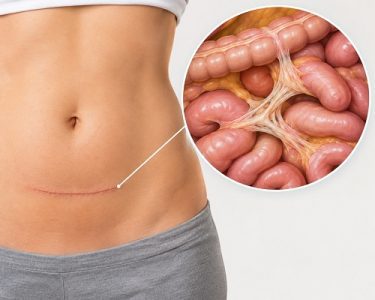
Abdominal adhesions are bands of scar-like tissue that develop inside the abdomen. They commonly form after abdominal or pelvic surgery, although inflammation and infections can also cause them. Most adhesions do not produce symptoms, but some can interfere with the normal movement of the intestines. In certain situations, they can contribute to an intestinal obstruction, which may cause significant bloating, abdominal pain, nausea, vomiting, constipation and an inability to pass gas.
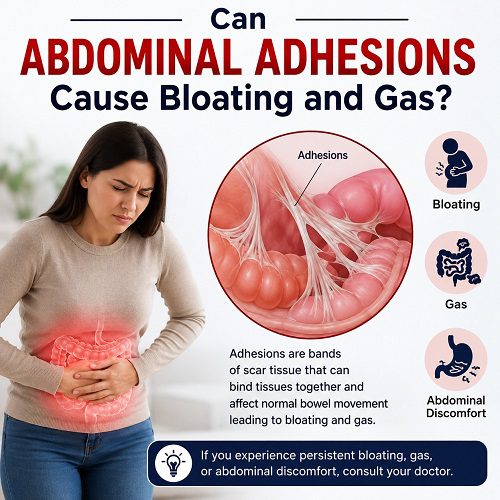
So, can abdominal adhesions cause bloating and gas? Yes, they can contribute to these symptoms, particularly when they interfere with intestinal movement or cause partial or complete obstruction. However, bloating and gas alone do not prove that adhesions are responsible. Abdominal Adhesions and Bloating can help you recognise when symptoms may require medical evaluation.
What Are Abdominal Adhesions?
What Are Abdominal Adhesions? Abdominal adhesions are bands of scar-like tissue that form between tissues or organs inside the abdomen. They can cause organs or sections of the intestine to stick together when they would normally move freely.
They most commonly develop following abdominal surgery. During surgery, handling of tissues and the body’s natural healing process can cause scar tissue to form. Adhesions may also develop after abdominal infections or inflammatory conditions such as Crohn’s disease, diverticular disease, endometriosis, pelvic inflammatory disease or peritonitis.
Adhesions can form between:
- Loops of the small intestine
- The intestine and abdominal wall
- Abdominal organs
- Pelvic tissues and organs
Many people have adhesions without knowing it because they do not experience symptoms or complications. The presence of an adhesion does not necessarily mean that Abdominal Adhesions treatment is required.
Problems generally occur when the adhesion pulls, compresses, twists or kinks part of the intestine.
Can Abdominal Adhesions Cause Bloating and Gas?
Yes. Abdominal Adhesions and Bloating can be connected when adhesions interfere with the normal passage of food, fluid, intestinal contents or gas.
Normally, the digestive tract continuously moves its contents through coordinated muscular contractions. Gas produced during digestion also needs to move through the intestines before it can be expelled.
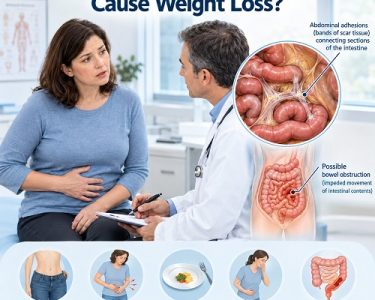
An adhesion may alter the position or movement of an intestinal loop. If the bowel becomes narrowed or kinked, intestinal contents and gas may move more slowly. In more significant cases, an adhesion can contribute to a partial or complete intestinal obstruction.
This can result in:
- Abdominal bloating
- Abdominal distension
- A feeling of fullness or pressure
- Cramping
- Abdominal pain
- Increased discomfort after eating
- Constipation
- Difficulty passing gas
- Nausea or vomiting
Therefore, adhesions do not necessarily create gas directly. Instead, they may interfere with the normal movement of gas and intestinal contents, making bloating and distension more noticeable.
How Do Intestinal Adhesions Affect Digestion?
The digestive tract needs sufficient space and mobility to move food, liquid and gas forward.
When intestinal adhesions form around or between bowel loops, they can restrict normal movement. An adhesion may pull one section of intestine towards another or create an angle that makes the passage of intestinal contents more difficult.
Think of the intestine as a flexible tube. If part of that tube becomes sharply bent or compressed, movement through it can become less efficient.
A partial restriction may allow some food, fluid and gas to pass. This can produce intermittent symptoms such as:
- Bloating that comes and goes
- Abdominal cramps
- Changes in bowel habits
- Increased gas
- Constipation
- Abdominal discomfort after meals
A more severe obstruction can prevent intestinal contents and gas from moving through the affected area. This situation requires urgent medical assessment.
What Does Adhesion-Related Bloating Feel Like?
Bloating associated with adhesions can vary significantly from person to person.
Some people may experience mild abdominal fullness or pressure. Others may notice visible abdominal swelling or distension, particularly during episodes of impaired intestinal movement.
Possible symptoms include:
1. Abdominal fullness
You may feel unusually full or uncomfortable even after eating a relatively small meal.
2. Abdominal distension
The abdomen may appear larger or feel tight because intestinal contents and gas are not moving normally.
3. Cramping
If the intestine is attempting to push contents past a narrowed or restricted area, you may experience intermittent cramping.
4. Constipation
A partial obstruction can interfere with the normal movement of stool.
5. Difficulty passing gas
This is particularly important when it occurs together with severe bloating, abdominal pain, nausea or vomiting.
6. Nausea and vomiting
These Abdominal Adhesions symptoms may occur when intestinal contents cannot move normally through the digestive tract.
NIDDK lists abdominal pain, bloating, constipation, inability to pass gas, nausea and vomiting among symptoms that may occur with intestinal obstruction caused by adhesions.
Why Do Adhesions Cause Gas Symptoms?
It is important to distinguish gas production from gas retention or impaired movement.
The digestive tract naturally contains gas. Gas enters the digestive system through swallowed air, while bacteria in the large intestine produce gas when they break down certain undigested carbohydrates. Bloating, distension and passing gas are therefore normal digestive experiences.
Adhesions may become relevant when they interfere with how that gas moves through the intestine.
For example, if a section of bowel becomes narrowed or kinked, gas may have difficulty travelling through the affected area. This can contribute to pressure, distension and discomfort.
As a result, someone may describe their symptoms as:
- “Trapped gas”
- Excessive bloating
- Pressure in the abdomen
- A swollen or tight stomach
- Difficulty passing wind
However, these symptoms are not specific to adhesions. Many other digestive conditions can produce similar complaints.
Common Causes of Bloating and Gas Other Than Adhesions
If you experience persistent abdominal bloating, adhesions are only one possible explanation.
Common Abdominal Adhesions causes of gas and bloating include:
- Eating quickly
- Swallowing excess air
- Fizzy or carbonated drinks
- Certain carbohydrates
- Constipation
- Lactose intolerance
- Fructose intolerance
- IBS
- Small intestinal bacterial overgrowth
- Functional gastrointestinal disorders
- Other digestive conditions
NIDDK notes that gas symptoms can occur when bacteria break down undigested carbohydrates and that conditions such as IBS, constipation, carbohydrate intolerance and small intestinal bacterial overgrowth may also contribute to gas-related symptoms.
This is why persistent bloating should not automatically be attributed to previous surgery or suspected adhesions.
Who Is More Likely to Develop Abdominal Adhesions?
The strongest risk factor is a previous abdominal or pelvic operation.
Adhesions are particularly common following open abdominal surgery. They can also develop after laparoscopic procedures, although the risk is generally lower than with open surgery. Multiple operations, emergency abdominal surgery and operations involving the lower digestive tract can increase the likelihood of adhesions.
Other potential Abdominal Adhesions causes include:
- Abdominal infections
- Appendicitis
- Crohn’s disease
- Diverticular disease
- Endometriosis
- Pelvic inflammatory disease
- Peritonitis
- Radiation therapy involving the abdomen
- Long-term peritoneal dialysis
Importantly, symptoms from adhesions may develop shortly after surgery or many years later.
Can Bloating Years After Surgery Be Caused by Adhesions?
It can be.
A person may undergo abdominal surgery and feel completely well for years before developing symptoms associated with adhesions.
This is because adhesions can remain harmless for a long time. In some people, they never cause a problem. In others, changes in intestinal movement or a new narrowing can eventually produce symptoms.
If you previously had abdominal or pelvic surgery and now experience unexplained recurrent bloating, abdominal pain, constipation or difficulty passing gas, discuss these symptoms with a healthcare professional.
However, having undergone surgery does not mean that every episode of bloating is caused by adhesions.
How Are Abdominal Adhesions Diagnosed?
Diagnosing adhesions can be challenging.
Standard imaging tests generally cannot directly show abdominal adhesions. Doctors may instead use your medical history, physical examination and imaging to identify complications such as an intestinal obstruction or to rule out other causes of symptoms.
Your doctor may ask about:
- Previous abdominal or pelvic surgery
- Previous infections
- Your bowel habits
- Abdominal pain
- Bloating and distension
- Vomiting
- Difficulty passing stool or gas
- How long symptoms have been present
CT scans and X-rays can help identify intestinal obstruction and may provide information about its location and severity.
In some circumstances, surgery may be required to definitively identify adhesions.
Treatment for Adhesion-Related Bloating
Abdominal Adhesions Treatment depends on the cause and severity of symptoms.
If adhesions are present but do not cause symptoms or complications, treatment is usually unnecessary.
If adhesions contribute to a significant intestinal obstruction, hospital treatment may be required. Depending on the circumstances, doctors may initially use supportive treatment such as intravenous fluids and decompression of the digestive tract. Surgery may be necessary if the obstruction does not resolve or if there are signs of serious complications.
Surgery can release adhesions, but it also carries an important consideration: surgery itself can create new adhesions. Therefore, doctors generally weigh the potential benefits against the risks before recommending adhesion surgery.
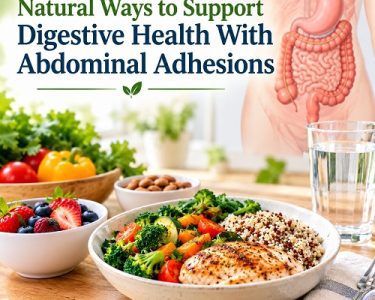
Can Diet Reduce Bloating From Adhesions?
There is no specific diet that removes abdominal adhesions.
However, if your symptoms are related to a digestive problem, a healthcare professional may recommend dietary changes based on your individual situation.
Some people find that reducing foods or drinks that increase gas helps manage ordinary bloating. Eating slowly, avoiding excessive fizzy drinks and identifying foods that trigger symptoms may also be useful for some people.
However, diet should not be used as a substitute for urgent medical assessment when an intestinal obstruction is suspected.
If you have been diagnosed with a partial bowel obstruction, follow the dietary instructions provided by your medical team. The appropriate diet can depend on the severity and location of the obstruction.
When Is Bloating an Emergency?
Most bloating is not an emergency. However, severe or rapidly worsening bloating can sometimes be a sign of intestinal obstruction.
Seek urgent medical attention if bloating occurs with:
- Severe or worsening abdominal pain
- Persistent abdominal cramping
- Repeated vomiting
- Significant abdominal swelling or distension
- Inability to pass gas
- Inability to pass stool
- Fever
- Rapid heart rate
- Severe weakness or dehydration
A complete intestinal obstruction can become life-threatening because it can compromise blood flow to the intestine or lead to serious infection. NIDDK specifically advises immediate medical attention when symptoms suggest a complete obstruction, including abdominal pain and inability to pass stool or gas.
Do not try to manage severe obstruction symptoms at home with laxatives or home remedies without medical advice.
Abdominal Adhesions and Bloating: Key Takeaways
Abdominal Adhesions and Bloating can be related, but the relationship is usually indirect.
Adhesions are internal bands of scar tissue that can restrict or alter intestinal movement. When they pull, twist, compress or kink the bowel, they may contribute to impaired movement of gas and intestinal contents. This can result in bloating, abdominal distension, constipation, pain and difficulty passing gas.
At the same time, bloating and gas are extremely common and have many possible causes. Having a history of abdominal surgery increases the possibility of adhesions, but it does not prove that adhesions are responsible for current symptoms.
The most important distinction is between occasional bloating and symptoms suggesting an intestinal obstruction. Severe pain, significant abdominal swelling, vomiting or an inability to pass gas or stool warrants urgent medical assessment.
If you have recurrent bloating after abdominal surgery, particularly when it occurs alongside pain or changes in bowel movements, speak with a healthcare professional. Proper evaluation can help determine whether adhesions, another digestive disorder or a different medical condition is responsible.
Frequently Asked Questions
Can abdominal adhesions cause excessive gas?
Abdominal adhesions do not necessarily increase gas production. However, if they interfere with intestinal movement, gas may become harder to move through the bowel, contributing to pressure, bloating and discomfort.
Can adhesions cause a swollen stomach?
Yes. When adhesions contribute to partial or complete intestinal obstruction, gas and intestinal contents can accumulate and cause abdominal swelling or distension.
Can adhesions cause constipation and gas?
They can, particularly when an adhesion restricts intestinal movement or contributes to an obstruction. Constipation and difficulty passing gas are recognised symptoms associated with intestinal obstruction.
Can abdominal adhesions go away on their own?
Adhesions generally do not simply disappear, although symptoms may change over time. Many adhesions never cause symptoms and therefore do not require treatment.
Can an ultrasound detect abdominal adhesions?
Routine imaging generally cannot reliably identify abdominal adhesions themselves. Imaging such as CT scans can, however, help identify complications such as intestinal obstruction.
Should I see a doctor for persistent abdominal bloating?
Yes. Persistent or unexplained bloating deserves medical evaluation, particularly when it occurs with abdominal pain, constipation, vomiting, weight loss or changes in bowel habits.
Medical Disclaimer
This article is intended for general educational and informational purposes only. It is not a substitute for professional medical advice, diagnosis or treatment. Abdominal bloating and gas can have many causes, and only a qualified healthcare professional can determine the underlying cause of persistent or severe symptoms. If you experience severe abdominal pain, significant swelling, persistent vomiting, or an inability to pass stool or gas, seek urgent medical attention.