
 By
By Nausea can be an uncomfortable symptom with many possible causes, ranging from indigestion and infections to medication side effects and digestive disorders. But if you have a history of abdominal surgery or inflammation and frequently experience nausea along with abdominal pain, bloating, constipation, or difficulty passing gas, you may wonder whether scar tissue inside your abdomen could be involved.
This raises an important question: Can abdominal adhesions cause nausea?
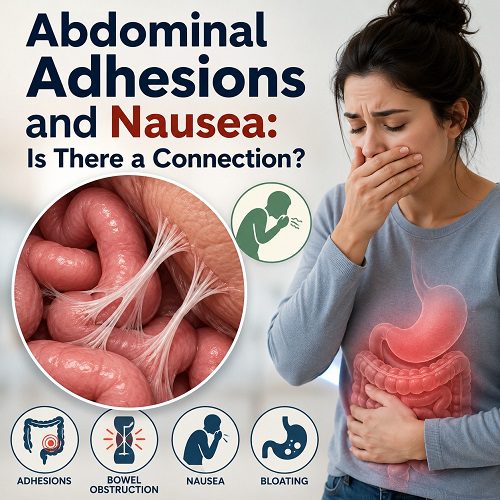
The answer is that abdominal adhesions may be associated with nausea, particularly when they interfere with the normal movement of the intestines. Adhesions are bands of scar-like tissue that can form between abdominal organs, tissues, or the abdominal wall. In some people, they cause no symptoms at all. In others, they can pull, kink, twist, or compress parts of the intestine and potentially contribute to an intestinal or bowel obstruction. Abdominal Adhesions and Nausea can help you recognize possible warning signs and understand when medical evaluation is important.
What Are Abdominal Adhesions?
What Are Abdominal Adhesions? Abdominal adhesions are bands of scar-like tissue that develop inside the abdomen. They can cause organs and tissues that normally move freely against one another to become attached.
The most common cause is previous abdominal surgery. Adhesions can also develop after inflammation or infection inside the abdomen. Conditions such as Crohn’s disease, diverticular disease, endometriosis, pelvic inflammatory disease, and peritonitis may be associated with adhesion formation. Radiation treatment and some other abdominal conditions can also contribute.
Adhesions are relatively common after abdominal surgery, but having them does not necessarily mean that a person will experience symptoms. In fact, many people with abdominal adhesions never develop complications.
When symptoms do occur, chronic abdominal pain is commonly reported. More serious symptoms can develop if an adhesion interferes with the intestines.
Can Abdominal Adhesions Cause Nausea?
Yes, abdominal adhesions can be associated with nausea, but nausea is usually more concerning when it occurs as part of a digestive complication such as an intestinal obstruction.
An adhesion may pull or bend a loop of intestine. If the intestine becomes narrowed or blocked, food, fluids, gas, and digestive contents may have difficulty moving through the digestive tract.
As pressure builds behind the affected area, symptoms can include:
- Nausea
- Vomiting
- Abdominal pain or cramping
- Bloating or abdominal swelling
- Constipation
- Difficulty passing gas
- A feeling of fullness or discomfort
NIDDK identifies nausea and vomiting among the symptoms that may occur with an intestinal obstruction caused by abdominal adhesions.
Therefore, the connection between Abdominal Adhesions and Nausea may be indirect. The adhesion itself may not simply “cause nausea” in isolation. Instead, it can interfere with intestinal movement, and that disruption may produce nausea.
How Do Adhesions Lead to Digestive Symptoms?
To understand the connection, it helps to consider how the intestines normally work.
Your digestive tract moves food, liquid, and waste through coordinated muscular contractions. The intestines also need enough space and flexibility to move normally inside the abdominal cavity.
Adhesions can interfere with this movement. A band of scar tissue may attach one part of the intestine to another structure, potentially creating tension or changing the position of the bowel.
In some cases, an adhesion can cause the intestine to kink or become compressed. If the passage becomes sufficiently narrow, intestinal contents may not move normally.
This can result in symptoms such as abdominal discomfort, bloating, nausea, and vomiting.
A more severe blockage is known as an intestinal or bowel obstruction. Adhesions are an important cause of small-bowel obstruction.
Nausea Without Bowel Obstruction
It is important to remember that not every person with abdominal adhesions and nausea has a bowel obstruction.
Nausea is a nonspecific symptom. It can occur because of many conditions, including:
- Gastrointestinal infections
- Food poisoning
- Acid reflux
- Gastritis
- Medication side effects
- Migraine
- Motion sickness
- Gallbladder problems
- Pancreatic disorders
- Pregnancy
- Other digestive disorders
Therefore, simply having a history of abdominal surgery and experiencing nausea does not prove that adhesions are responsible.
Doctors generally consider the complete pattern of symptoms, medical history, physical examination, and appropriate testing when determining the possible cause.
Symptoms That May Occur With Abdominal Adhesions
Many abdominal adhesions do not cause noticeable symptoms. When symptoms develop, they may vary depending on where the adhesions are located and whether they interfere with an organ or the intestine.
Possible symptoms include:
Abdominal Pain
Chronic or recurring abdominal pain is one of the most commonly reported symptoms associated with symptomatic adhesions.
Pain may sometimes feel like pulling, stretching, cramping, or discomfort. However, abdominal pain has many possible Abdominal Adhesions causes, so it cannot by itself establish that adhesions are present.
Bloating
If intestinal movement is affected, gas and digestive contents may accumulate and contribute to bloating or abdominal distension.
Nausea
Nausea may occur when normal intestinal movement is disrupted, particularly when adhesions contribute to partial or complete obstruction.
Vomiting
Vomiting can occur when intestinal contents cannot move normally through a blockage. Vomiting combined with severe abdominal pain, swelling, and inability to pass gas or stool requires urgent medical assessment.
Constipation
A partial or complete obstruction may make it difficult for stool to move through the intestines.
Difficulty Passing Gas
An inability to pass gas can be an important warning sign, especially when it occurs with abdominal pain, bloating, nausea, or vomiting.
Abdominal Adhesions and Bowel Obstruction
One of the most important complications associated with abdominal adhesions is a bowel obstruction.
A bowel obstruction occurs when the normal movement of food, fluids, gas, or stool through the intestine becomes partially or completely blocked.
Adhesions are the most common cause of small-bowel obstruction, according to NIDDK.
The Abdominal Adhesions symptoms can include:
- Cramping or abdominal pain
- Abdominal swelling or bloating
- Nausea
- Vomiting
- Constipation
- Inability to pass gas
A complete obstruction can become a medical emergency. A prolonged blockage can affect blood flow to part of the intestine and potentially result in serious complications, including tissue damage or infection of the abdominal lining.
This is why persistent or severe symptoms should not simply be attributed to “scar tissue” without medical evaluation.
When Is Nausea a Warning Sign?
Occasional mild nausea is usually not enough to indicate a serious complication. However, nausea becomes more concerning when it appears alongside symptoms suggesting intestinal blockage.
Seek urgent medical attention if you develop nausea together with:
- Severe or worsening abdominal pain
- Significant abdominal swelling
- Repeated vomiting
- Inability to pass stool
- Inability to pass gas
- Fever
- A rapid heartbeat
- Severe weakness or dehydration
A complete intestinal obstruction can be life-threatening and requires prompt medical care.
Do not attempt to manage suspected bowel obstruction at home with laxatives or other treatments without medical advice.
Who Is More Likely to Develop Abdominal Adhesions?
Anyone can potentially develop abdominal adhesions, but certain situations increase the likelihood.
The most important risk factor is previous abdominal surgery.
Adhesions may be particularly associated with:
- Open abdominal surgery
- Emergency abdominal surgery
- Pelvic surgery
- Surgery involving the colon or rectum
- Multiple abdominal operations
- Abdominal inflammation or infection
Importantly, symptoms related to adhesions may develop soon after surgery or many years later.
This means that a person who underwent abdominal surgery years ago should still mention that surgical history to a healthcare professional when experiencing unexplained abdominal symptoms.
How Are Abdominal Adhesions Diagnosed?
Diagnosing adhesions can be challenging.
Standard imaging tests generally cannot directly show abdominal adhesions. Instead, doctors may use imaging to identify complications such as intestinal obstruction or to rule out other Abdominal Adhesions causes of symptoms.
Depending on the situation, a healthcare professional may use:
- Medical history
- Physical examination
- Blood tests
- Abdominal X-rays
- CT scans
- Contrast studies
A CT scan can be particularly useful when doctors suspect intestinal obstruction because it may help identify the location, severity, and possible cause of the blockage.
In some situations, surgery may be needed to definitively identify adhesions.
Because many conditions can cause abdominal pain and nausea, doctors usually consider alternative explanations before concluding that adhesions are responsible.
How Are Adhesions Treated?
Abdominal Adhesions Treatment depends on whether the adhesions are causing symptoms or complications.
No Treatment May Be Needed
If adhesions are not causing symptoms or complications, doctors generally do not recommend treatment simply to remove them.
This is because surgery itself can cause new adhesions.
Treatment for Bowel Obstruction
If adhesions cause an intestinal obstruction, medical treatment may be required in a hospital.
Doctors may initially use approaches such as intravenous fluids and, in appropriate cases, a tube through the nose into the stomach to remove accumulated digestive contents and reduce pressure.
Some obstructions resolve without surgery, while others require an operation.
If surgery is necessary, the surgeon may release the adhesion causing the blockage.
Surgery for Symptomatic Adhesions
In selected cases, surgery may be considered for adhesions that cause significant complications or persistent problems.
However, surgery must be carefully considered because operating inside the abdomen can lead to the formation of additional adhesions.
The decision should therefore be individualized by a qualified healthcare professional.
Can Diet Help With Abdominal Adhesions and Nausea?
There is no specific diet that can remove abdominal adhesions. Adhesions are bands of internal scar tissue, and dietary changes cannot physically dissolve them.
However, if you experience nausea or digestive symptoms, your healthcare professional may recommend dietary adjustments depending on the underlying cause.
For example, during certain digestive conditions, a healthcare professional may recommend temporarily modifying meal size, food texture, or other dietary factors.
If a bowel obstruction is suspected, however, diet should not be used as a substitute for medical assessment.
Anyone with significant nausea, vomiting, abdominal swelling, severe pain, or inability to pass gas or stool should seek medical advice promptly.
Can Abdominal Adhesions Be Prevented?
There is no guaranteed way for an individual to prevent adhesions after abdominal surgery.
Surgeons can take measures intended to reduce the likelihood of adhesion formation. These may include minimizing tissue trauma, using minimally invasive surgical techniques when appropriate, and using certain adhesion barriers in selected procedures.
However, patients should not avoid medically necessary surgery simply because of the possibility of adhesions. Surgical decisions should be based on the overall benefits and risks of treatment.
What Should You Tell Your Doctor?
If you experience recurring nausea and have previously had abdominal surgery, provide your healthcare professional with as much information as possible.
Useful details include:
- The type of surgery you previously had
- When the surgery occurred
- Whether you have had multiple abdominal operations
- When your nausea started
- Whether nausea occurs after meals
- Whether you have abdominal pain
- Whether your abdomen becomes bloated or swollen
- Whether you are passing stool normally
- Whether you can pass gas
- Whether you have experienced vomiting
- Whether symptoms are getting worse
This information can help your healthcare professional determine whether adhesions, obstruction, or another condition could be contributing to your symptoms.
Frequently Asked Questions
Can abdominal adhesions cause nausea without pain?
It is possible to experience nausea without significant pain, but nausea alone does not establish that adhesions are responsible. Nausea has many possible causes. If nausea is persistent, recurrent, or associated with vomiting or changes in bowel movements, medical evaluation is appropriate.
Does nausea mean I have a bowel obstruction?
No. Nausea is not specific to bowel obstruction. However, nausea combined with severe abdominal pain, swelling, vomiting, constipation, or inability to pass gas can be a warning sign of obstruction and should be assessed urgently.
Can adhesions cause bloating and gas?
They can contribute to bloating and digestive symptoms when they interfere with intestinal movement or cause an obstruction. However, common digestive conditions can also cause bloating and gas.
Can abdominal adhesions go away on their own?
Adhesions generally do not simply dissolve on their own. Many remain without causing symptoms and therefore require no treatment. When adhesions cause serious complications such as obstruction, medical or surgical treatment may be necessary.
Can adhesions cause symptoms years after surgery?
Yes. Adhesion-related complications can occur long after the original abdominal operation. Therefore, previous surgery remains relevant when evaluating new abdominal symptoms.
Final Thoughts
The connection between Abdominal Adhesions and Nausea is real, but it is important to understand the mechanism. Adhesions are internal bands of scar-like tissue that commonly develop after abdominal surgery. Most cause no symptoms, but some can interfere with intestinal movement.
When an adhesion pulls, bends, or compresses the intestine, it can contribute to partial or complete bowel obstruction. This may lead to nausea, vomiting, abdominal pain, bloating, constipation, and difficulty passing gas.
Nausea by itself does not mean that you have adhesions or a bowel obstruction. However, nausea accompanied by severe abdominal pain, repeated vomiting, significant swelling, or inability to pass stool or gas should be treated as a potential medical emergency.
If you have a history of abdominal surgery and are experiencing persistent or unexplained digestive symptoms, speak with a qualified healthcare professional. Early evaluation can help identify the cause and determine whether further testing or treatment is necessary.
Medical Disclaimer
This article is intended for general educational and informational purposes only. It is not a substitute for professional medical diagnosis, treatment, or advice. Abdominal pain, nausea, vomiting, and bowel changes can have many causes. If you have severe or worsening symptoms, especially symptoms suggestive of bowel obstruction, seek urgent medical attention.