 By
By Abdominal adhesions are bands of scar-like tissue that develop inside the abdomen and cause organs or tissues to stick together. Under normal circumstances, abdominal organs have smooth surfaces that allow them to move freely against one another. When inflammation, injury, or surgery affects these surfaces, the body’s natural healing process can sometimes create fibrous tissue that connects nearby organs or tissues.
Understanding the causes of abdominal adhesions is important because these adhesions are common, particularly after abdominal surgery. Most people who develop adhesions never experience symptoms or complications. However, in some cases, adhesions can pull, twist, or compress the intestines and may contribute to chronic abdominal pain or intestinal obstruction.
The most common cause is surgery involving the abdomen or pelvis. However, surgery is not the only possible cause. Inflammatory diseases, infections, endometriosis, radiation therapy, peritoneal dialysis, and certain other conditions can also contribute to adhesion formation.
What Are Abdominal Adhesions?
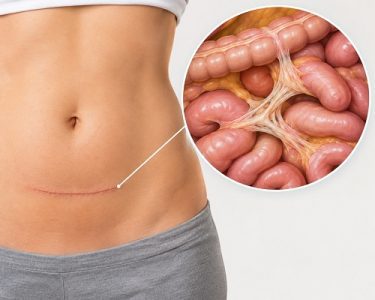
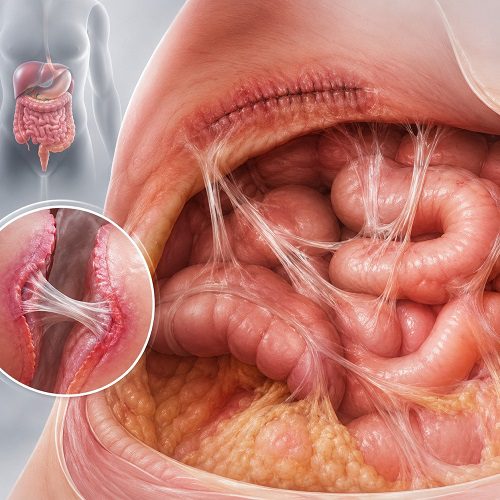
What Are Abdominal Adhesions? Abdominal adhesions are internal bands of fibrous or scar-like tissue that form between organs, tissues, or the abdominal wall. They may connect loops of intestine to each other, attach the intestine to another abdominal organ, or connect an organ to the abdominal wall.
Normally, the abdominal organs can move as the body moves. Adhesions can interfere with this normal movement by causing tissues to become stuck together. In some people, these bands remain harmless and produce no noticeable symptoms. In others, they can cause organs to become pulled out of their usual position.
One of the most important potential complications is intestinal obstruction. Adhesions can bend or compress a section of the intestine, interfering with the normal movement of food, fluids, and gas through the digestive tract. Adhesions are a major cause of small bowel obstruction.
How Do Abdominal Adhesions Form?
To understand the causes of abdominal adhesions, it helps to understand the body’s healing response.
When tissue inside the abdomen is injured or inflamed, the body activates an inflammatory and repair process. Proteins and cells involved in healing can create temporary connections between damaged surfaces. Normally, these connections can break down as healing progresses. However, when the healing process results in persistent fibrous tissue, an adhesion may develop.
The result is similar to an internal scar. Instead of appearing on the skin, the abdominal scar tissue forms between structures inside the abdominal cavity.
Surgery is particularly likely to trigger this process because tissues may be cut, moved, handled, exposed to air, or otherwise disturbed during an operation. Inflammation and tissue injury associated with the procedure can contribute to adhesion formation.
1. Abdominal Surgery
Abdominal surgery is the most common cause of abdominal adhesions.
Whenever surgeons operate inside the abdominal cavity, tissues may experience some degree of injury or inflammation. This can happen during both open and minimally invasive procedures. The body’s healing response can subsequently result in scar-like bands between tissues.
According to the National Institute of Diabetes and Digestive and Kidney Diseases (NIDDK), adhesions develop in more than 9 out of 10 people who undergo surgery that opens the abdomen. However, most people with adhesions do not develop symptoms or complications.
This means that having an adhesion does not automatically mean a person will experience pain or digestive problems.
Why Can Surgery Cause Adhesions?
Several factors during abdominal surgery may contribute to adhesion formation, including:
- Tissue injury during the operation
- Inflammation caused by surgery
- Handling of internal organs
- Healing of surgical wounds
- Blood or tissue irritation inside the abdominal cavity
- Exposure of tissues during surgery
- The type and extent of the operation
These processes can encourage the development of abdominal scar tissue.
2. Abdominal Adhesions After Surgery
Abdominal adhesions after surgery can develop relatively soon after an operation or may become clinically significant years later.
This is one reason why someone may experience abdominal discomfort or an intestinal obstruction long after an apparently successful surgical procedure. NIDDK notes that symptoms and complications related to surgery-associated adhesions can begin at any time after surgery, including many years later.
The risk may be greater after certain types of surgery, particularly emergency abdominal operations and procedures involving the pelvis or lower digestive tract.
People who have undergone multiple abdominal operations may also have a greater opportunity for adhesion formation because each operation can create additional tissue injury and healing.
3. Open Abdominal Surgery
Open surgery, sometimes called laparotomy, involves a larger abdominal incision and greater exposure of internal tissues.
Adhesions can occur after open abdominal procedures because tissues are handled and manipulated during the operation. NIDDK notes that adhesions are less common after laparoscopic surgery than after open surgery.
This does not mean laparoscopic surgery eliminates the risk. Adhesions can still form after minimally invasive procedures.
The type of surgery recommended depends on the medical condition being treated, and patients should not assume that avoiding open surgery is always possible or appropriate.
4. Laparoscopic Surgery
Laparoscopic surgery uses smaller abdominal openings and specialized instruments. Although it generally has a lower risk of adhesion formation than open abdominal surgery, adhesions can still develop.
Any procedure that causes internal tissue injury or inflammation can potentially contribute to scar formation. Therefore, laparoscopic surgery should not be considered completely free of adhesion risk.
Surgeons may use careful tissue handling and other techniques designed to reduce adhesion formation when appropriate.
5. Abdominal Infections
Infections inside the abdomen can cause inflammation and tissue injury, which may lead to adhesion formation.
For example, serious abdominal infections can irritate the lining of the abdominal cavity. As the body attempts to control the inflammation and repair damaged tissue, scar-like connections may form between nearby structures.
A particularly important example is a ruptured appendix. Appendicitis itself can cause inflammation, but a ruptured appendix can result in infection and more extensive inflammation within the abdominal cavity. This may increase the likelihood of subsequent adhesion formation.
6. Peritonitis
Peritonitis is inflammation or infection of the peritoneum, the thin lining that covers many organs within the abdominal cavity.
Because peritonitis can cause significant inflammation inside the abdomen, it is another potential cause of adhesions.
The inflammation associated with peritonitis may cause abdominal tissues to become irritated and damaged. During the healing process, fibrous tissue can form between surfaces that would normally remain separate.
Severe or untreated abdominal infections require prompt medical care because infection and inflammation inside the abdomen can become serious.
7. Crohn’s Disease
Crohn’s disease is a chronic inflammatory condition that can affect different parts of the digestive tract.
Because Crohn’s disease can cause repeated inflammation and tissue injury, it is among the inflammatory conditions associated with abdominal adhesion formation.
People with Crohn’s disease may also undergo abdominal surgery to treat complications of their condition. Therefore, both the underlying inflammation and previous surgery may be relevant when evaluating the potential causes of adhesions.
8. Diverticular Disease and Diverticulitis
Diverticular disease involves small pouches that develop in the digestive tract, particularly in the colon. When these pouches become inflamed, the condition is known as diverticulitis.
Inflammation associated with diverticular disease can contribute to adhesion formation. NIDDK identifies diverticular disease among abdominal conditions that can cause adhesions.
More severe episodes involving significant inflammation or infection may increase the likelihood of internal scar formation.
9. Endometriosis
Endometriosis is another possible cause of abdominal or pelvic adhesions.
In endometriosis, tissue similar to the lining of the uterus grows outside the uterus. This tissue can become inflamed and cause irritation in the pelvis and abdomen.
Over time, inflammation associated with endometriosis can contribute to scar tissue and adhesions. These adhesions may cause pelvic structures to become attached to one another.
In some cases, pelvic adhesions associated with endometriosis can contribute to chronic pelvic pain or fertility problems.
10. Pelvic Inflammatory Disease
Pelvic inflammatory disease (PID) is an infection affecting parts of the female reproductive system.
Inflammation associated with PID can damage reproductive tissues and contribute to scar formation. Adhesions may develop around the reproductive organs and fallopian tubes.
Because pelvic adhesions can interfere with the normal anatomy of the reproductive system, they may sometimes contribute to fertility problems.
Anyone experiencing symptoms suggestive of a pelvic infection should seek appropriate medical evaluation rather than waiting for symptoms to resolve on their own.
11. Radiation Therapy
Radiation therapy used to treat certain cancers can also contribute to internal tissue changes and scarring.
Radiation affecting abdominal or pelvic tissues may cause inflammation and tissue injury. In some circumstances, this can contribute to adhesion formation. NIDDK lists radiation therapy among the less common causes of abdominal adhesions.
The likelihood and severity of tissue changes depend on factors such as the area treated, radiation dose, and individual circumstances.
12. Long-Term Peritoneal Dialysis
Peritoneal dialysis is a Abdominal Adhesions treatment used for some people with kidney failure.
Long-term peritoneal dialysis can affect the peritoneal lining. NIDDK lists long-term peritoneal dialysis as another potential cause of abdominal adhesions.
People receiving this treatment are monitored by healthcare professionals, who can evaluate abdominal symptoms and other potential complications.
13. Abdominal Injury or Inflammation
Not every adhesion is caused by an operation.
Any significant injury or inflammatory process affecting abdominal tissues can potentially contribute to adhesion formation. When tissues are damaged, the body’s repair mechanisms may produce scar-like tissue.
For this reason, a person without a history of abdominal surgery can still develop adhesions.
In some cases, however, the exact cause may never be identified. Some adhesions may even be present from birth.
Are Abdominal Adhesions Always Dangerous?
No. Most abdominal adhesions do not cause symptoms or require treatment.
A person can have extensive adhesions and never know they are present. Problems generally occur when adhesions interfere with the normal function or movement of organs.
Potential complications include:
- Chronic abdominal or pelvic pain
- Intestinal obstruction
- Bloating
- Difficulty passing stool or gas
- Nausea and vomiting
- Fertility problems in some women
The severity depends on where the adhesions form and how they affect surrounding organs.
Can Abdominal Adhesions Be Prevented?
There is no guaranteed way to prevent all abdominal adhesions. However, surgeons can take measures to reduce the likelihood of adhesion formation.
When medically appropriate, laparoscopic surgery may have a lower adhesion risk than open surgery. Surgeons may also handle tissues carefully and use specialized adhesion barriers in selected procedures.
Patients cannot always control whether adhesions develop because many of the factors involved are part of the body’s normal healing response.
How Are Abdominal Adhesions Diagnosed?
Diagnosing adhesions can be challenging because standard imaging tests often cannot directly show them.
Doctors generally consider a person’s symptoms, medical history, previous surgeries, and other possible causes. CT scans and X-rays may help identify complications such as an intestinal obstruction, even when the adhesions themselves cannot be clearly visualized.
In some situations, surgery may be required to directly identify adhesions.
Because abdominal pain can have many causes, it is important not to assume that adhesions are responsible without appropriate medical evaluation.
When Should You Seek Medical Attention?
Most adhesions are harmless, but symptoms of intestinal obstruction require urgent attention.
Seek emergency medical care if you experience symptoms such as:
- Severe or worsening abdominal pain or cramping
- Significant abdominal swelling or bloating
- Persistent nausea or vomiting
- Inability to pass gas
- Inability to pass stool
A complete intestinal obstruction can become life-threatening because it may interfere with blood flow to the intestine and can lead to serious complications.
If you have persistent unexplained abdominal pain, especially after previous abdominal surgery, discuss your symptoms with a qualified healthcare professional.
Final Thoughts
The causes of abdominal adhesions are closely connected to injury, inflammation, and the body’s natural healing process. Abdominal surgery is the most common cause, making abdominal adhesions after surgery an important concern for people who have undergone abdominal or pelvic procedures.
However, surgery is not the only cause. Conditions such as Crohn’s disease, diverticular disease, endometriosis, pelvic inflammatory disease, peritonitis, and certain infections can also contribute to adhesion formation. Radiation therapy and long-term peritoneal dialysis are additional possible causes.
Although abdominal adhesions can lead to complications, most people with adhesions do not experience symptoms. Treatment is generally considered when adhesions cause significant problems, such as intestinal obstruction or persistent symptoms. Because surgery to remove adhesions can itself lead to new adhesions, treatment decisions should be made with a healthcare professional after considering the potential benefits and risks.
Understanding how abdominal scar tissue develops can help people recognize potential warning signs and have more informed conversations with their healthcare providers.
Medical Disclaimer
This article is intended for general educational and informational purposes only. It is not a substitute for professional medical advice, diagnosis, or treatment. Abdominal pain, vomiting, bloating, constipation, or inability to pass gas can have many possible causes. If symptoms are severe, sudden, or worsening, seek urgent medical attention. Always consult a qualified healthcare professional regarding your individual symptoms and treatment options.