
 By
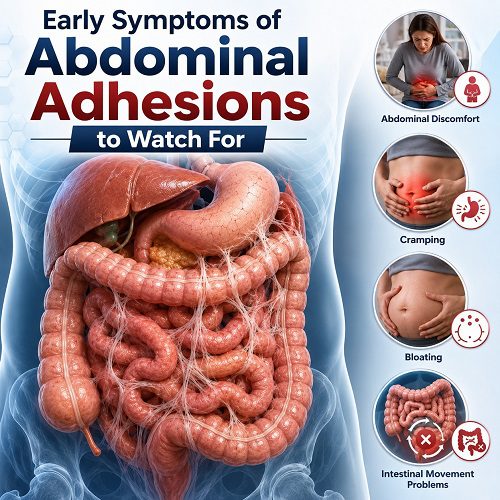
By Abdominal adhesions are bands of scar-like tissue that can develop inside the abdomen and cause organs or tissues to stick together. They commonly form after abdominal surgery, but inflammation, infection, certain medical conditions, radiation therapy, and other forms of abdominal injury can also contribute to their development. Many people have adhesions without ever experiencing symptoms. However, when adhesions interfere with normal movement of the intestines or cause a partial or complete intestinal blockage, symptoms can develop.
Recognizing abdominal adhesions symptoms can be important, especially for people who have previously had abdominal or pelvic surgery. Some symptoms may be mild and intermittent, while others can indicate a serious intestinal obstruction that requires urgent medical attention.
This guide explains the early symptoms to watch for, what abdominal adhesion pain may feel like, how intestinal adhesions can affect digestion, when to contact a healthcare professional, and how abdominal adhesions are evaluated.
What Are Abdominal Adhesions?
What Are Abdominal Adhesions? Abdominal adhesions are internal bands of fibrous or scar-like tissue that form between abdominal organs, between loops of intestine, or between an organ and the abdominal wall.
Under normal circumstances, abdominal organs can move relatively freely against one another. Adhesions can cause tissues to become attached, potentially restricting normal movement. In some cases, these bands can pull, kink, twist, or compress parts of the intestine.
Abdominal adhesions are particularly common after abdominal surgery. According to the National Institute of Diabetes and Digestive and Kidney Diseases (NIDDK), more than 9 out of 10 people who undergo surgery that opens the abdomen develop adhesions, although most people with adhesions never experience symptoms or complications.
Because adhesions themselves often cannot be seen on standard imaging tests, symptoms and medical history can play an important role in determining whether they may be contributing to abdominal problems.
Why Do Abdominal Adhesions Cause Symptoms?
Not every adhesion causes discomfort. Symptoms generally occur when an adhesion affects the movement of an organ or interferes with the intestines.
For example, an adhesion may pull on surrounding tissue and contribute to chronic abdominal discomfort. In other situations, intestinal adhesions can cause part of the bowel to become narrowed or kinked. This can interfere with the movement of food, liquid, stool, and gas through the digestive tract.
When an adhesion contributes to an intestinal obstruction, symptoms may become more noticeable and potentially severe. Abdominal pain, bloating, constipation, inability to pass gas, nausea, and vomiting can occur with intestinal obstruction.
Common Abdominal Adhesions Symptoms
The symptoms of abdominal adhesions can vary considerably. Some people have no symptoms, while others experience recurring abdominal problems.
1. Chronic or Recurring Abdominal Pain
One of the most commonly reported abdominal adhesions symptoms is chronic abdominal pain.
Abdominal adhesion pain may feel different from person to person. Some people describe a pulling, tugging, aching, or uncomfortable sensation. Others may experience intermittent cramping or discomfort that comes and goes.
Pain may sometimes become more noticeable with certain movements or digestive activity. However, abdominal pain has many possible causes, so pain alone cannot confirm the presence of adhesions.
If you have persistent or unexplained abdominal pain—particularly if you have a history of abdominal surgery—talk with a healthcare professional about possible causes.
2. Abdominal Cramping
Cramping can occur when adhesions interfere with normal intestinal movement.
The discomfort may come in waves rather than remaining constant. Cramping that becomes progressively stronger, especially when accompanied by bloating, nausea, vomiting, or difficulty passing stool or gas, can be a warning sign of an intestinal obstruction.
Severe or worsening cramping should not be ignored.
3. Bloating or Abdominal Distension
Bloating is another symptom that may occur when intestinal movement becomes disrupted.
You may notice that your abdomen feels unusually full, tight, or swollen. In some cases, visible abdominal distension can occur when gas and digestive contents cannot move normally through the intestines.
Bloating is common and can result from many digestive conditions, so it does not automatically indicate intestinal adhesions. However, sudden or significant swelling combined with pain, vomiting, or inability to pass gas or stool requires prompt medical evaluation.
4. Constipation or Changes in Bowel Movements
Some people with symptomatic adhesions may experience constipation or changes in their usual bowel habits.
If an adhesion contributes to a partial intestinal blockage, stool may move more slowly through the affected area. This can result in constipation, abdominal discomfort, and bloating.
A sudden change in bowel movements should be evaluated in context. Persistent constipation can have many causes, including diet, medications, dehydration, functional digestive disorders, and other medical conditions.
5. Difficulty Passing Gas
Difficulty passing gas can be particularly important when it occurs alongside abdominal pain and swelling.
A person experiencing an intestinal obstruction may be unable to pass gas or stool because material cannot move normally through the intestine. The combination of abdominal pain, bloating, vomiting, and inability to pass gas or stool can indicate a potentially serious blockage.
6. Nausea
Nausea can occur when intestinal movement becomes impaired.
It may accompany cramping, bloating, or abdominal discomfort. Nausea alone is not specific to abdominal adhesions and can occur with infections, food-related illness, medication side effects, and many other conditions.
However, persistent nausea associated with increasing abdominal pain, swelling, or vomiting deserves medical attention.
7. Vomiting
Vomiting can occur when an intestinal obstruction becomes significant.
If an adhesion causes the intestine to become severely narrowed or blocked, digestive contents may not be able to move forward normally. This can contribute to nausea and vomiting.
Repeated vomiting combined with severe abdominal pain or abdominal swelling should be treated as an urgent medical concern.
What Does Abdominal Adhesion Pain Feel Like?
There is no single type of pain that proves adhesions are responsible.
Abdominal adhesion pain may be chronic, intermittent, cramping, aching, or associated with a sensation of pulling or restricted movement. Some people may experience discomfort in a particular region of the abdomen, while others may have more generalized symptoms.
It is also possible to have extensive adhesions without pain or any other symptoms. This is why abdominal pain should not automatically be attributed to adhesions, even when a person has undergone previous surgery.
Other conditions—including gallbladder problems, appendicitis, inflammatory bowel disease, hernias, constipation, urinary problems, and gynecological conditions—can also cause abdominal pain.
A healthcare professional can help determine whether further evaluation is appropriate.
Intestinal Adhesions and Bowel Obstruction
One of the most important concerns involving intestinal adhesions is their potential to cause a bowel obstruction.
An obstruction occurs when the normal movement of food, fluid, air, or stool through the intestine becomes partially or completely blocked. Adhesions are a common cause of small bowel obstruction.
Symptoms may include:
- Severe or worsening abdominal pain
- Repeated abdominal cramping
- Significant bloating or swelling
- Nausea
- Vomiting
- Constipation
- Inability to pass gas
- Inability to pass stool
A complete intestinal obstruction can become life-threatening because the affected section of bowel may lose its blood supply or develop serious complications such as peritonitis.
When Are Abdominal Adhesions Symptoms an Emergency?
Not every symptom associated with adhesions requires emergency treatment. However, certain warning signs should be taken seriously.
Seek urgent medical attention if you develop severe or rapidly worsening abdominal pain, significant abdominal swelling, repeated vomiting, or an inability to pass stool or gas—particularly when several of these symptoms occur together.
A complete bowel obstruction can require hospital treatment and, in some cases, emergency surgery.
A fever or unusually fast heart rate may also occur when an obstruction causes serious complications, such as reduced blood flow to intestinal tissue or peritonitis.
Do not attempt to diagnose or treat a possible intestinal obstruction at home.
Who Is More Likely to Develop Abdominal Adhesions?
A history of abdominal surgery is the most important risk factor.
Adhesions can develop after both open and laparoscopic abdominal procedures, although they are generally less common after laparoscopic surgery. Emergency abdominal surgery and procedures involving the pelvis or lower digestive tract may carry a greater risk of adhesions and related complications.
Other possible Abdominal Adhesions causes include:
- Abdominal or pelvic infections
- Appendicitis
- Crohn’s disease
- Diverticular disease
- Endometriosis
- Pelvic inflammatory disease
- Peritonitis
- Radiation therapy involving the abdomen
- Long-term peritoneal dialysis
In some cases, adhesions may also be present from birth.
Can Symptoms Develop Years After Surgery?
Yes. Adhesion-related symptoms do not necessarily appear immediately after surgery.
A person may undergo abdominal surgery and feel completely well for years before developing symptoms associated with adhesions. According to NIDDK, symptoms and complications related to surgery-associated adhesions may begin many years after the original operation.
This is one reason it is useful to tell your healthcare professional about previous abdominal or pelvic surgeries when discussing unexplained abdominal symptoms.
How Are Abdominal Adhesions Diagnosed?
Diagnosing abdominal adhesions can be challenging because adhesions themselves often cannot be directly identified with routine imaging.
Doctors generally begin by reviewing your symptoms and medical history and performing a physical examination. Your history of abdominal surgery or conditions that can cause inflammation may be especially relevant.
Blood tests may be used to help assess your condition or rule out other causes. Imaging tests such as CT scans and X-rays may help identify an intestinal obstruction or other problems, even though they generally cannot directly show the adhesions themselves.
In some circumstances, surgery may be necessary to directly identify adhesions and address a complication.
How Are Abdominal Adhesions Treated?
If adhesions do not cause symptoms or complications, Abdominal Adhesions treatment is often unnecessary.
When adhesions cause significant problems, a surgeon may perform a procedure called adhesiolysis to separate or release the scar tissue. However, surgery itself can lead to the formation of new adhesions, so doctors generally consider the potential benefits and risks before recommending surgery.
If adhesions cause an intestinal obstruction, hospital treatment may be required. Depending on the severity and circumstances, doctors may use intravenous fluids, intestinal decompression, monitoring, or surgery.
Treatment should be individualized by a qualified healthcare professional.
What You Should Do If You Notice Possible Symptoms
If you have mild but recurring abdominal discomfort, bloating, constipation, or cramping, keep track of your symptoms and discuss them with your healthcare professional.
It may be useful to note:
- When the symptoms began
- How frequently they occur
- Where the pain is located
- Whether symptoms occur after eating
- Changes in bowel movements
- Whether you can pass gas normally
- Whether nausea or vomiting occurs
- Any previous abdominal or pelvic surgeries
- Any history of abdominal infections or inflammatory conditions
This information can help your healthcare professional understand the pattern of your symptoms and decide whether additional testing is appropriate.
Final Thoughts on Abdominal Adhesions Symptoms
Understanding abdominal adhesions symptoms can help you recognize changes that deserve medical attention. Chronic abdominal pain is one of the most common symptoms when adhesions become symptomatic, but intestinal adhesions can also contribute to cramping, bloating, constipation, nausea, vomiting, and difficulty passing gas when they interfere with normal intestinal movement.
The most important warning signs are severe or worsening abdominal pain, significant swelling, repeated vomiting, and inability to pass stool or gas. These symptoms can indicate an intestinal obstruction, which can become life-threatening and requires urgent medical evaluation.
Having abdominal adhesions does not necessarily mean you will develop complications. In fact, many people with adhesions never experience symptoms. If you have persistent abdominal symptoms or a history of abdominal surgery, speak with a qualified healthcare professional rather than assuming adhesions are the cause.
Medical Disclaimer
This article is intended for general educational and informational purposes only. It does not diagnose, treat, cure, or prevent abdominal adhesions, intestinal obstruction, or any other medical condition. Abdominal pain and digestive symptoms can have many different causes. If you experience severe abdominal pain, persistent vomiting, significant abdominal swelling, fever, or inability to pass stool or gas, seek urgent medical attention. Always consult a qualified healthcare professional for diagnosis and personalized treatment advice.