 By
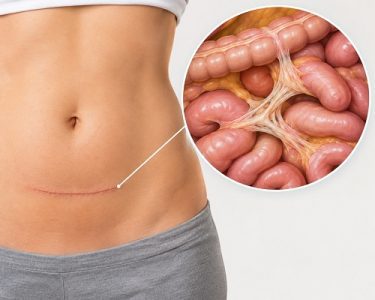
By Abdominal adhesions are bands of scar-like tissue that can develop inside the abdomen after surgery, infection, inflammation, or other forms of tissue injury. In many people, adhesions cause no symptoms and never create a health problem. However, in some cases, they can pull, twist, or compress sections of the intestine and interfere with the normal movement of digestive contents.
When intestinal adhesions block the passage of food, fluid, and gas through the intestine, they can lead to a condition called a bowel obstruction. Bowel obstruction from adhesions is one of the important complications associated with abdominal scar tissue and may require prompt medical evaluation.
Understanding the connection between abdominal adhesions and bowel obstruction can help you recognize warning signs and understand why some people develop digestive symptoms years after abdominal surgery.
What Are Abdominal Adhesions?
What Are Abdominal Adhesions? Abdominal adhesions are bands of fibrous tissue that form between abdominal organs or between organs and the abdominal wall. They are part of the body’s natural healing response after tissue becomes irritated or injured.
Normally, abdominal organs can move against one another relatively freely. After inflammation or injury, however, the healing process can cause surfaces that would normally remain separate to become connected by scar tissue.
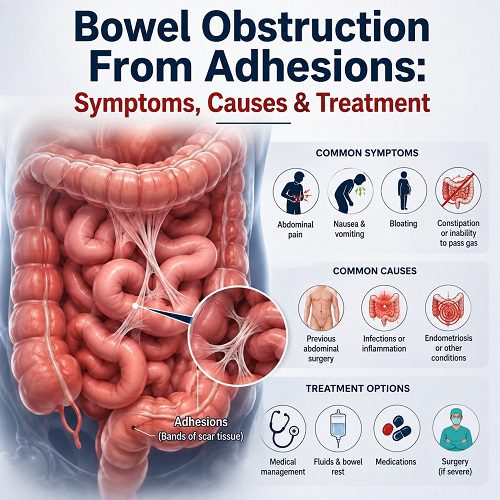
Common Abdominal Adhesions causes of intestinal adhesions and abdominal adhesions include:
- Abdominal or pelvic surgery
- Previous bowel surgery
- Appendicitis or other abdominal infections
- Peritonitis
- Crohn’s disease and other inflammatory conditions
- Endometriosis
- Radiation therapy in some cases
- Previous abdominal trauma
Surgery is one of the most common causes of abdominal adhesions. Importantly, adhesions can develop after both major and relatively minor abdominal procedures.
Many adhesions never cause symptoms. Problems generally occur when an adhesion interferes with the normal movement or position of an abdominal organ.
How Can Adhesions Cause a Bowel Obstruction?
A healthy intestine moves partially digested food, liquid, and gas through a series of coordinated muscle contractions. This process allows nutrients and fluids to be absorbed while waste eventually moves toward the colon and rectum.
An adhesion can interfere with this process in several ways.
For example, a band of scar tissue may attach one section of intestine to another. It can create a tight point around the bowel or pull a loop of intestine into an abnormal position. In some cases, the intestine can become kinked or twisted around an adhesive band.
When the intestinal passage becomes narrowed or blocked, digestive contents can no longer move normally. This is known as a bowel obstruction from adhesions.
The obstruction may be partial, meaning some material can still pass through, or complete, meaning the passage is essentially blocked.
A bowel obstruction can become serious because pressure can build up inside the intestine. Blood flow to the affected section may become impaired, potentially causing tissue damage or other complications.
Bowel Obstruction Symptoms to Watch For
Recognizing bowel obstruction symptoms is important, particularly for people who have previously undergone abdominal surgery or have conditions associated with intestinal adhesions.
Common Abdominal Adhesions symptoms include:
Abdominal Pain and Cramping
Abdominal pain is a common symptom of bowel obstruction. It may occur in waves as the intestine contracts in an attempt to move its contents past the blockage.
Some people describe the pain as cramping, while others experience persistent abdominal discomfort.
Abdominal Bloating and Swelling
A blocked intestine can cause gas and fluid to accumulate behind the obstruction. This may result in abdominal bloating, fullness, or visible swelling.
Nausea and Vomiting
As digestive contents accumulate, nausea and vomiting can occur. Vomiting may become more frequent as an obstruction becomes more severe.
Difficulty Passing Stool or Gas
A person with an obstruction may have difficulty having a bowel movement or passing gas. Complete obstruction is more likely to cause an inability to pass both stool and gas.
However, passing stool does not always rule out an obstruction, especially when the obstruction is partial.
Loss of Appetite
Abdominal discomfort, nausea, and impaired movement of digestive contents can reduce the desire to eat.
Constipation
Constipation can occur with bowel obstruction, although constipation alone does not necessarily indicate an obstruction.
Dehydration
Vomiting and reduced intake can contribute to dehydration. Signs may include dry mouth, weakness, dizziness, and reduced urination.
Symptoms can vary depending on the location and severity of the obstruction. Some people develop symptoms suddenly, while others experience progressively worsening discomfort.
When Is a Bowel Obstruction an Emergency?
A suspected bowel obstruction should be taken seriously because complications can develop if the intestine becomes severely compressed or its blood supply is compromised.
Seek urgent medical attention for symptoms such as:
- Severe or worsening abdominal pain
- Persistent vomiting
- Significant abdominal swelling
- Inability to pass stool or gas
- Fever
- Rapid heart rate
- Severe weakness or dizziness
- Signs of dehydration
- Abdominal tenderness that becomes increasingly severe
Severe or rapidly worsening symptoms require prompt medical assessment. A person should not attempt to treat a suspected complete bowel obstruction at home with laxatives unless specifically instructed by a healthcare professional.
Who Is at Greater Risk of Bowel Obstruction From Adhesions?
The risk of bowel obstruction from adhesions is higher in people who have previously experienced abdominal or pelvic surgery.
Risk may increase with:
- Multiple abdominal surgeries
- Previous bowel operations
- Abdominal infection
- Inflammatory bowel disease
- Significant abdominal inflammation
- Conditions that cause repeated tissue irritation
However, having abdominal surgery does not mean that a person will develop a bowel obstruction. Many people develop adhesions without ever experiencing complications.
The amount and location of scar tissue are more important than simply having a history of surgery.
How Is Adhesive Bowel Obstruction Diagnosed?
Doctors typically begin with a medical history and physical examination. A history of previous abdominal surgery can provide an important clue.
During an evaluation, the healthcare professional may ask about:
- The location and timing of abdominal pain
- Vomiting
- Bowel movements
- Ability to pass gas
- Previous abdominal operations
- Previous episodes of obstruction
- Other digestive symptoms
Imaging tests may then be used to determine whether an obstruction is present and to assess its severity.
CT Scan
A CT scan is commonly used when doctors suspect intestinal obstruction. It can provide detailed images of the abdomen and may help identify the location and characteristics of the obstruction.
CT imaging can also help doctors look for complications such as reduced blood flow, perforation, or other abnormalities.
Abdominal X-Ray
An abdominal X-ray may show patterns associated with intestinal obstruction. Depending on the situation, additional imaging may be necessary.
Blood Tests
Blood tests may help doctors assess dehydration, inflammation, infection, electrolyte disturbances, and other complications.
Importantly, adhesions themselves are not always directly visible on imaging. Doctors may identify an obstruction and consider adhesions a likely cause based on the patient’s medical history and the overall clinical picture.
How Is Bowel Obstruction From Adhesions Treated?
Abdominal Adhesions Treatment depends on whether the obstruction is partial or complete, the severity of symptoms, and whether complications are present.
Initial Medical Management
Some adhesive bowel obstructions can improve without surgery, particularly when there are no signs of intestinal damage or other emergency complications.
Treatment in a hospital may include:
- Temporary restriction of food and drink
- Intravenous fluids
- Correction of electrolyte imbalances
- Monitoring of symptoms and vital signs
- Medication for pain and nausea when appropriate
- A tube through the nose into the stomach in selected cases to remove accumulated fluid and gas
Doctors may monitor the patient to determine whether the obstruction resolves as the intestine recovers.
Surgery
Surgery may be necessary when an obstruction does not resolve, is complete, repeatedly returns, or is associated with complications.
A procedure called adhesiolysis involves cutting or releasing adhesions that are causing the obstruction.
In emergency situations, surgery may also be required if doctors suspect that part of the intestine has lost its blood supply, become severely damaged, or perforated.
Surgery can relieve an existing obstruction, but it is important to recognize that abdominal surgery itself can lead to new adhesions. For this reason, doctors carefully weigh the potential benefits and risks before recommending an operation.
Can Abdominal Adhesions Be Prevented?
Not all adhesions can be prevented. They are part of the body’s healing response, and some people are more prone to developing them after abdominal injury or surgery.
Surgeons may use techniques designed to reduce tissue trauma and minimize the formation of adhesions. In certain circumstances, specialized adhesion barriers may also be considered.
For patients, the most important step is understanding that a previous abdominal operation can remain relevant to future digestive symptoms.
If someone who has had abdominal surgery develops unexplained recurrent abdominal pain, bloating, vomiting, or changes in bowel function, discussing the history of surgery with a healthcare professional can be useful.
Living With Intestinal Adhesions
Having intestinal adhesions does not necessarily mean that a person needs treatment.
Many people have adhesions without symptoms. If adhesions are discovered incidentally and are not causing an obstruction or other complication, surgery is generally not automatically required simply to remove them.
People with a history of adhesive bowel obstruction may be advised to pay attention to recurring symptoms and seek medical care when concerning changes occur.
It is also important not to assume that every episode of abdominal discomfort is caused by adhesions. Gallbladder disease, constipation, hernias, infections, inflammatory bowel conditions, and other problems can cause similar symptoms.
Proper evaluation is therefore important.
Can Bowel Obstruction From Adhesions Come Back?
Yes. A person who has experienced an adhesive bowel obstruction can develop another obstruction in the future.
This can happen because existing adhesions remain or because additional adhesions form after treatment or surgery.
Recurrence does not mean that another operation is always required. Treatment depends on the circumstances of each episode.
Anyone with a previous history of bowel obstruction should tell healthcare professionals about it when seeking care for new abdominal symptoms.
What Is the Difference Between Adhesions and a Bowel Obstruction?
The terms are related but do not mean the same thing.
Adhesions are bands of scar-like tissue that develop inside the body.
A bowel obstruction occurs when the normal passage of intestinal contents becomes blocked or significantly impaired.
Adhesions are one possible cause of bowel obstruction. Other Abdominal Adhesions causes include hernias, tumors, inflammatory narrowing, twisting of the intestine, and certain other digestive conditions.
Therefore, having adhesions does not automatically mean that a bowel obstruction is present.
Frequently Asked Questions
Can adhesions cause stomach pain?
Yes. Adhesions can sometimes contribute to abdominal pain, particularly when they pull on organs or interfere with normal intestinal movement. However, abdominal pain has many possible causes, so persistent or severe pain should be evaluated.
How long after surgery can adhesions cause a bowel obstruction?
Adhesions can cause problems long after the original surgery. An adhesive obstruction may occur months or even years after an operation.
Can intestinal adhesions go away on their own?
Adhesions generally do not simply disappear on their own. However, many adhesions never cause symptoms and do not require treatment.
Can you prevent bowel obstruction from adhesions?
There is no guaranteed way to prevent adhesive bowel obstruction. Surgical techniques can reduce the risk of adhesion formation, but adhesions can still develop.
Should I see a doctor for bloating after abdominal surgery?
Persistent or unexplained bloating after abdominal surgery deserves medical attention, particularly when accompanied by pain, vomiting, constipation, or difficulty passing gas.
Final Thoughts
Bowel obstruction from adhesions is an important complication of abdominal scar tissue. Although many intestinal adhesions remain harmless, some can interfere with the normal movement of the bowel and cause partial or complete obstruction.
Knowing the major bowel obstruction symptoms, including abdominal cramping, bloating, vomiting, constipation, and difficulty passing gas, can help people recognize when medical evaluation may be necessary.
A history of abdominal surgery is an important risk factor, but symptoms should never automatically be attributed to adhesions. Because bowel obstruction can sometimes become an emergency, severe or rapidly worsening symptoms require prompt professional assessment.
If you have had abdominal surgery and develop significant abdominal pain, repeated vomiting, severe swelling, or an inability to pass stool or gas, seek urgent medical care rather than attempting to manage the problem yourself.