 By
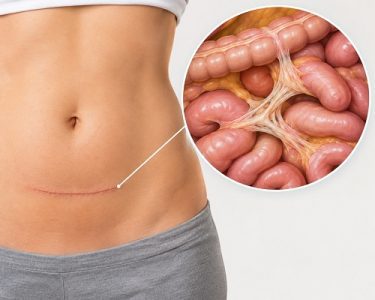
By Abdominal adhesions are bands of internal scar tissue that can cause tissues and organs inside the abdomen to stick together. They commonly develop after abdominal or pelvic surgery, although infections, inflammation, endometriosis, radiation therapy, and other conditions can also contribute to their formation. Many people have adhesions without experiencing any symptoms. However, when adhesions cause persistent pain, intestinal obstruction, or other complications, surgical treatment may sometimes be considered.
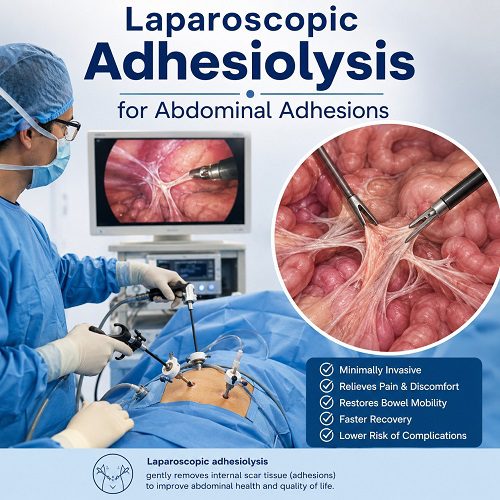
One surgical approach is Laparoscopic Adhesiolysis, a minimally invasive procedure used to identify and carefully release adhesions through small abdominal incisions. Compared with traditional open surgery, laparoscopy uses a camera and specialized instruments inserted through small openings. In appropriately selected patients, this approach may offer the benefits associated with minimally invasive surgery, although it is not suitable for every case.
This guide explains what Laparoscopic Adhesiolysis involves, when it may be recommended, how the procedure works, its potential benefits and risks, recovery, and questions to discuss with a surgeon.
What Is Laparoscopic Adhesiolysis?
Laparoscopic Adhesiolysis is a minimally invasive form of adhesion surgery in which a surgeon separates abnormal bands of scar tissue inside the abdomen.
The term “adhesiolysis” means releasing or dividing adhesions. During the procedure, the surgeon uses a laparoscope—a thin instrument with a camera—to see the inside of the abdomen on a monitor. Additional small incisions allow specialized surgical instruments to be inserted.
The goal is not necessarily to remove every adhesion. Instead, the surgeon generally focuses on adhesions that are causing a specific problem, such as restricting the bowel, creating a blockage, or contributing to another surgically treatable complication.
Because adhesions can be attached to delicate organs and intestinal tissue, the procedure requires careful surgical technique. In some situations, extensive or dense adhesions may make a laparoscopic approach difficult or unsafe, and the surgeon may need to convert to open surgery.
Why Do Abdominal Adhesions Form?
Abdominal adhesions are essentially internal bands of scar-like tissue. They can form when tissues inside the abdomen become irritated, injured, or inflamed and then heal in a way that causes nearby surfaces to stick together.
Previous abdominal surgery is the most common cause. Adhesions are particularly common following open abdominal surgery, although they can also develop after laparoscopic procedures. Emergency operations and procedures involving the pelvis, colon, or rectum may carry a higher risk.
Other possible causes include:
- Abdominal infections
- Peritonitis
- Appendicitis
- Crohn’s disease
- Diverticular disease
- Endometriosis
- Pelvic inflammatory disease
- Radiation therapy
- Peritoneal dialysis
- Previous abdominal inflammation
Some adhesions are present from birth, although these are less common.
Importantly, having abdominal adhesions does not automatically mean that surgery is necessary. Many people never develop symptoms or complications.
What Symptoms Can Abdominal Adhesions Cause?
Most abdominal adhesions cause no symptoms. When Abdominal Adhesions symptoms occur, chronic or recurring abdominal pain is one of the most common complaints. Adhesions may restrict normal movement of abdominal tissues or pull on nearby structures.
More serious symptoms can develop when an adhesion bends, twists, or compresses the intestine and causes an intestinal obstruction.
Possible symptoms include:
- Recurrent abdominal pain or cramping
- Bloating
- Abdominal distension
- Nausea
- Vomiting
- Constipation
- Difficulty passing gas
- Changes in bowel habits
A complete intestinal obstruction can become a medical emergency. Severe abdominal pain, persistent vomiting, significant swelling, and inability to pass stool or gas require urgent medical assessment.
When Is Laparoscopic Adhesiolysis Considered?
Doctors generally avoid surgery for adhesions that are not causing symptoms or complications. This is important because any abdominal operation can potentially create new adhesions.
Laparoscopic Adhesiolysis may be considered when adhesions are causing a significant, surgically treatable problem. Depending on the individual situation, this can include:
1. Adhesive Bowel Obstruction
Adhesions are a major cause of small bowel obstruction. An adhesion can pull or kink an intestinal loop, preventing food, fluids, gas, and stool from moving normally through the digestive tract.
Some partial obstructions can initially be managed without surgery using hospital observation, intravenous fluids, bowel rest, and other supportive measures. However, complete obstruction, worsening symptoms, or evidence of compromised bowel may require urgent surgery.
2. Persistent Symptoms After Other Causes Are Excluded
Some patients experience recurrent abdominal symptoms that may be associated with adhesions. However, abdominal pain has many possible causes, and doctors must carefully evaluate other conditions before recommending surgery.
Surgery is not automatically appropriate simply because adhesions are suspected.
3. Adhesions Interfering With Another Surgical Procedure
Sometimes adhesions need to be released to safely reach or operate on another abdominal structure. In such situations, adhesiolysis may be part of a larger surgical procedure.
The decision depends on the location, severity, and density of the adhesions, as well as the patient’s overall health.
How Are Abdominal Adhesions Diagnosed?
Diagnosing adhesions can be challenging because standard imaging tests often cannot directly show the scar tissue itself. Abdominal Adhesions Be Seen on a CT Scan and other imaging studies can, however, help identify an intestinal obstruction or exclude other causes of abdominal symptoms.
Before considering Laparoscopic Adhesiolysis, a doctor may review:
- Medical and surgical history
- Current symptoms
- Physical examination findings
- Blood tests
- CT scans
- Abdominal X-rays
- Contrast studies when appropriate
A history of previous abdominal surgery can increase suspicion for adhesions.
In some cases, surgery is ultimately required to directly inspect the abdomen and identify adhesions. If appropriate, the surgeon may treat the adhesions during the same procedure.
How Does Laparoscopic Adhesiolysis Work?
The exact technique varies according to the patient’s condition and the location and severity of the adhesions.
Before surgery, the patient typically receives general anesthesia. The surgeon then makes several small abdominal incisions. A laparoscope is introduced through one incision, allowing the surgical team to view the abdominal cavity on a monitor.
Specialized instruments are introduced through additional incisions. The surgeon carefully identifies the adhesions and separates them using appropriate surgical instruments.
The procedure may involve:
- Creating small abdominal access points.
- Introducing the laparoscope and surgical instruments.
- Examining the abdominal cavity.
- Identifying adhesions and the structures they involve.
- Carefully dividing adhesions that are responsible for the problem.
- Releasing restricted intestinal loops or other tissues when necessary.
- Checking the abdomen for injury or other complications.
- Closing the small incisions.
The surgeon’s priority is to release problematic adhesions while minimizing unnecessary injury to surrounding tissues.
In complex cases, adhesions may be extremely dense or extensive. If the surgeon cannot safely continue laparoscopically, conversion to an open operation may be necessary.
Laparoscopic vs. Open Adhesion Surgery
There are two main surgical approaches to adhesiolysis: laparoscopic and open surgery.
Laparoscopic surgery uses several small incisions and a camera. Open surgery, sometimes called laparotomy, generally requires a larger abdominal incision.
Laparoscopy can be advantageous because it is less invasive than traditional open surgery. Laparoscopic operations are also associated with a lower tendency to form adhesions compared with open abdominal surgery.
However, laparoscopic surgery is not automatically the best choice for everyone.
Patients with extensive previous surgery, very dense adhesions, severe abdominal inflammation, or certain emergency conditions may require open surgery. The surgeon may also decide that continuing laparoscopically presents an unacceptable risk of intestinal or organ injury.
Therefore, the choice between laparoscopic and open adhesion surgery must be individualized.
Potential Benefits of Laparoscopic Adhesiolysis
When appropriately selected, laparoscopic treatment may offer several potential advantages.
Smaller Incisions
Instead of one large abdominal incision, laparoscopic surgery generally uses several small incisions.
Less Tissue Trauma
Because the access incisions are smaller, minimally invasive surgery may reduce surgical trauma compared with an equivalent open procedure.
Potentially Faster Recovery
Some patients recover more quickly after laparoscopic surgery than after open abdominal surgery, although recovery varies according to the extent of adhesiolysis and whether additional procedures are performed.
Reduced Risk of New Adhesions Compared With Open Surgery
Laparoscopic surgery is generally associated with fewer postoperative adhesions than open surgery, although it does not eliminate the risk.
Treatment of the Underlying Mechanical Problem
When adhesions are responsible for bowel obstruction or another surgically correctable problem, releasing them can restore normal movement or relieve the restriction.
What Are the Risks?
Although Laparoscopic Adhesiolysis is minimally invasive, it is still abdominal surgery and carries potential risks.
Possible complications include:
- Bleeding
- Infection
- Injury to the intestine
- Injury to nearby organs
- Anesthesia-related complications
- Bowel leakage
- Blood clots
- Recurrence of adhesions
- Need to convert to open surgery
- Persistent or recurrent abdominal symptoms
One of the most important considerations is that surgery itself can create new adhesions. NIDDK notes that surgery used to treat adhesions can result in additional adhesions forming.
This is why surgeons generally weigh the expected benefits against the possibility that another operation could create future problems.
Can Adhesions Come Back After Surgery?
Yes. Recurrent adhesions are possible after adhesiolysis.
Surgery separates existing scar tissue, but the healing process can create new scar tissue. Surgeons therefore use techniques intended to minimize tissue injury and reduce the likelihood of adhesion formation.
Depending on the procedure and circumstances, surgeons may use adhesion-prevention barriers and careful tissue handling. Laparoscopic surgery itself may also reduce the likelihood of postoperative adhesions compared with open surgery.
There is no guarantee that adhesions will not return.
Recovery After Laparoscopic Adhesiolysis
Recovery depends on several factors, including the number and density of adhesions, whether bowel obstruction was present, whether additional surgery was required, and the patient’s overall health.
After surgery, the medical team monitors the patient for:
- Pain control
- Return of bowel function
- Ability to tolerate food and fluids
- Signs of infection
- Abdominal swelling
- Bowel movement and passage of gas
- Surgical wound healing
Patients are usually given individualized instructions about activity, wound care, medications, diet, and follow-up appointments.
It is important to follow the surgeon’s instructions rather than comparing recovery with another person’s experience.
If symptoms such as increasing abdominal pain, repeated vomiting, fever, worsening abdominal swelling, or inability to pass stool or gas occur after surgery, medical attention should be sought promptly.
What Happens If Adhesions Cause a Bowel Obstruction?
An intestinal obstruction caused by adhesions can require urgent medical treatment.
Doctors may initially attempt nonsurgical management for selected partial obstructions. This may include hospital monitoring, intravenous fluids, and decompression of the digestive tract with a tube passed through the nose into the stomach. Some obstructions resolve with conservative Abdominal Adhesions treatment.
If the obstruction does not resolve, becomes complete, or causes signs of intestinal damage, surgery may be required.
During Laparoscopic Adhesiolysis, the surgeon may release the adhesion responsible for the blockage. In severe cases, however, the operation may need to be converted to an open procedure or combined with Abdominal Adhesions treatment of damaged bowel.
How Can Surgeons Reduce New Adhesions?
Because adhesion formation is part of the body’s healing response, completely preventing adhesions is difficult.
Surgeons may use strategies intended to reduce the risk, including:
- Using minimally invasive techniques when appropriate
- Handling tissues gently
- Reducing unnecessary tissue trauma
- Keeping foreign materials out of the abdominal cavity
- Maintaining appropriate tissue moisture
- Using adhesion barriers in selected situations
The choice of preventive measures depends on the operation and the patient’s individual circumstances.
Is Laparoscopic Adhesiolysis Right for Everyone?
No. The suitability of laparoscopic surgery depends on the patient’s symptoms, medical history, previous operations, suspected cause, and severity of the adhesions.
A surgeon may favor laparoscopy when the adhesions appear suitable for minimally invasive treatment. In other situations, an open operation may be safer.
It is also important to remember that unexplained abdominal pain does not necessarily mean adhesions are responsible. Since surgery can cause new adhesions, doctors generally avoid operating solely on the basis of suspected adhesions without a reasonable clinical indication.
Questions to Ask Your Surgeon
If your doctor has recommended Laparoscopic Adhesiolysis, consider asking:
- What is causing my symptoms?
- Are adhesions confirmed or only suspected?
- Could my symptoms have another cause?
- Why do you recommend laparoscopic rather than open surgery?
- What are the expected benefits?
- What complications should I know about?
- Could the operation require bowel repair or removal?
- Is there a possibility that the procedure will be converted to open surgery?
- What is my expected recovery time?
- What can be done to reduce the risk of new adhesions?
- What symptoms should prompt urgent medical attention?
These questions can help you understand whether the potential benefits of surgery outweigh its risks in your particular situation.
Final Thoughts
Laparoscopic Adhesiolysis is a minimally invasive surgical technique used to release abdominal adhesions when they cause significant problems such as bowel obstruction or another condition requiring surgical treatment. It uses small abdominal incisions, a camera, and specialized instruments to carefully separate scar tissue.
Not every person with abdominal adhesions needs surgery. In fact, most adhesions do not cause symptoms or complications and can be left untreated. Surgery itself can create additional adhesions, so doctors carefully consider the risks and benefits before recommending an operation.
When surgery is appropriate, laparoscopy may provide a less invasive approach than traditional open adhesion surgery. However, the safest technique depends on the individual patient and the extent of the adhesions.
If you have persistent abdominal pain, recurrent bowel symptoms, or signs of intestinal obstruction, speak with a qualified healthcare professional. Severe abdominal pain accompanied by vomiting, marked swelling, or inability to pass gas or stool requires urgent medical evaluation.
This article is for educational purposes only and should not replace diagnosis or treatment from a qualified healthcare professional.