 By
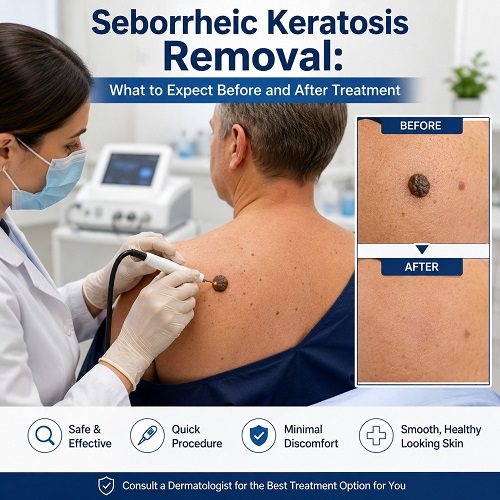
By Seborrheic keratosis removal is a common dermatological procedure performed to remove harmless skin growths that become irritating, itchy, Inflamed Seborrheic Keratosis, or cosmetically unwanted. Although seborrhoeic keratoses are non-cancerous and generally do not require treatment, many people choose removal because the lesions catch on clothing, bleed after rubbing, or affect their confidence.
Understanding what happens before, during, and after seborrheic keratosis removal can help you prepare for the procedure and recover more comfortably. Who may benefit from treatment, the different removal methods, expected healing times, possible side effects, and aftercare recommendations.
What is Seborrheic Keratosis?
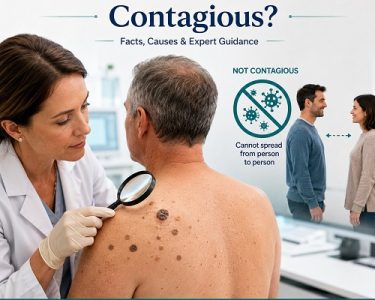
Seborrhoeic keratosis is a common benign skin growth that usually develops in adults over the age of 40. The growths often appear on the:
- Chest
- Back
- Seborrheic Keratosis on Face
- Neck
- Shoulders
- Abdomen
They may look waxy, rough, slightly raised, or as though they have been “stuck on” to the skin. Colours vary from light tan to dark brown or black.
Although harmless, they can sometimes resemble melanoma or other skin cancers, making professional examination important when a lesion changes unexpectedly.
Why Consider Seborrheic Keratosis Removal?
Doctors usually recommend removal only when necessary.
Common reasons include:
Cosmetic concerns
Many people dislike visible growths on the face, neck, or chest.
Irritation
Lesions can rub against:
- Clothing
- Jewellery
- Seatbelts
- Bras
- Backpack straps
Repeated friction may Seborrheic Keratosis Causes soreness or bleeding.
Itching
Some seborrhoeic keratoses become persistently itchy.
Inflammation
Inflamed lesions may become:
- Red
- Swollen
- Tender
- Crusted
Diagnostic uncertainty
If your dermatologist cannot confidently distinguish the lesion from skin cancer, removal allows laboratory examination.
Preparing Before Seborrheic Keratosis Removal
Preparation is generally straightforward.
Your dermatologist will:
- Examine the lesion
- Review your medical history
- Discuss medications
- Explain treatment options
- Answer questions
You may be advised to mention:
- Blood-thinning medicines
- Diabetes
- Bleeding disorders
- Previous skin infections
- Allergies to local anaesthetics
Avoid scratching or attempting to remove the growth yourself before your appointment.
How Dermatologists Diagnose Seborrheic Keratosis
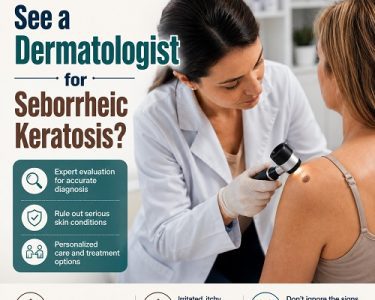
Seborrheic Keratosis Diagnosis usually includes a visual skin examination.
A dermatoscope may help reveal characteristic features.
If there is any uncertainty, the dermatologist may perform:
- Shave biopsy
- Punch biopsy
- Complete excision
The sample is sent to a pathology laboratory to confirm the diagnosis.
Common Seborrheic Keratosis Removal Methods
Several treatments are available depending on the lesion’s size, location, thickness, and appearance.
Cryotherapy
Cryotherapy is one of the most frequently used treatments.
Liquid nitrogen freezes the lesion.
The frozen tissue gradually dies and falls away over one to three weeks.
Benefits
- Quick Seborrheic Keratosis treatment
- Minimal preparation
- Little bleeding
- Suitable for many small lesions
Possible side effects
- Temporary blister
- Mild discomfort
- Skin lightening
- Redness
Curettage
A curette is a small surgical instrument used to gently scrape away the growth.
The area is usually numbed first with local anaesthetic.
This method works well for raised lesions.
Electrocautery
Electrocautery uses a small electrical current to burn away the growth.
It is often combined with curettage for complete removal.
Advantages include:
- Good cosmetic outcome
- Excellent bleeding control
- Fast procedure
Shave Removal
The dermatologist carefully shaves the growth from the skin surface.
Local anaesthetic keeps the procedure comfortable.
This technique often leaves minimal scarring.
Laser Removal
Some dermatologists use laser technology to vaporise seborrhoeic keratoses.
Benefits include:
- Precision
- Minimal bleeding
- Excellent cosmetic results
- Reduced damage to surrounding skin
Laser treatment may not be available everywhere.
Surgical Excision
Complete excision is less commonly needed.
It may be recommended when:
- Cancer cannot be ruled out
- The lesion is unusually large
- Previous treatments failed
Does Seborrheic Keratosis Removal Hurt?
Most procedures cause little discomfort.
Depending on the treatment, you may experience:
- Mild stinging
- Temporary burning
- Slight pressure
Local anaesthetic is commonly used for curettage, shave removal, and excision.
Cryotherapy often Seborrheic Keratosis causes only a brief freezing sensation.
What Happens During the Procedure?
A typical appointment lasts between 15 and 30 minutes.
The process generally includes:
- Cleaning the skin
- Local anaesthetic if required
- Removal procedure
- Bleeding control
- Protective dressing if necessary
- Aftercare instructions
Many patients return home immediately afterwards.
What to Expect Immediately After Treatment
The treated area may appear:
- Pink
- Red
- Slightly swollen
- Tender
Depending on the treatment method, you might notice:
- Small blister
- Crusting
- Mild oozing
- Scab formation
These are normal parts of healing.
Healing Timeline After Seborrheic Keratosis Removal
First 24 Hours
- Mild soreness
- Redness
- Slight swelling
Days 2–7
- Scab develops
- Area feels less tender
- Blister may dry
Weeks 2–4
- Scab naturally falls away
- New skin appears
One to Three Months
- Redness gradually fades
- Skin texture improves
- Pigmentation becomes more even
Healing times vary depending on:
- Treatment type
- Lesion size
- Body location
- Individual skin healing
Seborrheic Keratosis Removal Aftercare
Proper aftercare encourages healing and lowers the risk of complications.
Your dermatologist may recommend:
- Keeping the area clean
- Washing gently with mild soap
- Applying petroleum jelly if advised
- Covering with a dressing when necessary
- Avoiding scratching
Do not pick at scabs, as this may increase scarring.
Protecting the Healing Skin
Seborrheic Keratosis Sun exposure can cause long-lasting pigmentation changes.
For several weeks after Natural Treatment for Seborrheic Keratosis:
- Wear protective clothing
- Apply sunscreen with SPF 30 or higher
- Avoid tanning beds
Sun protection helps improve cosmetic results.
Possible Side Effects
Most side effects are temporary.
These may include:
- Redness
- Swelling
- Mild pain
- Scabbing
- Temporary pigmentation changes
- Small blister
These Seborrheic Keratosis symptoms usually resolve naturally.
Possible Risks
Complications are uncommon when removal is performed by a qualified healthcare professional.
Potential risks include:
- Infection
- Scarring
- Bleeding
- Delayed healing
- Skin discolouration
- Rare recurrence
Following aftercare instructions reduces these risks.
When Should You Contact Your Doctor?
Seek medical advice if you notice:
- Increasing redness
- Pus
- Fever
- Severe pain
- Heavy bleeding
- Rapid swelling
- Foul-smelling discharge
These may indicate infection.
Can Seborrheic Keratosis Grow Back?
The removed lesion usually does not return.
However, new seborrhoeic keratoses may develop elsewhere over time, particularly with ageing or genetic predisposition.
Regular skin checks can help monitor new growths.
Can You Remove Seborrheic Keratosis at Home?
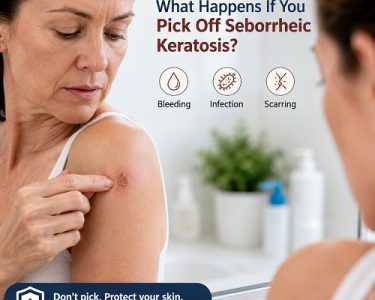
Home removal is not recommended.
Attempting to cut, scrape, burn, or freeze skin growths yourself can lead to:
- Infection
- Bleeding
- Permanent scars
- Incorrect diagnosis
- Delayed detection of skin cancer
Always seek assessment from a qualified healthcare professional before removing any skin lesion.
Lifestyle Tips After Seborrheic Keratosis Removal
Healthy skin habits support healing and overall skin health.
Consider:
- Staying hydrated
- Eating a balanced diet
- Avoiding smoking
- Protecting skin from excessive sun exposure
- Checking your skin regularly
- Attending follow-up appointments if advised
Frequently Asked Questions
Is seborrheic keratosis removal medically necessary?
Not always. Most lesions are harmless and only require treatment if they become symptomatic, irritated, or difficult to diagnose.
Will the procedure leave a scar?
Many people heal with little or no visible scarring, although this depends on the treatment method, lesion size, and individual healing.
How long does recovery take?
Most treated areas heal within two to four weeks, while colour changes may continue to improve over several months.
Is cryotherapy effective?
Yes. Cryotherapy is one of the most common and effective treatments for many seborrhoeic keratoses.
Can multiple lesions be removed at one visit?
Yes. Dermatologists frequently remove several lesions during the same appointment if appropriate.
Conclusion
Seborrheic keratosis removal is generally a quick, safe, and effective procedure for people who wish to remove bothersome or cosmetically unwanted skin growths. Several treatment options are available, including cryotherapy, curettage, electrocautery, laser therapy, and shave removal. Recovery is usually straightforward with proper aftercare, and most people experience excellent cosmetic results.
Although seborrhoeic keratoses are benign, any new, changing, bleeding, or unusually coloured skin lesion should be assessed by a healthcare professional to ensure an accurate diagnosis before treatment.
Disclaimer:
This article is for educational purposes only and should not replace professional medical advice, diagnosis, or treatment. Always consult a qualified healthcare provider regarding any new or changing scalp or forehead lump.