 By
By Actinic keratosis (AK) is a common skin condition that develops after long-term exposure to ultraviolet (UV) radiation. It often appears as rough, scaly, or dry patches on areas of skin that receive regular sun exposure, such as Actinic Keratosis on the Face, Actinic Keratosis on the Scalp, Actinic Keratosis on the Ears, Actinic Keratosis on the Neck, forearms, and backs of Actinic Keratosis on the Hands. Although many actinic keratoses remain harmless, some can develop into squamous cell carcinoma, a type of skin cancer. For this reason, appropriate assessment and treatment are important.
One treatment option that dermatologists may consider is photodynamic therapy for actinic keratosis. This treatment combines a light-sensitive medicine with a specific wavelength of light to target abnormal skin cells. It can be particularly useful when several actinic keratoses are present across an area of sun-damaged skin.
How photodynamic therapy works, what happens during treatment, its potential benefits and side effects, and what people should know before discussing it with a dermatologist.
What Is Actinic Keratosis?
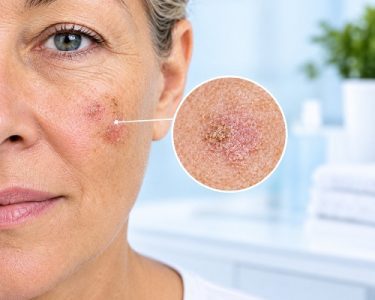
What Is Actinic Keratosis? Actinic keratosis is a precancerous skin lesion associated primarily with cumulative UV exposure. It usually develops gradually over many years.
An actinic keratosis may look like:
- A rough or sandpaper-like patch
- A red, pink, brown, or skin-coloured area
- A flaky or scaly lesion
- A small crusted spot
- A persistent patch that feels rougher than surrounding skin
Some lesions are easier to feel than see. A person may notice roughness when running a finger over the skin even when the lesion has only a subtle change in colour.
Actinic keratoses are more common in people with significant cumulative sun exposure, particularly those who spend considerable time outdoors. However, anyone can develop them.
A dermatologist can examine suspicious lesions and determine whether treatment, monitoring, or a biopsy is appropriate.
What Is Photodynamic Therapy for Actinic Keratosis?
Photodynamic therapy for actinic keratosis is a dermatological treatment that uses two main components:
- A photosensitising medicine applied to the affected skin.
- A specific light source used to activate the medicine.
The photosensitising agent is absorbed preferentially by abnormal or rapidly dividing cells in the treated area. Once activated by the appropriate light, it produces reactive molecules that damage targeted abnormal cells.
The treatment can therefore target areas of abnormal skin while helping preserve much of the surrounding healthy tissue.
Depending on the particular medicine, light source, and treatment protocol, the process may differ between clinics. A dermatologist determines the appropriate approach based on the location, number, thickness, and characteristics of the lesions.
How Does PDT for Actinic Keratosis Work?
The basic principle behind PDT for Actinic Keratosis is relatively straightforward.
First, the dermatologist prepares the treatment area. Any surface scale or crust may be gently removed to help the photosensitising medicine penetrate the abnormal skin.
A photosensitising cream or other preparation is then applied to the affected area. The medicine is allowed to remain on the skin for a specified period.
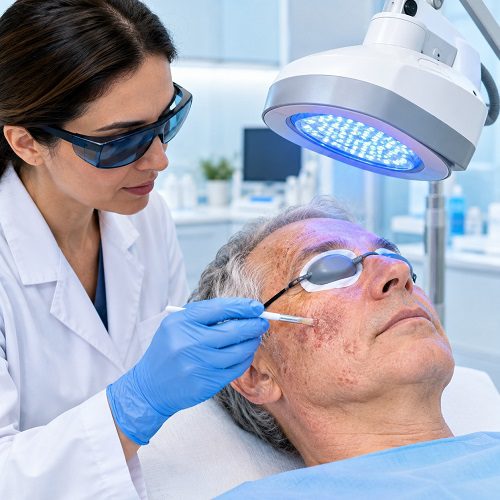
After this preparation stage, the treated area is exposed to a particular wavelength of light.
The light activates the photosensitising substance. This produces a chemical reaction that damages abnormal cells.
The exact timing and technique depend on the treatment protocol being used. Some modern PDT approaches use shorter incubation periods or daylight exposure, while conventional approaches may involve a controlled medical light source.
Because the treatment works on an area rather than only one visible lesion, it may be useful when several actinic keratoses and areas of sun-damaged skin are present.
Why Is Light Therapy Used for Actinic Keratosis?
Light therapy in PDT is not simply ordinary sunlight or a general-purpose light treatment. The light is carefully selected to activate the photosensitising medicine.
The combination of the medicine and the appropriate light produces the therapeutic effect.
This is different from simply exposing actinic keratosis to sunlight. Unprotected UV exposure can contribute to further skin damage and is not a substitute for medical treatment.
During PDT, the dermatologist controls the treatment conditions and provides instructions for protecting the skin before and after the procedure.
What Happens During Treatment?
The precise process can vary, but a typical session may include several stages.
1. Skin assessment
The dermatologist examines the affected area and confirms which lesions should be treated.
2. Preparation
The skin may be cleaned and the surface scale of thicker lesions gently removed.
3. Application of the photosensitising medicine
A light-sensitive medicine is applied to the selected treatment area.
4. Waiting period
The medicine remains on the skin for a specified period so that it can penetrate the target tissue.
5. Light exposure
The area is exposed to the appropriate light source for a defined period.
6. Aftercare
The dermatologist provides instructions concerning sun and bright-light avoidance, skincare, and what reactions to expect.
The entire process can take some time, particularly when preparation and incubation are included.
What Does Photodynamic Therapy Feel Like?
The experience varies from person to person and can also depend on the treatment method.
During illumination, some people experience:
- Warmth
- Stinging
- Burning sensations
- Tingling
- Discomfort
The intensity can vary depending on the treated body area and the amount of sun damage.
Clinics may use different methods to help patients manage discomfort. The dermatologist should explain what to expect before treatment and what options are available if the treatment becomes uncomfortable.
What Happens After PDT?
The treated skin may become red and irritated following photodynamic therapy. Some people experience swelling, crusting, scaling, or increased sensitivity.
These reactions are often part of the skin’s response to treatment.
The appearance of the treated area can temporarily become more noticeable before it improves.
A dermatologist may recommend gentle skincare during recovery. Patients should follow the specific aftercare instructions provided by their healthcare professional rather than applying unapproved products to the treated area.
Sun Protection After Treatment
Sun and bright-light protection is particularly important after photodynamic treatment because residual photosensitivity can occur.
Patients may be advised to:
- Avoid direct sunlight.
- Follow the clinic’s instructions about indoor and outdoor light exposure.
- Wear protective clothing when appropriate.
- Use suitable sun protection after the dermatologist advises it.
- Avoid deliberate tanning.
- Follow all post-treatment instructions carefully.
The exact precautions and duration depend on the photosensitising medicine and treatment protocol.
Potential Benefits of PDT
One reason dermatologists may use photodynamic therapy is its ability to treat multiple lesions and an area of sun-damaged skin during the same treatment session.
Potential advantages can include:
Treating multiple lesions
Rather than treating every visible lesion separately, PDT can cover a broader treatment area.
Treatment of sun-damaged skin
PDT may address visible actinic keratoses as well as areas containing less obvious abnormal cells.
Cosmetic considerations
In appropriate patients, PDT can provide a treatment option where cosmetic appearance is an important consideration.
Non-surgical approach
PDT does not involve cutting the skin in the way that surgical removal does.
However, these potential advantages do not mean PDT is appropriate for everyone. A dermatologist should determine whether it suits the individual patient’s lesions and circumstances.
Are There Side Effects?
Like other medical treatments, photodynamic therapy for actinic keratosis can cause side effects.
Common reactions may include:
- Redness
- Burning or stinging
- Swelling
- Tenderness
- Scaling
- Crusting
- Temporary changes in skin colour
- Increased sensitivity to light
Most reactions are temporary, but the duration can vary.
Less common or more significant reactions should be discussed with a healthcare professional. Patients should contact their medical team if they develop severe pain, significant swelling, signs of infection, or another reaction that concerns them.
Is PDT Suitable for Every Actinic Keratosis?
No. The most appropriate actinic keratosis treatment depends on several factors.
These may include:
- The number of lesions
- Lesion thickness
- Location
- Extent of sun damage
- Previous treatments
- Skin type
- Other medical considerations
- Whether the lesion has features suggesting skin cancer
Some lesions may require biopsy or another form of treatment rather than PDT.
A dermatologist may consider options such as cryotherapy, topical medicines, curettage, excision, or other treatments depending on the clinical situation.
PDT Compared With Other Actinic Keratosis Treatments
There is no single treatment that is suitable for every person.
Cryotherapy
Cryotherapy for Actinic Keratosis uses extreme cold to destroy individual lesions. It is commonly used for isolated actinic keratoses.
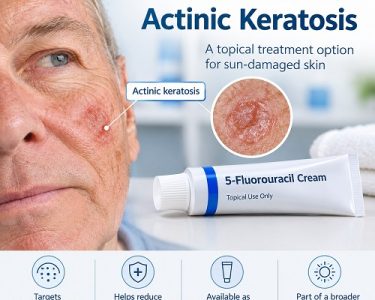
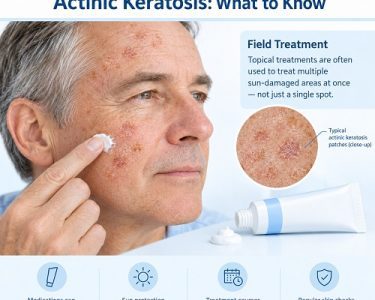
Topical treatments
Certain prescription creams and gels can treat actinic keratoses over a larger area. Examples include medicines containing specific active ingredients prescribed by healthcare professionals.
Curettage
A clinician may scrape away selected lesions, sometimes combined with another treatment.
Excision
Surgical removal may be considered when a lesion requires complete removal or when skin cancer is suspected.
Photodynamic therapy
PDT uses a photosensitising medicine followed by controlled light exposure. It can be considered when several lesions or a broader area of sun-damaged skin require treatment.
The choice depends on the clinical circumstances rather than simply selecting the treatment with the most convenient name or procedure.
How Effective Is Photodynamic Therapy?
The response to PDT varies between patients and treatment protocols.
Some actinic keratoses may clear after treatment, while others may persist or return. People with extensive sun damage can also develop new lesions in the future.
This is important because treating existing actinic keratoses does not remove the underlying history of UV exposure.
Regular skin examinations and sun protection remain important after treatment.
If a lesion does not respond as expected, changes in appearance, or returns repeatedly, the patient should discuss it with a dermatologist.
Can Actinic Keratosis Return After PDT?
Yes. A successfully treated lesion may recur, and new actinic keratoses can develop elsewhere.
The reason is that UV exposure can cause widespread changes in sun-damaged skin.
For this reason, PDT should not be viewed as a permanent guarantee against future actinic keratoses.
Protecting the skin from UV radiation is an important part of long-term skin health.
How Can You Reduce Future Sun Damage?
Practical sun-protection habits include:
- Seeking shade during strong sunlight.
- Wearing protective clothing.
- Wearing a wide-brimmed hat when appropriate.
- Using broad-spectrum sunscreen as directed.
- Avoiding intentional tanning.
- Limiting unnecessary prolonged exposure to strong sunlight.
- Having persistent or changing skin lesions checked.
Sun protection is useful even after successful treatment because previous UV exposure cannot be reversed.
Questions to Ask Before PDT
Before undergoing PDT, patients may wish to ask their dermatologist:
- Why is PDT suitable for my actinic keratoses?
- Which photosensitising medicine will be used?
- What type of light will activate it?
- How should I prepare my skin before treatment?
- How long will the treatment take?
- What discomfort should I expect?
- How should I care for my skin afterwards?
- How long should I avoid bright light or direct sunlight?
- Will I need more than one treatment?
- What should I do if a lesion does not improve?
- When should I return for a follow-up examination?
These questions can help patients understand the procedure and make informed decisions with their healthcare professional.
PDT for Actinic Keratosis: What Should Patients Remember?
PDT for Actinic Keratosis is a specialised treatment that combines a photosensitising medicine with controlled light exposure. The activated medicine produces a reaction that damages abnormal cells in the treated area.
It may be considered for people with multiple actinic keratoses or broader areas of sun-damaged skin. It also offers a non-surgical treatment option in appropriate circumstances.
However, PDT is not suitable for every lesion or every patient. The dermatologist needs to assess the skin carefully before recommending treatment.
Patients should also understand that successful treatment does not prevent new actinic keratoses from developing. Ongoing sun protection and skin monitoring remain important.
When Should You See a Dermatologist?
A dermatologist should assess an actinic keratosis or other suspicious skin lesion, particularly if it:
- Becomes thicker
- Bleeds
- Becomes painful
- Develops a persistent crust
- Grows rapidly
- Changes significantly
- Does not heal
- Looks different from your other lesions
These features do not automatically mean that a lesion is cancerous, but they warrant professional assessment.
Early evaluation can help determine whether the lesion is an actinic keratosis or another skin condition requiring different management.
Final Thoughts
Photodynamic therapy for actinic keratosis is an established dermatological treatment that combines a photosensitising medicine with controlled light exposure. It can be useful for selected patients, particularly when multiple actinic keratoses or areas of sun-damaged skin are being considered for treatment.
PDT can cause temporary redness, discomfort, swelling, scaling, and sensitivity to light, so appropriate preparation and aftercare are important. A dermatologist can explain the expected recovery process and determine whether PDT is appropriate.
Anyone with persistent, changing, painful, bleeding, or thickened skin lesions should seek professional assessment rather than attempting to treat the lesions independently.
Medical Disclaimer
This article is provided for general educational and informational purposes only. It does not constitute medical advice, diagnosis, or treatment. Photodynamic therapy and other treatments for actinic keratosis should be discussed with a qualified dermatologist or healthcare professional. Do not delay professional medical assessment because of information presented in this article.