 By
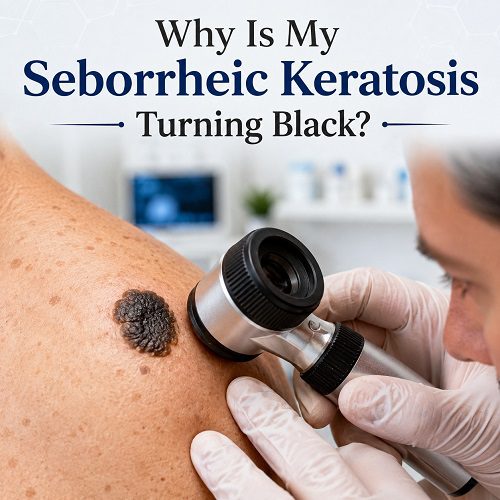
By Seborrheic keratosis is one of the most common non-cancerous skin growths seen in adults, especially after the age of 40. These growths often appear tan, brown, or dark brown, but many people become alarmed when they suddenly notice their black seborrheic keratosis becoming darker or nearly black. A dramatic change in color naturally raises concerns about skin cancer, particularly melanoma.
Fortunately, a black seborrheic keratosis is not always a sign of something dangerous. In many cases, the dark appearance results from natural pigmentation, aging, irritation, or minor bleeding beneath the growth. However, because melanoma can sometimes resemble seborrheic keratosis, any sudden changes should always be evaluated by a healthcare professional. Why seborrheic keratosis can turn black, when the change is considered normal, warning signs that require medical attention, diagnosis, treatment options, and practical skin care tips for Seborrheic Keratosis.
What is Seborrheic Keratosis?
Seborrheic keratosis is a harmless skin growth that develops from the outer layer of the skin (epidermis). These growths often have a waxy, rough, or wart-like surface and appear as though they are “stuck” onto the skin.
Common locations include:
- Face
- Chest
- Back
- Neck
- Shoulders
- Scalp
- Arms
Although harmless, they may vary greatly in color, including:
- Light tan
- Brown
- Dark brown
- Nearly black
This variation explains why many people discover a black seborrheic keratosis and immediately worry about cancer.
Can Seborrheic Keratosis Naturally Be Black?
Yes.
One of the most overlooked facts is that seborrheic keratosis naturally occurs in many different shades.
Some lesions develop:
- Dark pigmentation
- Thick keratin buildup
- Dense melanin deposits
As these accumulate over time, the lesion may appear black rather than brown.
People with darker skin tones may naturally develop darker seborrheic keratoses without any underlying disease.
Why Is My Seborrheic Keratosis Turning Black?
Several factors can cause the lesion to become darker.
1. Increased Pigmentation
The most common reason is increased melanin production.
Pigment cells may gradually deposit more melanin inside the lesion, causing it to darken over months or years.
Usually this happens gradually without pain.
2. Aging of the Lesion
Older seborrheic keratoses often become:
- Thicker
- Rougher
- Darker
This natural aging process Seborrheic Keratosis causes many lesions to appear almost black.
3. Friction and Irritation
Constant rubbing from:
- Clothing
- Bra straps
- Waistbands
- Necklaces
- Shaving
can irritate the lesion.
Repeated irritation may produce inflammation, making the growth appear darker.
4. Minor Bleeding
Sometimes the lesion gets scratched accidentally.
Small amounts of blood trapped inside may dry and create a black appearance.
This is particularly common after:
- Scratching
- Picking
- Shaving
- Trauma
5. Thick Keratin Build-Up
Seborrheic keratosis contains large amounts of keratin.
As keratin accumulates, the surface becomes:
- Dark
- Hard
- Crusty
- Blackish
This does not necessarily indicate cancer.
6. Inflammation
Inflamed seborrheic keratosis may become:
- Dark red
- Brown
- Black
- Swollen
Inflammation may occur after irritation or infection.
Is Black Seborrheic Keratosis Dangerous?
Most black seborrheic keratoses remain completely benign.
However, sudden color changes should never be ignored.
Because melanoma may closely resemble seborrheic keratosis, any suspicious lesion deserves professional evaluation.
How Is Black Seborrheic Keratosis Different from Melanoma?
Many people confuse the two conditions.
| Black Seborrheic Keratosis | Melanoma |
| Waxy appearance | Usually smooth or irregular |
| Looks stuck onto skin | Grows within the skin |
| Rough surface | Variable texture |
| Well-defined edges | Often irregular borders |
| Usually harmless | Skin cancer |
| Slow changes | Can change rapidly |
Even experienced physicians sometimes use dermoscopy or biopsy to distinguish them.
Warning Signs You Should Never Ignore
Seek medical evaluation if your lesion:
- Changes rapidly
- Becomes jet black suddenly
- Bleeds repeatedly
- Develops irregular borders
- Shows multiple colors for Seborrheic Keratosis
- Becomes painful
- Ulcerates
- Continues growing rapidly
- Itches persistently
- Looks significantly different from your other lesions
These symptoms do not necessarily indicate cancer but require examination.
Can a Black Seborrheic Keratosis Bleed?
Yes.
Bleeding usually occurs because:
- It was scratched
- Clothing rubbed against it
- It became irritated
- It partially detached
Occasional bleeding is common.
Repeated bleeding should be evaluated.
Can Infection Cause It to Turn Black?
Sometimes.
When irritated skin becomes infected, you may notice:
- Swelling
- Warmth
- Redness
- Crusting
- Dark discoloration
- Pus
Treatment may require antibiotics if bacterial infection develops.
Who Is More Likely to Develop Black Seborrheic Keratosis?
Risk factors include:
- Age over 40
- Family history
- Fair skin
- Darker skin pigmentation
- Long-term sun exposure
- Multiple existing seborrheic keratoses
Most people eventually develop several lesions during adulthood.
How Do Dermatologists Diagnose Black Seborrheic Keratosis?
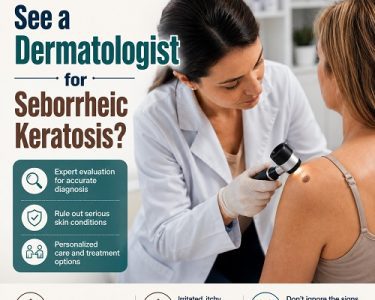
Diagnosis usually begins with a skin examination.
Doctors evaluate:
- Shape
- Border
- Color
- Thickness
- Texture
Many dermatologists also use dermoscopy.
This handheld instrument magnifies skin structures invisible to the naked eye.
When Is a Skin Biopsy Needed?
A biopsy may be recommended if:
- The diagnosis is uncertain.
- The lesion resembles melanoma.
- It changes rapidly.
- It bleeds repeatedly.
- It has irregular pigmentation.
A small tissue sample is examined under a microscope to confirm the diagnosis.
Treatment Options
Most seborrheic keratoses require no treatment unless they become bothersome or cosmetically undesirable.
Common removal methods include:
Cryotherapy
Liquid nitrogen freezes the growth, causing it to fall off over time.
Curettage
The lesion is gently scraped away after numbing the area.
Electrocautery
Heat from an electric current removes the lesion and controls bleeding.
Laser Therapy
Certain lasers effectively remove pigmented lesions while minimizing damage to surrounding skin.
Shave Removal
A dermatologist carefully shaves the lesion from the skin’s surface.
Can You Remove It at Home?
Home removal is not recommended.
Avoid:
- Cutting
- Burning
- Picking
- Scraping
- Using unverified chemical treatments
Improper removal increases the risk of:
- Infection
- Bleeding
- Scarring
- Delayed diagnosis of melanoma
Always consult a qualified healthcare professional before attempting treatment.
Natural Remedies for Seborrheic Keratosis
Natural Remedies for Seborrheic Keratosis are often searched by people who want gentle ways to care for these common, usually harmless skin growths. Seborrheic keratoses can appear as raised, waxy, rough, or brown patches on the face, chest, back, and other areas. While natural approaches may help support healthy skin and reduce irritation, they should not be considered proven methods for removing seborrheic keratosis.
Seborrheic Keratosis Home Care
Good Seborrheic Keratosis Home Care focuses on protecting the affected skin. Keep the area clean and moisturized, avoid scratching or picking the growth, and reduce friction from tight clothing or jewelry. Using sunscreen can also help protect surrounding skin from excessive ultraviolet exposure.
Some people consider ingredients such as aloe vera, coconut oil, or other soothing moisturizers for general skin comfort. However, there is limited scientific evidence that these products can eliminate seborrheic keratoses. Avoid applying strong acids, essential oils, or homemade preparations because they may cause burns, irritation, infection, or scarring.
How Seborrheic Keratosis Is Diagnosed
Understanding How Seborrheic Keratosis Is Diagnosed is important before trying any home treatment. A dermatologist can usually identify the growth by examining its appearance and texture. Dermoscopy may also be used when the diagnosis is uncertain. If a lesion looks unusual, changes rapidly, bleeds, or has irregular pigmentation, a biopsy may be recommended to rule out skin cancer.
Treatment Options for Seborrheic Keratosis
Although natural remedies may support comfortable skin, professional Treatment Options for Seborrheic Keratosis are more appropriate when a growth needs removal. Depending on its size and location, a dermatologist may recommend cryotherapy, curettage, electrocautery, shave removal, or another suitable procedure.
Overall, Natural Remedies for Seborrheic Keratosis should be viewed as supportive skin-care practices rather than guaranteed treatments. Consult a dermatologist before attempting to remove a suspicious or changing skin growth at home.
Can Black Seborrheic Keratosis Fall Off?
Sometimes.
After:
- Cryotherapy
- Minor trauma
- Friction
the lesion may partially loosen and eventually detach.
Do not force it off, as this may cause bleeding or infection.
Can Seborrheic Keratosis Become Cancer?
Seborrheic keratosis itself does not become skin cancer.
However, melanoma and other skin cancers may develop nearby or resemble seborrheic keratosis.
That is why any new or changing dark lesion deserves professional assessment.
How to Monitor Your Skin
Perform monthly skin checks.
Look for:
- New lesions
- Changes in size
- Color changes
- Bleeding
- Pain
- Rapid growth
Taking photographs every few months can help you notice subtle changes.
Prevention Tips
Although seborrheic keratosis cannot always be prevented, healthy skin habits may reduce irritation and support overall skin health.
Helpful practices include:
- Wear sunscreen daily.
- Avoid excessive sun exposure.
- Moisturize dry skin.
- Avoid scratching skin growths.
- Wear loose-fitting clothing if lesions rub.
- Schedule regular skin examinations if you have many lesions.
Frequently Asked Questions
Is black seborrheic keratosis always cancer?
No. Most black seborrheic keratoses are benign, but sudden changes should always be examined by a dermatologist.
Why did my seborrheic keratosis suddenly turn black?
Possible reasons include increased pigmentation, minor bleeding, irritation, inflammation, or thick keratin buildup. A sudden change should be medically assessed.
Can black seborrheic keratosis disappear on its own?
Some lesions may partially detach after irritation or treatment, but most remain unless professionally removed.
Does black color mean the lesion is infected?
Not necessarily. Infection usually causes redness, swelling, warmth, tenderness, or pus in addition to color changes.
Should I pick off a black seborrheic keratosis?
No. Picking may cause bleeding, infection, scarring, and could delay the diagnosis of a more serious skin condition.
Conclusion
Discovering a black seborrheic keratosis can be unsettling, but in many cases, the darker color is simply a result of natural pigmentation, aging, keratin buildup, or minor irritation. Most seborrheic keratoses remain harmless and do not require treatment unless they become uncomfortable or cosmetically bothersome. However, any lesion that changes rapidly, bleeds repeatedly, develops irregular borders, or displays multiple colors should be evaluated promptly by a dermatologist to rule out melanoma or other skin cancers. Regular skin self-examinations, protecting your skin from excessive sun exposure, and avoiding the temptation to scratch or remove lesions at home are simple yet important steps in maintaining healthy skin. If you’re ever unsure whether a dark skin growth is a black seborrheic keratosis or something more serious, seeking professional medical advice is always the safest choice.