 By
Smartwatches have become more than devices for tracking daily steps, exercise, and sleep. Many modern models include features that monitor heart rate and identify patterns that may suggest an abnormal heart rhythm. One important condition these devices can help identify is atrial fibrillation (AFib), a common heart rhythm disorder associated with an increased risk of stroke and other cardiovascular complications.
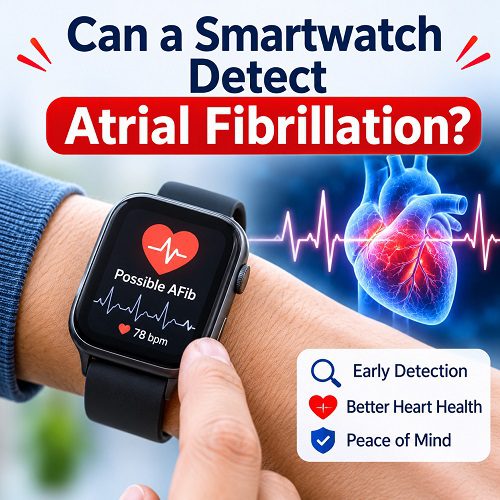
But can a smartwatch detect atrial fibrillation accurately? The answer is yes, some smartwatches can identify signs of AFib, although their capabilities depend on the device, its sensors, and how the monitoring feature works. Certain watches use optical sensors to detect irregular pulse patterns, while others can record a single-lead electrocardiogram (ECG or EKG) that may provide evidence of an abnormal rhythm.
How a smartwatch detects AFib, what its alerts mean, and when to seek medical advice is essential. Although wearable technology can support early detection, it cannot replace a professional medical assessment or a complete diagnostic evaluation.
What Is Atrial Fibrillation?
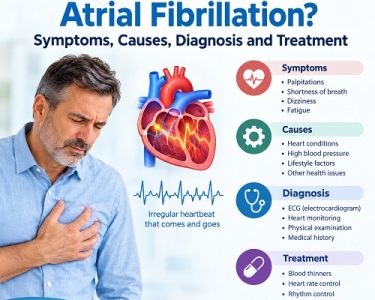
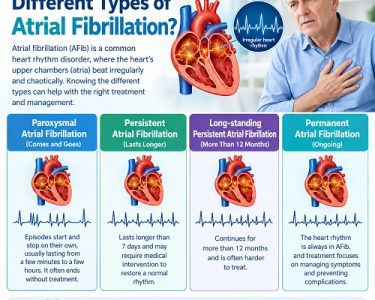
Atrial fibrillation is an irregular heart rhythm that develops when the electrical signals controlling the upper chambers of the heart become disorganized. Instead of contracting in a coordinated way, the atria quiver or beat irregularly, potentially causing an irregular and sometimes rapid heartbeat.
Some people experience noticeable symptoms, while others have no symptoms at all. AFib can occur occasionally, last for extended periods, or become persistent.
Common Atrial Fibrillation symptoms include:
- Heart palpitations or a fluttering sensation in the chest
- A rapid or irregular heartbeat
- Shortness of breath
- Fatigue or reduced exercise tolerance
- Dizziness or lightheadedness
- Chest discomfort
Atrial fibrillation can also be present without obvious symptoms. This is one reason heart rhythm monitoring is important for people who have risk factors such as older age, high blood pressure, diabetes, heart disease, or sleep apnea.
When AFib occurs, blood may not move efficiently through the heart. This can contribute to clot formation and increase the risk of stroke. Early diagnosis allows healthcare professionals to assess the person’s risks and determine whether treatments such as heart rate control, rhythm management, or blood-thinning medication are appropriate.
How Can a Smartwatch Detect Atrial Fibrillation?
A smartwatch may identify possible AFib using two main technologies: optical heart rate monitoring and electrocardiogram recording.
1. Optical Heart Rate Sensors
Many smartwatches use photoplethysmography (PPG), a technology that shines light into the skin and measures changes in blood volume as the heart pumps. These changes help the device estimate the pulse rate and identify patterns between heartbeats.
A wearable heart monitor equipped with an irregular rhythm notification feature can analyze pulse intervals over time. If the detected pattern repeatedly appears irregular in a way that may be consistent with AFib, the device may display a notification.
However, an optical sensor measures pulse-related changes rather than the heart’s electrical activity directly. Movement, loose watch placement, poor skin contact, and other irregular rhythms can affect the readings.
2. Electrocardiogram (ECG or EKG) Features
Some smartwatches include an ECG application that records the electrical signals of the heart using electrodes built into the watch and, in some models, the watch’s crown or frame.
During a recording, the user generally rests a finger on a designated electrode while keeping the watch on the wrist. The device records a short electrical tracing that its software analyzes.
Depending on the model and the quality of the recording, the app may classify the rhythm as showing signs consistent with AFib, sinus rhythm, an inconclusive result, or an unreadable recording.
An ECG-capable smartwatch can provide useful information to share with a healthcare professional. However, its recording is typically a single-lead ECG and does not provide all the information available from a standard 12-lead ECG.
Not every smartwatch has an ECG feature, and availability may vary by model, country, age eligibility, and regulatory authorization.
Can Smartwatch Atrial Fibrillation Alerts Be Trusted?
Smartwatch alerts can be useful, but their accuracy depends on the device, its technology, the quality of the signal, and the circumstances in which measurements are taken.
Some devices have been evaluated in clinical studies and can identify AFib with good performance under appropriate conditions. Nevertheless, an alert is not the same as a confirmed diagnosis. The American College of Cardiology explains that consumer wearables have important limitations, including false-positive readings and difficulty distinguishing AFib from certain other abnormal rhythms.
Several factors influence how reliable a reading may be:
- Movement: Exercise or wrist movement can interfere with the sensor signal.
- Watch fit: Loose contact between the watch and skin may reduce recording quality.
- Other heart rhythms: Premature beats and other arrhythmias can produce irregular pulse patterns.
- Short episodes: AFib that occurs intermittently may not be detected during the watch’s monitoring periods.
- Recording quality: An ECG recording may be inconclusive if the electrical signal is noisy or incomplete.
A smartwatch may therefore generate an alert when AFib is not present, or fail to identify AFib that occurs between measurements.
It is equally important to understand that a normal smartwatch reading does not rule out atrial fibrillation. If you have Atrial Fibrillation symptoms or risk factors, medical evaluation may still be necessary even when the device reports no irregularity.
What Do Atrial Fibrillation Alerts Mean?
Atrial Fibrillation alerts are notifications that tell you your smartwatch has detected a pattern that may indicate an irregular heart rhythm. Their exact meaning depends on the manufacturer’s software and the type of monitoring feature.
Irregular rhythm notification
The watch has identified a pulse pattern that may be consistent with AFib. This is a reason to seek medical advice, not proof that you have the condition.
ECG result suggesting AFib
A compatible watch has recorded electrical activity that its algorithm considers consistent with AFib. A clinician should review the tracing and arrange appropriate confirmation.
Normal or inconclusive result
A normal result only describes the recording that was obtained. An inconclusive result means the device could not classify it reliably. Neither should override concerning symptoms.
Some watches check for irregularity periodically rather than continuously. As a result, the device may miss brief episodes. An ECG app that requires you to start a recording also cannot automatically capture every episode unless a compatible monitoring feature is operating.
What Should You Do If Your Smartwatch Detects AFib?
Receiving an unexpected heart rhythm notification can be worrying. The best response is to stay calm, preserve the available information, and arrange appropriate medical evaluation.
Step 1: Review the notification
Read the alert carefully and check whether it refers to an irregular pulse, an ECG classification, or another type of heart rate notification. Follow the device’s instructions, but do not assume that the result establishes a diagnosis.
Step 2: Save the recording
If your watch provides an ECG tracing, save the recording or export the report if possible. Record the date and time of the alert and note any symptoms you experienced.
This information may help your healthcare professional decide which tests are needed.
Step 3: Contact a healthcare professional
If you have a new or repeated AFib alert, contact a healthcare professional promptly for advice, even if you feel well. Your clinician can review the device information, assess your medical history, and determine whether an ECG or longer period of heart rhythm monitoring is appropriate.
Do not wait for another smartwatch alert before seeking advice if you are experiencing symptoms.
Step 4: Seek emergency care for serious symptoms
Call your local emergency service immediately if you develop chest pain or pressure, severe shortness of breath, fainting, or symptoms that could indicate a stroke, such as sudden facial drooping, arm weakness, or difficulty speaking.
Do not delay emergency care to take a smartwatch ECG or check your pulse again. Serious symptoms require urgent assessment regardless of what the device displays.
Step 5: Do not change medication yourself
Do not start aspirin, blood thinners, heart rhythm medication, or other treatments solely because of a smartwatch notification. If you already take prescribed medication, do not stop or change the dose without professional guidance.
The appropriate response depends on whether AFib is confirmed, your stroke risk, your medical history, and other individual factors. The American Heart Association’s AFib diagnosis guide provides further information.
How Do Doctors Confirm Atrial Fibrillation?
When a smartwatch suggests an irregular rhythm, a healthcare professional may use several methods to determine whether AFib is present.
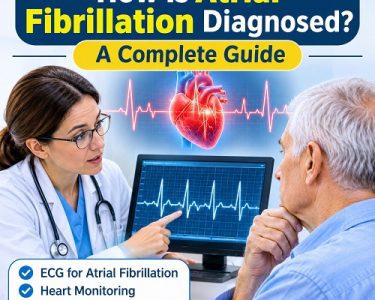
1. Standard 12-Lead ECG
A 12-lead electrocardiogram records the heart’s electrical activity through electrodes placed on the chest and limbs. It is a key test for diagnosing Atrial Fibrillation when the abnormal rhythm is occurring during the recording.
2. Holter Monitor
A Holter monitor records the heart’s electrical activity continuously, commonly over 24–48 hours or longer, depending on the device and clinical need. It may identify irregular rhythms that do not appear during a brief ECG.
3. Event Monitor or Extended ECG Patch
If episodes occur infrequently, a clinician may recommend a monitor worn for several days or weeks. The monitoring period is selected according to symptom frequency and the likelihood of capturing an episode.
4. Medical History and Examination
Doctors may ask about palpitations, dizziness, fainting, breathlessness, medications, alcohol consumption, sleep apnea, and existing medical conditions. They may also check blood pressure and request blood tests or other investigations to assess possible contributing factors.
The NICE atrial fibrillation guideline recommends a 12-lead ECG to confirm suspected AFib when an irregular pulse is detected, with ambulatory monitoring considered when the initial ECG does not capture suspected intermittent episodes.
Benefits of Using a Smartwatch for Heart Monitoring
Although smartwatches have limitations, they can offer several useful benefits when used appropriately.
- Earlier identification of possible AFib
Some people have intermittent or symptom-free AFib. A smartwatch may identify a suspicious rhythm pattern outside a medical setting and encourage the wearer to seek an assessment.
- Convenient heart rhythm monitoring
A compatible wearable heart monitor allows users to check their heart rhythm during everyday activities without visiting a clinic for every recording.
- Useful information for healthcare professionals
Saved ECG tracings, notification history, and symptom notes can help clinicians understand when irregular rhythms may have occurred.
- Support for people with known AFib
For selected patients with an established diagnosis, compatible wearable ECG devices may help document recurrent Atrial Fibrillation episodes under a clinician’s guidance. However, a smartwatch should not replace a prescribed monitoring plan or clinical follow-up.
- Greater awareness of heart health
Wearable technology can encourage people to pay attention to symptoms, understand their heart rate patterns, and seek medical care when something unusual occurs.
These benefits are most meaningful when wearable data is interpreted alongside medical history, clinical assessment, and appropriate testing.
Limitations of Smartwatch AFib Detection
Despite improvements in wearable technology, several limitations remain.
- Not all smartwatches support AFib detection. Basic heart rate tracking is not equivalent to an AFib detection feature.
- False alarms can occur. Other irregular rhythms, movement, and recording problems may produce misleading results.
- Some episodes may be missed. Intermittent monitoring cannot guarantee that every abnormal rhythm will be detected.
- ECG features have specific limits. Many smartwatch ECGs record only one electrical lead and cannot replace a complete clinical ECG assessment.
- Features differ by region. Regulatory authorization, supported devices, age requirements, and software availability vary.
- An alert does not assess stroke risk. A watch cannot independently determine whether you need anticoagulant medication or another AFib treatment.
A smartwatch also cannot reliably rule out other serious conditions, such as a heart attack. Symptoms should always take priority over device readings.
Who May Benefit Most From a Smartwatch With AFib Detection?
A smartwatch with an appropriate heart rhythm feature may be useful for adults who want to monitor their heart health, particularly when they have risk factors for AFib or have been advised by a clinician to record possible episodes.
People who experience occasional palpitations may also find ECG recording useful, provided they understand that an episode must occur while a usable recording is being made to capture it.
However, a smartwatch is not necessarily the best monitoring option for everyone. People with frequent fainting, severe symptoms, or suspected serious arrhythmias may require medical-grade monitoring. Those who already have AFib should ask their healthcare professional whether smartwatch monitoring is suitable for their individual care plan.
People should also avoid relying exclusively on consumer devices to screen for disease. The decision to use a wearable should consider its validated capabilities, the person’s medical circumstances, and whether the results can be reviewed appropriately.
How to Use a Smartwatch More Effectively
If your device includes an authorized AFib detection or ECG feature, a few practical steps may improve the usefulness of its readings.
- Check compatibility. Confirm that your particular model supports the feature in your country and that you meet its eligibility requirements.
- Wear the watch correctly. Follow the manufacturer’s instructions for fit and sensor contact.
- Follow recording instructions. Remain still and use the recommended posture when taking an ECG recording.
- Keep relevant records. Save abnormal readings, ECG tracings, and notification timestamps.
- Record symptoms. Note whether palpitations, dizziness, or breathlessness occurred at the same time.
- Discuss results with your clinician. Ask whether additional monitoring or testing is necessary.
- Continue recommended care. Do not substitute smartwatch readings for prescribed medication, clinical appointments, or professional advice.
These steps can help make wearable data more useful without creating a false sense of security.
Can a Smartwatch Detect AFib Before Symptoms Begin?
Yes, certain smartwatches may identify patterns suggesting AFib in people who do not notice symptoms. This is potentially valuable because AFib can be asymptomatic.
However, the ability to detect possible AFib does not mean that every case will be found, or that all smartwatch-detected episodes require the same treatment. The clinical significance of an episode depends on factors such as the person’s health, the rhythm recording, and their risk of stroke.
A smartwatch notification should therefore be considered a possible early warning rather than a definitive diagnosis. Research and clinical guidelines continue to emphasize the importance of interpreting wearable data in an appropriate medical context.
Natural Treatment for Atrial Fibrillation
Atrial fibrillation (AFib) is a heart rhythm disorder that causes an irregular or sometimes rapid heartbeat. Although medical treatment is essential for managing this condition, certain lifestyle changes may help support heart health. Natural Remedies for Atrial Fibrillation can complement prescribed treatment but should never replace medication or professional medical advice.
A heart-healthy diet is an important step toward managing AFib. Include fruits, vegetables, whole grains, lean proteins, and healthy fats in your daily meals. Limiting excess salt and highly processed foods may also support cardiovascular health.
Regular physical activity, such as walking, swimming, or gentle cycling, can improve overall fitness. However, people with AFib should consult their healthcare provider before starting a new exercise routine. Maintaining a healthy weight, managing stress through meditation or breathing exercises, and getting sufficient sleep may also help reduce potential triggers.
Limiting alcohol, avoiding excessive caffeine if it triggers symptoms, and quitting smoking are additional measures that may benefit heart health. Some herbal supplements can interact with heart medications, so always consult a healthcare professional before using them.
Natural Remedies for Atrial Fibrillation work best as part of a comprehensive care plan. Medical supervision is particularly important because AFib can increase the risk of stroke. Seek emergency care for chest pain, severe shortness of breath, or fainting.
Frequently Asked Questions
1. Can a smartwatch accurately detect atrial fibrillation?
Some smartwatches can identify patterns consistent with AFib with good accuracy under suitable conditions. However, false-positive and false-negative results are possible, and a healthcare professional should confirm a suspected diagnosis.
2. Can a smartwatch detect AFib without symptoms?
Yes. Some compatible devices can identify suspicious pulse patterns or record an irregular rhythm even when the wearer does not notice symptoms. However, intermittent monitoring may miss episodes.
3. Does a normal smartwatch reading mean my heart is healthy?
No. A normal reading does not rule out AFib, other arrhythmias, or heart disease. Seek medical advice if you have concerning symptoms or have been advised to undergo further testing.
4. What should I do if my watch gives me an AFib alert?
Save the notification and any available ECG recording, then contact a healthcare professional for guidance. Seek emergency care for severe symptoms, including chest pain, fainting, significant breathlessness, or possible stroke symptoms.
5. Can a smartwatch replace a medical ECG?
No. A smartwatch ECG is usually a single-lead recording, whereas a standard 12-lead ECG provides more comprehensive electrical information. Your clinician will determine which tests are appropriate.
6. Can a smartwatch tell me whether I need blood thinners?
No. Decisions about anticoagulants require an assessment of the diagnosis, stroke risk, bleeding risk, and other clinical factors. Never start or stop these medications based on a smartwatch notification alone.
Conclusion
So, can a smartwatch detect atrial fibrillation? Yes, some compatible smartwatches can identify irregular pulse patterns or record ECG signals that may suggest AFib. These features can support awareness and encourage timely medical assessment, including in people who do not experience obvious symptoms.
However, a smartwatch cannot reliably diagnose or exclude every case of AFib. False alerts, missed episodes, sensor limitations, and differences between device models all matter. A suspected abnormal rhythm should be evaluated by a healthcare professional, who can arrange an ECG or longer-term monitoring when necessary.
Using a wearable heart monitor responsibly means treating Atrial Fibrillation alerts as useful information rather than a final medical answer. When combined with appropriate clinical care, smartwatch technology can be a helpful tool for supporting heart health.
Medical disclaimer:
This article is for educational purposes only and does not replace professional medical advice, diagnosis, or treatment. Anyone who receives an abnormal heart rhythm notification should seek appropriate medical guidance. Serious or sudden symptoms require emergency assessment.
Medical References
The following reputable medical sources support the article’s discussion of AFib detection, diagnosis, and wearable monitoring.
- American Heart Association. How Is AFib Diagnosed? Explains ECG testing, medical evaluation, and wearable heart monitors.
https://www.heart.org/en/health-topics/atrial-fibrillation/treatment-and-prevention-of-atrial-fibrillation/afib-diagnosis - American College of Cardiology. Smartwatches and Atrial Fibrillation: What Works and What Needs Improvement? Reviews the clinical usefulness and limitations of consumer wearable devices.
https://www.acc.org/latest-in-cardiology/articles/2024/05/29/16/56/smartwatches-and-atrial-fibrillation - American College of Cardiology / American Heart Association and partner organizations. 2023 Guideline for the Diagnosis and Management of Atrial Fibrillation. Provides clinical guidance on AFib diagnosis and the interpretation of wearable device recordings.
https://pmc.ncbi.nlm.nih.gov/articles/PMC11104284/ - National Institute for Health and Care Excellence (NICE). Atrial fibrillation: diagnosis and management — Recommendations. Describes ECG confirmation and ambulatory monitoring for suspected intermittent AFib.
https://www.nice.org.uk/guidance/NG196/chapter/recommendations - U.S. Food and Drug Administration (FDA). Post-Market Evaluation of Smartwatch Cardiovascular Notifications. Discusses the role and evaluation of consumer wearable notifications for cardiovascular conditions.
https://www.fda.gov/science-research/advancing-regulatory-science/post-market-evaluation-smartwatch-cardiovascular-notifications - Haverkamp W, et al. Can we trust a smartwatch ECG? Potential and limitations. European Journal of Heart Failure. 2021;23(6):850–853.
https://doi.org/10.1002/ejhf.2194