 By
By Irritated seborrheic keratosis care is essential for reducing discomfort and preventing unnecessary skin damage. Seborrheic keratoses are common, noncancerous skin growths that often appear with age. Although they are harmless, they can become irritated by clothing, shaving, sweating, or accidental rubbing. This irritation may lead to itching, redness, tenderness, or even minor bleeding.
When a seborrheic keratosis becomes uncomfortable, many people instinctively pick or scratch it. Unfortunately, this can make the irritation worse, increase the risk of infection, and delay healing. Fortunately, there are many gentle ways to care for an irritated seborrheic keratosis while protecting your skin.
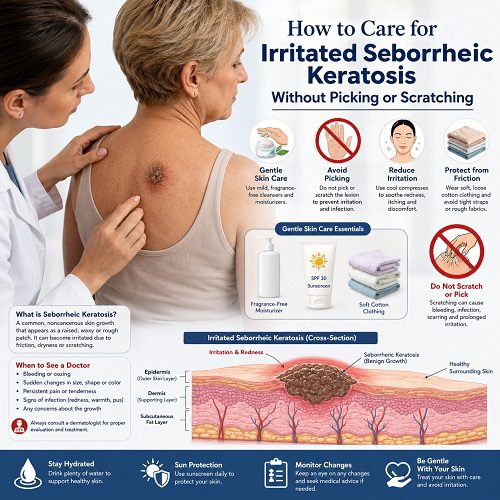
What is Seborrheic Keratosis?
Seborrheic keratosis is a benign skin growth that commonly develops during middle age and later adulthood. These growths often appear as:
- Brown, black, or tan spots
- Slightly raised or thickened patches
- Waxy or wart-like surfaces
- Rough or crumbly texture
- Well-defined borders
They commonly develop on the:
- Chest
- Back
- Neck
- Seborrheic Keratosis on the Face
- Shoulders
- Abdomen
Unlike skin cancer, seborrheic keratoses usually grow slowly and do not spread to other parts of the body.
Why Does Seborrheic Keratosis Become Irritated?
Even harmless growths can become irritated because of everyday activities.
Common Seborrheic Keratosis Causes include:
- Tight clothing
- Friction from collars or waistbands
- Bra straps
- Backpacks
- Shaving
- Scratching
- Excessive sweating
- Dry skin
- Repeated rubbing
- Accidental trauma
When irritated, the growth may become:
- Red
- Tender
- Itchy Seborrheic Keratosis
- Inflamed Seborrheic Keratosis
- Slightly swollen
- Crusty
- Sensitive to touch
Why You Should Never Pick or Scratch
Although scratching may provide temporary relief, it often creates more problems.
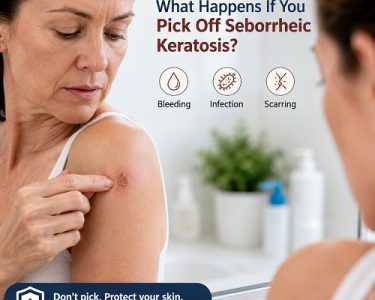
Picking an irritated seborrheic keratosis can:
- Damage healthy skin
- Cause bleeding
- Increase inflammation
- Introduce bacteria
- Increase infection risk
- Delay healing
- Leave scars
- Cause prolonged discomfort
Keeping your hands away from the irritated area is one of the most important parts of irritated seborrheic keratosis care.
Gentle Ways to Care for Irritated Seborrheic Keratosis
1. Keep the Area Clean
Wash the area daily using:
- Lukewarm water
- Mild fragrance-free cleanser
- Gentle pat drying
Avoid:
- Harsh soaps
- Strong exfoliants
- Alcohol-based cleansers
- Scrubbing brushes
Clean skin reduces irritation while protecting the skin barrier.
2. Apply a Fragrance-Free Moisturizer
Dry skin often increases itching.
Choose moisturizers that are:
- Fragrance-free
- Dye-free
- Alcohol-free
- Designed for sensitive skin
Moisturized skin is less likely to itch and become inflamed.
3. Reduce Friction
Constant rubbing can keep the lesion irritated.
Helpful strategies include:
- Wear loose cotton clothing.
- Avoid tight collars.
- Choose soft fabrics.
- Remove rough clothing tags.
- Use breathable materials during exercise.
Reducing friction allows irritated skin to calm Natural Support for Seborrheic Keratosis.
4. Avoid Hot Water
Very hot showers remove natural skin oils.
Instead:
- Use warm water.
- Limit shower time.
- Moisturize immediately afterward.
This helps maintain healthy skin hydration.
5. Resist the Urge to Scratch
If itching becomes bothersome:
- Gently tap around the area.
- Apply a cool compress.
- Moisturize the skin.
- Distract yourself until the itch passes.
Scratching almost always prolongs irritation.
6. Use Cool Compresses
A cool, clean compress can temporarily reduce:
- Itching
- Swelling
- Burning
- Redness
Apply for:
10–15 minutes several times daily as needed.
Avoid placing ice directly on the skin.
Protect the Growth During Daily Activities
Simple lifestyle changes can prevent repeated irritation.
These include:
- Sleeping in soft clothing
- Avoiding rough towels
- Using gentle laundry detergent
- Wearing sunscreen outdoors
- Being careful while shaving
- Avoiding unnecessary rubbing
Small changes often provide significant relief.
Can You Cover an Irritated Seborrheic Keratosis?
Sometimes.
If clothing repeatedly rubs the growth, a loose, breathable bandage may provide temporary protection.
However:
- Change dressings daily.
- Keep the area dry.
- Avoid adhesive directly over sensitive skin.
- Remove the covering when friction is no longer an issue.
Continuous covering without reason may trap moisture.
Avoid Home Removal Methods
Many online remedies recommend removing seborrheic keratoses at home.
Avoid using:
- Razor blades
- Nail clippers
- Vinegar
- Strong acids
- Caustic chemicals
- Burning methods
- Sharp instruments
Attempting removal at home may cause:
- Infection
- Bleeding
- Scarring
- Severe irritation
If removal is desired, consult a qualified healthcare professional.
Skin Care Ingredients That May Help
Gentle products can support healthy skin.
Look for ingredients such as:
- Ceramides
- Glycerin
- Hyaluronic acid
- Colloidal oatmeal
- Aloe vera
- Petrolatum
These ingredients help maintain skin moisture and reduce irritation.
Ingredients to Avoid
Sensitive skin may react poorly to:
- Fragrances
- Alcohol
- Strong acids
- Harsh exfoliants
- Abrasive scrubs
- Essential oils on irritated skin
Keeping your routine simple is often best.
Can Stress Make Itching Worse?
Stress does not cause seborrheic keratosis, but many people notice itching feels worse during stressful periods.
Helpful stress-management habits include:
- Regular exercise
- Meditation
- Deep breathing
- Good sleep
- Balanced nutrition
- Staying hydrated
Managing overall wellness may reduce the urge to scratch.
Should You Moisturize Every Day?
Yes.
Daily moisturizing helps:
- Reduce dryness
- Improve skin comfort
- Support the skin barrier
- Minimize itching
- Protect surrounding healthy skin
Apply moisturizer immediately after bathing for the best results.
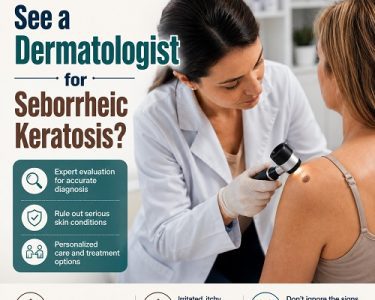
When Should You See a Doctor?
Although seborrheic keratoses are usually harmless, seek medical evaluation if the lesion:
- Bleeds repeatedly
- Changes rapidly
- Becomes extremely painful
- Develops persistent redness
- Produces pus
- Has an unusual appearance
- Grows very quickly
- Is difficult to distinguish from skin cancer
A dermatologist can confirm the Seborrheic Keratosis diagnosis and recommend appropriate treatment if needed.
Medical Treatments for Persistent Irritation
If Seborrheic Keratosis Home Care is not enough, a healthcare provider may recommend Seborrheic Keratosis Removal.
Treatment options may include:
- Cryotherapy for Seborrheic Keratosis (freezing)
- Curettage
- Electrocautery
- Minor surgical removal
- Laser Removal for Seborrheic Keratosis (in selected cases)
These procedures are generally quick and performed in an outpatient setting.
Everyday Habits That Protect Your Skin
Good skin care supports long-term comfort.
Healthy habits include:
- Gentle cleansing
- Daily moisturizing
- Sun protection
- Wearing breathable fabrics
- Avoiding scratching
- Staying hydrated
- Maintaining a healthy lifestyle
- Monitoring skin changes
These practices may help prevent future irritation.
Common Mistakes to Avoid
Avoid these common errors:
- Picking at the growth
- Scratching repeatedly
- Using harsh chemicals
- Trying home removal techniques
- Ignoring signs of infection
- Wearing irritating clothing
- Scrubbing the lesion
- Delaying medical evaluation for suspicious changes
Simple preventive care is often the safest approach.
Frequently Asked Questions
Can irritated seborrheic keratosis heal on its own?
Yes. Mild irritation often improves once friction is removed and the skin is cared for gently.
Is itching normal?
Yes. Temporary itching can occur, especially if the growth is dry or rubbed by clothing.
Can moisturizer help?
Yes. Fragrance-free moisturizers often reduce dryness and improve comfort.
Should I scratch if it itches badly?
No. Scratching increases irritation and may lead to bleeding or infection.
Can seborrheic keratosis become infected?
Yes. Repeated picking, scratching, or injury can introduce bacteria and cause infection.
Conclusion
Proper irritated seborrheic keratosis care focuses on protecting the skin rather than trying to remove or scratch the growth. Gentle cleansing, regular moisturizing, reducing friction, and avoiding picking can help calm irritation and support healthy healing. While seborrheic keratoses are generally harmless, persistent pain, bleeding, rapid changes, or signs of infection should always be evaluated by a healthcare professional. With consistent skin-friendly habits and timely medical advice when necessary, most irritated seborrheic keratoses can be managed safely and comfortably.