
 By
By A lipoma is one of the most common types of soft tissue lumps found beneath the skin. If you’ve recently noticed a soft, movable lump on your body, you may be wondering what is a lipoma and whether it is something to worry about. Fortunately, most lipomas are harmless and do not require treatment unless they cause discomfort or cosmetic concerns.
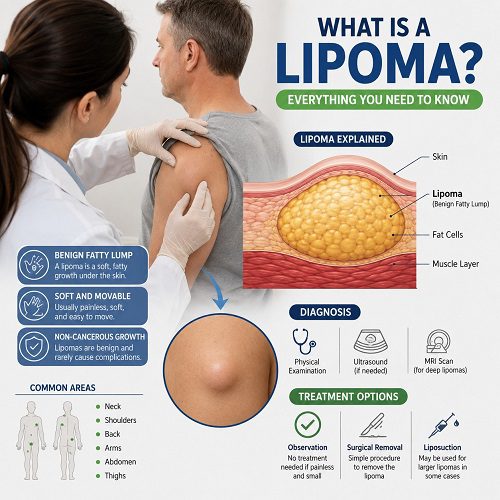
Understanding lipoma meaning can help reduce unnecessary anxiety. A lipoma is a non-cancerous growth made up of fat cells that develops slowly over time. Medical professionals often describe it as a benign fatty lump because it is usually soft, painless, and unlikely to become cancerous. lipoma explained in simple terms, covering symptoms, causes, diagnosis, treatment options, and frequently asked questions.
What is a Lipoma?
A lipoma is a slow-growing, fatty growth that forms beneath the skin. It develops when fat cells multiply and collect in one area, creating a soft lump that can easily move when touched.
Lipomas are considered benign tumors, meaning they are not cancerous. They can occur almost anywhere on the body where fat cells are present, including:
- Neck
- Shoulders
- Arms
- Back
- Chest
- Abdomen
- Lipoma on the Thighs
- Forehead
Although anyone can develop a lipoma, they are most commonly seen in adults between 40 and 60 years of age.
When discussing what is a lipoma, it is important to remember that these growths are generally harmless and rarely pose serious health risks.
Lipoma Meaning Explained
The word “lipoma” comes from:
- “Lipo” meaning fat
- “Oma” meaning tumor or growth
Therefore, the literal lipoma meaning is a growth made up of fatty tissue.
However, calling it a tumor often worries patients unnecessarily. In medical terminology, tumor simply refers to abnormal tissue growth and does not always mean cancer. Lipomas are among the safest and most common benign growths diagnosed worldwide.
Understanding lipoma explained from a medical perspective can help distinguish it from more serious skin or soft tissue conditions.
What Does a Lipoma Feel Like?
A typical lipoma has several recognizable characteristics.
Lipomas Are Usually:
- Soft to touch
- Round or oval shaped
- Easily movable under the skin
- Slow growing
- Usually painless
- Small in size (1–5 cm), although larger lipomas can occur
People often discover a lipoma accidentally while:
- Bathing
- Changing clothes
- Exercising
- Receiving a massage
- Performing self-examinations
A benign fatty lump often feels doughy or rubbery rather than firm or hard.
Common Symptoms of Lipoma
Many lipomas produce few or no symptoms.
Typical Signs Include:
- Soft lump beneath the skin
- Slow enlargement over months or years
- Painless swelling
- Movable growth
- Mild tenderness if pressing against nerves
- Cosmetic concerns
Large lipomas may occasionally cause:
- Muscle discomfort
- Pressure sensations
- Restricted movement
- Mild pain
If a lump becomes painful, rapidly enlarges, or feels hard, medical evaluation is recommended.
What Causes Lipomas?
The exact Causes Lipoma remains unclear. Researchers believe several factors may contribute to lipoma development.
Possible Causes Include:
Genetics
Lipomas sometimes run in families. Individuals with a family history may have an increased risk.
Minor Injuries
Some patients notice lipomas developing after trauma or minor injuries, although scientific evidence remains limited.
Age
Lipomas commonly occur between:
- 40–60 years of age
They can develop earlier but are less common in children.
Medical Conditions
Certain inherited disorders may increase lipoma formation, including:
- Familial multiple lipomatosis
- Gardner syndrome
- Madelung disease
- Dercum’s disease
Most lipomas, however, develop without any identifiable cause.
Who Is at Risk?
Several factors may increase your likelihood of developing a lipoma.
Risk Factors Include:
- Family history
- Middle age
- Certain genetic conditions
- Previous lipomas
- Rare metabolic disorders
Lipomas affect both men and women and are relatively common worldwide.
Where Do Lipomas Usually Appear?
Lipomas can occur almost anywhere on the body.
Common Locations Include:
- Neck
- Shoulders
- Upper arms
- Upper back
- Chest
- Abdomen
- Thighs
- Forehead
- Lipoma on the Scalp
Less commonly, lipomas may develop within:
- Muscles
- Internal organs
- Digestive tissues
- Deep soft tissues
Deep lipomas may require imaging studies for diagnosis because they are not always visible externally.
Are Lipomas Cancerous?
No. Most lipomas are completely benign.
One of the biggest concerns among patients asking what is a lipoma is whether it can become cancer.
The answer is reassuring:
- Lipomas are usually non-cancerous.
- Most remain harmless throughout life.
- Malignant transformation is extremely uncommon.
However, certain rare tumors called liposarcomas can resemble lipomas.
Warning Signs Include:
- Rapid growth
- Persistent pain
- Hard texture
- Deep tissue involvement
- Size larger than 5 centimeters
- Reduced mobility beneath the skin
Any suspicious changes should be evaluated by a healthcare professional.
How Are Lipomas Diagnosed?
Doctors often diagnose lipomas during a physical examination.
Diagnosis May Include:
Medical History
Healthcare providers may ask:
- When did you notice the lump?
- Has it grown rapidly?
- Is it painful Lipoma?
- Have you had previous lipomas?
Physical Examination
Doctors typically evaluate:
- Size
- Texture
- Mobility
- Tenderness
- Location
Imaging Tests
Sometimes imaging studies are recommended.
These include:
- Ultrasound
- MRI scans
- CT scans
Imaging becomes especially important when lipomas are:
- Deep
- Large
- Painful
- Rapidly growing
Biopsy
Rarely, doctors may Remove Lipoma tissue samples when cancer cannot be ruled out completely.
Different Types of Lipomas
Lipomas exist in several forms.
Conventional Lipoma
The most common type consisting entirely of fatty tissue.
Fibrolipoma
Contains both:
- Fat cells
- Fibrous tissue
Angiolipoma
Contains blood vessels and may occasionally cause pain.
Intramuscular Lipoma
Develops inside muscle tissue and may require surgical removal.
Spindle Cell Lipoma
Usually occurs in:
- Neck
- Shoulders
- Upper back
Multiple Lipomas
Some individuals develop numerous lipomas throughout the body.
Can Lipomas Grow?
Yes. Lipomas often grow slowly over several years.
Most remain small and stable, while others may enlarge gradually.
Growth patterns vary significantly among individuals.
Factors Affecting Growth Include:
- Genetics
- Body composition
- Lipoma type
- Individual biology
Rapid enlargement should always be medically evaluated.
Do Lipomas Go Away Naturally?
Lipomas rarely disappear without treatment.
Unlike inflammatory swellings, they usually remain present once they develop.
Some lipomas remain unchanged for decades, while others slowly enlarge.
Because they are harmless, treatment is not always necessary.
Doctors may simply recommend:
- Observation
- Regular monitoring
- Follow-up examinations
Treatment Options for Lipomas
Lipoma Treatment Options depends on:
- Size
- Symptoms
- Location
- Cosmetic concerns
Surgical Removal
Lipoma Removal Surgery remains the most effective treatment.
Benefits include:
- Permanent Lipoma removal
- Low recurrence rates
- Tissue confirmation through laboratory analysis
Most procedures are performed under local anesthesia.
Liposuction
Smaller lipomas may occasionally be removed through:
- Needle aspiration
- Liposuction techniques
However, recurrence rates may be slightly higher because fatty tissue can remain behind.
Observation
No treatment may be necessary when lipomas are:
- Small
- Painless
- Stable
- Not cosmetically concerning
Many patients safely live with lipomas throughout their lifetime.
Natural Support Strategies
Although no natural remedy has been scientifically proven to eliminate lipomas, maintaining overall health may support tissue wellness.
Healthy lifestyle practices include:
Balanced Nutrition
Focus on:
- Fruits
- Vegetables
- Whole grains
- Lean proteins
- Healthy fats
Regular Exercise
Exercise supports:
- Weight management
- Circulation
- General wellness
Adequate Hydration
Maintaining hydration contributes to overall tissue health.
Medical Monitoring
Always seek professional evaluation if changes occur in size, appearance, or symptoms.
Natural approaches should never replace proper medical diagnosis.
When Should You See a Doctor?
Seek medical evaluation if you notice:
- Rapid growth
- Painful lumps
- Hard texture
- Restricted movement
- Skin changes
- Multiple enlarging lipomas
- Deep tissue masses
Early evaluation helps confirm that the growth is a harmless benign fatty lump rather than another medical condition.
Natural Supplements for Lipoma Support
Natural Supplements for Lipoma Support are increasingly sought by individuals looking to maintain overall wellness while managing lipomas. A lipoma is a benign fatty lump that develops beneath the skin and is usually harmless. Although supplements cannot remove lipomas, some may support healthy inflammatory responses, skin health, and general metabolic function.
Popular Natural Supplements for Lipoma Support include turmeric, which contains curcumin and is known for its antioxidant properties. Omega-3 fatty acids may help support normal inflammatory balance, while green tea extract provides plant-based antioxidants that contribute to overall cellular health. Milk thistle is commonly used to support liver function, and vitamin C plays an important role in collagen production and tissue health.
Many people also explore Natural Remedies for Lipoma alongside healthy lifestyle practices. Maintaining a balanced diet rich in fruits, vegetables, whole grains, and adequate hydration can support overall wellness. Regular physical activity may further contribute to maintaining healthy body composition and metabolic health.
Before starting any herbal or dietary supplement, it is advisable to consult a healthcare professional, especially if you have existing medical conditions or take prescription medications. Natural approaches are best used as supportive measures rather than replacements for proper medical evaluation and care.
Frequently Asked Questions
Can Lipomas Become Cancer?
Lipomas are usually benign and rarely become cancerous.
Are Lipomas Painful?
Most lipomas are painless, although some may become uncomfortable if they compress nearby tissues.
Can Exercise Remove Lipomas?
Exercise improves overall health but does not typically eliminate lipomas.
Are Lipomas Common?
Yes. Lipomas are among the most common soft tissue tumors seen in adults.
Can Children Develop Lipomas?
Although uncommon, lipomas may occur at any age.
Do Lipomas Return After Surgery?
Complete surgical removal generally provides excellent outcomes with low recurrence rates.
Living With a Lipoma
Many individuals live comfortably with lipomas without experiencing complications.
Helpful strategies include:
- Monitoring size changes
- Attending medical follow-ups
- Maintaining healthy lifestyle habits
- Seeking evaluation when symptoms develop
Knowing what is a lipoma can help reduce unnecessary worry and support informed healthcare decisions.
Conclusion
Understanding what is a lipoma begins with recognizing that it is usually a harmless, slow-growing benign fatty lump composed of fatty tissue beneath the skin. Most lipomas are painless, movable, and non-cancerous, requiring little more than observation unless symptoms arise.
This guide has provided lipoma meaning and lipoma explained in simple, practical language. While lipomas rarely cause serious complications, medical evaluation is always recommended if a lump changes rapidly, becomes painful, or appears unusual.
With proper diagnosis and appropriate management, most people with lipomas enjoy excellent long-term outcomes and can confidently make informed decisions about their health.