
 By
By A lipoma on thigh is a common, non-cancerous growth made up of fatty tissue. It develops slowly beneath the skin and usually feels soft, movable, and painless. Although finding a lump on your thigh or leg can be worrying, most lipomas are harmless and rarely become a serious health concern.
A Lipoma on the Thigh or Leg can appear in people of almost any age, although it is more common in adults between 40 and 60 years old. These growths may remain the same size for years or gradually enlarge over time. Understanding the signs, possible causes, and available care options can help you decide when medical advice is necessary.
What is a Lipoma?
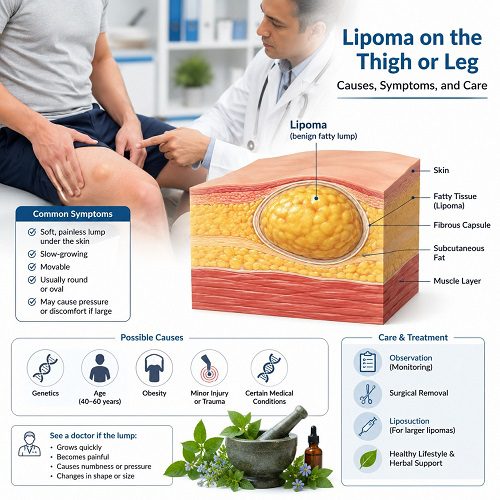
A lipoma is a benign tumour composed of mature fat cells. Unlike cancerous tumours, lipomas do not spread to other parts of the body. They grow just beneath the skin, surrounded by a thin fibrous capsule.
The thighs are one of the common locations where lipomas develop because these areas naturally contain a large amount of fatty tissue.
Most lipomas measure between 1 and 5 centimetres, although some can become much larger if left untreated.
What Does a Lipoma on the Thigh Feel Like?
A fatty lump in leg typically has several distinctive characteristics.
It is usually:
- Soft to the touch
- Easily movable beneath the skin
- Round or oval in shape
- Slow growing
- Usually painless
- Located just beneath the skin
- Covered by normal-looking skin
Some larger lipomas may press on nearby muscles or nerves, causing mild discomfort or tenderness.
Where Can Lipomas Develop on the Leg?
Although the thigh is one of the most common sites, lipomas can develop almost anywhere on the lower limb.
Common locations include:
- Front of the thigh
- Inner thigh
- Outer thigh
- Lipoma Back of the thigh
- Upper leg
- Lower leg
- Calf
- Near the knee
- Around the ankle (less common)
A Lipoma on the Thigh or Leg may occur as a single lump or multiple lipomas may develop in different areas.
Causes of Lipoma on Thigh
The exact Causes of Lipoma remains unknown. However, researchers believe several factors may contribute.
Genetics
Lipomas often run in families. People with inherited conditions such as familial multiple lipomatosis have a higher chance of developing multiple lipomas.
Minor Injury
Some people notice a lipoma appearing after a minor injury. Although trauma does not directly cause the tumour, it may trigger the growth of existing fat cells.
Age
Lipomas are most frequently diagnosed between the ages of 40 and 60.
Obesity
Although lipomas consist of fat tissue, obesity itself does not directly cause them. However, individuals with more fatty tissue may notice them more easily.
Certain Medical Conditions
Rare genetic disorders associated with multiple lipomas include:
- Familial multiple lipomatosis
- Dercum’s disease
- Madelung’s disease
- Gardner syndrome
Symptoms of Lipoma on Thigh
Most people experience few symptoms.
Common signs include:
Soft Lump
The lump feels doughy or rubbery.
Slow Growth
Lipomas usually enlarge very slowly over several years.
Easy Movement
The lump moves easily beneath the skin when touched.
Painless
Most lipomas do not hurt.
Mild Pain in Some Cases
Pain may occur if the lipoma compresses nearby nerves or muscles.
Cosmetic Concern
Large lipomas may become noticeable under clothing and affect confidence.
When Should You See a Doctor?
Although lipomas are usually harmless, seek medical advice if you notice:
- Rapid growth
- Increasing pain
- Hard lump
- Redness or warmth
- Skin ulceration
- Difficulty walking
- Numbness
- Weakness
- Lump larger than 5 centimetres
- Sudden change in shape
Lipoma symptoms may indicate another condition requiring medical evaluation.
Conditions That May Look Like a Lipoma
Not every lump on the thigh is a lipoma.
Possible alternatives include:
Epidermoid Cyst
Usually firmer and may have a small opening on the skin.
Enlarged Lymph Node
Typically occurs in the groin and may become tender during infection.
Muscle Hernia
A bulge caused by muscle pushing through surrounding tissue.
Haematoma
A collection of blood after injury.
Abscess
Usually painful, warm, and associated with infection.
Soft Tissue Sarcoma
Rare but important to exclude when the lump grows rapidly or feels hard.
Diagnosis of Lipoma on Thigh
Doctors usually diagnose a lipoma through physical examination.
Additional investigations may include:
Medical History
The doctor asks about:
- Growth rate
- Pain
- Family history
- Previous injuries
- Other lumps
Physical Examination
The doctor checks:
- Size
- Shape
- Mobility
- Consistency
- Tenderness
Ultrasound
Ultrasound helps distinguish fatty tissue from cysts or other masses.
MRI Scan
MRI provides detailed images of deeper or larger lipomas.
CT Scan
Less commonly used but may be recommended for deep tumours.
Biopsy
If there is concern about cancer, a small tissue sample may be taken for laboratory analysis.
Treatment Options
Most lipomas Treatment Options do not require unless they become painful, large, or cosmetically bothersome.
Observation
Small, painless lipomas can simply be monitored over time.
Doctors may recommend regular reviews to ensure no significant changes occur.
Surgical Removal
Surgical excision remains the most effective treatment.
Benefits include:
- Complete removal
- Very low recurrence
- Tissue can be examined under a microscope
- Usually performed under local anaesthesia
Most patients return home the same day.
Liposuction
Some surgeons use liposuction for larger lipomas.
Advantages include:
- Smaller scar
- Faster recovery
However, recurrence may be slightly higher because the capsule may remain.
Steroid Injection
Occasionally used to shrink the lump but does not completely remove it.
Recovery After Surgery
Recovery is generally straightforward.
Patients should:
- Keep the wound clean
- Follow dressing instructions
- Avoid strenuous exercise for several days
- Watch for infection
- Attend follow-up appointments
Most people recover within two weeks.
Home Care Tips
Although home remedies cannot remove a lipoma, healthy habits may support overall skin and tissue health.
Helpful tips include:
- Maintain a healthy weight
- Exercise regularly
- Eat a balanced diet
- Stay hydrated
- Avoid repeatedly pressing the lump
- Monitor for changes in size
Never attempt to squeeze or puncture a lipoma yourself.
Best Supplements for Lipoma
If you are looking for the Best Supplements for Lipoma, it is important to understand that no dietary supplement has been scientifically proven to eliminate or shrink a lipoma. A lipoma is a benign fatty tumour that usually does not require treatment unless it becomes painful, grows rapidly, or causes discomfort. However, some people choose supplements as part of their overall wellness routine to support healthy skin, metabolism, and tissue health.
When considering the Best Supplements for Lipoma, options such as omega-3 fatty acids, turmeric (curcumin), vitamin D, green tea extract, and antioxidant-rich herbal supplements are commonly discussed for their potential to support the body’s natural inflammatory response and overall health. While these supplements may contribute to general wellbeing, they should not replace medical evaluation or treatment.
Natural Support for Lipoma also includes maintaining a balanced diet rich in fruits, vegetables, whole grains, and lean proteins, staying physically active, and maintaining a healthy weight. These healthy lifestyle habits promote overall tissue health and may help support your body’s normal functions.
Before starting any supplement, consult a qualified healthcare professional, especially if you take prescription medications or have underlying medical conditions. If a lipoma changes in size, becomes painful, or develops rapidly, seek medical advice to confirm the diagnosis and discuss appropriate treatment options.
Can a Lipoma Become Cancer?
One of the biggest concerns people have is whether a thigh lump lipoma can become cancerous.
The answer is reassuring.
Lipomas almost never become cancer.
However, a different condition called liposarcoma is a rare cancer of fatty tissue. Doctors investigate any lump that grows rapidly, feels hard, or causes persistent pain to rule out this possibility.
Living with a Lipoma
Many people live with a Lipoma on the Thigh or Leg for years without problems.
Most lipomas:
- Remain harmless
- Grow slowly
- Do not affect walking
- Require little monitoring
- Never need surgery
If the lump interferes with daily activities or causes emotional distress, treatment is available.
Can Lipomas Be Prevented?
There is no guaranteed way to prevent lipomas because their exact cause remains unknown.
However, maintaining overall health may support healthy tissues.
Recommendations include:
- Regular exercise
- Healthy diet
- Avoid smoking
- Routine medical check-ups
- Prompt evaluation of new lumps
Prognosis
The outlook for people with a fatty lump in leg caused by a lipoma is excellent.
Most lipomas:
- Are benign
- Grow slowly
- Rarely recur after complete removal
- Do not shorten life expectancy
- Usually require minimal treatment
People with multiple hereditary lipomas may continue developing new growths throughout life, but these remain benign in most cases.
Frequently Asked Questions
Is a lipoma on the thigh dangerous?
No. Most lipomas are benign and harmless. However, any rapidly growing or painful lump should be assessed by a healthcare professional.
Can exercise remove a lipoma?
No. Exercise cannot shrink or remove a lipoma because it is enclosed within a capsule of fatty tissue.
Does a lipoma hurt?
Most lipomas are painless. Larger ones may cause discomfort if they press on nearby nerves or muscles.
Can a lipoma return after surgery?
Complete Lipoma removal surgical has a low recurrence rate. If part of the capsule remains, the lipoma may occasionally return.
Should I massage a lipoma?
No. Massaging will not remove the lump and may cause unnecessary irritation.
Conclusion
A Lipoma on the Thigh or Leg is a common, benign fatty growth that usually develops slowly beneath the skin. Most lipomas are painless, movable, and harmless, requiring only observation. However, any lump that changes rapidly, becomes painful, or interferes with daily activities should be assessed by a healthcare professional.
Early evaluation helps confirm the diagnosis and rule out more serious conditions. When treatment is needed, surgical removal is typically safe, effective, and associated with excellent long-term outcomes. Understanding the symptoms and available care options allows individuals with a lipoma on leg, thigh lump lipoma, or fatty lump in leg to make informed decisions about their health.