 By
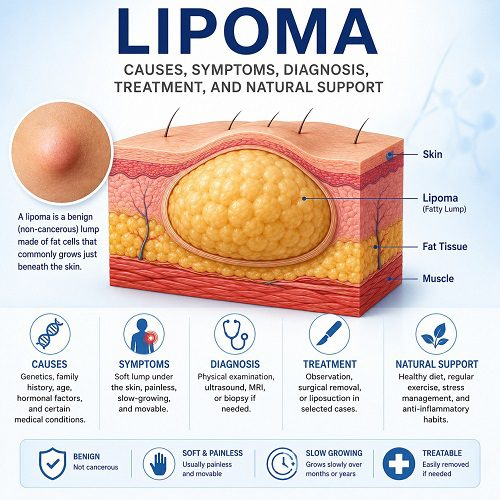
By A lipoma is a soft, slow-growing lump made up of fat cells. It usually forms just under the skin and often feels smooth, rubbery, and easy to move when touched. In most cases, a lipoma is harmless and does not turn into cancer. Many people live with one for years without pain or serious health problems. However, some lipomas can become uncomfortable, grow larger, or cause concern because of where they appear on the body.
Because these fatty lumps are common, many people want to understand lipoma causes, spot possible lipoma symptoms, and learn about lipoma diagnosis, lipoma treatment, and lipoma removal options. Some also look for natural ways to support comfort, skin health, and general wellbeing while monitoring a lump under medical guidance.
This guide explains what a lipoma is, why it may develop, what signs to watch for, how doctors confirm the diagnosis, and which treatment options are available. It also covers practical self-care and natural support strategies that may help alongside proper medical advice.
What Is a Lipoma?
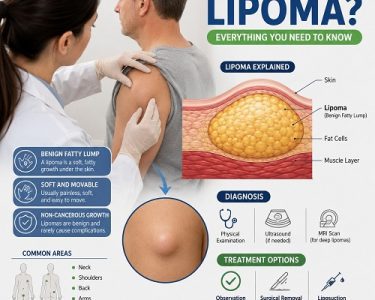
A lipoma is a benign growth of fat tissue. “Benign” means it is not cancer. Lipomas can develop almost anywhere there is fat tissue, but they most often appear on the:
- Neck
- Shoulders
- Back
- Arms
- Thighs
- Abdomen
A lipoma usually grows slowly over time. It often feels:
- Soft or doughy
- Round or oval
- Moveable under the skin
- Painless, though some may cause discomfort
Lipomas can occur in adults of any age, but they are most commonly seen in middle age. Some people develop only one lipoma, while others may have several.
How Common Are Lipomas?
Lipomas are among the most common soft tissue lumps seen in medical practice. They affect both men and women, although some types may be slightly more common in certain groups. In many cases, a lipoma is discovered by chance during bathing, dressing, or applying lotion because it grows slowly and may not hurt.
Even though a lipoma is usually harmless, it is still important not to ignore a new lump. Any new swelling, especially one that grows quickly, becomes painful, or changes in texture, should be assessed by a qualified healthcare professional.
Lipoma Causes: Why Do Lipomas Develop?
The exact lipoma causes are not always clear. Doctors do not yet know why fat cells begin to collect and form a lump in some people. However, several factors may play a role.
1. Genetics and Family History
Family history appears to be one of the strongest risk factors. If close relatives have had lipomas, your chances of developing one may be higher. Some inherited conditions are linked to multiple lipomas.
2. Age
Lipomas are more often found in adults between 40 and 60, although they can appear at any age.
3. Minor Injury or Trauma
Some people notice a lipoma forming after a bump or minor injury in the area. Trauma is not proven to directly cause lipomas, but it may draw attention to a lump that was already developing.
4. Certain Medical Conditions
A few rare conditions can lead to multiple fatty lumps. These include disorders that affect fat metabolism or connective tissue. Examples include familial multiple lipomatosis and other uncommon syndromes.
5. Body Fat Distribution and Metabolism
Researchers are still exploring whether changes in fat storage, metabolism, inflammation, or local tissue growth signals may contribute to lipoma development.
Although people often worry that diet alone causes a lipoma, there is no strong evidence that eating fatty foods directly creates these lumps. Lipomas are more complex than simple weight gain under the skin.
Lipoma Symptoms: What Does a Lipoma Feel Like?
Many lipoma symptoms are mild or absent, which is why these lumps are often found incidentally. Still, there are a few common signs that may suggest a lipoma.
Common Lipoma Symptoms
A Soft Lump Under the Skin
This is the most typical sign. The lump often feels smooth and soft rather than hard.
Easy Movement
A lipoma can often be moved slightly with the fingers. It does not usually feel fixed firmly in place.
Slow Growth
Most lipomas enlarge gradually over months or years rather than appearing suddenly overnight.
Usually Painless
Most lipomas do not hurt. However, pain can occur if the lump presses on nearby nerves, contains blood vessels, or is located in an area that gets irritated by clothing or movement.
Small to Moderate Size
Many lipomas are under 5 cm, but some can grow larger.
When Lipoma Symptoms May Become More Noticeable
A lipoma may cause more concern if it:
- Grows quickly
- Becomes painful or tender
- Feels firm rather than soft
- Causes numbness, tingling, or pressure
- Restricts movement
- Appears deep in the tissue rather than just under the skin
- Changes in shape or colour of the overlying skin
These features do not always mean cancer, but they do mean the lump should be checked without delay.
Where Can Lipomas Appear?
Lipomas usually form close to the skin surface, but they can appear in deeper tissues too. Common sites include:
- Upper back
- Neck
- Forehead or scalp
- Upper arms
- Chest wall
- Abdomen
- Thighs
A lipoma can also develop in less common places such as muscles, internal organs, or around nerves, although this is much rarer. Deep lipomas may not be obvious from the outside and may need imaging to identify them.
Lipoma Diagnosis: How Doctors Confirm a Lipoma
A proper lipoma diagnosis is important because not every lump is a lipoma. Cysts, swollen lymph nodes, abscesses, hernias, and other soft tissue growths can sometimes look similar. In rare cases, a cancerous tumour called liposarcoma may also be considered, especially if the lump behaves unusually.
1. Medical History
The doctor will ask questions such as:
- How long has the lump been there?
- Has it grown recently?
- Is it painful?
- Have you had similar lumps before?
- Is there a family history of lipomas?
- Have you noticed redness, fever, weight loss, or other symptoms?
2. Physical Examination
During the examination, the doctor will assess:
- Size of the lump
- Shape and borders
- Texture
- Mobility
- Tenderness
- Depth beneath the skin
- Skin changes over the lump
A classic lipoma often has a very recognisable feel during examination.
3. Ultrasound
An ultrasound may be used when the diagnosis is not fully clear. It helps show whether the lump is solid, fluid-filled, or made of fatty tissue.
4. MRI or CT Scan
Imaging is more likely if the lump is large, deep, painful, fast-growing, or in a difficult location. MRI is especially helpful for looking at soft tissues in detail.
5. Biopsy
If there is any uncertainty, a biopsy may be recommended. This means taking a small sample of tissue for laboratory analysis. A biopsy helps rule out more serious conditions.
When a Lump May Not Be a Simple Lipoma
Although lipomas are benign, it is important to know when a lump needs urgent assessment. Warning signs include:
- Rapid growth
- A lump larger than 5 cm
- Deep location below muscle
- Significant pain
- Hard or fixed texture
- Recurrent growth after removal
- Unexplained weight loss or general illness
These signs do not confirm cancer, but they do mean a doctor should investigate the lump properly.
Lipoma Treatment: Do All Lipomas Need Treatment?
Not always. In many cases, lipoma treatment is not necessary if the lump is small, painless, and clearly benign. A doctor may simply recommend observation. This means keeping an eye on the lipoma and reporting any changes.
Watchful Waiting
If the lump is not causing trouble, your doctor may advise:
- Monitoring the size
- Watching for pain or tenderness
- Reporting sudden growth
- Returning for review if anything changes
This approach is common because many lipomas remain stable for years.
Lipoma Removal and Medical Treatment Options
If a lipoma becomes bothersome, painful, cosmetically distressing, or difficult to diagnose with confidence, treatment may be considered. The most common options include lipoma removal by surgery and a few other medical approaches.
1. Surgical Lipoma Removal
Surgery is the standard treatment for a lipoma that needs to be removed. It is often done under local anaesthetic for small superficial lipomas.
During the procedure:
- The skin is numbed
- A small cut is made over the lump
- The lipoma is gently removed
- The wound is closed with stitches if needed
Benefits of Surgical Lipoma Removal
- Removes the lump completely
- Allows tissue testing if needed
- Low chance of recurrence if fully removed
- Often gives peace of mind
Recovery After Surgery
Recovery is usually straightforward for small lipomas. Mild soreness, bruising, or swelling may occur for a few days. Larger or deeper lipomas may need a longer healing period.
2. Liposuction for Selected Cases
Some doctors may use liposuction for certain lipomas, especially larger soft ones. This can reduce scarring, but it may not remove the capsule as completely as surgery. Because of this, recurrence may be more likely in some cases.
3. Steroid Injection
In selected situations, steroid injections may shrink a lipoma, but they do not usually remove it fully. This is less common than surgical treatment.
Can Lipomas Go Away on Their Own?
Lipomas usually do not disappear by themselves. Some may remain unchanged for years, while others slowly enlarge. If a lump shrinks or changes rapidly, it is still worth discussing with a doctor because that pattern is not typical for a classic lipoma.
Natural Support for Lipoma: What Can Help Alongside Medical Care?
There is no proven natural cure that can dissolve a lipoma completely. Be cautious of online claims that promise to “melt away” a fatty lump without proper diagnosis. A lump should never be self-treated aggressively without knowing exactly what it is.
That said, natural support may still play a useful role in overall comfort, inflammation balance, skin health, and general wellbeing. These approaches should support—not replace—medical assessment.
Natural Support Strategies for Lipoma Comfort and General Health
1. Anti-Inflammatory Eating Pattern
Although food does not directly remove a lipoma, a balanced anti-inflammatory diet may support overall tissue health and metabolic balance.
Focus on:
- Colourful vegetables
- Fresh fruit
- Oily fish such as sardines or salmon
- Nuts and seeds
- Olive oil
- Beans and lentils
- Whole grains in sensible portions
Try to limit:
- Ultra-processed foods
- Sugary drinks
- Excess refined carbohydrates
- Deep-fried foods
- Heavy intake of processed meats
2. Weight Management for General Wellbeing
Losing weight does not usually remove a lipoma, because the lump is a separate collection of fat cells. Still, maintaining a healthy weight can support comfort, mobility, and metabolic health.
3. Gentle Movement and Circulation Support
Regular walking, stretching, swimming, and low-impact exercise can support circulation, lymphatic flow, and overall health. If a lipoma sits in an area that rubs during exercise, adjust clothing or movement to avoid irritation.
4. Avoid Repeated Pressure on the Lump
If your lipoma is on the shoulder, back, thigh, or another area exposed to friction, try to reduce constant pressure from:
- Tight clothing
- Backpack straps
- Repetitive rubbing
- Hard seating surfaces
This may reduce discomfort, even though it will not remove the lipoma.
5. Warm Compress for Mild Discomfort
If a lipoma feels mildly uncomfortable, a warm compress may help soothe surrounding muscle tension. Make sure the heat is gentle, not hot enough to burn the skin.
6. Stress Management and Sleep
Chronic stress and poor sleep can affect inflammation, pain sensitivity, and healing. Supporting your general health through regular sleep, calm routines, and stress reduction may help you cope better with discomfort and health worries.
7. Do Not Squeeze or Cut a Lipoma at Home
This is one of the most important points. Never try to pop, puncture, cut, or drain a lipoma yourself. Doing so can cause:
- Infection
- Bleeding
- Scarring
- Pain
- Delayed diagnosis of a more serious lump
Are Herbal Remedies Effective for Lipoma?
Some traditional or herbal remedies for lipoma support, including castor oil packs, turmeric, herbal pastes, or detox routines. At present, there is not enough strong scientific evidence to confirm that these treatments remove a lipoma safely and effectively.
If you want to use a natural topical product for skin comfort, speak to a healthcare professional first—especially if:
- The skin is irritated
- The lump is painful
- You are pregnant or breastfeeding
- You take medicines that affect bleeding or immunity
- The lump has not been properly diagnosed
Natural products can still cause allergic reactions, skin irritation, or delays in getting the right diagnosis.
Living With a Lipoma: Practical Tips
If your doctor confirms that you have a harmless lipoma and you are monitoring it, these steps may help:
- Take a photo every few months for size comparison
- Measure the lump gently if advised by your doctor
- Note any new pain, redness, or growth
- Wear loose clothing if the area rubs
- Keep follow-up appointments if the lump changes
- Seek review if you develop new lumps or worrying symptoms
When to See a Doctor About a Lipoma
You should seek medical advice if you notice any lump that is new, changing, or worrying. Arrange a prompt review if:
- The lump is growing quickly
- It becomes painful
- It feels hard or fixed
- It is larger than usual
- It interferes with movement
- It returns after previous lipoma removal
- You have several new lumps appearing
- You are unsure whether it is a lipoma at all
It is always safer to get a lump checked than to assume it is harmless.
Can a Lipoma Turn Into Cancer?
A typical lipoma is benign and does not usually turn into cancer. However, some other tumours can resemble a lipoma. That is why a professional lipoma diagnosis matters—especially if the lump is large, painful, deep, or growing rapidly.
The goal is not to create fear, but to encourage proper evaluation rather than self-diagnosis.
FAQs About Lipoma
1. What is a lipoma?
A lipoma is a benign lump made of fat cells that usually develops just under the skin. It often feels soft, smooth, and easy to move when touched. A lipoma is not usually dangerous, but any new lump should still be checked by a doctor to confirm the diagnosis.
2. What causes a lipoma?
The exact lipoma causes are not always known. Genetics, family history, age, and certain inherited conditions may increase the risk. In some cases, people notice a lipoma after a minor injury, although trauma is not considered a proven direct cause.
3. What are the common lipoma symptoms?
Common lipoma symptoms include a soft lump under the skin, slow growth, and a smooth or rubbery feel. Most lipomas are painless, but some may cause discomfort if they press on nearby nerves or are located in an area that gets irritated.
4. How is lipoma diagnosis done?
Lipoma diagnosis usually begins with a physical examination and medical history. If the lump is large, painful, deep, or unusual, the doctor may order an ultrasound, MRI, or biopsy to confirm that it is a lipoma and not another type of growth.
5. Does a lipoma need treatment?
Not always. A small, painless lipoma may not need treatment if it is clearly harmless. Doctors often recommend monitoring it unless it grows, becomes painful, or causes cosmetic or physical discomfort.
6. What is the best lipoma treatment?
The best lipoma treatment depends on the size, location, and symptoms. If treatment is needed, surgical removal is the most common and effective option. Some cases may also be managed with monitoring if the lump is not causing any problems.
7. How is lipoma removal performed?
Lipoma removal is usually done through a minor surgical procedure under local anaesthetic. The doctor makes a small cut in the skin and removes the fatty lump. Recovery is often quick for small lipomas, although larger ones may take longer to heal.
8. Can a lipoma go away on its own?
In most cases, a lipoma does not go away on its own. It may stay the same size for years or slowly grow over time. If a lump changes quickly, becomes painful, or feels different, it should be checked by a doctor.
9. Can natural remedies cure a lipoma?
There is no strong scientific evidence that natural remedies can remove a lipoma completely. However, healthy lifestyle habits, anti-inflammatory foods, and general skin and tissue support may help overall wellbeing. Natural approaches should never replace proper medical assessment.
10. When should I see a doctor about a lipoma?
You should see a doctor if the lump grows quickly, becomes painful, feels hard, causes numbness, or interferes with movement. Medical advice is also important if you are not sure whether the lump is a lipoma or if it returns after lipoma removal.
Final Thoughts on Lipoma Care
A lipoma is a common benign fatty lump that often causes little more than concern about how it looks or feels. Knowing the common lipoma causes, recognising possible lipoma symptoms, and understanding how lipoma diagnosis works can help you take the right next step if you notice a lump under your skin.
In many cases, no urgent lipoma treatment is needed beyond observation. When the lump becomes painful, large, awkward, or cosmetically troubling, lipoma removal through a minor surgical procedure is often the most effective option. Natural support strategies may help with comfort, general health, and peace of mind, but they should never replace proper medical assessment.
If you have a lump that is new, growing, painful, or uncertain, book a medical review. A correct diagnosis is the safest and most practical starting point for any treatment plan.