 By
By Lipomas are among the most common benign fatty lumps that develop beneath the skin. When people discover a soft, painless lump on their body, one of the first questions they ask is, “can lipoma go away on its own?” Since lipomas are usually harmless and grow slowly, many people wonder whether treatment is necessary or if the lump will simply disappear naturally over time.
The good news is that lipomas are typically benign and often do not require immediate treatment. However, they usually behave differently from temporary swellings or inflammatory lumps. Understanding how lipomas develop can help determine whether observation is appropriate or medical intervention may become necessary.
What is a Lipoma?
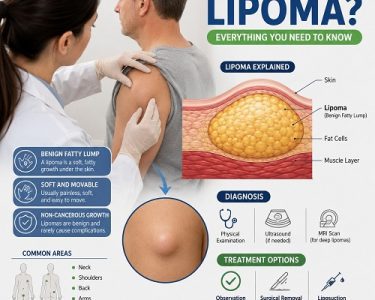
A lipoma is a soft, movable lump made up of fatty tissue that develops beneath the skin. These benign tumors commonly occur on the:
- Lipoma on the Neck
- Shoulders
- Lipoma on the Arm
- Lipoma on the Back
- Chest
- Abdomen
- Lipoma on the Thigh
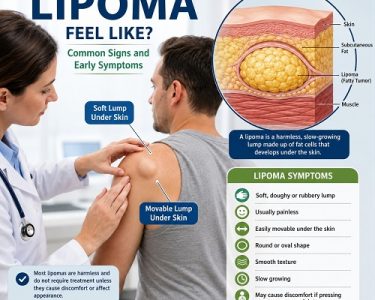
Lipomas are generally:
- Soft to the touch
- Slow growing
- Painless
- Easily movable beneath the skin
- Usually harmless
They can range from very small lumps measuring less than an inch to larger growths that gradually increase in size over several years.
Can Lipoma Go Away on Its Own?
The simple answer is no in most cases.
If you’re asking, can lipoma go away on its own, medical experience suggests that lipomas rarely disappear naturally without Lipoma treatment. Unlike swollen lymph nodes or cysts that may resolve over time, lipomas consist of mature fat cells that generally remain present unless removed.
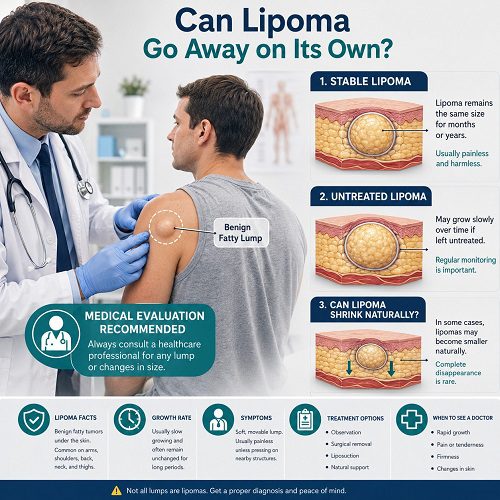
Most lipomas:
- Stay the same size for years.
- Grow slowly over time.
- Occasionally become slightly smaller.
- Rarely disappear completely.
Although spontaneous regression has been reported in uncommon situations, it is considered unusual rather than expected.
Therefore, if you’ve discovered a lipoma, waiting for it to vanish completely may not be realistic.
Why Don’t Lipomas Usually Disappear?
Lipomas develop when fat cells accumulate within a thin fibrous capsule beneath the skin. Since these fatty tissues become organized within the lump, the body doesn’t typically break them down naturally.
Unlike temporary swelling caused by:
- Infection
- Injury
- Allergic reactions
- Fluid accumulation
Lipomas contain actual fat tissue rather than inflammatory material.
This explains why most lipomas remain present for many years without significant changes.
Do Lipomas Disappear Naturally?
Many patients wonder whether do lipomas disappear after lifestyle changes or with time alone.
Generally speaking:
| Lipoma Changes | Common? |
| Remains unchanged | Very common |
| Slowly enlarges | Common |
| Slightly shrinks | Uncommon |
| Completely disappears | Rare |
| Lipoma Causes complications | Uncommon |
Some individuals report noticing that their lipoma becomes:
- Less noticeable
- Slightly softer
- Smaller in appearance
However, this doesn’t necessarily mean the lipoma has disappeared. Changes in body weight or surrounding tissues can alter its appearance without eliminating the fatty growth itself.
Can Lipoma Shrink Naturally?
Another frequently asked question is whether can lipoma shrink naturally.
The answer is sometimes—but not always.
Several factors may influence how noticeable a lipoma appears:
Weight Changes
If an individual loses body fat, surrounding tissues may become thinner, making some lipomas appear either:
- More prominent
- Slightly reduced in size
However, lipomas do not necessarily shrink proportionately with weight loss.
Reduced Inflammation
Occasionally, mild irritation surrounding a lipoma may decrease, making the lump feel:
- Smaller
- Softer
- Less uncomfortable
Natural Variations
Some lipomas may show minor fluctuations in size naturally over time. Small changes are possible, although complete disappearance remains rare.
Therefore, while a lipoma can occasionally shrink naturally to some extent, significant reduction without treatment should not be expected.
What Happens to an Untreated Lipoma?
An untreated lipoma often causes no health problems whatsoever.
Many individuals live with lipomas for decades without requiring any treatment.
An untreated lipoma may:
- Remain unchanged
- Grow slowly
- Become cosmetically bothersome
- Occasionally cause discomfort if pressing nearby structures
Most untreated lipomas are:
- Benign
- Stable
- Non-cancerous
- Easily monitored
Doctors frequently recommend observation rather than immediate removal when a lipoma:
- Is painless
- Isn’t growing rapidly
- Doesn’t affect movement
- Doesn’t interfere with daily activities
When Should an Untreated Lipoma Be Evaluated?
Medical evaluation becomes important if an untreated lipoma begins showing unusual changes.
Consult a healthcare professional if you notice:
Rapid Growth
Lipomas generally enlarge slowly. Rapid enlargement should always be assessed appropriately.
Pain
Most lipomas are painless. Persistent pain may require further investigation.
Firmness
Lipomas usually feel:
- Soft
- Rubbery
- Movable
A lump becoming unusually firm deserves medical attention.
Skin Changes
Watch for:
- Redness
- Ulceration
- Swelling
- Skin discoloration
Deep Location
Some lipomas develop deeper beneath muscles and connective tissues, making imaging studies necessary.
Can Exercise Make Lipomas Disappear?
Many individuals attempt:
- Exercise
- Weight loss
- Lifestyle modifications
to eliminate lipomas naturally.
Although maintaining a healthy lifestyle offers numerous health benefits, exercise alone generally does not remove established lipomas.
Exercise may help:
- Improve body composition
- Reduce overall fat percentage
- Improve circulation
- Enhance general wellness
However, lipomas consist of localized fatty tissue that usually remains unaffected by routine exercise programs.
Can Diet Help Shrink Lipomas?
No specific diet has been scientifically proven to eliminate lipomas completely.
Nevertheless, healthy dietary practices may support overall wellness by emphasizing:
- Fruits
- Vegetables
- Whole grains
- Healthy fats
- Adequate hydration
Some people pursue natural dietary approaches aimed at supporting normal fat metabolism. While such practices may promote general health, they should not be considered guaranteed treatments for lipomas.
Are Natural Remedies Effective?
Natural remedies for Lipoma are frequently discussed online for lipoma management, including:
- Herbal preparations
- Dietary changes
- Massage therapies
- Topical applications
While some individuals report personal experiences of improvement, scientific evidence supporting complete lipoma disappearance through natural remedies remains limited.
Natural approaches may potentially support:
- Skin health
- Comfort
- General wellness
However, anyone considering alternative therapies should consult qualified healthcare professionals before delaying necessary medical evaluation.
When Should Lipomas Be Removed?
Treatment may become appropriate when lipomas:
- Cause discomfort
- Continue enlarging
- Limit movement
- Create cosmetic concerns
- Produce pressure symptoms
- Raise diagnostic uncertainty
Common treatment options include:
Surgical Removal
The most definitive treatment remains complete surgical excision.
Benefits include:
- Permanent Lipoma removal
- Low recurrence rates
- Histological confirmation
Liposuction Techniques
Selected lipomas may be treated using minimally invasive techniques that reduce scarring.
Observation
For many patients, careful monitoring remains entirely appropriate.
Signs Your Lipoma May Not Be Typical
Although lipomas are benign, not every lump beneath the skin represents a lipoma.
Medical assessment becomes especially important when you experience:
- Sudden enlargement
- Persistent pain
- Immobility
- Hard texture
- Multiple rapidly growing lumps
- Neurological symptoms
Healthcare providers may recommend:
- Physical examination
- Ultrasound imaging
- MRI studies
- Biopsy procedures when necessary
Early evaluation helps establish an accurate Lipoma diagnosis and appropriate management plan.
Can Lipomas Return After Removal?
Lipomas usually do not recur when completely Lipoma removed.
However, recurrence remains possible in some cases if:
- Residual fatty tissue remains.
- Multiple lipomas are present.
- Genetic predisposition exists.
Individuals with familial tendencies may naturally develop additional lipomas throughout life despite successful removal of previous growths.
Living Comfortably with Lipomas
Many people successfully manage lipomas conservatively without complications.
Helpful strategies include:
- Monitoring size changes.
- Maintaining healthy body weight.
- Seeking medical advice for unusual Lipoma Symptoms.
- Scheduling periodic examinations if recommended.
- Avoiding unnecessary manipulation of the lump.
Remember that most lipomas remain harmless and stable for prolonged periods.
Frequently Asked Questions
Can lipoma go away on its own?
Most lipomas do not disappear naturally. They commonly remain unchanged or grow slowly over time.
Do lipomas disappear after weight loss?
Weight loss may alter how noticeable a lipoma appears, but it usually does not eliminate the fatty growth itself.
Can lipoma shrink naturally?
Minor reductions in size occasionally occur, but complete natural disappearance remains uncommon.
Is an untreated lipoma dangerous?
An untreated lipoma is usually harmless. Medical evaluation is recommended if it grows rapidly, becomes Painful Lipoma, or changes significantly.
Can massage remove a lipoma?
Massage has not been scientifically proven to remove lipomas. Excessive pressure may cause discomfort or irritation.
Conclusion
So, can lipoma go away on its own? In most situations, the answer is no. Lipomas are benign fatty growths that tend to remain stable or enlarge slowly rather than disappearing naturally. Although some individuals may observe minor changes in size, complete spontaneous resolution is uncommon.
Questions such as do lipomas disappear, whether an untreated lipoma is harmful, and can lipoma shrink naturally are understandable concerns for many patients. Fortunately, most lipomas are harmless and can simply be monitored unless they become painful, rapidly enlarge, or interfere with daily activities.
If you notice unusual changes in any lump beneath your skin, seeking professional medical evaluation remains the safest approach. Early assessment can provide reassurance, confirm the diagnosis, and help determine whether observation or treatment is the most appropriate option.