 By
By Seborrheic keratosis is one of the most common non-cancerous skin growths seen in adults, especially after the age of 40. Although these growths are harmless, many people choose to have them removed because they become irritated, catch on clothing, itch, or affect appearance.
A common concern after treatment is seborrheic keratosis recurrence. Many patients wonder whether the same growth will return after it has been removed or whether they are likely to develop new ones in the future.
The reassuring news is that a properly removed seborrheic keratosis usually does not grow back. However, people who are prone to these growths may continue developing new seborrheic keratoses on other parts of the body over time. Understanding the difference between true recurrence and the appearance of new lesions is important for setting realistic expectations after treatment.
What is Seborrheic Keratosis?
Seborrheic keratosis is a benign skin growth that often appears waxy, rough, or slightly raised. They range in colour from light tan to dark brown or black and commonly develop on the:
- Chest
- Back
- Shoulders
- Neck
- Seborrheic Keratosis on the Face
- Scalp
They often have a “stuck-on” appearance and may vary greatly in size.
Unlike skin cancer, seborrheic keratoses do not spread to other organs or become cancerous. Nevertheless, some skin cancers can resemble these growths, making professional Seborrheic Keratosis diagnosis important whenever a lesion changes rapidly.
What Causes Seborrheic Keratosis?
The exact Causes Seborrheic Keratosis remains unknown, but researchers believe several factors contribute.
These include:
- Ageing
- Family history
- Genetic predisposition
- Long-term sun exposure
- Natural skin ageing processes
Many individuals inherit a tendency to develop numerous seborrheic keratoses throughout life.
Can Seborrheic Keratosis Come Back After Removal?
The answer depends on what is meant by “come back.”
The Removed Growth Usually Does Not Return
If the dermatologist completely removes a seborrheic keratosis, that specific lesion rarely grows back.
Seborrheic Keratosis Removal methods destroy or remove the affected skin cells entirely.
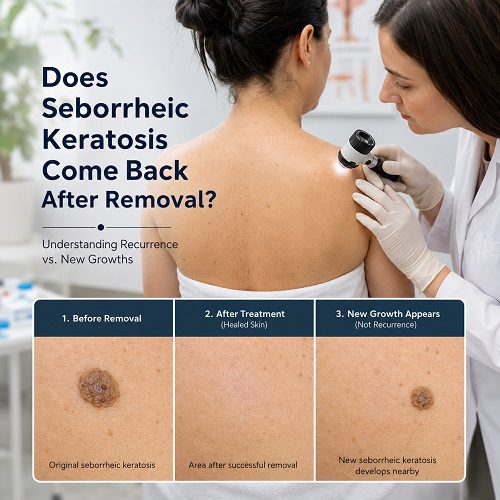
New Growths Can Develop
Many people mistake new nearby lesions for recurrence.
In reality:
- The original lesion is gone.
- A completely new seborrheic keratosis develops nearby.
- This reflects the individual’s tendency to form these growths.
This distinction explains most cases labelled as seborrheic keratosis recurrence.
What Is Seborrheic Keratosis Recurrence?
Recurrence generally falls into two categories.
1. True Recurrence
The original lesion was not completely removed.
Small portions remain within the skin and slowly regrow.
Although possible, this is relatively uncommon when treatment is performed correctly.
2. Development of New Lesions
This is much more common.
Patients who develop one seborrheic keratosis often develop dozens more over the following years.
This is not treatment failure.
Instead, it reflects the natural progression of the condition.
Which Removal Methods Have the Lowest Recurrence?
Several effective treatments are available.
Cryotherapy
Liquid nitrogen freezes the lesion until it falls away.
Benefits include:
- Fast procedure
- Minimal discomfort
- Excellent success rates
Very thick lesions occasionally require repeat treatment.
Curettage
The dermatologist gently scrapes away the growth after numbing the skin.
Advantages include:
- Complete removal
- Low recurrence
- Quick healing
Electrocautery
Heat destroys remaining skin cells after scraping.
This combination provides excellent clearance and reduces recurrence.
Laser Removal
Laser Removal for Seborrheic Keratosis treatment precisely vaporises the lesion while protecting surrounding skin.
Benefits include:
- Cosmetic precision
- Minimal bleeding
- Lower risk of scarring
Shave Excision
The raised lesion is shaved from the skin surface.
When completely removed, recurrence is uncommon.
Why Might a Seborrheic Keratosis Return?
Although uncommon, several situations increase recurrence risk.
Incomplete Removal
Small remnants may remain beneath the skin.
These residual cells can gradually produce another lesion.
Very Thick Lesions
Large or longstanding growths sometimes require more than one treatment session.
Misdiagnosis
Occasionally another skin condition resembles seborrheic keratosis.
Examples include:
- Actinic keratosis
- Wart
- Basal cell carcinoma
- Melanoma
Accurate diagnosis ensures proper treatment.
Genetic Predisposition
Some families naturally develop hundreds of seborrheic keratoses throughout adulthood.
New lesions are expected regardless of previous treatment.
Who Is Most Likely to Develop New Seborrheic Keratoses?
Several factors increase risk.
Age
The number of lesions typically increases after age 50.
Family History
Genetics play a major role.
If close relatives have multiple seborrheic keratoses, future growths become more likely.
Sun Exposure
Although not the sole cause, ultraviolet exposure appears to contribute to lesion development.
Skin Type
Seborrheic keratoses occur in all skin tones.
However, their appearance and colour may differ.
Can You Prevent Seborrheic Keratosis Recurrence?
There is currently no guaranteed prevention.
However, healthy skin habits may reduce additional skin damage.
Recommendations include:
- Wear broad-spectrum sunscreen daily.
- Avoid excessive Seborrheic Keratosis Sun Exposure.
- Wear protective clothing outdoors.
- Avoid unnecessary skin irritation.
- Perform regular skin self-examinations.
- Attend routine dermatology check-ups if you develop multiple lesions.
What Should You Expect After Removal?
Healing depends on the treatment method.
Most patients experience:
- Mild redness
- Temporary crusting
- Slight tenderness
- Small scab formation
Healing usually occurs within two to four weeks.
Keeping the area clean and following aftercare instructions reduces complications.
When Should You Contact a Dermatologist?
Even if you’ve previously had seborrheic keratoses, seek medical advice if a skin lesion:
- Changes rapidly
- Bleeds repeatedly
- Develops irregular borders
- Becomes very painful
- Appears unusually dark
- Has multiple colours
- Grows quickly
These features may indicate another skin condition requiring prompt evaluation.
Can Home Remedies Prevent Recurrence?
Many websites promote natural remedies for seborrheic keratoses.
Common examples include:
- Apple cider vinegar
- Tea tree oil
- Hydrogen peroxide
- Garlic
- Baking soda
Scientific evidence supporting these Natural Remedies for Seborrheic Keratosis is extremely limited.
Some may even cause:
- Burns
- Skin irritation
- Infection
- Permanent scarring
It is safest to consult a healthcare professional before attempting self-treatment.
Emotional Impact of Recurrent Skin Growths
Although harmless, repeated seborrheic keratoses can affect confidence.
People may feel embarrassed by visible lesions on the:
- Face
- Neck
- Chest
- Hands
Fortunately, modern dermatology offers safe cosmetic removal options with excellent results.
Knowing that these growths are benign often provides considerable reassurance.
Long-Term Outlook
The long-term outlook is excellent.
Most people simply develop additional benign growths over many years.
The important points are:
- Removed lesions rarely return.
- New lesions may continue appearing.
- Regular skin checks remain beneficial.
- Cosmetic treatment remains effective whenever desired.
Most individuals live normal, healthy lives without complications from seborrheic keratoses.
Frequently Asked Questions
Can seborrheic keratosis grow back after freezing?
Usually not. If the lesion is completely destroyed during Cryotherapy for Seborrheic Keratosis, recurrence is uncommon. Thick lesions may occasionally require another treatment.
Is seborrheic keratosis recurrence common?
True recurrence is uncommon. Most people who think a lesion has returned are actually developing a new seborrheic keratosis nearby.
Will removing one seborrheic keratosis stop others from appearing?
No. Removal only treats the existing lesion. It does not prevent future growths.
Can I remove seborrheic keratosis at home?
Home removal is not recommended because other skin conditions, including skin cancer, can resemble seborrheic keratosis. Incorrect treatment may cause infection or scarring.
How often should I check my skin after removal?
Perform monthly skin self-examinations and see your dermatologist if you notice new, changing, or unusual lesions.
Conclusion
Understanding seborrheic keratosis recurrence helps reduce unnecessary worry after treatment. In most cases, a properly removed seborrheic keratosis does not return. However, individuals who are genetically prone to these benign growths may continue developing new lesions over time.
Routine skin examinations, sensible sun protection, and prompt assessment of any changing skin lesion are the best ways to maintain healthy skin. If you notice a new growth after removal, remember that it is more likely to be a new seborrheic keratosis than the return of the old one. A dermatologist can confirm the diagnosis and recommend treatment if needed.