
 By
By Arthritis affects millions of people worldwide and is one of the leading causes of Arthritis, stiffness, and reduced mobility. Whether it develops due to aging, injury, or autoimmune conditions, arthritis can significantly impact daily life. Many individuals seek natural and supportive approaches to manage Arthritis symptoms alongside conventional medical Arthritis treatments. Among the most popular options are glucosamine and chondroitin supplements.
Glucosamine for Arthritis has gained widespread attention because of its potential role in supporting joint function and maintaining cartilage health. Often combined with chondroitin, these supplements are commonly used to promote comfort, flexibility, and long-term arthritis support. While they are not considered a cure for arthritis, some people may experience Arthritis symptoms relief when using them as part of a comprehensive joint health plan.
This article explores how glucosamine and chondroitin work, their potential benefits, scientific evidence, recommended usage, safety considerations, and how they may contribute to healthier joints.
What is Arthritis?
Arthritis is not a single disease but a group of conditions that cause inflammation, pain, and stiffness in the joints. The most common forms include:
- Osteoarthritis (OA)
- Rheumatoid arthritis (RA)
- Psoriatic arthritis
- Gout
- Juvenile arthritis
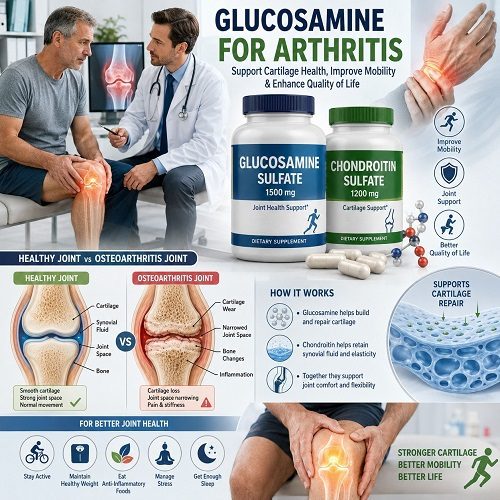
Osteoarthritis is the most prevalent form and develops when cartilage gradually wears down over time. Cartilage serves as a protective cushion between bones, allowing smooth and painless movement. When cartilage deteriorates, bones may rub together, resulting in pain, swelling, and limited mobility.
Maintaining cartilage health is therefore an important aspect of supporting individuals living with arthritis.
What is Glucosamine?
Glucosamine is a naturally occurring compound found within cartilage. It plays an essential role in producing molecules that help maintain healthy connective tissues and joint structures.
As a dietary supplement, glucosamine is commonly available in three forms:
- Glucosamine sulfate
- Glucosamine hydrochloride
- N-acetyl glucosamine
Among these, glucosamine sulfate has been the most extensively studied for arthritis support.
Glucosamine supplements are frequently derived from shellfish shells, although vegetarian alternatives produced through fermentation are also available.
What is Chondroitin?
Chondroitin is another natural component of cartilage that contributes to its elasticity and water retention properties. Healthy cartilage requires adequate hydration to absorb shock and withstand daily movement.
Chondroitin supplements are generally sourced from animal cartilage, including:
- Bovine cartilage
- Shark cartilage
- Porcine cartilage
Chondroitin is widely used alongside glucosamine because researchers believe the combination may offer complementary support for joint function and cartilage preservation.
Why Are Glucosamine and Chondroitin Used Together?
Glucosamine and chondroitin serve different but potentially complementary functions.
Glucosamine may:
- Support cartilage formation
- Promote joint lubrication
- Help maintain connective tissue health
- Assist normal joint movement
Chondroitin may:
- Support cartilage hydration
- Promote elasticity within joint tissues
- Help maintain cushioning properties
- Support overall joint structure
Together, they are commonly included in many joint supplements designed for arthritis support.
Although individual responses vary, many users report improvements in:
- Joint stiffness
- Mild discomfort
- Flexibility
- Mobility
- Daily physical function
How Does Glucosamine for Arthritis Work?
Researchers continue to study how glucosamine affects arthritic joints. Several mechanisms have been proposed.
Supporting Cartilage Health
Cartilage naturally breaks down over time, especially in osteoarthritis. Glucosamine participates in producing glycosaminoglycans, important components that contribute to cartilage structure.
By supporting these processes, glucosamine may help maintain cartilage health.
Reducing Inflammatory Activity
Some studies suggest glucosamine possesses mild anti-inflammatory properties. Reduced inflammation may contribute to improved comfort and mobility in certain individuals.
Promoting Joint Function
Healthy joints depend upon multiple structures working together, including:
- Cartilage
- Synovial fluid
- Ligaments
- Tendons
- Bone surfaces
Glucosamine may support normal joint function by helping maintain these interconnected systems.
Supporting Mobility
Many individuals take glucosamine for arthritis because maintaining mobility is essential for preserving quality of life. Improved joint comfort can make walking, climbing stairs, and performing daily activities easier.
Scientific Evidence Behind Glucosamine for Arthritis
Numerous clinical studies have evaluated glucosamine supplements over the past several decades. Results have been mixed, largely because researchers have used different formulations, dosages, and study populations.
Osteoarthritis Research
Several studies have reported that glucosamine sulfate may provide modest symptom improvement in osteoarthritis patients, particularly those with knee arthritis.
Potential benefits observed include:
- Reduced stiffness
- Improved joint comfort
- Better physical function
- Enhanced mobility
However, not all studies have demonstrated significant improvements compared with placebo.
The GAIT Study
One of the most widely discussed investigations was the Glucosamine/Chondroitin Arthritis Intervention Trial (GAIT). Researchers evaluated glucosamine, chondroitin, their combination, and placebo treatments in patients with knee osteoarthritis.
The study found:
- Some participants with moderate-to-severe pain experienced improvements with combination therapy.
- Overall results varied among patient groups.
- Individual responses differed substantially.
These findings suggest that glucosamine and chondroitin may benefit certain individuals more than others.
Long-Term Cartilage Studies
Some research has suggested glucosamine sulfate supplementation may slow structural joint changes in osteoarthritis. While further studies remain necessary, maintaining cartilage health remains an important area of ongoing investigation.
Can Glucosamine Help Rheumatoid Arthritis?
Rheumatoid arthritis differs significantly from osteoarthritis because it is an autoimmune disease.
RA involves:
- Immune system dysfunction
- Chronic inflammation
- Progressive joint damage
- Systemic symptoms
Glucosamine is not considered a treatment for rheumatoid arthritis itself. Disease-modifying medications prescribed by healthcare providers remain the primary therapy.
However, some individuals may use glucosamine alongside conventional treatments to support:
- Joint comfort
- Physical function
- Arthritis support
- Overall mobility
Patients with rheumatoid arthritis should always consult their healthcare providers before beginning supplements.
Benefits of Glucosamine for Arthritis
Although results vary among individuals, potential benefits include:
Improved Joint Comfort
Many people use glucosamine supplements to help support comfortable movement throughout daily activities.
Better Mobility
Improved flexibility and reduced stiffness may help individuals remain physically active.
Cartilage Health Support
Glucosamine contributes to important biological processes involved in cartilage maintenance.
Long-Term Arthritis Support
Consistent supplementation may provide supportive benefits over time rather than immediate symptom relief.
Enhanced Quality of Life
Maintaining mobility often contributes positively to:
- Exercise participation
- Daily independence
- Physical activity levels
- Emotional well-being
Benefits of Chondroitin Supplements
Chondroitin also offers several potential supportive benefits.
These include:
- Supporting cartilage hydration
- Improving shock absorption
- Maintaining joint flexibility
- Promoting cartilage integrity
- Supporting comfortable movement
Chondroitin may work particularly well when included among comprehensive joint supplements containing additional supportive ingredients.
Popular Joint Supplements for Arthritis
Modern joint supplements frequently combine multiple ingredients designed to support healthy joints.
Common ingredients include:
- Glucosamine sulfate
- Chondroitin sulfate
- MSM (Methylsulfonylmethane)
- Turmeric extract
- Boswellia
- Collagen peptides
- Hyaluronic acid
- Vitamin D
- Omega-3 fatty acids
These ingredients may complement one another by targeting various aspects of arthritis support and joint function.
When selecting supplements, consumers should prioritize:
- Third-party testing
- Reputable manufacturers
- Appropriate dosages
- Transparent labeling
- Professional medical guidance
How Long Does Glucosamine Take to Work?
Unlike pain medications that may provide rapid symptom relief, glucosamine often requires patience.
Some individuals notice improvements after:
- Two to four weeks
- Six to eight weeks
- Two to three months
Clinical studies frequently evaluate supplementation periods ranging from three to six months.
Healthcare providers may recommend allowing sufficient time before determining whether glucosamine supplementation provides meaningful benefits.
Recommended Dosages
Commonly studied dosages include:
Glucosamine Sulfate
- 1,500 mg daily
Chondroitin Sulfate
- 800 to 1,200 mg daily
These amounts are sometimes divided into multiple doses throughout the day.
Dosage recommendations may vary depending upon:
- Age
- Medical history
- Current medications
- Specific formulations
Always follow product labeling instructions and professional medical advice.
Safety Considerations
Glucosamine is generally well tolerated by most adults when appropriately used.
Possible side effects include:
- Nausea
- Heartburn
- Mild stomach discomfort
- Bloating
- Constipation
- Diarrhea
Chondroitin may occasionally cause:
- Mild digestive symptoms
- Headaches
- Fatigue
Serious adverse effects are uncommon but remain possible.
Who Should Exercise Caution?
Certain individuals should speak with healthcare providers before using glucosamine or chondroitin supplements.
These include people with:
- Shellfish allergies
- Diabetes
- Bleeding disorders
- Pregnancy
- Autoimmune diseases
- Multiple chronic medical conditions
Additionally, individuals taking prescription medications should discuss potential supplement interactions.
Drug Interactions
Glucosamine and chondroitin may interact with certain medications.
Potential interactions include:
- Blood thinners
- Diabetes medications
- Certain chemotherapy treatments
- Immunosuppressive therapies
Medical supervision is particularly important when combining supplements with prescription treatments.
Lifestyle Strategies That Complement Glucosamine
Supplements often work best when incorporated into a broader joint health plan.
Helpful strategies include:
Maintaining a Healthy Weight
Excess body weight places additional stress upon joints, particularly:
- Knees
- Hips
- Ankles
- Lower back
Regular Physical Activity
Low-impact exercises may improve:
- Flexibility
- Strength
- Balance
- Mobility
Examples include:
- Walking
- Swimming
- Cycling
- Yoga
- Stretching exercises
Eating an Anti-Inflammatory Diet
Nutritious dietary choices can contribute positively to arthritis support.
Consider emphasizing:
- Fruits
- Vegetables
- Whole grains
- Fatty fish
- Olive oil
- Nuts
- Seeds
Staying Hydrated
Hydration supports overall body function and contributes to healthy connective tissues.
Getting Adequate Sleep
Quality sleep allows the body to recover and supports overall well-being.
Choosing High-Quality Joint Supplements
Consumers should carefully evaluate supplement quality before purchasing products.
Look for:
- Third-party testing certifications
- Clearly listed ingredients
- Evidence-based dosages
- Manufacturer transparency
- Good manufacturing practices
Avoid products that make unrealistic claims such as:
- “Guaranteed arthritis cure”
- “Permanent joint regeneration”
- “Instant cartilage replacement”
Responsible supplements should focus upon supporting overall joint health rather than promising impossible outcomes.
Herbal Remedies for Arthritis
Herbal Remedies for Arthritis have become increasingly popular among individuals seeking natural ways to support joint health and improve mobility. Arthritis can cause joint pain, stiffness, and inflammation that affect everyday activities. While medical treatment remains important, herbal approaches may provide valuable arthritis support when combined with a healthy lifestyle.
Many traditional herbs are known for their anti-inflammatory and antioxidant properties. Turmeric for Arthritis, ginger, boswellia, and green tea are among the most widely used natural ingredients for promoting joint comfort. These herbs may help support flexibility and contribute to overall joint wellness. They are commonly included in the Best Supplements for Arthritis Support because of their potential to support healthy inflammatory responses.
A Joint Support Herbal Supplement for Arthritis may combine multiple botanical ingredients to provide comprehensive support for cartilage health, mobility, and joint function. Some formulations also include glucosamine, chondroitin, or omega-3 fatty acids to complement herbal ingredients.
Maintaining a balanced diet, engaging in regular low-impact exercise, and choosing high-quality supplements can further enhance joint health. Although herbal remedies are not a cure for arthritis, they may offer supportive benefits for many individuals.
Before beginning any supplement regimen, consult a healthcare professional to ensure it is appropriate for your individual health needs and medications for arthritis.
Frequently Asked Questions
Is Glucosamine Effective for Everyone?
No. Individual responses vary considerably. Some people experience meaningful improvements, while others notice little difference.
Can Glucosamine Cure Arthritis?
No. Glucosamine does not cure arthritis. It may provide supportive benefits for certain individuals when used alongside appropriate medical care and lifestyle strategies.
Should Glucosamine Be Taken Daily?
Many studies have evaluated daily supplementation. Individuals should follow healthcare provider recommendations and product instructions.
Is It Better to Take Glucosamine Alone or With Chondroitin?
Some individuals prefer combination formulations because glucosamine and chondroitin support different aspects of cartilage health and joint function.
Can Younger Adults Take Glucosamine?
Adults experiencing joint concerns may discuss supplementation options with healthcare professionals regardless of age.
Final Thoughts
Glucosamine for Arthritis remains one of the most widely studied and commonly used approaches for supporting joint health. While scientific findings continue to evolve, glucosamine—particularly when combined with chondroitin—may offer meaningful arthritis support for some individuals.
By promoting cartilage health, supporting mobility, and contributing to comfortable movement, glucosamine and chondroitin continue to play an important role among modern joint supplements. Their benefits are often best realized when combined with healthy lifestyle practices, regular exercise, balanced nutrition, and appropriate medical care.
It is important to remember that supplements are supportive tools rather than replacements for professional treatment. Individuals living with arthritis should work closely with qualified healthcare providers to develop personalized strategies that address both symptom management and long-term joint health.
With informed choices and realistic expectations, glucosamine and chondroitin may become valuable components of a comprehensive approach to maintaining active, healthy joints throughout life.
Disclaimer:
This article is for educational purposes only and should not replace professional medical advice, diagnosis, or treatment. Always consult a qualified healthcare provider regarding any new or changing scalp or forehead lump.