 By
By A lipoma is one of the most common benign soft tissue growths found beneath the skin. Although lipomas are usually harmless, many people seek treatment because of cosmetic concerns, discomfort, or gradual enlargement. Surgery remains the most common treatment option, but many individuals ask whether lipoma removal without surgery is possible.
The answer depends on several factors, including the lipoma’s size, location, symptoms, and the desired treatment outcome. While complete removal is most reliably achieved through surgery, some cases may benefit from observation or minimally invasive approaches that can reduce the size or symptoms of a lipoma without requiring traditional surgical excision. The available options for lipoma removal without surgery, including non-surgical lipoma treatment, the role of steroid injection for lipoma, and various alternatives to lipoma surgery.
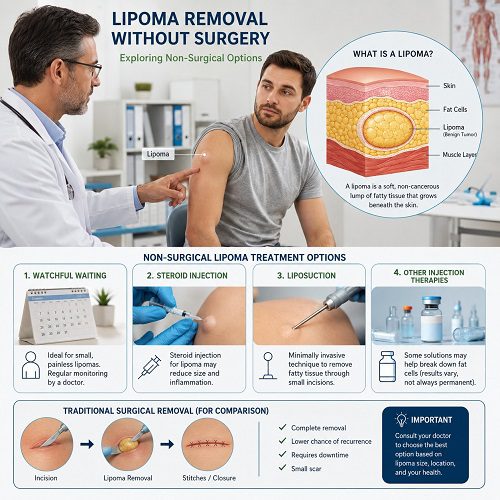
What is a Lipoma?
A lipoma is a slow-growing lump composed of fatty tissue that develops beneath the skin. These growths are typically:
- Soft to the touch
- Easily movable beneath the skin
- Usually painless
- Slow growing
- Non-cancerous
Lipomas commonly occur on the:
Some people develop only one lipoma, while others may develop multiple growths throughout their lifetime.
Most lipomas do not require treatment unless they cause:
- Pain
- Cosmetic concerns
- Rapid enlargement
- Restricted movement
- Pressure on surrounding tissues
Many patients prefer exploring alternatives before considering surgery.
Is Lipoma Removal Without Surgery Possible?
The term lipoma removal without surgery can sometimes be misleading. Completely eliminating a lipoma without physically removing the fatty tissue is difficult. Most non-surgical methods focus on:
- Reducing the size
- Improving cosmetic appearance
- Managing Lipoma symptoms
- Monitoring stable lipomas
Traditional surgical excision remains the most effective method for completely removing the lipoma and minimizing recurrence. However, several alternatives may be appropriate for selected cases.
The best treatment depends upon:
- Lipoma size
- Location
- Symptoms
- Patient preference
- Physician recommendations
When Is Surgery Not Necessary?
Many lipomas do not require immediate treatment. Doctors may recommend observation when the lipoma is:
- Small
- Painless
- Slowly growing
- Not affecting daily activities
- Not cosmetically concerning
Regular monitoring may be all that is required.
Signs that warrant medical evaluation include:
- Rapid growth
- Increasing pain
- Skin changes
- Firm texture
- Restricted movement
- Significant enlargement
Proper Lipoma diagnosis is essential before deciding on any Lipoma treatment option.
Non-Surgical Lipoma Treatment Options
Several forms of non-surgical lipoma treatment are available depending on individual circumstances.
These include:
- Observation
- Steroid injections
- Liposuction techniques
- Injection therapies under investigation
- Lifestyle management
- Minimally invasive procedures
Let’s examine each option in greater detail.
Watchful Waiting
The simplest alternative to surgery is careful observation.
Because lipomas are benign tumors, treatment may not be necessary if they are:
- Stable in size
- Not painful
- Not causing cosmetic concerns
- Not interfering with movement
Doctors may recommend periodic examinations to monitor changes.
Observation offers several benefits:
- No surgical risks
- No recovery time
- No scarring
- No medical procedures
Patients should seek reassessment if symptoms change over time.
Steroid Injection for Lipoma
A commonly discussed option is steroid injection for lipoma.
Steroid injections may help:
- Reduce inflammation
- Shrink fatty tissue
- Improve cosmetic appearance
- Decrease lipoma size in selected cases
However, steroid injections do not usually remove the entire lipoma.
How Steroid Injections Work
The injected medication may gradually reduce fat cells within the lipoma over several weeks or months.
Patients may experience:
- Partial shrinkage
- Improved appearance
- Reduced prominence beneath the skin
Multiple Lipoma treatment sessions may sometimes be required.
Benefits of Steroid Injections
Potential advantages include:
- Minimally invasive treatment
- Little downtime
- Small or no scars
- Reduced discomfort
- Office-based procedure
Limitations
Steroid injections also have limitations.
They may:
- Provide incomplete removal
- Produce variable results
- Require repeated treatments
- Leave residual fatty tissue
Large lipomas usually respond less predictably than smaller growths.
Liposuction for Lipoma Treatment
Liposuction is sometimes considered among the alternatives to lipoma surgery.
Rather than removing the entire capsule surgically, doctors use suction techniques to remove fatty tissue.
Benefits may include:
- Smaller incisions
- Faster recovery
- Improved cosmetic outcomes
- Reduced scarring
However, liposuction does not always remove the lipoma capsule completely.
Incomplete removal may increase the likelihood of recurrence.
Liposuction may be considered when:
- Cosmetic appearance is important
- Lipomas are relatively large
- Multiple lipomas are present
- Patients wish to minimize scarring
Treatment decisions should always be individualized.
Injection Lipolysis
Researchers have explored fat-dissolving injections as another possible non-surgical lipoma treatment.
Certain compounds may help:
- Break down fat cells
- Reduce fatty tissue volume
- Improve cosmetic appearance
However, their use for lipomas remains limited and is not universally accepted as standard treatment.
Patients should consult qualified healthcare professionals before pursuing experimental therapies.
Lifestyle Measures and Lipoma Management
Although lifestyle changes cannot remove existing lipomas, maintaining overall health may support general tissue health.
Helpful measures include:
- Eating a balanced diet
- Maintaining a healthy body weight
- Regular physical activity
- Staying hydrated
- Routine medical examinations
Importantly, losing weight does not necessarily shrink a lipoma because lipomas contain localized fatty tissue that behaves differently from normal body fat.
Can Natural Remedies Remove Lipomas?
Many websites promote natural cures for lipomas. Common suggestions include:
- Herbal applications
- Apple cider vinegar
- Essential oils
- Dietary Lipoma supplements
- Massage therapies
Currently, scientific evidence supporting complete lipoma removal through Home Remedies for Lipoma is limited.
Natural Treatment for Lipoma may support overall wellness, but they should not replace professional evaluation when:
- The lump grows rapidly.
- Pain develops.
- Multiple lipomas appear suddenly.
- Diagnosis remains uncertain.
Always consult healthcare professionals before applying alternative therapies.
Alternatives to Lipoma Surgery
There are several recognized alternatives to lipoma surgery, although complete removal may not always be achieved.
These include:
Observation
Suitable for:
- Small lipomas
- Painless growths
- Stable lesions
Steroid Injection
May help:
- Reduce size
- Improve cosmetic appearance
Liposuction
Can provide:
- Smaller scars
- Reduced recovery time
Minimally Invasive Techniques
Selected patients may benefit from:
- Small-incision procedures
- Combined liposuction techniques
- Specialized dermatological treatments
Treatment selection depends on:
- Medical history
- Lipoma characteristics
- Cosmetic goals
- Physician recommendations
When Is Surgical Removal Recommended?
Traditional surgery remains appropriate when lipomas are:
- Painful
- Rapidly enlarging
- Deep beneath the skin
- Compressing nearby structures
- Causing cosmetic distress
- Limiting movement
Surgery provides:
- Complete removal
- Lower recurrence rates
- Histopathological examination when necessary
Doctors may recommend surgery when non-surgical approaches are unlikely to provide satisfactory outcomes.
Are Non-Surgical Treatments Permanent?
One important question regarding lipoma removal without surgery involves long-term effectiveness.
Non-surgical approaches may:
- Shrink the lipoma
- Improve appearance
- Reduce symptoms
However, they do not always provide permanent removal.
Some lipomas may:
- Persist unchanged
- Slowly enlarge again
- Require additional treatment later
Complete surgical excision remains the treatment most likely to permanently eliminate the growth.
Risks of Delaying Treatment
Observation is generally safe for diagnosed lipomas, but medical evaluation should not be delayed when unusual symptoms appear.
Seek professional assessment if you notice:
- Sudden growth
- Persistent pain
- Redness
- Firm texture
- Numbness
- Restricted movement
Rarely, other soft tissue conditions may resemble lipomas.
Proper diagnosis may involve:
- Physical examination
- Ultrasound imaging
- MRI scans
- Biopsy when appropriate
Accurate diagnosis ensures appropriate treatment planning.
Who May Benefit Most From Non-Surgical Treatment?
Patients who may consider non-surgical lipoma treatment include those with:
- Small lipomas
- Cosmetic concerns
- Multiple lipomas
- Surgical anxiety
- Medical conditions limiting surgical procedures
The ideal candidate depends upon individual medical circumstances.
A healthcare provider can determine whether:
- Observation is sufficient.
- Steroid injections may help.
- Liposuction is appropriate.
- Surgical removal remains necessary.
Frequently Asked Questions
Can a Lipoma Disappear Naturally?
Lipomas rarely disappear on their own. Most remain stable or slowly enlarge over time.
Can Steroid Injections Completely Remove Lipomas?
No. Steroid injection for lipoma may reduce its size but usually does not completely eliminate the growth.
Is Liposuction Better Than Surgery?
Liposuction offers cosmetic advantages but may carry a higher risk of incomplete removal compared with traditional surgical excision.
Are Lipomas Dangerous?
Most lipomas are benign and harmless. However, any unusual lump should receive professional evaluation.
Can Exercise Remove a Lipoma?
Lipoma Exercise supports overall health but does not typically remove existing lipomas.
Conclusion
For many patients, lipoma removal without surgery is an appealing option, particularly when cosmetic concerns or fear of surgical procedures are involved. While complete removal without surgery may not always be possible, several forms of non-surgical lipoma treatment can offer meaningful benefits. Observation, steroid injection for lipoma, liposuction techniques, and other minimally invasive approaches may help reduce symptoms or improve appearance in selected cases.
There are several effective alternatives to lipoma surgery, but treatment decisions should always consider the size, location, and behavior of the lipoma. Surgical excision remains the most reliable option for complete removal, especially when the growth causes pain, enlarges rapidly, or interferes with normal activities.
If you notice changes in an existing lipoma or develop a new soft tissue lump, seeking professional medical evaluation is the safest approach. Early diagnosis helps ensure that you receive the most appropriate treatment tailored to your individual needs.
Disclaimer:
This article is for educational purposes only and should not replace professional medical advice, diagnosis, or treatment. Always consult a qualified healthcare provider regarding any new or changing scalp or forehead lump.