 By
By Abdominal adhesions are bands of internal scar-like tissue that can develop between organs, tissues or the abdominal wall. They commonly form after abdominal or pelvic surgery, although infections, inflammation and conditions such as endometriosis can also cause them. For many people, adhesions cause no symptoms and never require treatment. For others, they can contribute to ongoing abdominal pain, bowel problems or complications such as intestinal obstruction.
So, how long do abdominal adhesions last? There is no single time frame that applies to everyone. Unlike a skin wound that gradually fades, internal adhesions can remain for many years. Some may become less problematic over time, while others can continue to cause symptoms or complications long after the original injury or operation.
Understanding how adhesions develop, how long they can remain and when treatment may be necessary can help you recognise symptoms and discuss appropriate care with your healthcare professional.
What Are Abdominal Adhesions?
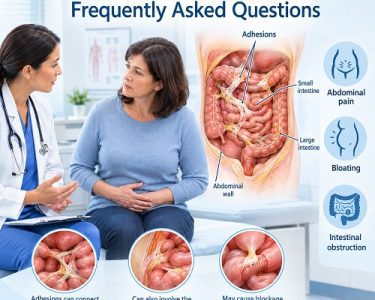
What Are Abdominal Adhesions? Abdominal adhesions are bands of fibrous, scar-like tissue that form inside the abdomen. They may develop between loops of intestine, between an organ and the abdominal wall, or between other abdominal or pelvic tissues.
Your body produces scar tissue as part of its natural healing process. When tissues inside the abdomen become irritated, injured or inflamed, the healing process can cause surfaces that would normally move freely to become attached to one another.
Surgery is the most common cause. Adhesions can develop after both open and laparoscopic abdominal procedures, although they are generally less common after laparoscopic surgery. They may also follow abdominal infections, inflammation, radiation treatment and certain medical conditions.
The resulting abdominal scar tissue may be thin and flexible or thicker and more restrictive. Many people have adhesions without knowing they are there.
How Long Do Abdominal Adhesions Last?
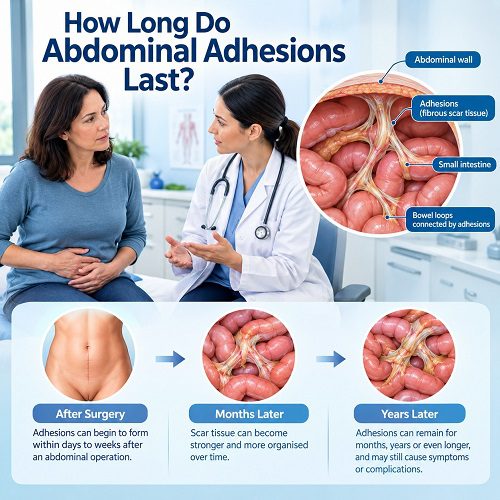
Abdominal adhesions can last for months, years or even indefinitely. There is no predictable date when they automatically disappear.
In some people, adhesions can improve or become less troublesome over time. Cleveland Clinic notes that some abdominal adhesions improve on their own. However, adhesions do not behave like an ordinary surface scar that simply fades away. Some can remain inside the abdomen for a very long time.
This means that having abdominal surgery several years ago does not necessarily rule out adhesions as a possible cause of new Abdominal Adhesions symptoms.
In fact, symptoms and complications related to adhesions can begin at any time after surgery, including many years later.
Therefore, the most useful question is often not simply how long the adhesions have been present, but whether they are causing symptoms or affecting normal organ function.
Do Abdominal Adhesions Go Away Naturally?
Some adhesions may become less symptomatic over time. However, you should not assume that all abdominal scar tissue will naturally disappear.
Most adhesions do not cause symptoms or complications, so treatment is usually unnecessary when they are not causing problems.
If adhesions are causing chronic pain, bowel symptoms or another complication, a healthcare professional may investigate the underlying problem.
It is also important to understand that there is currently no guaranteed home treatment that can simply dissolve established abdominal adhesions. Surgery, known as adhesiolysis, can release adhesions when there is an appropriate medical reason for doing so. However, surgery itself can cause new adhesions.
For this reason, doctors generally avoid operating on adhesions unless the potential benefits outweigh the risks.
Why Can Abdominal Adhesions Last So Long?
Adhesions are formed from fibrous scar-like tissue during the body’s healing response. Once these tissues have attached internal structures to one another, they may remain in place.
Unlike an external surgical scar, abdominal adhesions cannot simply be seen or monitored by looking at the skin.
The body’s healing process can continue to remodel scar tissue, which may alter its appearance and flexibility. However, this does not mean that every adhesion will disappear completely.
Several factors can influence whether adhesions develop and whether they become troublesome, including:
- The type of surgery performed
- Whether surgery was open or laparoscopic
- The number of previous abdominal operations
- Emergency versus planned surgery
- The amount of inflammation or tissue injury
- Abdominal or pelvic infections
- Conditions such as endometriosis or inflammatory bowel disease
People who have undergone multiple abdominal operations may have a greater risk of developing adhesions.
Can Adhesions Cause Symptoms Years Later?
Yes. Adhesions can cause symptoms long after the original surgery or abdominal inflammation.
Chronic abdominal pain is one of the most commonly reported symptoms when adhesions are symptomatic. However, pain alone does not prove that adhesions are responsible because many other abdominal conditions can cause similar symptoms.
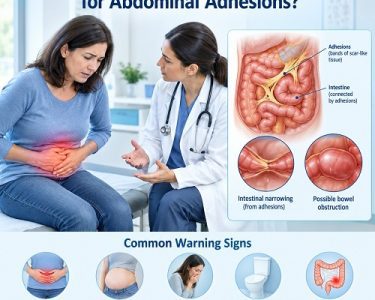
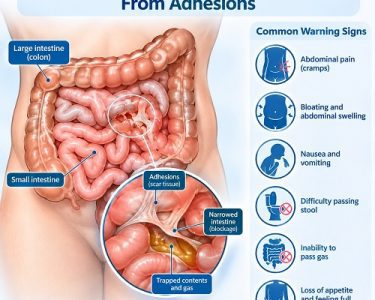
Adhesions can sometimes pull, kink or compress parts of the intestine. This can interfere with the normal movement of food, fluid, gas and stool through the bowel.
Possible symptoms include:
- Abdominal pain or cramping
- Bloating
- Constipation
- Difficulty passing gas
- Nausea
- Vomiting
- Abdominal swelling
Symptoms can vary considerably between individuals.
A person may have extensive adhesions without experiencing any symptoms, while another person with fewer adhesions may experience significant problems.
What Happens to Abdominal Adhesions Over Time?
The behaviour of adhesions is different from person to person.
Some remain stable and cause no problems. Others may become tighter or more restrictive. In some cases, symptoms can appear after a long period without problems.
Older NIDDK information notes that adhesions can become larger and tighter over time, while current NIDDK guidance also confirms that adhesion-related symptoms and complications can begin many years after surgery.
This helps explain why someone may feel well for years after an operation and then develop abdominal discomfort later.
However, new abdominal pain should not automatically be attributed to old adhesions. A doctor may need to consider other Abdominal Adhesions causes before deciding that adhesions are responsible.
Can Abdominal Adhesions Come Back After Treatment?
Yes. Recurrent adhesions are possible after adhesiolysis.
Adhesion surgery involves separating or cutting the bands of scar tissue. Although this can relieve an obstruction or other serious complication, the surgical process creates new tissue injury. As the abdomen heals, new adhesions may develop.
This is one of the main reasons doctors carefully consider whether surgery is appropriate. NIDDK states that surgery to treat adhesions can result in new adhesions forming.
Cleveland Clinic similarly explains that additional surgery can lead to further adhesion formation.
Therefore, surgery does not guarantee that adhesions will never return.
When Do Abdominal Adhesions Need Treatment?
Most abdominal adhesions do not need treatment if they are not causing symptoms or complications.
Doctors may consider treatment when adhesions are strongly suspected of causing significant problems, particularly intestinal obstruction.
Abdominal Adhesions Treatment decisions depend on factors such as:
- The severity of symptoms
- Whether there is a bowel obstruction
- Whether the obstruction is partial or complete
- Whether symptoms improve without surgery
- The patient’s previous surgical history
- The potential risks of another operation
When an obstruction is present, treatment may initially involve hospital care, intravenous fluids and other measures. Some obstructions may resolve without surgery. If the obstruction does not resolve or there are signs of a serious complication, surgery may be required.
How Are Abdominal Adhesions Diagnosed?
Diagnosing adhesions can be challenging because ordinary imaging tests often cannot directly show them.
Doctors may use your medical history, physical examination, blood tests and imaging studies to investigate your symptoms and rule out other conditions. CT scans and X-rays can help identify an intestinal obstruction, even though they may not directly show the adhesions themselves.
In some circumstances, surgery may be required to confirm the presence of adhesions.
This is important because abdominal pain after surgery does not automatically mean you have symptomatic adhesions. Other conditions can cause similar symptoms, so proper medical assessment is important.
Can Lifestyle Changes Remove Abdominal Scar Tissue?
Lifestyle measures can support general digestive and physical health, but they should not be described as a proven way to remove established adhesions.
There is no specific diet that has been shown to dissolve abdominal adhesions.
If you have been diagnosed with a bowel obstruction or have been advised to follow a particular diet, follow your healthcare professional’s instructions. For example, some people with partial obstruction may receive specific dietary advice from their healthcare team.
Gentle physical activity may also be appropriate for some people after recovery from surgery, but activity recommendations depend on the operation, recovery stage and individual health.
If abdominal movement causes pain, seek professional advice rather than trying to forcefully stretch or manipulate the abdomen.
Can Physical Therapy Help Adhesion-Related Pain?
Some people explore physical therapy or soft tissue techniques for abdominal discomfort after surgery.
Cleveland Clinic notes that some studies suggest soft tissue mobilisation may help reduce pain associated with adhesions, although more research is needed to establish its benefits.
If you are considering physical therapy, discuss it with your healthcare professional first, particularly if you have recently had surgery, have severe pain or have symptoms suggesting bowel obstruction.
Physical therapy should not be viewed as a replacement for urgent medical treatment when an obstruction or another serious abdominal condition is suspected.
What Increases the Risk of Long-Term Adhesion Problems?
Not everyone with adhesions develops complications. However, some situations are associated with a greater likelihood of adhesion formation.
These include:
Multiple abdominal surgeries
Each additional abdominal operation can create another opportunity for internal scar tissue to develop.
Emergency abdominal surgery
Emergency procedures may involve inflammation, infection or significant tissue handling, which can contribute to adhesion formation.
Pelvic and bowel surgery
Operations involving the lower digestive tract and pelvis are associated with increased adhesion risk.
Abdominal inflammation or infection
Conditions such as Crohn’s disease, diverticular disease, endometriosis, pelvic inflammatory disease and peritonitis can contribute to adhesion formation.
When Should You Seek Urgent Medical Help?
Most abdominal adhesions are not emergencies. However, an adhesion-related bowel obstruction can become life-threatening.
Seek urgent medical attention if you develop symptoms such as:
- Severe or worsening abdominal pain
- Significant abdominal swelling
- Repeated vomiting
- Inability to pass gas
- Inability to pass stool
- Severe cramping accompanied by bloating
- Fever or a rapid heartbeat alongside severe abdominal symptoms
A complete intestinal obstruction requires urgent medical assessment because it can compromise blood supply to the intestine and potentially lead to serious infection.
Do not wait for symptoms to disappear if you suspect a bowel obstruction.
Can Abdominal Adhesions Be Prevented?
There is no guaranteed way to prevent every adhesion.
However, surgeons can take steps during abdominal surgery to reduce the risk. These may include using minimally invasive techniques where appropriate, handling tissues carefully and using adhesion barriers in selected situations.
Laparoscopic surgery is associated with fewer adhesions than open abdominal surgery, although adhesions can still develop after minimally invasive procedures.
The decision about surgical technique depends on the condition being treated and the individual circumstances.
How Long Do Abdominal Adhesions Last After Surgery?
There is no standard recovery period for internal adhesions after surgery.
The surgical wound on the outside of your body may heal within weeks, while internal healing continues for considerably longer. Adhesions may form as part of this internal healing process.
Importantly, symptoms caused by adhesions can occur much later. NIDDK notes that symptoms and complications may begin at any point after surgery, even many years later.
Therefore, the absence of symptoms during the first few months after surgery does not necessarily mean that adhesions cannot cause problems later.
Do You Always Need Surgery for Long-Lasting Adhesions?
No.
The presence of adhesions alone does not mean that surgery is necessary. Many people have adhesions without symptoms or complications and never require treatment.
Surgery is generally considered when there is a clear medical reason, such as an intestinal obstruction or another significant complication.
This approach is important because adhesiolysis can itself lead to additional adhesion formation.
Your healthcare professional can assess your symptoms, medical history and potential risks before recommending treatment.
Final Thoughts
So, how long do abdominal adhesions last? They can remain inside the abdomen for months, years or potentially much longer. Some adhesions may become less troublesome with time, while others can continue to cause symptoms or lead to complications years after surgery.
Most abdominal adhesions do not cause symptoms and do not require treatment. However, persistent abdominal pain, bloating, changes in bowel movements or difficulty passing gas should be assessed, particularly if you have previously undergone abdominal or pelvic surgery.
Because adhesions can cause intestinal obstruction, severe abdominal pain, swelling, vomiting or an inability to pass stool or gas should receive urgent medical attention.
If you have been diagnosed with adhesions, discuss your symptoms and treatment options with a qualified healthcare professional. Avoid assuming that every abdominal symptom is caused by adhesions, and remember that surgery can sometimes result in recurrent adhesions.
Medical Disclaimer
This article is for general educational purposes only and does not replace professional medical advice, diagnosis or treatment. If you have severe abdominal pain, persistent vomiting, significant swelling, or cannot pass stool or gas, seek urgent medical care.