 By
By Lipomas are among the most common benign soft tissue tumors, affecting millions of people worldwide. These soft, slow-growing fatty lumps usually develop beneath the skin and can appear almost anywhere on the body. Although most lipomas are harmless and painless, many people wonder whether they run in families. If your parents, siblings, or close relatives have experienced lipomas, you may ask, “are lipomas hereditary?”
The answer is that they can be. While many lipomas occur sporadically without any identifiable cause, genetics may play an important role in certain individuals. Several inherited conditions are associated with multiple lipomas, suggesting that hereditary factors can significantly influence a person’s likelihood of developing these fatty tumors.
What is a Lipoma?
A lipoma is a benign tumor composed primarily of fat cells. These growths usually develop beneath the skin and feel soft and movable when touched. Lipomas tend to grow slowly over months or years and are generally painless unless they compress nearby nerves or tissues.
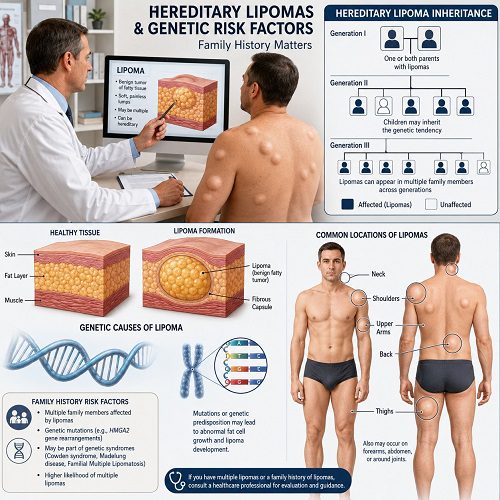
Common locations include:
- Neck
- Shoulders
- Arms
- Upper back
- Abdomen
- Lipoma on the Thigh
- Forehead
- Lipoma on the Scalp
- Chest
Lipomas may occur singly or in multiples. Some individuals develop several lipomas throughout their lifetime, which may suggest an inherited predisposition.
Are Lipomas Hereditary?
Yes, in certain cases, are lipomas hereditary can be answered with a definite yes. Although many lipomas occur randomly, hereditary factors are well documented in medical literature.
People with a family history of lipomas may have a greater chance of developing:
- Multiple lipomas
- Earlier onset of symptoms
- Recurring lipomas
- Familial lipoma syndromes
When several family members experience lipomas across multiple generations, genetics becomes an important consideration.
Researchers believe inherited genetic mutations can influence:
- Fat cell growth
- Cellular metabolism
- Connective tissue development
- Tumor formation mechanisms
Having a genetic predisposition does not necessarily guarantee that lipomas will develop, but it may increase susceptibility.
Understanding Hereditary Lipoma Conditions
One of the best-known hereditary conditions involving lipomas is Familial Multiple Lipomatosis (FML).
Familial Multiple Lipomatosis
Familial Multiple Lipomatosis is an inherited disorder characterized by:
- Numerous lipomas
- Multiple affected family members
- Progressive development over time
- Predominantly painless growths
Patients often develop dozens of lipomas affecting:
- Lipoma on the Arm
- Legs
- Trunk
- Lipoma on the Back
- Shoulders
The condition commonly follows an autosomal dominant inheritance pattern, meaning only one affected parent may pass the genetic trait to their children.
Symptoms include:
- Soft movable lumps
- Slow enlargement
- Multiple lesions
- Cosmetic concerns
- Occasional discomfort
Although benign, multiple lipomas may significantly affect quality of life when they become large or numerous.
Family History of Lipoma
A positive family history of lipoma remains one of the strongest indicators of hereditary involvement.
Doctors frequently ask questions such as:
- Did either parent have lipomas?
- Are multiple family members affected?
- When were the lipomas first diagnosed?
- Have family members undergone lipoma removal procedures?
Keeping a detailed family medical history may provide valuable clues for diagnosis.
Consider hereditary factors if:
- Several close relatives have lipomas.
- Lipomas appear during early adulthood.
- Multiple lipomas develop simultaneously.
- Symptoms occur across generations.
Family history does not always guarantee inheritance but significantly contributes to risk assessment.
Genetic Causes of Lipoma
Scientists continue investigating the precise genetic causes of lipoma formation. Several chromosomal abnormalities have been identified in certain lipoma cases.
Research suggests alterations involving:
- Chromosome 12
- Chromosome 6
- Chromosome 13
- Specific gene rearrangements affecting fat tissue growth
These genetic changes may contribute to:
- Excessive fat cell proliferation
- Altered tissue growth regulation
- Multiple lipoma formation
- Familial inheritance patterns
Not all lipomas involve inherited mutations. Many isolated lipomas occur without any identifiable genetic abnormalities.
Genetics represents only one component of lipoma development. Environmental influences and individual biological differences may also contribute.
Conditions Associated With Multiple Lipomas
Several inherited disorders increase lipoma risk.
Familial Multiple Lipomatosis
Characteristics include:
- Multiple lipomas
- Strong family history
- Benign tumors
- Progressive development
Dercum’s Disease
This rare disorder may involve:
- Painful lipomas
- Obesity
- Fatigue
- Chronic discomfort
Cowden Syndrome
Associated features include:
- Multiple benign growths
- Increased cancer risks
- Skin abnormalities
- Inherited genetic mutations
Madelung Disease
Typically presents with:
- Symmetrical fat deposits
- Neck enlargement
- Shoulder involvement
- Metabolic abnormalities
Identifying underlying syndromes helps physicians provide individualized treatment recommendations.
Who Is More Likely to Develop Hereditary Lipomas?
Individuals may have higher risk if they:
- Have affected parents
- Possess multiple lipomas
- Experience early symptom onset
- Have inherited genetic disorders
- Report strong family histories
Additional factors may include:
- Age
- Hormonal influences
- Metabolic changes
- Genetic susceptibility
Hereditary lipoma conditions frequently become apparent during early or middle adulthood.
Symptoms of Hereditary Lipomas
Hereditary lipomas typically resemble ordinary lipomas.
Symptoms include:
- Soft lumps beneath the skin
- Slow growth
- Rounded appearance
- Movable texture
- Multiple growths
- Minimal tenderness
Less commonly, patients may experience:
- Pain
- Pressure symptoms
- Restricted movement
- Cosmetic concerns
Medical evaluation is recommended whenever a lump demonstrates:
- Rapid enlargement
- Persistent pain
- Firm texture
- Skin discoloration
- Sudden changes in appearance
These symptoms warrant prompt examination to exclude other conditions.
How Are Hereditary Lipomas Diagnosed?
Diagnosis begins with a comprehensive medical evaluation.
Healthcare providers may assess:
Physical Examination
Doctors examine:
- Size
- Shape
- Consistency
- Location
- Number of lipomas
Family History Assessment
Questions may include:
- Which relatives are affected?
- How many lipomas developed?
- Were surgical procedures performed?
- Did symptoms occur early in life?
Imaging Studies
Medical imaging may include:
- Ultrasound
- MRI scans
- CT imaging
Imaging helps determine:
- Lipoma depth
- Tissue involvement
- Surgical planning
- Differential diagnosis
Biopsy Procedures
Occasionally, physicians recommend biopsies when diagnosis remains uncertain.
Biopsies help distinguish:
- Lipomas
- Liposarcomas
- Cysts
- Other soft tissue tumors
Genetic Testing
Some inherited syndromes may require specialized genetic evaluation when:
- Multiple family members are affected.
- Lipomas occur alongside other symptoms.
- Rare inherited disorders are suspected.
Can Lipomas Skip Generations?
Yes, hereditary conditions occasionally appear to skip generations.
Possible explanations include:
- Variable gene expression
- Incomplete penetrance
- Mild symptoms remaining unnoticed
- Misdiagnosis among relatives
A parent carrying genetic susceptibility may experience few or no symptoms while passing predisposition to future generations.
Because of these variations, obtaining detailed family medical information remains extremely valuable.
Can Children Inherit Lipoma Risk?
Children may inherit increased susceptibility when hereditary conditions exist within families.
However, inheriting genetic risk does not mean that lipomas will inevitably develop.
Several possibilities exist:
- No lipomas may develop.
- Only one lipoma may appear.
- Multiple lipomas may gradually emerge.
- Symptoms may remain mild.
Parents should consult healthcare providers if children in Lipoma develop:
- Multiple soft tissue lumps
- Rapidly growing masses
- Painful swellings
- Unusual skin findings
Early evaluation promotes appropriate monitoring and reassurance.
Treatment Options for Hereditary Lipomas
Lipoma Treatment depends upon:
- Size
- Location
- Symptoms
- Cosmetic concerns
- Number of lipomas
Observation
Many lipomas require no treatment whatsoever.
Monitoring remains appropriate when growths are:
- Small
- Painless
- Stable
- Non-problematic
Surgical Removal
Lipoma Removal Surgery remains the most common treatment for symptomatic lipomas.
Benefits include:
- Complete removal
- Pathological examination
- Cosmetic improvement
- Reduced discomfort
Liposuction Techniques
Selected cases involving multiple lipomas may benefit from:
- Smaller incisions
- Improved cosmetic outcomes
- Treatment of larger areas
Pain Management
Painful hereditary lipoma disorders occasionally require:
- Medications
- Physical therapy
- Specialized treatment approaches
Lipoma Alternative Treatment plans should always be individualized.
Can Lipomas Return After Removal?
Recurrence remains uncommon after complete surgical excision.
However, hereditary conditions may cause:
- New lipomas
- Multiple future growths
- Progressive development over time
Patients with hereditary lipoma syndromes frequently develop additional lipomas despite successful removal of previous lesions.
Regular medical follow-up may therefore prove beneficial.
Lifestyle Factors and Lipomas
Many patients ask whether lifestyle influences hereditary lipoma development.
There is currently no convincing evidence that lipomas result from:
- Poor diet
- Obesity alone
- Lack of exercise
Although maintaining healthy habits supports overall wellness, hereditary lipomas primarily involve genetic influences rather than lifestyle choices.
Helpful habits include:
- Maintaining healthy body weight
- Regular physical activity
- Routine medical examinations
- Monitoring changes in existing lipomas
- Seeking prompt evaluation of suspicious symptoms
When Should You See a Doctor?
Consult a healthcare professional if you notice:
- Multiple lipomas developing rapidly
- Significant pain
- Large growths
- Restricted movement
- Skin changes
- Family members with similar symptoms
Immediate evaluation is recommended when lumps become:
- Hard
- Fixed in place
- Rapidly enlarging
- Extremely painful
These symptoms require proper assessment to exclude more serious conditions.
Frequently Asked Questions
Are lipomas hereditary in every case?
No. Many lipomas occur randomly without hereditary involvement. Genetics contributes only to certain cases.
Can lipomas be passed from parents to children?
Yes. Several hereditary disorders may increase lipoma risk among family members.
Does having one lipoma mean I inherited it?
Not necessarily. Single lipomas frequently develop without any identifiable family history.
Are hereditary lipomas dangerous?
Are hereditary lipomas dangerous? Most hereditary lipomas remain benign. Nevertheless, persistent or changing lumps should always undergo medical evaluation.
Can genetic testing diagnose hereditary lipomas?
Genetic testing may assist in diagnosing particular inherited syndromes when clinically indicated.
Conclusion
The question “are lipomas hereditary” does not have a simple yes-or-no answer. While many lipomas develop sporadically, hereditary factors clearly contribute in some individuals. A strong family history of lipoma, inherited disorders such as familial multiple lipomatosis, and specific genetic causes of lipoma formation all support the role of genetics in lipoma development.
Fortunately, most lipomas remain harmless and manageable. Understanding hereditary lipoma risk allows patients and healthcare providers to make informed decisions regarding diagnosis, monitoring, and treatment. If multiple family members are affected or numerous lipomas develop over time, discussing your medical and family history with a healthcare professional may provide valuable guidance and reassurance.
Disclaimer:
This article is intended for educational purposes only and should not replace professional medical advice, diagnosis, or treatment. Always consult a qualified healthcare provider regarding any new or concerning symptoms.