 By
By Finding a lump beneath your skin can be concerning. One of the most common questions people ask is whether they have a lipoma or a cyst. Although both conditions are usually benign, understanding the differences between them can help determine whether medical attention is necessary.
The debate surrounding lipoma vs cyst is common because both can appear as small, movable lumps beneath the skin. However, they differ significantly in their causes, texture, symptoms, and treatment approaches. Knowing whether you have a cyst or lipoma may prevent unnecessary anxiety and help you make informed healthcare decisions.
What is a Lipoma?
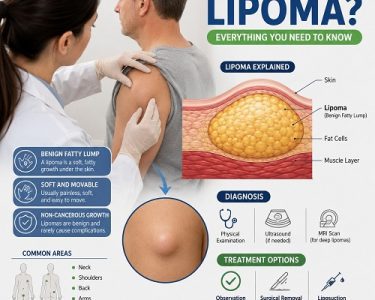
A lipoma is a slow-growing, benign growth composed of fatty tissue. It develops beneath the skin and typically feels soft and rubbery when touched. Lipomas are among the most common soft tissue tumors found in adults.
Lipomas generally:
- Grow slowly
- Feel soft and movable
- Are painless
- Develop beneath the skin
- Rarely become cancerous
They commonly appear on:
- Shoulders
- Arms
- Back
- Neck
- Abdomen
- Lipoma on the Thigh
Most lipomas measure between 1 and 3 inches in diameter, although some may grow larger over time.
What Is a Cyst?
A cyst is a sac-like structure filled with fluid, keratin, pus, or other material. Skin cysts commonly form when skin cells become trapped beneath the surface or when glands become blocked.
Common types include:
- Epidermoid cysts
- Sebaceous cysts
- Pilar cysts
- Ganglion cysts
- Inclusion cysts
Unlike lipomas, cysts often develop closer to the skin’s surface and may become inflamed or infected.
Characteristics of cysts include:
- Firm or slightly soft texture
- Visible opening or pore in some cases
- Occasional redness and swelling
- Tenderness when infected
- Variable growth rates
Understanding the difference between a fatty lump vs cyst can help identify which condition may be responsible for a lump beneath the skin.
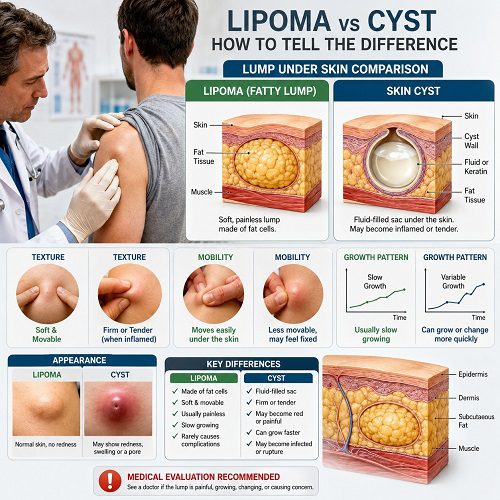
Lipoma vs Cyst: Major Differences
Several features help distinguish lipomas from cysts.
| Feature | Lipoma | Cyst |
| Contents | Fat tissue | Fluid, keratin, or pus |
| Texture | Soft and rubbery | Firm or soft |
| Movement | Moves easily | Less movable |
| Pain | Usually painless | May become painful |
| Growth | Slow | Variable |
| Infection Risk | Rare | Common |
| Skin Changes | Usually none | Redness possible |
| Appearance | Under skin | Often visible on skin surface |
| Treatment | Observation or removal | Drainage or removal |
This lump under skin comparison highlights several useful diagnostic clues.
How Does a Lipoma Feel?
Lipomas have several distinguishing characteristics:
Soft Texture
Lipomas feel:
- Doughy
- Soft
- Smooth
- Compressible
Easily Movable
One hallmark of lipomas is their mobility. When gently pressed, they often move beneath the skin.
Slow Growth
Lipomas usually enlarge gradually over months or years.
Minimal Symptoms
Most lipomas do not cause:
- Pain
- Redness
- Skin irritation
- Infection
Symptoms generally occur only when larger lipomas compress nearby nerves or tissues.
How Does a Cyst Feel?
Skin cysts differ considerably in appearance and sensation.
Firmer Texture
Cysts may feel:
- Firm
- Round
- Slightly compressible
- More fixed in place
Visible Skin Changes
Many cysts cause:
- Raised bumps
- Central pores
- Redness
- Swelling
Infection Risk
Infected cysts may become:
- Painful
- Warm
- Tender
- Enlarged
Some cysts discharge:
- Thick material
- White keratin
- Yellow fluid
- Pus when infected
These features are helpful when determining whether a lump represents a cyst or lipoma.
Causes of Lipomas
Researchers do not completely understand why lipomas develop. Potential contributing factors include:
Genetics
Family history significantly increases the likelihood of developing multiple lipomas.
Minor Trauma
Some lipomas appear after minor injuries, although the relationship remains unclear.
Age
Lipomas commonly occur between:
- 40 and 60 years of age
Medical Conditions
Rare inherited disorders include:
- Familial multiple lipomatosis
- Gardner syndrome
- Madelung disease
- Dercum’s disease
Most lipomas occur without an identifiable cause.
Causes of Skin Cysts
Several factors contribute to cyst formation.
Blocked Glands
Oil glands can become blocked, resulting in cyst development.
Skin Injury
Trauma may trap skin cells beneath the surface.
Hormonal Changes
Hormonal fluctuations occasionally contribute to cyst formation.
Infection
Inflammation may cause cyst enlargement and discomfort.
Unlike lipomas, cysts are more likely to develop inflammatory symptoms.
Common Locations of Lipomas
Lipomas frequently occur on:
- Neck
- Back
- Shoulders
- Arms
- Chest
- Abdomen
- Legs
They are uncommon on:
- Hands
- Feet
- Face
Lipomas generally occur within deeper layers of fatty tissue beneath normal-appearing skin.
Common Locations of Cysts
Cysts frequently appear on:
- Face
- Lipoma on the Scalp
- Neck
- Back
- Chest
- Genital region
- Behind the ears
They often develop near hair follicles or oil glands.
Symptoms of Lipomas
Lipoma symptoms may include:
- Soft lump beneath skin
- Slow enlargement
- Easy movement when touched
- Minimal discomfort
- Cosmetic concerns
Large lipomas occasionally cause:
- Pressure sensations
- Pain
- Reduced mobility
Fortunately, most remain harmless throughout life.
Symptoms of Skin Cysts
Skin cysts may produce:
- Tenderness
- Redness
- Swelling
- Drainage
- Skin irritation
- Pain when infected
Symptoms frequently fluctuate depending upon inflammation and infection.
Can Lipomas Become Cancerous?
Lipomas themselves are benign and rarely become cancerous.
However, medical evaluation is recommended when a lump demonstrates:
- Rapid growth
- Significant pain
- Firm consistency
- Limited mobility
- Deep tissue involvement
Rare cancerous tumors called liposarcomas differ substantially from lipomas and require specialized treatment.
Can Cysts Become Dangerous?
Most cysts are harmless, although complications occasionally develop.
Possible complications include:
- Infection
- Rupture
- Abscess formation
- Scarring
- Recurrence
Persistent or recurrent cysts may require Lipoma Removal Surgery.
Diagnosing Lipoma vs Cyst
Physicians usually diagnose both conditions through:
Physical Examination
Doctors evaluate:
- Size
- Texture
- Mobility
- Tenderness
- Skin changes
Ultrasound
Ultrasound imaging helps distinguish:
- Fatty tissue
- Fluid-filled cysts
- Solid masses
MRI Scans
MRI provides highly detailed imaging for larger or deeper masses.
Biopsy
In rare circumstances, physicians perform biopsies to exclude malignancy.
A thorough lump under skin comparison often allows accurate diagnosis without invasive procedures.
When Should You See a Doctor?
Seek medical evaluation if a lump:
- Grows rapidly
- Causes severe pain
- Becomes red or inflamed
- Limits movement
- Feels unusually firm
- Exceeds several inches in size
- Changes suddenly
Medical assessment is particularly important when symptoms worsen over time.
Treatment Options for Lipomas
Small lipomas often require no treatment.
Observation
Doctors frequently recommend monitoring when lipomas are:
- Small
- Painless
- Stable in size
Surgical Removal
Surgical excision remains the most effective treatment for:
- Painful lipomas
- Enlarging masses
- Cosmetic concerns
Liposuction
Some physicians perform liposuction for selected lipomas.
Treatment depends upon:
- Size
- Location
- Symptoms
- Patient preference
Treatment Options for Cysts
Cyst treatment varies considerably.
Warm Compresses
Minor inflamed cysts sometimes improve with:
- Heat therapy
- Observation
Drainage
Large infected cysts may require:
- Incision
- Drainage procedures
Antibiotics
Doctors prescribe antibiotics when bacterial infections occur.
Surgical Removal
Complete cyst excision provides the lowest recurrence risk.
Removing both the cyst and its capsule reduces future complications.
Home Care Recommendations
For both lipomas and cysts:
Avoid:
- Squeezing
- Puncturing
- Self-draining
- Aggressive massage
Instead:
- Monitor changes
- Maintain skin hygiene
- Seek professional evaluation when necessary
Attempting home removal significantly increases infection risks.
Lipoma vs Cyst: Quick Identification Guide
You may have a lipoma if the lump is:
- Soft
- Painless
- Slowly growing
- Easily movable
- Beneath normal skin
You may have a cyst if the lump is:
- Firm or tender
- Inflamed
- Associated with skin changes
- Producing drainage
- Occasionally painful
Understanding whether a lump represents a fatty lump vs cyst provides valuable guidance before seeking medical care.
Best Natural Supplements for Lipoma Support
Finding natural ways to support overall health is important for individuals living with lipomas. The Best Natural Supplements for Lipoma Support may help maintain healthy fat metabolism, support normal inflammatory responses, and promote general wellness when combined with a balanced lifestyle.
Many people interested in Natural Remedies for Lipoma look for herbal and nutritional supplements that support the body’s natural processes. While no supplement has been scientifically proven to eliminate lipomas, certain nutrients may contribute to overall health. Turmeric is widely recognized for its antioxidant properties and its role in supporting a healthy inflammatory response. Omega-3 fatty acids may support metabolic health, while green tea extract provides beneficial plant compounds that promote cellular wellness.
Other supplements often included in wellness routines are vitamin D, milk thistle for liver health support, and antioxidant-rich herbal formulations. Maintaining a nutrient-dense diet, regular physical activity, and adequate hydration may further support overall well-being.
Before beginning any supplement regimen, it is advisable to consult a qualified healthcare professional, especially if you have underlying medical conditions or take prescription medications.
Frequently Asked Questions
Can a Lipoma Turn Into a Cyst?
No. Lipomas and cysts are entirely different conditions and do not transform into one another.
Which Is More Painful?
Cysts are generally more painful because they frequently become inflamed or infected.
Are Lipomas Hard?
Most lipomas are soft and compressible. Hard or rapidly growing masses warrant medical evaluation.
Can Both Conditions Recur?
Yes. Both lipomas and cysts may recur following treatment, although complete surgical removal substantially reduces recurrence risks.
Can Ultrasound Differentiate Them?
Yes. Ultrasound imaging effectively distinguishes fatty tissue from fluid-filled cystic structures in many cases.
Prevention Tips
Although neither condition can always be prevented, helpful practices include:
- Maintaining healthy skin hygiene
- Avoiding unnecessary skin trauma
- Monitoring existing lumps
- Scheduling regular medical evaluations when changes occur
Early diagnosis often simplifies treatment decisions.
Final Thoughts
Understanding the differences between lipoma vs cyst helps reduce uncertainty when discovering an unexpected lump beneath the skin. While lipomas are typically soft, movable collections of fatty tissue, cysts are fluid-filled sacs that may become inflamed or infected. Recognizing the signs of a cyst or lipoma through careful lump under skin comparison allows individuals to seek appropriate medical care when necessary.
Although both conditions are usually benign, any rapidly growing, painful, or unusual lump should be professionally evaluated. Whether dealing with a fatty lump vs cyst, obtaining an accurate diagnosis remains the most important step toward effective management and peace of mind.
Disclaimer:
This article is intended for educational purposes only and should not replace professional medical advice, diagnosis, or treatment. Consult a qualified healthcare provider regarding any new or changing skin lump or medical concern.