 By
By Many people think lipomas only develop in middle-aged or older adults. While lipomas are most commonly diagnosed between the ages of 40 and 60, they can also occur in younger individuals. A lipoma in children or a lipoma in young adults is less common, but it is certainly possible. Understanding the Lipoma causes, symptoms, diagnosis, and treatment options can help parents and young adults make informed healthcare decisions.
Lipomas are benign (non-cancerous) growths made up of fat cells. They usually grow slowly beneath the skin and feel soft and movable when touched. Although they are generally harmless, any unusual lump should be evaluated by a healthcare professional to confirm the diagnosis and rule out other conditions.
What is a Lipoma?
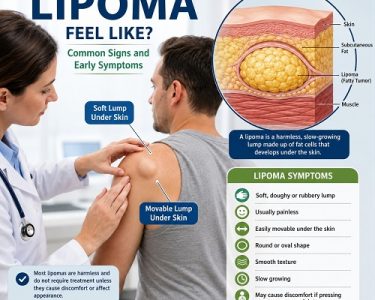
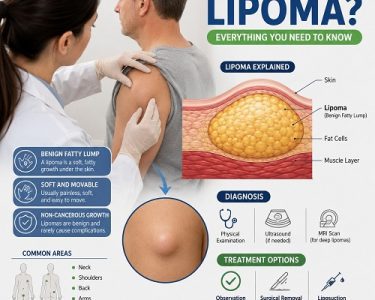
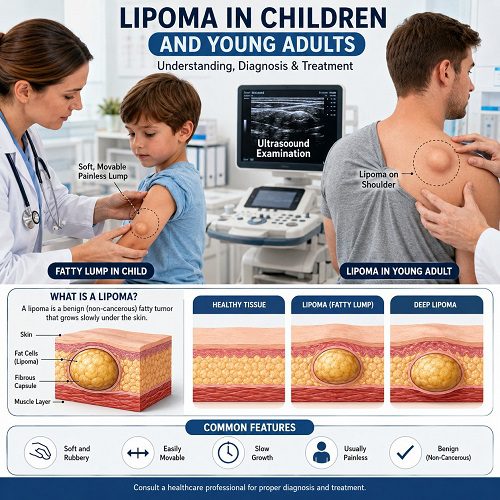
A lipoma is a soft, fatty lump that develops between the skin and the muscle layer underneath. It consists of mature fat cells enclosed within a thin fibrous capsule. Lipomas are among the most common benign soft tissue tumors.
Characteristics of a lipoma include:
- Soft and rubbery texture
- Easily movable under the skin
- Slow growth over time
- Usually painless
- Round or oval shape
- Commonly found on the neck, shoulders, back, arms, or Lipoma on the Thigh
Most lipomas are harmless and do not require treatment unless they cause discomfort, pain, or cosmetic concerns.
Can a Lipoma Occur in Children?
Yes, a lipoma in children can occur, although it is relatively uncommon compared to adults. Pediatric lipomas account for a small percentage of all soft tissue tumors seen in children.
Parents may notice a small lump beneath their child’s skin during bathing, dressing, or routine activities. Because any lump can be concerning, medical evaluation is important even though many pediatric lipomas are benign.
Children may develop lipomas on:
- Arms
- Legs
- Neck
- Back
- Shoulders
- Lipoma on the Scalp
In most cases, the lump grows slowly and does not cause pain.
How Common Is Lipoma in Young Adults?
A lipoma in young adults is more common than in children but still less frequent than in middle-aged adults. Young adults in their late teens and twenties may notice small fatty growths developing under the skin.
Several factors may contribute to lipoma development in younger individuals, including:
- Family history
- Genetic predisposition
- Minor injuries or trauma
- Certain inherited syndromes
- Metabolic factors
Although age can influence the likelihood of developing lipomas, there is no strict age limit. Lipomas can appear at almost any stage of life.
Understanding Lipoma Age Risk
When discussing lipoma age risk, healthcare providers often note that lipomas are most frequently diagnosed in adults between 40 and 60 years old. However, younger age groups are not immune.
Age Groups and Lipoma Risk
| Age Group | Risk Level |
| Children under 10 | Rare |
| Teenagers | Uncommon |
| Young adults (18–30) | Moderate |
| Adults (40–60) | Most common |
| Older adults | Common |
While the overall lipoma age risk increases with age, pediatric and young adult cases are well documented.
Causes of Lipoma in Children and Young Adults
The exact cause of lipomas remains unclear. Researchers believe multiple factors may contribute to their development.
Genetic Factors
Genetics appears to play a significant role. Children or young adults with a family history of lipomas may have a greater likelihood of developing them.
Hereditary Conditions
Certain inherited disorders can increase the risk of multiple lipomas, including:
- Familial Multiple Lipomatosis
- Gardner Syndrome
- Madelung Disease
- Dercum’s Disease (rare)
Minor Trauma
Some people report developing a lipoma after an injury. Although the connection is not fully proven, trauma may trigger growth in susceptible individuals.
Fat Cell Growth Abnormalities
Lipomas result from localized overgrowth of fat cells. Scientists continue to investigate why these cells multiply in certain areas.
Symptoms of Lipoma in Children
A fatty lump in child patients often presents with very few symptoms.
Common signs include:
Soft Lump
The lump feels soft and squishy beneath the skin.
Movable Growth
The mass can usually be moved slightly with gentle pressure.
Slow Enlargement
Lipomas typically grow slowly over months or years.
Painless Nature
Most children experience no pain or tenderness.
Normal Skin Appearance
The skin covering the lipoma usually appears normal.
Because a fatty lump in child patients can resemble other conditions, professional evaluation is important.
Symptoms of Lipoma in Young Adults
Young adults often notice a lipoma during self-examination or routine activities.
Symptoms may include:
- Small, soft lump under the skin
- Gradual enlargement
- Mild pressure sensation
- Cosmetic concerns
- Rare discomfort if pressing on nearby nerves
Most lipomas remain painless throughout life.
When Should Parents Be Concerned?
Although most lipomas are harmless, certain warning signs require prompt medical evaluation.
Seek medical attention if the lump:
- Grows rapidly
- Causes pain
- Feels hard or fixed
- Changes color
- Causes weakness or numbness
- Interferes with movement
- Becomes inflamed
These features may indicate a condition other than a simple lipoma.
Conditions That Can Mimic a Lipoma
Not every lump under the skin is a lipoma.
Other possibilities include:
Epidermoid Cysts
These fluid-filled sacs often contain keratin material.
Enlarged Lymph Nodes
Lymph nodes may swell due to infection or inflammation.
Hemangiomas
These are benign blood vessel growths often seen in children.
Fibromas
Benign tumors composed of fibrous tissue.
Liposarcoma
A rare cancerous tumor involving fatty tissue that requires immediate medical attention.
Proper diagnosis is essential to distinguish a lipoma in children from other growths.
How Doctors Diagnose Lipoma
Healthcare providers typically diagnose lipomas through a combination of physical examination and imaging studies.
Physical Examination
The doctor evaluates:
- Size
- Shape
- Texture
- Mobility
- Location
Many lipomas can be identified during a routine exam.
Ultrasound
Ultrasound is commonly used in children because it is safe and radiation-free.
It helps determine:
- Whether the lump contains fat
- Depth of the lesion
- Relationship to nearby tissues
MRI Scan
MRI provides detailed images when the diagnosis is uncertain or when the lipoma is located deeper in the body.
Biopsy
In rare cases, a biopsy may be performed to confirm the diagnosis.
Treatment Options for Lipoma in Children
Many pediatric lipomas do not require treatment.
Observation
Doctors often recommend monitoring the lipoma if it is:
- Small
- Painless
- Stable in size
- Not affecting daily activities
Regular follow-up visits help track any changes.
Surgical Removal
Lipoma Surgery may be recommended if the lipoma:
- Continues growing
- Causes discomfort
- Restricts movement
- Creates cosmetic concerns
Surgical Lipoma removal is generally safe and effective.
Liposuction
In selected cases, liposuction may be used to reduce the size of larger lipomas.
However, complete surgical excision remains the most common Treatment for Lipoma.
Treatment Options for Lipoma in Young Adults
Lipoma Alternative Treatment decisions for a lipoma in young adults depend on symptoms and personal preferences.
Options include:
Watchful Waiting
Many young adults choose observation when the lipoma causes no problems.
Surgical Excision
Removal offers a permanent solution and allows tissue examination.
Cosmetic Removal
Some individuals choose removal for appearance-related reasons, especially when lipomas are visible.
Can Lipomas Become Cancerous?
One of the most common concerns among parents and young adults is whether a lipoma can turn into cancer.
The good news is that lipomas are benign tumors and do not usually become cancerous.
However, healthcare providers may investigate unusual features such as:
- Rapid growth
- Firm texture
- Deep location
- Persistent pain
These symptoms may require additional testing to rule out other conditions.
Are Multiple Lipomas Possible?
Yes. Some children and young adults develop multiple lipomas.
This condition is often associated with:
- Family history
- Genetic factors
- Familial Multiple Lipomatosis
People with multiple lipomas may notice new growths appearing over time.
Preventing Lipomas
There is currently no proven way to prevent lipomas.
However, maintaining overall health may support normal tissue function.
Helpful habits include:
- Eating a balanced diet
- Staying physically active
- Maintaining a healthy weight
- Attending routine medical checkups
Because genetics plays a significant role, prevention may not always be possible.
Living with a Lipoma
Most children and young adults live normal, healthy lives with lipomas.
Many lipomas remain:
- Small
- Stable
- Painless
- Non-problematic
Regular monitoring and medical evaluation help ensure any changes are addressed promptly.
Parents should encourage children to report new lumps or changes in existing growths. Young adults should also perform periodic self-checks and seek medical advice if concerns arise.
Frequently Asked Questions
Can babies get lipomas?
Yes, although it is extremely rare. Congenital lipomas can be present at birth or appear during infancy.
Is a fatty lump in child patients always a lipoma?
No. Many conditions can cause lumps under the skin. Medical evaluation is necessary for accurate diagnosis.
Are lipomas painful?
Most lipomas are painless. Pain may occur if the lipoma presses on nearby nerves.
Do lipomas go away on their own?
Lipomas rarely disappear without treatment. Most remain stable or grow slowly over time.
Can a lipoma return after removal?
Recurrence is uncommon after complete surgical excision but can occasionally occur.
Conclusion
A lipoma in children is uncommon but entirely possible. Likewise, a lipoma in young adults can develop even though lipomas are more commonly seen later in life. Understanding lipoma age risk, recognizing the signs of a fatty lump in child patients, and seeking proper medical evaluation are important steps toward accurate diagnosis and peace of mind.
Most lipomas are harmless, slow-growing fatty tumors that do not require treatment. However, any new lump should be assessed by a healthcare professional to rule out other conditions and determine whether monitoring or removal is the best course of action.