 By
By Actinic keratosis (AK) is a common skin condition caused by long-term exposure to ultraviolet (UV) radiation. It typically appears as a rough, scaly, or crusty patch on areas of skin that receive frequent sun exposure, such as the Actinic Keratosis on the Face, ears, Actinic Keratosis on the Scalp, forearms, and backs of the hands.
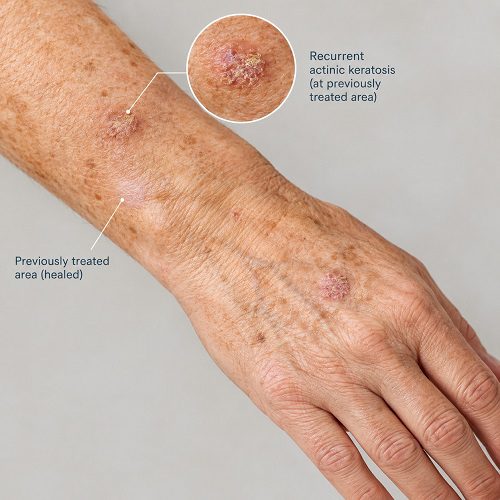
One of the most common questions people have after treatment is: can actinic keratosis come back? The answer is yes. Actinic keratosis can recur in a previously treated area, and people who have had one AK are also more likely to develop new lesions elsewhere on sun-damaged skin.
This does not necessarily mean that the original treatment failed. Actinic keratosis develops because of accumulated UV-related damage to skin cells. Treating a visible lesion removes or destroys the abnormal area, but it does not necessarily reverse all of the underlying sun damage in the surrounding skin.
Understanding why recurrence happens, what signs to watch for, and how to protect your skin can help you manage your long-term skin health.
What Is Actinic Keratosis?
What Is Actinic Keratosis? Actinic keratosis is a rough, scaly skin growth associated with chronic exposure to ultraviolet radiation. It is often found on areas of the body that receive significant sun exposure over many years.
Common locations include:
- Face
- Forehead
- Nose
- Actinic Keratosis on the Ears
- Bald scalp
- Actinic Keratosis on the Neck
- Actinic Keratosis on the Hands
- Forearms
- Actinic Keratosis on the Lips
An AK can be skin-colored, pink, red, brown, or yellowish. Some lesions are easier to feel than see because they may initially resemble a small rough patch or an area of sandpaper-like skin.
Actinic keratosis is not the same thing as skin cancer, but it is considered a precancerous lesion because some AKs can progress to cutaneous squamous cell carcinoma (SCC). The overall progression risk for an individual lesion is generally low, but people with multiple AKs have evidence of substantial cumulative sun damage and an increased risk of skin cancer.
Can Actinic Keratosis Come Back After Treatment?
Yes, can actinic keratosis come back after treatment is an important question because recurrence can occur months or years after treatment.
DermNet notes that actinic keratoses may recur after treatment and that previously treated areas can develop additional lesions.
There are several possible explanations.
First, the original lesion may not have been completely eliminated. This can happen with some Actinic Keratosis Treatments, particularly when an AK is thick or extensive.
Second, the surrounding skin may contain microscopic areas of sun damage that are not yet visible. These areas can later develop into new AKs.
Third, continued UV exposure can contribute to additional cellular damage, increasing the likelihood of developing further lesions.
For this reason, seeing another rough patch in the same general area does not automatically mean that the exact same lesion has returned. It may instead represent a new actinic keratosis developing within a chronically sun-damaged area.
Recurrent Actinic Keratosis vs. New Actinic Keratosis
The terms “recurrence” and “new lesion” can sometimes be confusing.
A recurrent actinic keratosis generally refers to an AK that returns in an area that was previously treated.
A new AK, on the other hand, develops in previously sun-damaged skin that may not have contained a visible lesion before.
From a patient’s perspective, both can look similar: a rough, scaly, persistent patch may appear again.
A dermatologist can determine whether the area appears consistent with recurrent AK, another new AK, or a different skin condition.
This distinction is important because persistent or changing lesions sometimes require further examination. Actinic keratoses can resemble certain skin cancers, and a biopsy may occasionally be needed when the diagnosis is uncertain or when a lesion does not respond to treatment.
Why Does Actinic Keratosis Recur?
1. Previous UV damage remains in the skin
The biggest reason AK can return is that treatment does not erase the history of sun exposure.
UV radiation can damage DNA within skin cells. Over many years, repeated exposure can produce areas of abnormal cell development.
Even after a visible AK has been treated, surrounding skin may still carry accumulated UV damage. DermNet describes actinic keratoses as a consequence of abnormal skin-cell development associated with UV-related DNA damage.
2. Continued sun exposure
Ongoing exposure to sunlight can contribute to additional skin damage.
This is why sun protection remains important even after successful treatment. Having an AK indicates that the skin has already experienced significant UV damage and that additional lesions may develop. The American Academy of Dermatology recommends daily sun protection for people who have had AKs.
3. Multiple areas of sun damage
Some people develop AKs in clusters or across broad areas of sun-damaged skin. Doctors may describe this as a “field” of sun damage.
In these situations, treating one visible spot may not address every abnormal area. Depending on the patient’s situation, a dermatologist may recommend treatment directed at a broader area rather than treating individual lesions alone.
4. Individual risk factors
The likelihood of developing additional AKs varies between individuals.
Risk can be influenced by factors such as cumulative UV exposure, age, previous sunburns, outdoor work or recreation, skin characteristics, and immune status.
Does Recurrence Mean the Treatment Did Not Work?
Not necessarily.
A treatment can successfully clear a particular actinic keratosis while the patient remains susceptible to developing another lesion later.
Different treatments are designed for different types and patterns of AK. Treatment options can include cryotherapy, topical medicines, curettage or other procedures, and photodynamic therapy. The appropriate approach depends on factors such as the number of lesions, their thickness, location, and the extent of surrounding sun damage.
If an AK returns, a dermatologist may recommend repeating the previous treatment or using another approach.
Persistent or recurrent lesions should be evaluated rather than repeatedly treated without professional assessment because some skin cancers can look similar to AK.
How Long Can It Take for Actinic Keratosis to Return?
There is no single timetable for recurrence.
An AK may return months or years after treatment. Some people may develop new lesions relatively quickly, while others may go for long periods without another noticeable lesion. DermNet specifically notes that AKs may recur months or years after treatment.
The timing can depend on the amount of existing sun damage, continued UV exposure, treatment type, individual risk factors, and whether other sun-damaged areas are present.
Therefore, successful treatment should not be viewed as the end of skin monitoring. Long-term observation remains important.
Signs That an Actinic Keratosis May Have Returned
A recurrent or new AK may appear as:
- A rough or sandpaper-like patch
- A persistent scaly spot
- A pink, red, brown, or skin-colored area
- A thickened or crusty lesion
- A spot that feels rough before it becomes clearly visible
- A persistent area of dryness or scaling
Some Actinic Keratosis Causes no symptoms. Others can itch, burn, or feel tender.
However, appearance alone cannot always distinguish an AK from other skin conditions.
Pay particular attention to lesions that become thicker, tender, ulcerated, rapidly enlarge, bleed, or change significantly. DermNet identifies tender, thickened, ulcerated, or enlarging lesions as features that warrant assessment because they may indicate progression toward squamous cell carcinoma.
What Should You Do If an AK Comes Back?
If you notice a rough or scaly spot returning in a previously treated location, arrange an evaluation with a dermatologist or qualified healthcare professional.
Do not assume that every returning lesion is simply another harmless AK.
Your healthcare professional may:
- Examine the lesion visually.
- Use dermoscopy to examine its structure.
- Compare it with previous examinations or photographs.
- Recommend another treatment.
- Perform a biopsy if the Actinic Keratosis diagnosis is uncertain or the lesion has concerning features.
A biopsy can help distinguish actinic keratosis from squamous cell carcinoma or another skin condition when necessary.
Can Actinic Keratosis Be Prevented From Coming Back?
There is no guaranteed way to prevent every recurrence, but prevention strategies can reduce further UV exposure and help lower the likelihood of developing additional actinic keratoses.
Use Broad-Spectrum Sunscreen
Daily sunscreen is one of the most important steps.
The American Academy of Dermatology recommends sunscreen as part of self-care for people who have had AKs. Regular sunscreen use can help reduce the development of additional AKs and may lower the risk associated with sun-damaged skin.
Choose a broad-spectrum sunscreen and apply it according to the product directions. Reapply when necessary, particularly after swimming or sweating.
Wear Protective Clothing
Sunscreen should be combined with physical protection.
Long-sleeved clothing, wide-brimmed hats, sunglasses, and other sun-protective clothing can reduce the amount of UV radiation reaching exposed skin.
Seek Shade
When possible, reduce direct sun exposure, particularly when UV levels are high.
Shade can be especially helpful during outdoor activities, but it should be combined with clothing and sunscreen because reflected and scattered UV radiation can still reach the skin.
Avoid Tanning Beds
Artificial tanning devices expose the skin to UV radiation and can contribute to cumulative skin damage.
Avoiding tanning beds is an important part of protecting skin that has already developed actinic keratosis.
Check Your Skin Regularly
Self-examination can help you notice new or changing lesions.
Look for areas that are:
- New
- Persistent
- Rough
- Scaly
- Growing
- Bleeding
- Tender
- Changing in appearance
The American Academy of Dermatology recommends regular skin self-checks and keeping dermatology appointments when advised.
Why Follow-Up Appointments Matter
People who have had actinic keratoses may be at increased risk of developing additional AKs and certain types of skin cancer.
Routine dermatology appointments allow a healthcare professional to examine previously affected areas and identify suspicious lesions early.
Follow-up frequency varies according to individual circumstances. Your dermatologist can recommend an appropriate schedule based on your history, number of lesions, treatment received, and overall risk factors.
Can Lifestyle Changes Help With Actinic Keratosis Recurrence?
Sun protection is the most important lifestyle-related strategy.
Maintaining consistent protection is more useful than relying on occasional precautions. For example, wearing sunscreen only during beach vacations may not provide the same protection as making sun protection part of your everyday routine.
Other healthy habits, such as avoiding tanning beds and regularly examining your skin, can also support long-term skin health.
Some studies have investigated nicotinamide, a form of vitamin B3, for people at high risk of developing multiple AKs. DermNet notes that nicotinamide may reduce the number and severity of AKs in some people. However, it should not be considered a replacement for sunscreen or professional medical care, and people should discuss whether it is appropriate for them with their healthcare provider.
When Should You See a Dermatologist?
Make an appointment if you notice a lesion that is persistent, returning, changing, or becoming more noticeable.
Prompt evaluation is especially important if a spot:
- Becomes thicker
- Grows rapidly
- Bleeds
- Develops an ulcer
- Becomes painful or very tender
- Develops a persistent crust
- Does not improve after treatment
- Looks noticeably different from your other AKs
These features do not automatically mean cancer is present, but they deserve professional assessment.
A lesion that appears to be a recurrent actinic keratosis may sometimes require a different treatment or additional testing.
Frequently Asked Questions
Can actinic keratosis come back after cryotherapy?
Yes. An AK can recur after cryotherapy, and new AKs can also develop in the same sun-damaged region. DermNet notes that treated lesions may recur and can sometimes be treated again using the same or a different method.
Can actinic keratosis come back after cream treatment?
Yes. Some patients may develop persistent or recurrent AKs after topical treatment. Further treatment may sometimes be appropriate, but a dermatologist should evaluate persistent lesions because skin cancer can resemble AK.
Does sunscreen prevent actinic keratosis from returning?
Consistent sun protection can help reduce the development of new AKs. The American Academy of Dermatology recommends daily sunscreen and other sun-protective habits for people who have had AKs.
Is recurrent actinic keratosis cancer?
Not necessarily. Actinic keratosis is not itself invasive skin cancer, but it is associated with an increased risk of squamous cell carcinoma. A returning lesion should be examined if it is persistent, changing, thick, painful, bleeding, or otherwise unusual.
How can I reduce Actinic Keratosis recurrence?
The main approach is to reduce further UV exposure through daily broad-spectrum sunscreen, protective clothing, shade, avoidance of tanning beds, regular skin checks, and appropriate dermatology follow-up.
Final Thoughts
So, can actinic keratosis come back? Yes. Recurrence can happen months or years after treatment, and people who have already developed AKs are also more likely to develop new lesions because the surrounding skin may have accumulated significant UV damage.
A recurrence does not automatically mean that treatment was unsuccessful. However, any returning, persistent, or changing lesion deserves attention. A dermatologist can determine whether it represents recurrent actinic keratosis, a new AK, or another skin condition.
The most useful long-term strategy is a combination of appropriate medical treatment, consistent sun protection, regular skin self-checks, and professional follow-up.
If you have previously been treated for actinic keratosis, protecting your skin every day is important—not only to help reduce additional AKs, but also to support early detection of other sun-related skin changes.
This article is for educational purposes and does not replace an examination or diagnosis from a qualified healthcare professional.