 By
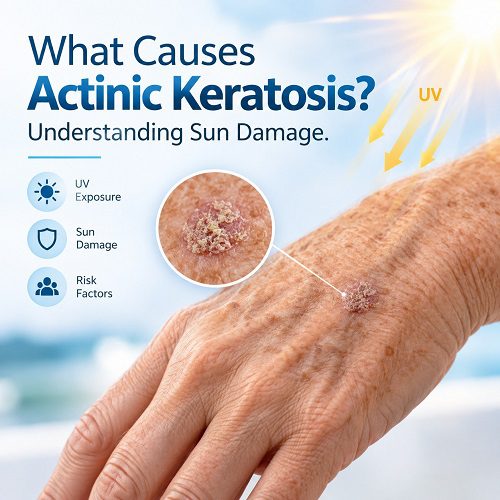
By Actinic keratosis is a common skin condition that develops when skin cells become damaged by long-term exposure to ultraviolet (UV) radiation. It usually appears as a rough, dry or scaly patch on areas of skin that receive frequent sunlight, such as the Actinic Keratosis on the Face, Actinic Keratosis on the Scalp, ears, Actinic Keratosis on the Neck, forearms and backs of the hands.
Understanding the causes of actinic keratosis can help you recognise the condition, identify your personal risk factors and take practical steps to protect your skin. Although actinic keratosis is often harmless, some lesions can develop into squamous cell carcinoma, a type of skin cancer. For this reason, persistent or changing skin lesions should be assessed by a qualified healthcare professional.
What Is Actinic Keratosis?
What Is Actinic Keratosis? Actinic keratosis, sometimes called solar keratosis, is a precancerous skin lesion caused primarily by cumulative UV damage. It occurs when repeated exposure to UV radiation damages the DNA of skin cells.
The condition usually develops gradually rather than appearing immediately after a single episode of sun exposure. Years of accumulated sun damage can cause abnormal changes in the cells within the outer layer of the skin.
An actinic keratosis may initially look like a small rough patch that is easier to feel than see. Over time, it can become more noticeable, thicker, scaly or crusted. Lesions may be skin-coloured, pink, red, tan or brown.
Actinic keratosis is more common in people who have had significant lifetime sun exposure, particularly those who spend considerable time outdoors or have experienced repeated sunburn.
The Main Causes of Actinic Keratosis
The most important of the causes of actinic keratosis is repeated exposure to ultraviolet radiation. UV radiation can damage the DNA of skin cells, and this damage can accumulate over many years.
1. Long-Term UV Exposure
Long-term UV exposure is the primary cause of actinic keratosis. Sunlight contains different types of ultraviolet radiation, including UVA and UVB rays.
UVB radiation plays an important role in sunburn and direct DNA damage, while UVA radiation penetrates deeper into the skin and contributes to long-term skin damage and ageing.
Regular exposure can gradually affect the ability of skin cells to grow and repair themselves normally. When damaged cells continue to reproduce, abnormal patches such as actinic keratoses may develop.
Importantly, UV damage is cumulative. A person does not necessarily need to experience severe sunburn every year to develop actinic keratosis. Everyday exposure accumulated over decades can contribute to the condition.
2. Cumulative Sun Damage
One of the key reasons actinic keratosis becomes more common with age is the accumulation of sun damage over a person’s lifetime.
Walking outdoors, working in the garden, playing sports, driving and spending time near reflective surfaces can all contribute to cumulative UV exposure.
Even relatively short periods of outdoor exposure can add to a person’s lifetime UV burden. Over many years, this can cause visible changes in the skin, including wrinkles, pigmentation changes, uneven texture and actinic keratoses.
This explains why actinic keratosis often appears on body parts that have received frequent sunlight over many years.
3. Repeated Sunburn
Repeated sunburn is another important contributor to the development of actinic keratosis.
A sunburn indicates that the skin has suffered significant UV injury. Multiple episodes of sunburn can increase cumulative damage to skin cells and may contribute to abnormal cellular changes later in life.
People who experienced frequent sunburn during childhood or adolescence may carry the effects of that UV damage into adulthood.
However, actinic keratosis can also develop in people who rarely experience obvious sunburn. Regular lower-level UV exposure can still accumulate over time.
4. Outdoor Work and Activities
People who spend many hours outdoors may have increased exposure to UV radiation.
Outdoor workers such as construction workers, farmers, gardeners, fishermen and landscapers may receive substantial daily sun exposure. Similarly, people who regularly participate in outdoor sports, hiking, cycling or other recreational activities may accumulate considerable UV exposure.
The duration, frequency and intensity of exposure can all influence the amount of cumulative sun damage.
Using protective clothing, shade and broad-spectrum sunscreen can help reduce ongoing exposure.
Actinic Keratosis Risk Factors
Several factors can increase the likelihood of developing actinic keratosis. These actinic keratosis risk factors often relate to the amount of UV radiation a person has received, their skin characteristics and their age.
Age
Actinic keratosis is more common in older adults because UV damage accumulates over time.
The longer skin has been exposed to sunlight, the greater the opportunity for UV-related cellular damage to occur. However, younger people can also develop actinic keratosis, particularly when they have had substantial UV exposure.
Fair Skin
People with fair skin generally have less natural melanin, the pigment that helps provide some protection against UV radiation.
Those with lighter skin, light-coloured eyes and blonde or red hair may therefore have a higher risk of developing actinic keratosis after significant sun exposure.
Having darker skin does not eliminate the risk. Actinic keratosis can occur in people of all skin tones, particularly after substantial cumulative UV exposure.
History of Sunburn
A history of repeated or severe sunburn is an important risk factor. Sunburn represents acute UV injury, and repeated episodes can contribute to cumulative skin damage.
Protecting the skin from excessive UV radiation throughout life can reduce further damage.
Frequent Outdoor Exposure
People who spend a large amount of time outdoors may receive more UV radiation than those who spend most of their time indoors.
This does not mean outdoor activity should be avoided. Instead, appropriate protection can help minimise unnecessary UV exposure.
Living in Sunny Regions
People living in areas with strong sunlight or high UV levels may receive greater cumulative exposure.
UV radiation can be significant even when temperatures are mild or the sky appears partly cloudy. Clouds do not eliminate UV radiation, so sun protection remains important throughout the year.
Weakened Immune System
People with weakened immune systems may have a higher risk of developing actinic keratoses and other skin problems.
Certain medical conditions and Actinic Keratosis Treatments can suppress immune function. Individuals in this situation should discuss appropriate skin monitoring and sun protection with their healthcare professional.
Previous Skin Cancer
A history of skin cancer may indicate significant cumulative UV exposure or increased susceptibility to UV-related skin damage.
Anyone with a previous history of skin cancer should follow their healthcare professional’s recommendations for regular skin checks and sun protection.
How UV Radiation Damages the Skin
To understand the causes of actinic keratosis, it helps to understand what UV radiation does to skin cells.
The skin continuously repairs itself. Normally, damaged cells can be repaired or removed before they cause significant problems. However, repeated UV exposure can produce DNA damage that accumulates over time.
When genetic damage affects genes responsible for controlling cell growth, some cells may begin behaving abnormally. Actinic keratosis represents an area where abnormal keratinocytes, the predominant cells in the outer layer of the skin, have developed as a result of chronic sun damage.
The process is gradual. A person may have microscopic cellular changes long before a visible lesion develops.
This is why protecting the skin today remains important even if there are no visible signs of sun damage.
Where Does Actinic Keratosis Usually Develop?
Actinic keratosis generally develops on areas that receive frequent sun exposure.
Common locations include:
- Face
- Forehead
- Scalp, particularly in people with thinning or no hair
- Ears
- Nose
- Cheeks
- Lips
- Neck
- Forearms
- Backs of the hands
- Shoulders
The location of a lesion can provide a clue about its relationship with chronic UV exposure.
For example, a rough patch on the back of the hand in a person with years of outdoor exposure may be consistent with actinic keratosis. However, other skin conditions can look similar, so a healthcare professional should make the diagnosis.
Can Actinic Keratosis Develop Without Sun Exposure?
Sun-related UV radiation is by far the most important cause of actinic keratosis. However, not every case can be explained simply by a person’s current outdoor habits.
Lifetime exposure matters. A person may have spent substantial time outdoors years or decades before the lesion becomes visible.
In addition, individual susceptibility varies. Age, skin type, immune status and previous UV exposure can all influence risk.
Artificial sources of UV radiation, particularly tanning beds, can also contribute to cumulative UV damage. Using tanning beds does not provide a safer alternative to natural sunlight.
Does Tanning Cause Actinic Keratosis?
Artificial tanning can expose the skin to significant levels of UV radiation. Repeated use can contribute to premature skin ageing and DNA damage.
Because actinic keratosis is strongly associated with cumulative UV-related damage, avoiding tanning beds is an important part of reducing unnecessary UV exposure.
A tan is not a sign that skin has become healthier. It is a response to UV exposure and indicates that the skin has been affected by radiation.
How to Reduce the Risk of Actinic Keratosis
You cannot completely reverse previous sun damage, but you can reduce additional UV exposure.
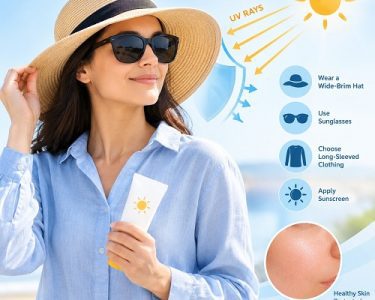
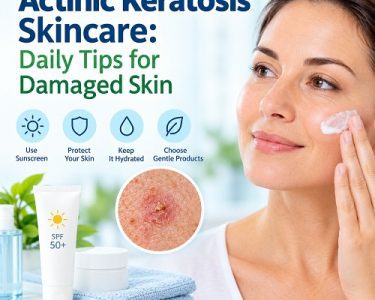
Use Broad-Spectrum Sunscreen
Apply a broad-spectrum sunscreen with an appropriate sun protection factor (SPF) to exposed skin. Reapply as directed, particularly after sweating or swimming.
Sunscreen should be used alongside other protective measures rather than treated as a licence to remain in direct sunlight for unlimited periods.
Wear Protective Clothing
Long-sleeved clothing, trousers, wide-brimmed hats and UV-protective clothing can reduce the amount of sunlight reaching the skin.
A wide-brimmed hat can provide useful protection for the face, ears and neck.
Seek Shade
Whenever possible, reduce direct exposure during periods when UV radiation is strongest.
Shade can be particularly useful during outdoor activities, although reflected UV radiation can still reach the skin.
Protect the Scalp
People with thinning hair or bald areas may have significant sun exposure on the scalp.
A hat can provide physical protection. Sunscreen may also be appropriate for exposed areas when suitable.
Avoid Tanning Beds
Avoiding artificial tanning can reduce unnecessary exposure to UV radiation and may help protect against long-term skin damage.
What Does Actinic Keratosis Look Like?
Actinic keratosis can appear differently from one person to another. Common features include a rough, dry or scaly patch of skin.
The lesion may feel similar to fine sandpaper. It can be small and subtle or become thicker and more noticeable.
Possible appearances include:
- Rough or scaly patches
- Dry areas that repeatedly return
- Pink or red patches
- Skin-coloured lesions
- Brownish patches
- Crusted areas
- Slightly raised spots
- Rough areas that are easier to feel than see
Some lesions may be tender, itchy or sensitive, while others cause no symptoms.
Because actinic keratosis can resemble eczema, psoriasis, warts or other skin conditions, professional assessment is important when a new or persistent lesion appears.
When Should You See a Doctor?
A healthcare professional should assess a skin lesion if it is new, persistent or changing.
Seek medical advice if a rough patch:
- Becomes noticeably thicker
- Grows rapidly
- Bleeds
- Becomes painful or tender
- Develops significant crusting
- Changes in appearance
- Does not heal
- Repeatedly returns in the same location
These changes do not automatically mean skin cancer is present. However, they warrant professional assessment because some actinic keratoses can progress to squamous cell carcinoma.
Can Actinic Keratosis Turn Into Skin Cancer?
Actinic keratosis is considered a precancerous skin lesion because some lesions can progress to squamous cell carcinoma.
The risk of an individual lesion progressing is generally considered low, but it is not possible to predict with certainty which lesion will change.
This is why recognising actinic keratosis and monitoring suspicious skin changes is important.
A dermatologist or other qualified healthcare professional can determine whether a lesion is likely to be actinic keratosis and recommend appropriate management.
Why Understanding the Causes of Actinic Keratosis Matters
Understanding the causes of actinic keratosis is useful because the condition is closely connected with preventable environmental exposure.
Previous sun damage cannot simply be erased, but reducing future UV exposure can help protect the skin from additional damage.
It is also important to remember that visible actinic keratoses may represent only one sign of cumulative UV injury. The surrounding skin may also have experienced microscopic or visible changes from years of exposure.
Regular self-examination and professional skin checks can therefore be valuable, particularly for people with several actinic keratosis risk factors.
Final Thoughts
The primary cause of actinic keratosis is long-term UV exposure and cumulative sun damage. Repeated sunlight, sunburn, outdoor activities, artificial tanning and individual factors such as fair skin, age and immune status can increase the likelihood of developing these rough, scaly skin lesions.
Knowing the causes of actinic keratosis can encourage better sun protection and earlier recognition of suspicious skin changes. Using sunscreen, wearing protective clothing, seeking shade and avoiding tanning beds can help reduce further UV-related damage.
If you notice a rough or scaly patch that persists, changes, becomes painful or bleeds, do not assume it is harmless. Have it examined by a qualified healthcare professional so that an appropriate diagnosis and treatment plan can be established.
Medical Disclaimer
This article is provided for general educational and informational purposes only. It is not intended to diagnose, treat, cure or prevent actinic keratosis or any other medical condition. Skin lesions can have different causes and may look similar. If you have a new, persistent, changing, painful or bleeding skin lesion, consult a qualified healthcare professional or dermatologist for proper evaluation and diagnosis.