 By
By Actinic keratosis (AK) is a common skin condition that develops after years of exposure to ultraviolet (UV) radiation. It often appears as rough, dry, scaly patches on areas exposed to sunlight, including the Actinic Keratosis on the Face, Actinic Keratosis on the Scalp, Actinic Keratosis on the Ears, hands, and forearms. Although these patches may seem harmless, actinic keratosis is considered a precancerous skin lesion because some cases can develop into squamous cell carcinoma.
Daily sun protection plays an important role in caring for skin affected by actinic keratosis. Choosing the right sunscreen can help reduce further UV damage, protect surrounding skin, and lower the risk of developing additional lesions.
However, not every sunscreen offers the same level of protection or comfort. People with actinic keratosis-prone skin should look for products that provide broad-spectrum coverage, a suitable SPF, water resistance, and a formula that feels comfortable enough for everyday use. How to choose sunscreen for actinic keratosis, which ingredients to consider, how to apply it correctly, and what additional steps can help protect sun-damaged skin.
What Is Actinic Keratosis?
What Is Actinic Keratosis? Actinic keratosis is a skin condition caused by cumulative exposure to ultraviolet radiation, mainly from sunlight. It develops when UV damage affects the DNA of skin cells, leading to abnormal cell growth.
The condition commonly affects people who have experienced frequent sun exposure over many years. It is more common in older adults, although younger individuals with significant UV exposure can also develop it.
Common Actinic Keratosis symptoms include:
- Rough or sandpaper-like skin patches.
- Dry, scaly areas that may feel more noticeable than they look.
- Pink, red, brown, or skin-coloured spots.
- Burning, itching, tenderness, or occasional discomfort.
- Lesions on the forehead, nose, ears, lips, scalp, and hands.
Actinic keratosis may develop as a single lesion or several patches across sun-exposed skin.
Because some lesions can progress into skin cancer, a dermatologist should examine suspicious or changing areas. Sunscreen helps protect against additional UV damage, but it does not remove existing actinic keratosis.
Why Is Sunscreen Important for Actinic Keratosis-Prone Skin?
People with actinic keratosis have evidence of previous UV-related skin damage. Continued exposure can contribute to additional lesions and increase the risk of skin cancer.
Using sunscreen consistently helps reduce the amount of UV radiation reaching the skin.
1. Helps Reduce Further UV Damage
UV radiation includes UVA and UVB rays. Both contribute to skin damage, although their effects differ.
UVA rays penetrate deeper into the skin and contribute to premature ageing and cellular damage. UVB rays are strongly associated with sunburn and also contribute to DNA damage.
A broad-spectrum sunscreen protects against both types of radiation.
2. Helps Prevent Additional Actinic Keratosis Lesions
Regular sunscreen use is an important part of managing skin that is prone to actinic keratosis.
It helps limit repeated UV exposure, which contributes to the development of new lesions. The American Academy of Dermatology recommends broad-spectrum SPF 30 or higher, water-resistant sunscreen for people with actinic keratosis.
3. Supports Skin Cancer Prevention
Actinic keratosis can sometimes progress to squamous cell carcinoma. Although not every lesion becomes cancerous, prevention and regular skin examinations remain important.
Sunscreen is one part of a wider skin cancer prevention strategy that also includes protective clothing, shade, and avoiding tanning.
4. Protects Surrounding Skin
Sun-damaged skin may have reduced resilience and increased sensitivity.
Daily sun protection helps protect both visible lesions and surrounding areas from further UV exposure.
What Is the Best Sunscreen for Actinic Keratosis?
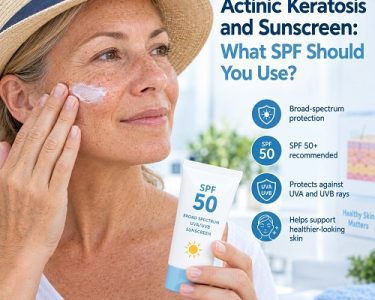
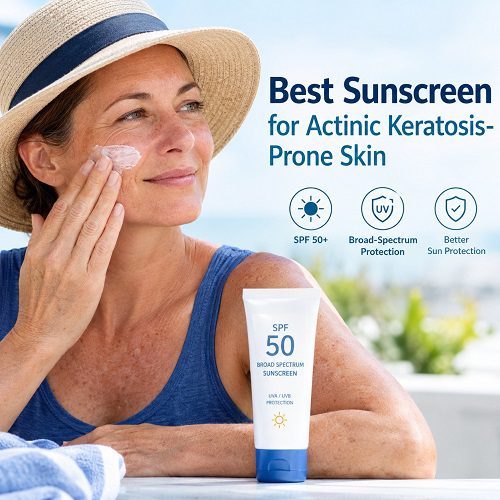
The best sunscreen for actinic keratosis-prone skin is generally a broad-spectrum, water-resistant formula with SPF 30 or higher.
For extended outdoor exposure, SPF 50 or higher is a practical choice.
Rather than choosing a product based only on its SPF number, consider its UVA protection, ingredients, texture, water resistance, and suitability for your skin.
1. Choose Broad-Spectrum Sunscreen
Broad-spectrum sunscreen protects against UVA and UVB radiation.
This is particularly important for actinic keratosis-prone skin because both types of UV radiation contribute to skin damage.
Look for the words “Broad Spectrum” on the label. In countries using the European sunscreen rating system, a high UVA protection rating, such as UVA-PF or a UVA circle mark, can also help you identify products with meaningful UVA coverage.
2. Select SPF 30 or SPF 50
SPF stands for Sun Protection Factor. It measures protection against UVB-induced skin reddening under controlled testing conditions.
The following table explains common SPF levels.
| SPF Level | General Protection | Suitability |
| SPF 15 | Lower UVB protection | Not the preferred minimum for AK-prone skin |
| SPF 30 | Filters approximately 97% of UVB | Daily sun protection |
| SPF 50 | Filters approximately 98% of UVB | Extended outdoor exposure |
| SPF 50+ | Higher labelled protection | Useful for prolonged outdoor activities |
SPF 50 does not mean you can stay outdoors all day without reapplying. Correct application and regular reapplication remain essential.
3. Consider Mineral Sunscreen
Mineral sunscreens contain active ingredients such as:
- Zinc oxide.
- Titanium dioxide.
These ingredients protect the skin by absorbing and scattering UV radiation.
Mineral sunscreen may suit people with sensitive or easily irritated skin. Zinc oxide products can also provide broad-spectrum protection when formulated and tested appropriately.
However, mineral sunscreen is not automatically better for everyone. Some formulations leave a white cast or feel thick. Choose a product that you can apply generously and consistently.
4. Look for Water Resistance
Water-resistant sunscreen is useful when you sweat, exercise, swim, or spend long periods outdoors.
Labels commonly indicate water resistance for 40 or 80 minutes.
Water resistance does not mean waterproof protection. Reapply according to the product label, especially after swimming, sweating, or towel drying.
Chemical vs Mineral Sunscreen: Which Should You Choose?
Both chemical and mineral sunscreens can protect actinic keratosis-prone skin when they provide adequate broad-spectrum coverage.
| Feature | Mineral Sunscreen | Chemical Sunscreen |
| Common ingredients | Zinc oxide, titanium dioxide | Avobenzone and other UV filters |
| Skin feel | May feel thicker | Often lightweight |
| White cast | Possible | Usually less visible |
| Sensitive skin | May suit some sensitive skin types | Depends on formulation |
| UV protection | Depends on tested formulation | Depends on tested formulation |
There is no universal winner between these sunscreen types.
If you have sensitive skin, test a small amount first. If a sunscreen causes persistent burning, itching, or irritation, discontinue it and seek advice from a dermatologist.
How to Choose Sunscreen for Different Skin Types
Actinic keratosis-prone skin can also be dry, oily, sensitive, or combination skin. Choosing a suitable texture can make daily use easier.
Sunscreen for Dry Skin
Dry skin may benefit from a cream-based sunscreen containing moisturising ingredients such as glycerin or ceramides.
These ingredients support skin hydration and help reduce the uncomfortable feeling of dryness.
Avoid products that cause stinging or excessive tightness.
Sunscreen for Oily Skin
People with oily skin may prefer lightweight lotions, gels, or fluid formulations.
Look for non-comedogenic products if you are prone to blocked pores.
A comfortable formula can make regular application easier without leaving the skin feeling excessively greasy.
Sunscreen for Sensitive Skin
Sensitive skin may respond better to fragrance-free products with simple formulations.
Mineral sunscreen containing zinc oxide or titanium dioxide may be worth considering.
If you have active skin irritation or are using prescription treatments for actinic keratosis, ask your dermatologist which sunscreen is appropriate.
Sunscreen for Mature Skin
Mature skin may have increased dryness and visible sun damage.
A moisturising broad-spectrum sunscreen can provide UV protection while supporting daily skincare.
Tinted formulations may also help reduce visible white residue.
How to Apply Sunscreen Correctly
Even a high-SPF product cannot provide its labelled protection if you apply too little or miss exposed areas.
Follow these steps for effective sun protection.
Step 1: Apply Before Going Outdoors
Apply sunscreen approximately 15 minutes before sun exposure, following the product instructions.
This gives the product time to form an even protective layer.
Step 2: Use Enough Sunscreen
For the face, the American Academy of Dermatology suggests approximately one teaspoon as a practical minimum.
For the entire exposed body, most adults need around 30 ml, although the amount depends on body size and exposed skin area.
Step 3: Cover Commonly Missed Areas
Pay particular attention to:
- Forehead and temples.
- Nose and cheeks.
- Ears.
- Neck and hairline.
- Bald or thinning scalp.
- Back of the hands.
- Forearms.
- Lips, using SPF 30 or higher lip balm.
These areas frequently receive significant sunlight and may develop actinic keratosis.
Step 4: Reapply Every Two Hours
Reapply sunscreen approximately every two hours while outdoors.
Reapply sooner after swimming, heavy sweating, or towel drying, following the product’s water-resistance instructions.
Step 5: Use Sunscreen Every Day
UV exposure occurs even when the weather is cloudy.
Make sunscreen part of your morning skincare routine rather than using it only during holidays or outdoor activities.
Additional Sun Protection Tips for Actinic Keratosis
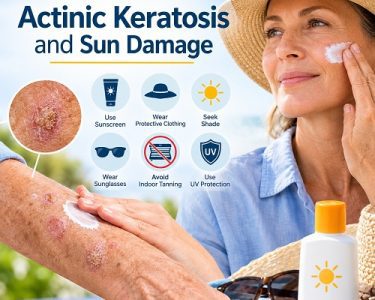
Sunscreen should not be your only form of protection. Combining different sun protection methods helps reduce overall UV exposure.
Wear Protective Clothing
Choose clothing that covers exposed skin, such as:
- Long-sleeved shirts.
- Lightweight trousers.
- Wide-brimmed hats.
- UV-protective clothing with a UPF rating.
- Sunglasses with UV protection.
A wide-brimmed hat is particularly helpful for protecting the ears, face, and scalp.
Seek Shade During Peak Sunlight
UV exposure is generally strongest around the middle of the day.
When possible, seek shade, particularly during outdoor activities.
Remember that shade does not completely eliminate UV exposure, so continue using sunscreen and protective clothing.
Avoid Tanning Beds
Artificial tanning devices expose the skin to UV radiation and contribute to skin damage.
Avoid tanning beds and deliberate tanning, especially if you have a history of actinic keratosis.
Protect Your Lips
The lower lip is a common site of actinic damage.
Use a broad-spectrum lip balm with SPF 30 or higher and reapply regularly.
Persistent roughness, scaling, or a sore on the lip requires medical assessment.
Can Sunscreen Treat Existing Actinic Keratosis?
No. Sunscreen does not directly eliminate an existing actinic keratosis lesion.
Its primary role is prevention of additional UV damage and support for long-term skin protection.
A dermatologist may recommend treatments such as:
- Cryotherapy (freezing individual lesions).
- Prescription topical medications.
- Photodynamic therapy.
- Curettage or other procedures when appropriate.
The treatment depends on the number, location, appearance, and clinical assessment of the lesions.
Do not rely on sunscreen alone to manage a suspicious or persistent patch.
Actinic Keratosis Treatment Options: Medical Care and Natural Remedies
Actinic keratosis is a common skin condition caused by long-term exposure to ultraviolet (UV) radiation. It appears as rough, dry, scaly patches, usually on sun-exposed areas such as the face, scalp, ears, and hands. Early treatment is important because some lesions can develop into squamous cell carcinoma.
There are several actinic keratosis treatment options, depending on the number, size, and location of the lesions. Dermatologists may recommend cryotherapy, topical prescription medications, photodynamic therapy, or curettage. These treatments help remove abnormal skin cells and manage existing lesions.
Natural Remedies for Actinic Keratosis
Many people explore Natural Remedies for Actinic Keratosis to support overall skin health. Gentle moisturisers, aloe vera, and a balanced diet rich in antioxidants may help maintain skin comfort. However, these approaches have not been proven to eliminate actinic keratosis or prevent skin cancer.
Daily sun protection is essential. Use broad-spectrum SPF 30 or higher sunscreen, wear protective clothing, and avoid excessive sun exposure.
Regular skin examinations also help identify suspicious changes early. If a lesion bleeds, grows, becomes painful, or does not heal, consult a dermatologist promptly.
When Should You See a Dermatologist?
Arrange a dermatology appointment if you notice a new or changing rough patch, particularly if you have a history of actinic keratosis.
Seek medical assessment for a lesion that:
- Grows rapidly.
- Becomes painful or tender.
- Bleeds repeatedly.
- Develops an open sore.
- Forms a thick or raised area.
- Does not heal.
- Changes noticeably in colour or appearance.
These features do not automatically mean cancer, but they require professional evaluation.
Regular skin examinations are particularly important for people with multiple actinic keratosis lesions or previous skin cancer.
Common Sunscreen Mistakes to Avoid
Some everyday habits can reduce the effectiveness of sun protection.
Using Sunscreen Only on Sunny Days
Clouds do not block all UV radiation. Apply sunscreen whenever you are outdoors during daylight.
Applying Too Little Product
A thin layer provides less protection than the SPF printed on the label.
Apply a generous, even amount.
Forgetting the Ears and Scalp
People often protect their faces but overlook the ears, hairline, and thinning scalp.
Use sunscreen or protective clothing on these areas.
Assuming High SPF Lasts Longer
SPF 50 does not last longer than SPF 30. Both require regular reapplication.
Using Expired Sunscreen
Check the expiry date and storage instructions. Replace sunscreen if it has expired or its texture, smell, or appearance has changed.
Relying Only on Sunscreen
No sunscreen blocks all UV radiation. Combine it with shade, hats, protective clothing, and regular skin checks.
Frequently Asked Questions
1. What SPF is best for actinic keratosis?
Broad-spectrum SPF 30 or higher is recommended for daily protection. SPF 50 or higher is a practical option for extended outdoor exposure, particularly when the product is water-resistant.
2. Is mineral sunscreen better for actinic keratosis?
Mineral sunscreen containing zinc oxide or titanium dioxide may suit people with sensitive skin. However, both mineral and chemical sunscreens can provide effective protection when they offer adequate broad-spectrum coverage.
3. Can sunscreen prevent actinic keratosis?
Regular sunscreen use helps reduce UV exposure and can lower the risk of developing additional actinic keratosis lesions. It cannot guarantee prevention or reverse all existing sun damage.
4. Should I wear sunscreen indoors?
Daily sunscreen is particularly relevant if you spend time near windows or receive sunlight through them. UVA rays can pass through ordinary window glass.
5. Can I use sunscreen after actinic keratosis treatment?
In many cases, yes. However, treated skin may be temporarily sensitive or healing. Follow your dermatologist’s instructions about when and how to apply sunscreen to the treated area.
6. Is SPF 100 necessary for actinic keratosis-prone skin?
SPF 100 is not universally necessary. Broad-spectrum SPF 30 or higher is the general recommendation, while SPF 50 or higher can be useful for extended outdoor exposure. Correct application and reapplication matter regardless of the SPF number.
7. Does sunscreen remove rough actinic keratosis patches?
No. Sunscreen protects against further UV damage but does not remove existing lesions. A dermatologist can recommend suitable treatment.
Conclusion
Choosing the right sunscreen for actinic keratosis-prone skin is an important step in protecting against additional sun damage. A broad-spectrum SPF 30 or higher formula, with SPF 50 or higher for extended outdoor activities, provides a practical foundation for daily protection.
Consider your skin type, sensitivity, preferred texture, and water-resistance needs when selecting a product. Apply sunscreen generously, cover exposed areas, and reapply every two hours while outdoors.
Combine sunscreen with protective clothing, a wide-brimmed hat, shade, and regular skin examinations.
Most importantly, remember that sunscreen supports prevention rather than treating existing actinic keratosis. A dermatologist should assess persistent, changing, bleeding, or painful lesions to determine whether further investigation or treatment is needed.
Medical Disclaimer
This article is for educational and informational purposes only. It does not replace professional medical advice, diagnosis, or treatment. Actinic keratosis requires appropriate medical assessment because some lesions can progress to skin cancer. Consult a qualified dermatologist before starting treatment or changing your skincare routine. Never delay medical evaluation because of information provided in this article.