
 By
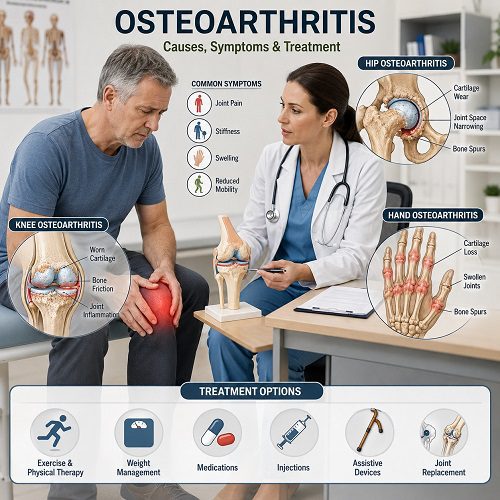
By Osteoarthritis is the most common form of arthritis and affects millions of people worldwide. It is a chronic joint condition that develops when the protective cartilage cushioning the ends of bones gradually wears away. This process leads to pain, stiffness, swelling, and reduced mobility. Although osteoarthritis can affect any joint, it most commonly occurs in the knees, hips, hands, spine, and feet.
As people age, the risk of developing osteoarthritis increases. However, aging is not the only cause. Previous injuries, obesity, genetics, and repetitive joint stress can all contribute to the development of this condition. Understanding osteoarthritis symptoms, causes, and available osteoarthritis treatment options can help individuals manage the condition effectively and maintain a better quality of life.
What is Arthritis?
Arthritis is a general term for inflammation or damage of one or more joints, causing pain, stiffness, swelling, and reduced movement. It is not a single disease—there are more than 100 different types of arthritis.
The two most common types are:
- Osteoarthritis: The most common form. It occurs when the protective cartilage that cushions the ends of bones wears down over time. It often affects the knees, hips, hands, and spine, especially with aging or after joint injuries.
- Rheumatoid arthritis: An autoimmune disease in which the body’s immune system mistakenly attacks the lining of the joints, leading to pain, swelling, and potentially permanent joint damage if untreated.
Common symptoms
- Joint pain
- Stiffness, especially in the morning
- Swelling and tenderness
- Reduced range of motion
- Warmth or redness around a joint (in some types)
Who can get arthritis?
Arthritis can affect people of all ages, including children, although it becomes more common as people get older.
What is Osteoarthritis?
Osteoarthritis is a degenerative joint disease characterized by the breakdown of cartilage within joints. Cartilage is a smooth, flexible tissue that allows bones to glide over one another without friction. When cartilage deteriorates, bones begin rubbing together, causing discomfort and damage.
Over time, joint degeneration may lead to:
- Bone spurs
- Joint inflammation
- Reduced flexibility
- Pain during movement
- Loss of joint function
Unlike autoimmune forms of arthritis such as rheumatoid arthritis, osteoarthritis is primarily caused by wear and tear on the joints.
How Common Is Osteoarthritis?
Osteoarthritis is one of the leading causes of disability among adults. It affects people of all ages but is most common in individuals over the age of 50. The prevalence continues to rise due to aging populations and increasing obesity rates worldwide.
Commonly affected joints include:
- Knees
- Hips
- Hands and fingers
- Lower back
- Neck
- Feet
The condition can affect one or multiple joints simultaneously.
Causes of Osteoarthritis
Several factors contribute to the development of osteoarthritis. In many cases, multiple risk factors work together to accelerate joint degeneration.
1. Aging
Aging is one of the strongest risk factors. As people get older, cartilage naturally becomes less resilient and more susceptible to damage.
Why Aging Matters
- Reduced cartilage repair capacity
- Decreased joint lubrication
- Increased wear and tear over time
2. Joint Injuries
Past injuries can significantly increase the risk of osteoarthritis.
Examples include:
- Sports injuries
- Fractures
- Torn ligaments
- Meniscus injuries
Even injuries that healed years earlier may eventually lead to osteoarthritis.
3. Obesity
Excess body weight places additional stress on weight-bearing joints such as the knees and hips.
Obesity contributes to:
- Increased mechanical stress
- Faster cartilage breakdown
- Greater inflammation throughout the body
Weight management is one of the most effective ways to reduce osteoarthritis progression.
4. Genetics
Family history can influence a person’s likelihood of developing osteoarthritis.
Inherited factors may affect:
- Cartilage quality
- Bone structure
- Joint alignment
- Inflammatory responses
Individuals with close relatives who have osteoarthritis may be at higher risk.
5. Repetitive Joint Stress
Certain occupations and activities involve repeated movements that place stress on specific joints.
Examples include:
- Construction work
- Farming
- Professional sports
- Repetitive lifting
- Frequent kneeling or squatting
Years of repetitive stress can contribute to cartilage damage.
6. Joint Misalignment
Abnormal joint structure can create uneven pressure across cartilage surfaces.
Examples include:
- Bowed legs
- Knock knees
- Congenital joint abnormalities
Improper alignment increases wear in affected areas.
7. Muscle Weakness
Weak muscles provide less support for joints, increasing stress and instability.
Maintaining muscle strength helps protect joints from excessive strain.
Osteoarthritis Symptoms
The severity of osteoarthritis symptoms can vary significantly between individuals. Symptoms often develop gradually and worsen over time.
1. Joint Pain
Pain is usually the most common symptom.
Pain may:
- Occur during movement
- Improve with rest
- Become more persistent as the disease progresses
2. Joint Stiffness
Morning stiffness is common and typically lasts less than 30 minutes.
Stiffness may also occur after:
- Sitting for extended periods
- Inactivity
- Long periods of rest
3. Swelling
Inflammation around affected joints can cause noticeable swelling and tenderness.
Swelling may fluctuate depending on activity levels.
4. Reduced Range of Motion
People with osteoarthritis often find it difficult to move affected joints through their full range.
Examples include:
- Difficulty bending the knee
- Trouble gripping objects
- Reduced hip mobility
5. Grinding Sensation
As cartilage wears away, bones may rub together.
This can create:
- Clicking sounds
- Popping sensations
- Grinding or cracking noises
6. Bone Spurs
Extra bone growths called osteophytes may develop around joints.
Bone spurs can:
- Cause discomfort
- Restrict movement
- Contribute to joint deformities
7. Joint Instability
Advanced osteoarthritis may weaken supporting structures, causing joints to feel unstable or prone to giving way.
Common Types of Osteoarthritis
Knee Osteoarthritis
The knee is one of the most frequently affected joints.
Symptoms include:
- Pain while walking
- Difficulty climbing stairs
- Swelling
- Knee stiffness
Hip Osteoarthritis
Hip osteoarthritis often causes pain in:
- The groin
- Buttocks
- Thigh
Symptoms may worsen after prolonged activity.
Hand Osteoarthritis
Hand osteoarthritis commonly affects:
- Finger joints
- Thumb base
People may experience:
- Reduced grip strength
- Joint enlargement
- Pain during daily tasks
Spine Osteoarthritis
Degeneration of spinal joints can lead to:
- Neck pain
- Back pain
- Reduced flexibility
- Nerve compression symptoms
Diagnosing Osteoarthritis
A healthcare provider typically diagnoses osteoarthritis using a combination of medical history, physical examination, and imaging tests.
Physical Examination
The doctor may assess:
- Joint tenderness
- Swelling
- Range of motion
- Joint stability
Imaging Studies
X-rays
X-rays can reveal:
- Joint space narrowing
- Bone spurs
- Cartilage loss
MRI
MRI scans provide detailed images of:
- Cartilage
- Ligaments
- Soft tissues
These scans are often used when symptoms are severe or unclear.
Osteoarthritis Treatment
While there is currently no cure for osteoarthritis, many effective osteoarthritis treatment options can help reduce symptoms and improve function.
1. Lifestyle Modifications
Lifestyle changes are often the foundation of treatment.
Weight Loss
Losing excess weight can significantly reduce stress on joints.
Benefits include:
- Reduced pain
- Improved mobility
- Slower joint degeneration
Regular Exercise
Exercise helps:
- Strengthen muscles
- Improve flexibility
- Maintain joint function
Recommended activities:
- Walking
- Swimming
- Cycling
- Yoga
- Stretching exercises
2. Physical Therapy
Physical therapists can develop personalized exercise programs that help:
- Improve balance
- Increase flexibility
- Strengthen muscles surrounding affected joints
Physical therapy may also reduce pain and improve mobility.
3. Medications
Several medications may help manage symptoms.
Pain Relievers
Common options include:
- Acetaminophen
- Nonsteroidal anti-inflammatory drugs (NSAIDs)
Examples:
- Ibuprofen
- Naproxen
Always use medications according to medical guidance.
Topical Treatments
Creams and gels containing pain-relieving ingredients may be applied directly to affected joints.
These products can provide localized symptom relief.
4. Joint Injections
For persistent pain, healthcare providers may recommend injections.
Corticosteroid Injections
Benefits may include:
- Reduced inflammation
- Temporary pain relief
Hyaluronic Acid Injections
These injections aim to improve joint lubrication and movement.
Results vary between individuals.
5. Assistive Devices
Supportive devices can reduce joint stress.
Examples include:
- Braces
- Orthotics
- Canes
- Walkers
These tools may improve mobility and safety.
6. Surgical Treatment
Surgery may be considered when conservative treatments fail.
Joint Replacement
Joint replacement surgery is commonly performed for:
- Knee osteoarthritis
- Hip osteoarthritis
The damaged joint surfaces are replaced with artificial components.
Joint Realignment Surgery
In some cases, surgeons may correct alignment issues to redistribute pressure across the joint.
Natural Support for Osteoarthritis
Many people explore natural approaches alongside conventional medical care.
Potential supportive strategies include:
Anti-Inflammatory Diet
Foods that may support joint health include:
- Fatty fish
- Leafy greens
- Berries
- Nuts
- Olive oil
- Whole grains
Herbal Supplements
Some individuals use herbal products designed for joint support Herbal Supplement for Arthritis.
Examples often include:
- Turmeric
- Boswellia
- Ginger
- Devil’s claw
Consult a healthcare provider before using supplements.
Heat and Cold Therapy
Heat therapy may:
- Relax muscles
- Improve circulation
Cold therapy may:
- Reduce swelling
- Numb painful areas
Preventing Joint Degeneration
Although not all cases can be prevented, healthy habits may lower the risk of joint degeneration.
Prevention tips include:
- Maintaining a healthy weight
- Staying physically active
- Strengthening muscles
- Avoiding repetitive joint strain
- Using proper body mechanics
- Protecting joints from injury
- Eating a balanced diet
Early intervention can significantly slow disease progression.
Living With Osteoarthritis
Many people successfully manage osteoarthritis and continue to lead active lives.
Helpful strategies include:
- Following treatment plans
- Staying physically active
- Monitoring symptoms
- Managing weight
- Using supportive devices when necessary
- Seeking medical advice when symptoms worsen
Regular communication with healthcare providers can help optimize treatment and maintain independence.
Conclusion
Osteoarthritis is a common degenerative joint condition that develops when cartilage gradually wears away, leading to pain, stiffness, and reduced mobility. Factors such as aging, obesity, injuries, genetics, and repetitive joint stress all contribute to its development. Recognizing osteoarthritis symptoms early allows individuals to seek appropriate care and slow the progression of joint degeneration.
Although there is no cure, numerous osteoarthritis treatment options are available, including lifestyle modifications, physical therapy, medications, injections, and surgery when necessary. Combined with healthy habits and proper medical guidance, these approaches can help reduce pain, improve joint function, and enhance overall quality of life. By taking proactive steps to protect joint health, many people can successfully manage osteoarthritis and remain active for years to come.
Disclaimer:
This article is for educational purposes only and should not replace professional medical advice, diagnosis, or treatment. Always consult a qualified healthcare provider regarding any new or changing scalp or forehead lump.