 By
The human heart depends on a carefully coordinated electrical system to maintain a regular heartbeat and pump blood efficiently throughout the body. However, problems with the heart’s electrical signals can cause abnormal heart rhythms, also known as arrhythmias. Two common types of heart rhythm disorders are atrial fibrillation (AFib) and atrial flutter.
Although these conditions affect the upper chambers of the heart, they have different electrical patterns, symptoms, and treatment considerations. Understanding Atrial Fibrillation vs atrial flutter is important because both conditions can increase the risk of serious complications, including stroke and heart failure.
Many people confuse atrial fibrillation with atrial flutter because they share similar symptoms, causes, and risk factors. However, the electrical activity responsible for each condition is different. Atrial fibrillation produces chaotic electrical signals, while atrial flutter generally involves a more organized but unusually rapid electrical circuit. Atrial Fibrillation and Atrial Flutter, including their symptoms, causes, diagnosis, treatment options, and potential complications.
What Is Atrial Fibrillation?
Atrial fibrillation, commonly called AFib, is an irregular and often rapid heart rhythm that develops when abnormal electrical signals disrupt the normal functioning of the atria, which are the two upper chambers of the heart.
Under normal circumstances, electrical signals begin in the sinoatrial (SA) node, the heart’s natural pacemaker. These signals travel through the atria, causing them to contract and push blood into the ventricles, the lower chambers of the heart.
In atrial fibrillation, electrical signals become disorganized and chaotic. Instead of contracting effectively, the atria quiver rapidly and irregularly.
As a result, the ventricles receive irregular electrical impulses, producing an irregular heartbeat.
Some people with atrial fibrillation experience noticeable symptoms, while others may have the condition without realizing it. AFib can occur in episodes or remain present for extended periods.
The condition is commonly associated with aging, high blood pressure, heart disease, obesity, diabetes, and other medical conditions.
Atrial fibrillation is clinically important because it can allow blood to pool in parts of the atria, particularly the left atrial appendage. This increases the possibility of blood clot formation. If a clot travels to the brain, it can cause an ischemic stroke.
What Is Atrial Flutter?
Atrial flutter is another type of abnormal heart rhythm that affects the atria. Like atrial fibrillation, it Atrial Fibrillation causes the upper chambers of the heart to beat faster than normal.
However, the electrical activity in atrial flutter is generally more organized.
Most typical atrial flutter cases involve a circular electrical pathway in the right atrium. This is known as a re-entry circuit. The electrical signal repeatedly travels around this pathway, causing the atria to activate rapidly.
The atrial rate is commonly around 250–350 beats per minute, although the exact rate can vary.
The atrioventricular (AV) node acts as a filter, preventing every atrial impulse from reaching the ventricles. For example, with 2:1 AV conduction, every second atrial impulse reaches the ventricles, often producing a ventricular rate of approximately 150 beats per minute.
One of the characteristic features of atrial flutter is its sawtooth appearance on an electrocardiogram (ECG), particularly in typical flutter.
Atrial flutter may occur independently or alongside atrial fibrillation. Some patients experience both conditions at different times.
Like AFib, atrial flutter can increase the risk of stroke and other cardiovascular complications.
Atrial Fibrillation vs Atrial Flutter: Key Differences
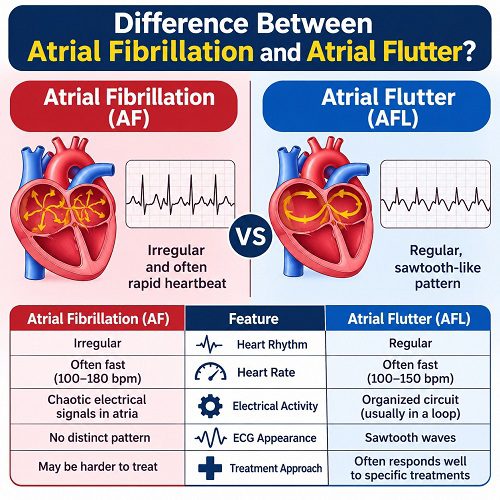
Although atrial fibrillation and atrial flutter affect the same areas of the heart, their electrical mechanisms are different. The most important distinction is that atrial fibrillation involves chaotic electrical activity, whereas atrial flutter involves a more organized, repetitive electrical circuit.
Understanding these heart rhythm differences helps healthcare professionals identify the condition and determine the most appropriate treatment.
Here are the major differences:
| Feature | Atrial Fibrillation (AFib) | Atrial Flutter |
| Electrical activity | Chaotic and disorganized | Organized and repetitive |
| Atrial rate | Very rapid and variable | Usually 250–350 beats per minute |
| Heart rhythm | Usually irregularly irregular | Often regular, depending on AV conduction |
| ECG appearance | No consistent P waves; irregular baseline | Characteristic flutter waves, often sawtooth-shaped |
| Main mechanism | Multiple disorganized electrical wavelets or triggers | Usually a re-entry electrical circuit |
| Symptoms | Palpitations, fatigue, dizziness, breathlessness | Similar symptoms, including palpitations and fatigue |
| Stroke risk | Increased | Also increased |
| Treatment | Medication, cardioversion, catheter ablation | Medication, cardioversion, catheter ablation |
| Ablation | Often involves pulmonary vein isolation | Typical flutter often treated with isthmus ablation |
Both conditions require appropriate medical assessment. The treatment plan depends on the patient’s symptoms, medical history, stroke risk, and overall heart health.
What Are the Symptoms of Atrial Fibrillation?
Atrial fibrillation symptoms can vary significantly from person to person. Some individuals experience severe symptoms, while others have no noticeable warning signs.
The symptoms may appear suddenly or develop gradually.
Common Atrial Fibrillation symptoms include:
1. Irregular heartbeat
One of the most common signs of atrial fibrillation is an irregular heartbeat. Patients may feel that their heart is racing, skipping beats, or beating unpredictably.
2. Heart palpitations
Palpitations are sensations of fluttering, pounding, or rapid beating in the chest. They may occur occasionally or continue for extended periods.
3. Shortness of breath
Because the heart may not pump blood efficiently during atrial fibrillation, some patients experience breathlessness, especially during physical activity.
4. Fatigue and weakness
An irregular heartbeat can reduce exercise tolerance and contribute to persistent tiredness. Patients may find everyday activities more exhausting than usual.
5. Dizziness and lightheadedness
Some individuals experience dizziness because of changes in heart rate and blood circulation.
6. Chest discomfort
Atrial fibrillation can sometimes cause chest pressure, discomfort, or pain. Chest pain should never be ignored because it may indicate a serious cardiovascular emergency.
Not everyone with AFib experiences symptoms. In some cases, the condition is discovered during a routine medical examination or an ECG.
What Are the Symptoms of Atrial Flutter?
The symptoms of atrial flutter are similar to those of atrial fibrillation. However, some patients experience a more regular and persistent rapid heartbeat.
Common atrial flutter symptoms include:
- Rapid heartbeat: The heart may beat faster than normal, sometimes producing a pulse around 150 beats per minute with 2:1 AV conduction.
- Heart palpitations: Patients may notice a fluttering or pounding sensation in their chest.
- Shortness of breath: Reduced cardiac efficiency can make breathing difficult, particularly during exercise.
- Fatigue: A persistently rapid heartbeat can cause tiredness and reduced physical endurance.
- Dizziness: Changes in blood circulation may cause lightheadedness or weakness.
- Anxiety: The sensation of a rapid heartbeat may cause nervousness or discomfort.
- Chest pressure: Some patients experience chest discomfort, particularly when the heart rate is very high.
Some individuals with atrial flutter do not experience noticeable symptoms. The condition may remain undiagnosed until an ECG or another heart examination is performed.
It is important to understand that symptoms alone cannot reliably distinguish atrial fibrillation from atrial flutter. An ECG is generally needed to identify the specific rhythm.
What Causes Atrial Fibrillation and Atrial Flutter?
Both atrial fibrillation and atrial flutter develop because of abnormal electrical activity in the heart. Several health conditions and lifestyle factors can contribute to these disorders.
Although their electrical mechanisms differ, they share many underlying causes and risk factors.
Common Causes of Atrial Fibrillation
Some of the most common causes and contributing factors include:
- High blood pressure: Long-term hypertension can change the structure of the heart and increase the risk of AFib.
- Coronary artery disease: Reduced blood supply to the heart can contribute to electrical abnormalities.
- Heart failure: Changes in heart structure and function may increase the likelihood of atrial fibrillation.
- Heart valve disease: Conditions affecting the heart valves can place additional pressure on the atria.
- Diabetes: Diabetes is associated with an increased risk of cardiovascular disease and AFib.
- Obesity: Excess body weight can contribute to inflammation, high blood pressure, and structural changes in the heart.
- Thyroid disorders: An overactive thyroid gland can increase heart rate and trigger abnormal rhythms.
- Alcohol consumption: Excessive alcohol intake can increase the likelihood of atrial fibrillation.
- Sleep apnea: Untreated obstructive sleep apnea is associated with an increased risk of AFib.
- Older age: The risk of developing atrial fibrillation increases with age.
Common Causes of Atrial Flutter
Atrial flutter can develop because of several similar conditions, including:
- High blood pressure
- Coronary artery disease
- Heart failure
- Previous heart surgery
- Heart valve disorders
- Congenital heart conditions
- Chronic lung disease
- Excessive alcohol consumption
- Overactive thyroid
- Age-related changes in heart tissue
In some cases, atrial flutter develops without an identifiable underlying cause.
According to the American Heart Association, atrial flutter shares several risk factors and clinical characteristics with atrial fibrillation. Both conditions can also occur in the same patient.
How Are Atrial Fibrillation and Atrial Flutter Diagnosed?
Accurate diagnosis is essential because atrial fibrillation and atrial flutter require different considerations when selecting treatment.
Doctors usually begin with a physical examination, medical history, and assessment of symptoms. They may recommend additional tests to identify the abnormal heart rhythm and evaluate possible underlying causes.
1. Electrocardiogram (ECG or EKG)
An electrocardiogram is one of the most important tests for diagnosing both conditions.
It records the electrical activity of the heart through electrodes attached to the skin.
In atrial fibrillation, the ECG usually shows:
- Absence of consistent, identifiable P waves.
- An irregularly irregular ventricular rhythm when AV conduction is variable.
- Disorganized atrial electrical activity.
In atrial flutter, the ECG may show:
- Characteristic flutter waves.
- A regular atrial activation pattern.
- A sawtooth appearance, particularly in typical atrial flutter.
- Regular or variable ventricular conduction.
These differences help healthcare professionals identify the type of arrhythmia.
2. Holter Monitor
A Holter monitor is a portable ECG device that continuously records heart activity, usually over 24–48 hours or sometimes longer.
It is particularly useful when symptoms occur intermittently and are not present during a standard ECG.
3. Event Monitor
An event monitor records heart rhythm over a longer period. It may be recommended for patients who experience occasional palpitations or unexplained dizziness.
4. Echocardiogram
An echocardiogram uses ultrasound waves to create images of the heart.
It helps doctors evaluate:
- Heart chamber size.
- Heart pumping function.
- Heart valve function.
- Structural abnormalities.
- Possible signs of heart failure.
5. Blood Tests
Blood tests may help identify conditions that contribute to abnormal heart rhythms.
Depending on the patient’s symptoms and medical history, doctors may check thyroid function, electrolytes, kidney function, and other relevant markers.
6. Electrophysiology Study
An electrophysiology study may be recommended when doctors need more detailed information about the heart’s electrical system.
This procedure uses specialized catheters to examine electrical signals and identify abnormal pathways responsible for certain arrhythmias.
Treatment Options for Atrial Fibrillation vs Atrial Flutter
Treatment for atrial fibrillation and atrial flutter focuses on controlling the heart rate, restoring or maintaining a normal rhythm when appropriate, and reducing the risk of blood clots and stroke.
The treatment approach depends on several factors, including the type of arrhythmia, symptoms, age, other medical conditions, and individual stroke risk.
Treatment for Atrial Fibrillation
The following treatment options may be considered:
1. Rate-control medications
Doctors may prescribe medications to slow the heart rate and improve symptoms.
Common examples include:
- Beta-blockers, such as metoprolol.
- Calcium channel blockers, such as diltiazem.
- Digoxin in selected patients.
These medications help control how quickly electrical signals travel from the atria to the ventricles.
2. Rhythm-control medications
Antiarrhythmic medications may be used to restore or maintain a normal heart rhythm.
Examples include amiodarone, flecainide, and dronedarone. The choice depends on the patient’s heart condition and other clinical factors.
3. Electrical cardioversion
Electrical cardioversion is a medical procedure that delivers a controlled electrical shock to the heart to restore a normal rhythm.
It is performed under medical supervision and may be recommended for patients with persistent symptoms or certain clinical situations.
4. Catheter ablation
Catheter ablation is a minimally invasive procedure that uses specialized catheters to target abnormal electrical tissue.
For atrial fibrillation, pulmonary vein isolation is a commonly used ablation technique.
It aims to prevent abnormal electrical signals from triggering AFib.
5. Blood-thinning medications
Anticoagulants may be prescribed to reduce the risk of stroke caused by blood clots.
Common examples include apixaban, rivaroxaban, dabigatran, edoxaban, and warfarin.
The need for anticoagulation depends on an individual’s stroke risk and other clinical considerations.
6. Natural Treatment for Atrial Fibrillation
Atrial fibrillation (AFib) is a common heart rhythm disorder that causes an irregular and often rapid heartbeat. While medical treatment is essential for managing this condition, certain lifestyle changes and natural approaches may help support heart health. Natural Remedies for Atrial Fibrillation can complement prescribed treatments and improve overall well-being.
One of the most effective natural approaches is maintaining a heart-healthy diet. Eating fruits, vegetables, whole grains, nuts, and omega-3-rich foods may support cardiovascular health. Regular moderate exercise, such as walking, swimming, or cycling, can also improve heart function.
Managing stress is equally important. Practices like yoga, meditation, and deep breathing may help reduce stress, which can trigger AFib episodes. Getting enough quality sleep, maintaining a healthy weight, and limiting caffeine and alcohol can also help manage symptoms.
However, natural remedies should never replace prescribed medications or medical procedures. Some herbal supplements may interact with heart medications or increase bleeding risks. Always consult a healthcare professional before trying supplements or making significant lifestyle changes.
Treatment for Atrial Flutter
Treatment for atrial flutter is similar in several ways, but catheter ablation is particularly effective for typical atrial flutter.
1. Heart rate-control medications
Beta-blockers and certain calcium channel blockers may help slow the heart rate.
However, controlling the ventricular rate can sometimes be more difficult in atrial flutter than in atrial fibrillation.
2. Antiarrhythmic medications
Doctors may prescribe medications to restore or maintain a normal heart rhythm.
The selection depends on the patient’s medical history and the presence of other heart conditions.
3. Electrical cardioversion
Electrical cardioversion can restore a normal heart rhythm in patients with atrial flutter.
It may be recommended when symptoms are significant or medication is ineffective.
4. Catheter ablation
Catheter ablation is a highly effective treatment for typical atrial flutter.
The procedure usually targets the cavotricuspid isthmus, an area of tissue involved in the electrical re-entry circuit.
By creating a small line of electrical block, doctors can interrupt the abnormal circuit and prevent typical atrial flutter from recurring.
5. Anticoagulation therapy
Patients with atrial flutter may also require anticoagulant medications to reduce the risk of stroke.
The 2023 ACC/AHA/ACCP/HRS guideline recommends assessing anticoagulation needs in atrial flutter using the same thromboembolic risk profile applied to atrial fibrillation. [2]
Can Atrial Fibrillation and Atrial Flutter Cause Serious Complications?
Yes. Both conditions can lead to serious health complications if they are not properly diagnosed and managed.
Although atrial flutter may appear more organized than atrial fibrillation, this does not mean it is harmless.
Some important complications include:
1. Stroke
Stroke is one of the most serious complications associated with both conditions.
When the atria do not contract normally, blood may collect in certain areas of the heart. This can increase the possibility of blood clot formation.
If a clot travels through the bloodstream and reaches the brain, it can block blood flow and cause an ischemic stroke.
Doctors assess individual stroke risk using clinical risk factors, often with a scoring system such as CHA₂DS₂-VASc.
Anticoagulant medication may be recommended to reduce this risk.
2. Heart Failure
A persistently rapid or abnormal heartbeat can weaken the heart muscle over time.
When the heart cannot pump blood efficiently, fluid may accumulate in the lungs and other parts of the body.
Common symptoms of heart failure include:
- Swelling in the legs and ankles.
- Shortness of breath.
- Persistent fatigue.
- Difficulty breathing when lying down.
- Reduced exercise tolerance.
3. Cardiomyopathy
Long-lasting rapid heart rhythms can sometimes cause tachycardia-induced cardiomyopathy.
This condition occurs when prolonged rapid heart activity weakens the heart muscle and reduces its pumping ability.
The condition may improve when the underlying abnormal rhythm is successfully controlled.
4. Reduced Quality of Life
Frequent palpitations, dizziness, fatigue, and breathlessness can interfere with everyday activities.
Some patients experience anxiety because of unpredictable episodes of abnormal heart rhythm.
Early diagnosis and appropriate treatment can help improve symptoms and quality of life.
Can Atrial Fibrillation Turn Into Atrial Flutter?
Atrial fibrillation and atrial flutter are separate heart rhythm disorders, but they are closely related.
A person can experience both conditions at different times. In some patients, atrial fibrillation may alternate with atrial flutter.
Both disorders can develop because of similar changes in the heart’s electrical system and underlying cardiovascular conditions.
For example, a patient may initially experience atrial flutter and later develop atrial fibrillation.
It is also possible for atrial fibrillation to occur after successful catheter ablation for typical atrial flutter.
This is why patients may require continued heart rhythm monitoring even after successful treatment.
Importantly, successful atrial flutter ablation does not automatically eliminate the risk of future atrial fibrillation or stroke. Decisions about ongoing anticoagulation should be based on individual risk assessment and medical advice. [2]
Which Is More Serious: Atrial Fibrillation or Atrial Flutter?
There is no simple answer because the seriousness of either condition depends on the patient’s overall health, symptoms, heart function, and risk of complications.
Atrial fibrillation is generally associated with a significant risk of stroke and may become a long-term condition requiring ongoing management.
Atrial flutter can also cause stroke, heart failure, and other complications. However, typical atrial flutter is often highly responsive to catheter ablation.
The important differences are:
- Atrial fibrillation: Usually involves chaotic electrical activity and an irregular heartbeat.
- Atrial flutter: Usually involves an organized electrical circuit and may produce a regular, rapid heartbeat.
- Stroke risk: Both conditions require appropriate assessment of thromboembolic risk.
- Treatment success: Typical atrial flutter often responds very well to catheter ablation, while atrial fibrillation may require more complex or repeated treatment.
Neither condition should be ignored. Both require an appropriate medical evaluation.
How Can You Reduce the Risk of Atrial Fibrillation and Atrial Flutter?
Although not all cases can be prevented, certain lifestyle changes can help reduce the risk of developing atrial arrhythmias and improve overall cardiovascular health.
Consider the following recommendations:
1. Control blood pressure
High blood pressure is an important risk factor for both atrial fibrillation and atrial flutter. Regular monitoring and appropriate treatment can help protect the heart.
2. Maintain a healthy weight
Excess body weight is associated with structural and electrical changes in the heart. Maintaining a healthy weight may help reduce the risk of atrial fibrillation.
3. Limit alcohol consumption
Excessive alcohol intake can trigger abnormal heart rhythms. Reducing alcohol consumption may help lower the risk of AFib episodes.
4. Exercise regularly
Regular physical activity supports cardiovascular health. However, exercise intensity should be appropriate for individual health conditions.
5. Manage diabetes
Keeping blood glucose levels under control can help reduce cardiovascular complications.
6. Treat sleep apnea
Untreated sleep apnea can contribute to abnormal heart rhythms. Patients experiencing loud snoring, interrupted breathing during sleep, or excessive daytime sleepiness should discuss evaluation with a healthcare professional.
7. Attend regular medical checkups
Regular examinations can help identify high blood pressure, thyroid disorders, diabetes, and other conditions associated with abnormal heart rhythms.
Lifestyle changes are helpful, but they do not replace medical treatment when atrial fibrillation or atrial flutter has already been diagnosed.
When Should You Seek Medical Attention?
You should consult a healthcare professional if you experience repeated palpitations, an unexplained rapid heartbeat, dizziness, unusual fatigue, or shortness of breath.
Early evaluation can help identify an underlying heart rhythm disorder and prevent potential complications.
Medical emergency
Seek emergency medical care immediately if you experience:
- Severe chest pain or pressure.
- Sudden difficulty breathing.
- Fainting or loss of consciousness.
- Sudden weakness or numbness on one side of the body.
- Sudden difficulty speaking or understanding speech.
- Sudden vision loss or severe unexplained dizziness.
These symptoms may indicate a heart attack, stroke, or another serious medical emergency. Do not wait for symptoms to disappear.
Frequently Asked Questions (FAQs)
1. What is the main difference between atrial fibrillation and atrial flutter?
The main difference is the electrical activity in the upper chambers of the heart. Atrial fibrillation causes chaotic and irregular electrical signals, whereas atrial flutter usually involves an organized electrical circuit that produces rapid atrial activity.
2. Is atrial flutter more regular than atrial fibrillation?
Yes. Atrial flutter generally produces a more organized atrial rhythm. Depending on how electrical signals pass through the AV node, the ventricular heartbeat may also be regular. Atrial fibrillation usually produces an irregularly irregular ventricular rhythm.
3. Can atrial flutter cause a stroke?
Yes. Atrial flutter can increase the risk of blood clot formation and stroke. Doctors assess stroke risk and may recommend anticoagulant medication depending on individual risk factors.
4. Which condition is easier to treat?
Typical atrial flutter is often easier to treat successfully with catheter ablation because its electrical circuit is usually well defined. Atrial fibrillation can be more complex and may require ongoing medication, lifestyle management, and sometimes repeat ablation procedures.
5. Can a person have atrial fibrillation and atrial flutter together?
Yes. Both conditions can occur in the same person, either at different times or as part of a changing pattern of atrial arrhythmias.
6. Can atrial fibrillation and atrial flutter go away permanently?
Both conditions can sometimes be controlled successfully with treatment. Typical atrial flutter has a high rate of successful treatment with catheter ablation. Atrial fibrillation can also improve significantly after treatment, but recurrence is possible. Continued monitoring may be necessary.
7. Does atrial flutter always require medication?
Not necessarily. Treatment depends on symptoms, heart rate, stroke risk, and the patient’s medical condition. Some patients may benefit from catheter ablation, while others may need medication or a combination of treatments.
Conclusion
Understanding Atrial Fibrillation vs atrial flutter is important because these two heart rhythm disorders may produce similar symptoms but have different electrical mechanisms.
Atrial fibrillation involves chaotic electrical signals that cause the atria to quiver irregularly. In contrast, atrial flutter usually involves a more organized electrical circuit that causes rapid atrial contractions.
Both conditions can cause palpitations, dizziness, fatigue, shortness of breath, and an increased risk of stroke. An ECG is one of the most effective ways to distinguish between them and guide further medical evaluation.
Although treatment options include medications, electrical cardioversion, anticoagulation, and catheter ablation, the best approach depends on each patient’s individual condition.
Recognizing symptoms early, managing cardiovascular risk factors, and following medical advice can help reduce complications and support long-term heart health.
Medical disclaimer
This article is intended for educational and informational purposes only. It should not replace professional medical advice, diagnosis, or treatment. Medical claims and treatment recommendations should be reviewed by a qualified cardiologist before publication.
Medical References
The following reputable medical sources can support the medical information presented in this article.
- American Heart Association (AHA)
What Is Atrial Flutter?
Explains atrial flutter, its symptoms, causes, risk factors, and treatment options.
Read the American Heart Association guide
- American College of Cardiology (ACC), American Heart Association (AHA), and Heart Rhythm Society (HRS)
2023 Guideline for the Diagnosis and Management of Atrial Fibrillation.
Provides clinical recommendations concerning diagnosis, stroke prevention, anticoagulation, catheter ablation, and management of atrial fibrillation.
Read the 2023 clinical guideline
- European Society of Cardiology (ESC)
2019 ESC Guidelines for the Management of Patients With Supraventricular Tachycardia.
Provides information about atrial flutter mechanisms, ECG characteristics, diagnosis, and treatment.
- Mayo Clinic
AFib and Atrial Flutter: What’s the Difference?
Provides a patient-friendly explanation of the differences between atrial fibrillation and atrial flutter.
- American Heart Association / American College of Cardiology
2023 Recommendations for Catheter Ablation and Anticoagulation.
Provides additional clinical recommendations about catheter ablation and stroke prevention in patients with atrial arrhythmias.