 By
Atrial fibrillation (AFib or AF) is a common heart rhythm disorder that causes the upper chambers of the heart, known as the atria, to beat irregularly and often rapidly. This can interfere with the normal flow of blood through the heart and increase the risk of blood clots, stroke and other cardiovascular complications.
The types of atrial fibrillation are mainly classified according to how long an episode lasts, whether the irregular rhythm stops on its own, and whether treatment is used to restore a normal heart rhythm. The main categories include paroxysmal, persistent, long-standing persistent and permanent atrial fibrillation. Doctors may also describe AF as first-diagnosed when it is identified for the first time.
Although these categories share similar symptoms, they can differ in duration, progression and treatment approach. Learning about each type can help you understand a diagnosis, recognise possible warning signs and discuss appropriate care with your healthcare professional. The different types of atrial fibrillation, their symptoms, Atrial Fibrillation potential causes, diagnosis and treatment options.
What Is Atrial Fibrillation?
Atrial fibrillation occurs when disorganised electrical signals affect the atria, causing them to quiver rather than contract in a coordinated way. As a result, the heart may pump blood less efficiently, and the heartbeat can become irregular.
Some people experience noticeable symptoms, while others have no obvious warning signs. Atrial fibrillation may occur occasionally, continue for several days or persist for months or years.
Common Atrial Fibrillation symptoms include:
- A rapid, irregular or fluttering heartbeat.
- Palpitations or a pounding sensation in the chest.
- Shortness of breath.
- Fatigue or reduced exercise tolerance.
- Dizziness or light-headedness.
- Weakness or reduced stamina.
- Chest discomfort.
Not everyone experiences these symptoms. Some people discover they have atrial fibrillation during a routine medical examination or heart rhythm test.
Atrial fibrillation is important to diagnose because it can increase the risk of stroke and may contribute to heart failure. Appropriate treatment can help control symptoms, manage cardiovascular risks and reduce complications.
What Are the Main Types of Atrial Fibrillation?
Doctors generally classify atrial fibrillation by the pattern and duration of the abnormal heart rhythm. The classification helps healthcare professionals describe the condition and consider appropriate treatment.
The principal categories are:
- First-diagnosed atrial fibrillation: AF identified for the first time.
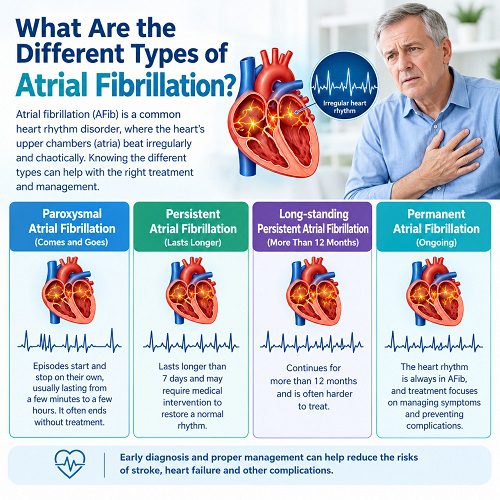
- Paroxysmal atrial fibrillation: AF that stops spontaneously or with treatment within seven days of onset.
- Persistent atrial fibrillation: AF that continues beyond seven days or requires intervention to end.
- Long-standing persistent atrial fibrillation: Continuous AF lasting at least 12 months when a rhythm-control strategy remains under consideration.
- Permanent atrial fibrillation: AF for which the patient and doctor have jointly decided not to pursue further attempts to restore and maintain a normal rhythm.
These categories are based on clinical definitions. They do not necessarily describe the severity of symptoms or the person’s overall risk.
1. Paroxysmal Atrial Fibrillation
Paroxysmal atrial fibrillation is an intermittent form of AF. Episodes begin and end, and the heart may return to its normal rhythm without treatment. Episodes can also be stopped with medical intervention.
Under widely used clinical definitions, paroxysmal AF ends within seven days of onset. Many episodes stop much sooner, sometimes within a few hours. The frequency varies: some people experience occasional episodes, while others experience them regularly.
Symptoms of paroxysmal atrial fibrillation
Atrial Fibrillation Symptoms may begin suddenly and disappear when the episode ends. They can include:
- Sudden heart palpitations.
- A racing or irregular heartbeat.
- Breathlessness during ordinary activities.
- Dizziness or light-headedness.
- Unusual tiredness.
- Anxiety or a feeling of unease during an episode.
Some Atrial Fibrillation episodes cause no noticeable symptoms. This means a person may have AF without realising it.
What can trigger an episode?
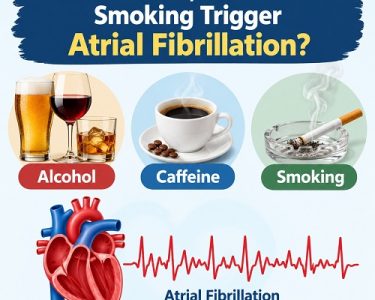
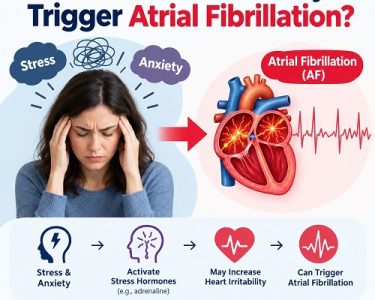
Potential triggers and contributing factors include alcohol consumption, poor sleep, dehydration, emotional stress and excessive stimulant intake. However, triggers vary between individuals, and an episode may occur without an obvious cause.
Underlying conditions such as high blood pressure, sleep apnoea, thyroid disorders and heart disease can also contribute to AF.
How is it managed?
Treatment depends on symptoms, recurrence, other medical conditions and the risk of stroke. A doctor may recommend medicines to control heart rate, antiarrhythmic medicines to maintain normal rhythm, or catheter ablation in suitable patients.
Important: Episodes stopping on their own does not mean the condition is harmless. Stroke prevention decisions depend on individual risk factors, not simply on whether AF occurs occasionally.
2. Persistent Atrial Fibrillation
Persistent atrial fibrillation occurs when the abnormal heart rhythm continues beyond seven days or does not stop on its own and requires intervention to restore a normal rhythm.
Unlike paroxysmal AF, persistent AF is less likely to end spontaneously once it has continued for an extended period. It may require medication or an electrical procedure called cardioversion.
Common symptoms
The symptoms are often similar to those associated with other forms of AF, but some people experience them for longer periods.
Possible symptoms include:
- Ongoing or recurrent palpitations.
- Fatigue throughout the day.
- Shortness of breath during physical activity.
- Reduced ability to exercise.
- Dizziness or weakness.
- Difficulty completing normal daily activities.
Some people remain relatively symptom-free even while their heart rhythm is abnormal.
What causes persistent AF?
Persistent AF may be associated with long-term high blood pressure, coronary artery disease, heart valve disorders, obesity, diabetes, sleep apnoea and advancing age.
Changes in the structure and electrical properties of the atria may make it harder for the heart to return to a normal rhythm naturally.
Treatment options
Treatment may involve several approaches, depending on the person’s condition:
- Rate control: Medicines help slow the heart rate.
- Rhythm control: Medicines or procedures aim to restore and maintain a normal rhythm.
- Electrical cardioversion: A controlled electrical shock is used to restore a normal rhythm.
- Catheter ablation: A procedure targets areas responsible for abnormal electrical signals.
- Stroke prevention: Anticoagulant medication may be recommended according to individual risk.
Doctors consider symptom burden, duration of AF, other health conditions and the benefits and risks of each option before choosing a treatment plan.
3. Long-Standing Persistent Atrial Fibrillation
Long-standing persistent atrial fibrillation is a form of AF in which the abnormal rhythm continues continuously for at least 12 months while a strategy to restore normal heart rhythm remains under consideration.
It differs from permanent AF because doctors and patients may still consider rhythm-control treatments, including cardioversion or catheter ablation.
Symptoms and possible complications
Symptoms depend on the person’s heart rate, general health and other medical conditions. Some people experience persistent palpitations, fatigue and breathlessness, while others notice little difference in their daily activities.
When AF continues for a long time, changes in the heart’s structure and electrical activity may make it more difficult to restore and maintain a normal rhythm. In some cases, a persistently rapid heart rate can weaken the heart muscle and contribute to heart failure.
Long-standing AF also requires careful assessment of stroke risk, even when symptoms are mild or absent.
How is it treated?
Treatment may include heart-rate control, anticoagulant medication when indicated, lifestyle changes and rhythm-control procedures in selected patients.
Catheter ablation may be considered when the expected benefits justify the risks. Its suitability depends on factors such as the duration of AF, the condition of the atria, previous treatment and the patient’s preferences.
A cardiologist may also review whether restoring a normal rhythm is likely to improve symptoms or heart function.
Long-standing persistent AF does not automatically mean that treatment options have been exhausted. The best approach depends on an individual assessment and shared decision-making.
4. Permanent Atrial Fibrillation
Permanent atrial fibrillation describes a treatment decision rather than simply a particular duration of an irregular heartbeat.
In this situation, the patient and healthcare professional agree that further attempts to restore and maintain a normal heart rhythm will not be pursued. Instead, treatment focuses on managing the heart rate, preventing stroke when indicated and improving quality of life.
Symptoms of permanent AF
Possible symptoms include:
- An irregular heartbeat.
- Persistent fatigue.
- Reduced exercise tolerance.
- Breathlessness during activity.
- Dizziness or weakness.
Some people have few symptoms and continue many of their usual activities. Others need treatment to manage symptoms or associated heart conditions.
Treatment and ongoing care
Permanent AF does not mean that the condition is left untreated. Ongoing management may include:
- Heart-rate control: Medicines help prevent the heart from beating too quickly.
- Stroke prevention: Doctors assess whether anticoagulants are appropriate.
- Management of related conditions: High blood pressure, diabetes, sleep apnoea and heart failure may need treatment.
- Lifestyle support: Regular physical activity, suitable weight management and limiting alcohol can help improve overall cardiovascular health.
- Regular reviews: Healthcare professionals monitor symptoms, medication effects and changes in heart function.
A permanent AF classification can be reconsidered if circumstances change and the patient and doctor decide to explore rhythm restoration again.
5. First-Diagnosed Atrial Fibrillation
First-diagnosed atrial fibrillation means that AF has been documented for the first time. It does not necessarily mean the abnormal rhythm has only just started.
A person may have experienced brief palpitations for months without seeking medical advice, or AF may be discovered during a routine examination.
The first diagnosis is an opportunity to assess the person’s cardiovascular health and identify any underlying conditions that may contribute to the abnormal rhythm.
Doctors may recommend:
- An electrocardiogram (ECG) to document the heart rhythm.
- Blood tests to assess thyroid function and other possible contributing factors.
- An echocardiogram to examine the heart’s structure and function.
- Ambulatory heart monitoring if episodes are intermittent.
- Assessment of stroke risk and the need for preventive treatment.
After diagnosis, the healthcare professional determines the AF pattern and develops an appropriate management plan. First-diagnosed AF can subsequently be classified as paroxysmal, persistent or another pattern as more information becomes available.
What Is the Difference Between the Types of Atrial Fibrillation?
The main difference is how the abnormal rhythm behaves over time and whether the treatment plan includes attempts to restore a normal rhythm.
| Type | Main characteristic |
| First-diagnosed AF | Identified for the first time |
| Paroxysmal AF | Stops spontaneously or with intervention within seven days |
| Persistent AF | Continues beyond seven days or requires intervention to end |
| Long-standing persistent AF | Continuous for at least 12 months while rhythm control remains an option |
| Permanent AF | Patient and doctor have agreed not to pursue further rhythm restoration |
These categories describe the rhythm pattern and treatment approach rather than providing a simple ranking from mild to severe. A person with intermittent AF can still have significant stroke risk, while someone with continuous AF may experience relatively few symptoms.
Can Atrial Fibrillation Progress From One Type to Another?
Yes. Some people experience paroxysmal AF before developing persistent or long-standing persistent AF. However, progression does not occur in every patient, and the pattern can vary over time.
Changes in the atria, ageing, high blood pressure, obesity, diabetes, sleep apnoea and other cardiovascular conditions may contribute to the progression of AF.
Early assessment and appropriate management can help address risk factors and reduce complications. Depending on the individual, treatment may include managing underlying conditions, controlling heart rate, preventing stroke and considering rhythm-control strategies.
It is not possible to predict an individual’s course based on the AF category alone. Regular follow-up helps doctors reassess symptoms, heart function and treatment needs.
How Is Atrial Fibrillation Diagnosed?
Doctors use a combination of medical history, examination and heart rhythm testing to diagnose atrial fibrillation.
Electrocardiogram (ECG)
An ECG records the heart’s electrical activity. It is a key test for confirming AF when the abnormal rhythm is present during the recording.
Holter monitor or other heart monitoring
A portable monitor records heart rhythm over an extended period. It can help detect intermittent episodes that may not appear during a short ECG.
Blood tests
Blood tests can help identify contributing conditions, such as thyroid problems, and assess other aspects of health relevant to treatment.
Echocardiogram
An echocardiogram uses ultrasound to examine the heart’s structure, pumping function and valves.
Doctors may also review medications, alcohol intake, sleep patterns and other possible triggers. Wearable devices can flag a possible irregular rhythm, but a notification alone does not establish a diagnosis; appropriate ECG confirmation is important.
What Are the Risks Associated With Different Types of Atrial Fibrillation?
All types of atrial fibrillation can carry health risks. The level of risk depends on several factors, including age, medical history, other cardiovascular conditions and the duration and frequency of episodes.
Stroke
AF can allow blood to pool in the atria, increasing the chance of blood clot formation. If a clot travels to the brain, it can cause a stroke. Doctors assess individual stroke risk to determine whether anticoagulant medication is appropriate.
Heart failure
A persistently rapid heart rate can weaken the heart muscle. AF can also worsen existing heart failure, while heart failure itself increases the likelihood of developing AF.
Reduced quality of life
Frequent palpitations, fatigue, breathlessness and anxiety about episodes may interfere with sleep, work, exercise and everyday activities.
Other cardiovascular problems
AF may occur alongside coronary artery disease, high blood pressure and heart valve disorders. Managing these conditions is an important part of long-term care.
Prompt diagnosis and appropriate treatment can help reduce complications. Seek emergency medical assistance if you experience chest pain, severe shortness of breath, fainting or signs of stroke, such as sudden facial weakness, arm weakness or difficulty speaking.
Can Lifestyle Changes Help Manage Atrial Fibrillation?
Lifestyle changes can support heart health and complement medical treatment. They cannot reliably eliminate AF or replace prescribed medication.
Consider the following measures:
- Manage blood pressure: Follow your healthcare professional’s advice and monitor blood pressure as recommended.
- Maintain a healthy weight: If you are overweight, gradual, sustainable weight loss may help reduce AF burden.
- Exercise regularly: Choose suitable physical activity based on your health and your doctor’s advice.
- Limit alcohol: Alcohol can trigger AF episodes in some people. Discuss appropriate limits or avoidance with your healthcare professional.
- Address sleep apnoea: Seek assessment if you snore heavily, experience interrupted breathing during sleep or feel excessively tired during the day.
- Avoid smoking: Stopping smoking supports cardiovascular health.
- Get adequate sleep: A consistent sleep schedule may help support overall health.
- Attend follow-up appointments: Report changes in symptoms and discuss whether your treatment remains appropriate.
Do not stop anticoagulants, heart-rate medicines or antiarrhythmic medication without medical advice. Herbal supplements can also interact with prescribed medicines, so discuss them with your doctor or pharmacist before use.
Natural Treatment for Atrial Fibrillation
Natural Remedies for Atrial Fibrillation may help support heart health and complement medical treatment. Atrial fibrillation (AFib) is an irregular heart rhythm that can increase the risk of stroke and other cardiovascular complications. Although lifestyle changes can help manage risk factors, natural treatments cannot reliably cure AFib or replace prescribed medication.
1. Follow a Heart-Healthy Diet
Eat a balanced diet rich in vegetables, fruits, whole grains, legumes, nuts and oily fish. Limit excessive salt, highly processed foods and unhealthy fats to support healthy blood pressure and cardiovascular function.
2. Exercise Regularly
Regular, moderate physical activity may improve cardiovascular health and help maintain a healthy weight. Choose activities suited to your fitness level and consult your healthcare professional before starting a new exercise programme.
3. Manage Stress and Sleep
Relaxation techniques, gentle yoga and deep breathing may help reduce stress. Maintain a consistent sleep schedule and seek medical advice if you experience symptoms of sleep apnoea.
4. Limit Alcohol and Stimulants
Alcohol can trigger AFib episodes in some people. Limit or avoid alcohol, and discuss caffeine consumption with your doctor if it worsens your symptoms.
5. Consider Supplements Carefully
Herbal products and supplements may interact with heart medicines and blood thinners. Always consult your healthcare professional before using them.
When Should You See a Doctor?
Arrange a medical assessment if you experience recurrent palpitations, unexplained fatigue, dizziness or breathlessness. Even if symptoms disappear, an intermittent rhythm problem may require investigation.
Seek emergency care for chest pain, severe breathing difficulty, fainting or possible stroke symptoms. Do not wait for the symptoms to resolve on their own.
If you already have atrial fibrillation, contact your healthcare professional if your symptoms become more frequent, your exercise tolerance decreases or your medication Atrial Fibrillation causes concerning side effects.
Conclusion
The types of atrial fibrillation include first-diagnosed, paroxysmal, persistent, long-standing persistent and permanent AF. Each category describes a different aspect of the abnormal heart rhythm or the approach to treatment.
Paroxysmal AF comes and goes, whereas persistent AF continues for longer and may require intervention. Long-standing persistent AF lasts at least 12 months when rhythm control remains an option. Permanent AF describes a shared decision to stop further attempts at restoring a normal rhythm.
Understanding these differences can help you discuss your diagnosis and treatment options with a healthcare professional. Regardless of the type, appropriate monitoring, stroke-risk assessment and management of underlying conditions are essential for protecting long-term health.
Medical disclaimer
This article is for general educational purposes only and is not a substitute for professional medical advice, diagnosis or treatment. Atrial fibrillation requires individual assessment by a qualified healthcare professional. Do not change or stop prescribed medication without consulting your doctor.
Medical References
These reputable medical sources can support the article and provide further reading for users.
- National Heart, Lung, and Blood Institute (NHLBI). Atrial Fibrillation: Types. Explains the major AF categories and their characteristics. Read the NHLBI guide.
- European Society of Cardiology (ESC). 2024 ESC Guidelines for the Management of Atrial Fibrillation. Provides clinical definitions and current management principles. Read the clinical guidelines.
- American College of Cardiology / American Heart Association (ACC/AHA). 2023 Guideline for the Diagnosis and Management of Atrial Fibrillation. Covers diagnosis, stroke prevention and treatment options. Read the guideline overview.
- American Heart Association (AHA). What Are the Symptoms of Atrial Fibrillation? Explains common symptoms and important warning signs. Read the AHA guide.