 By
By Tanning may give the skin a darker appearance, but it does not mean the skin is healthier. A tan is a response to ultraviolet (UV) radiation, and repeated UV exposure can gradually cause skin damage. Over time, this damage may contribute to changes such as premature skin ageing, uneven pigmentation, and actinic keratosis (AK).
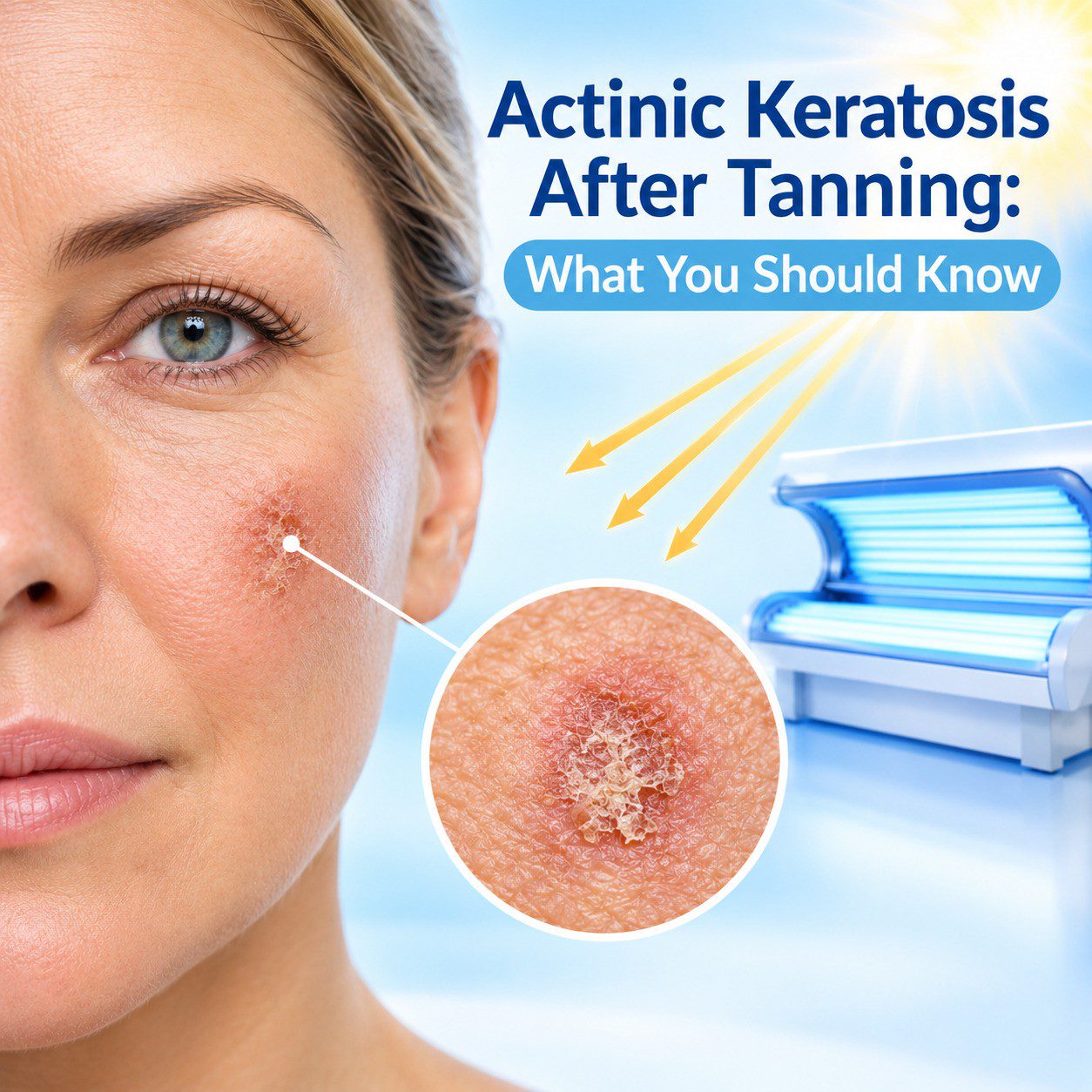
Actinic keratosis from tanning can develop after repeated exposure to ultraviolet radiation from the sun or indoor tanning equipment. Actinic keratosis is considered a precancerous skin growth because some lesions can develop into squamous cell carcinoma, a type of skin cancer.
Understanding the connection between tanning, UV exposure, and actinic keratosis can help you recognise suspicious skin changes and take steps to protect your skin.
What Is Actinic Keratosis?
What Is Actinic Keratosis? Actinic keratosis is a rough, scaly or crusty area of skin that develops because of long-term damage from ultraviolet radiation. It is sometimes called solar keratosis.
These lesions commonly appear on areas of the body that receive frequent sun exposure, including the:
- Actinic Keratosis on the Face
- Actinic Keratosis on the Ears
- Actinic Keratosis on the Neck
- Actinic Keratosis on the Scalp, particularly when hair is thinning
- Forehead
- Actinic Keratosis on the Hands
- Forearms
- Actinic Keratosis on the Lips
An actinic keratosis may appear as a small rough patch that is easier to feel than see. It can be red, pink, brown, tan, grey, white or close to the natural colour of the skin. Some lesions may itch, burn, sting or become tender.
Although an individual actinic keratosis may look harmless, it should not automatically be dismissed as a simple age spot, dry patch or irritation. A dermatologist can determine whether a skin change is an actinic keratosis or another condition.
Can Tanning Cause Actinic Keratosis?
Yes. Repeated UV exposure from both natural sunlight and indoor tanning can contribute to the development of actinic keratosis.
The American Academy of Dermatology explains that Actinic Keratosis Causes include severe skin damage from UV light from the sun or indoor tanning equipment, such as tanning beds and sunlamps.
This means actinic keratosis from tanning is not simply about one tanning session. Instead, the concern is cumulative UV-related skin damage over time.
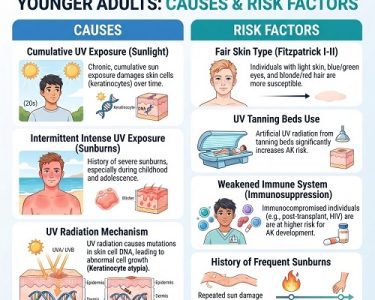
When UV radiation reaches the skin, it can damage cells. The body can repair some of this damage, but repeated exposure can allow damage to accumulate. Eventually, abnormal changes may develop in the skin.
A person who has regularly tanned may therefore notice rough or scaly areas years after the original tanning habits.
How Tanning Beds Contribute to Skin Damage
Tanning beds expose the skin to artificial ultraviolet radiation. The CDC identifies tanning beds as an artificial source of UV radiation and advises avoiding indoor tanning because excessive UV exposure can damage skin cells and increase skin cancer risk.
A common misconception is that indoor tanning is safer than outdoor tanning because the exposure takes place in a controlled environment. However, tanning beds still expose the skin to UV radiation.
The American Academy of Dermatology notes that tanning beds can produce harmful radiation and that people who use tanning beds can develop actinic keratoses.
Therefore, switching from outdoor tanning to indoor tanning does not eliminate UV-related skin damage.
Why Does a Tan Develop?
A tan is the skin’s response to UV radiation.
When UV rays reach the skin, they stimulate the production and movement of melanin, the pigment responsible for skin colour. The resulting darker appearance may be considered attractive by some people, but the colour change itself is evidence that the skin has responded to UV exposure.
The CDC explains that a tan or sunburn after UV exposure is a sign of skin injury rather than an indication of good health.
This is important because people may continue tanning when they do not immediately see obvious problems. UV-related damage can accumulate even when the skin does not develop an obvious burn.
Actinic Keratosis From Tanning and Cumulative UV Exposure
One of the most important concepts to understand is cumulative UV exposure.
Skin damage does not necessarily disappear simply because a person stops tanning for a period of time. Previous exposure can contribute to changes that become noticeable later.
For example, someone may have used tanning beds regularly during their younger years and develop a rough patch on the face or hands much later. The lesion may be associated with accumulated UV-related damage rather than a recent tanning session.
The American Academy of Dermatology states that even one actinic keratosis indicates significant UV-related skin damage and that people with AKs have an increased risk of developing additional actinic keratoses and skin cancer.
This is why preventing further exposure is important even after an actinic keratosis has appeared.
What Does Actinic Keratosis Look Like?
Actinic keratosis can look different from one person to another.
Possible features include:
- A rough or sandpaper-like texture
- A dry or scaly patch
- A red or pink area
- A brown or tan spot
- A skin-coloured rough growth
- A crusty patch
- A small raised area
- Burning, itching or tenderness
- A lesion that repeatedly returns in the same location
Some actinic keratoses are easier to feel than see. For example, you might run your fingers over the skin and notice a rough patch before noticing much visual change.
AKs can sometimes resemble harmless skin conditions, age spots or irritated skin. Because appearance alone cannot always establish a diagnosis, persistent or changing lesions should be evaluated by a qualified healthcare professional.
Where Does Actinic Keratosis Usually Appear?
Actinic keratoses tend to develop on areas that receive considerable UV exposure.
Common locations include:
Face
The face receives regular exposure to sunlight and may develop multiple areas of sun-related skin damage.
Ears
The ears are sometimes overlooked when people apply sunscreen, making them vulnerable to repeated UV exposure.
Scalp
People with thinning hair or bald areas may receive substantial UV exposure on the scalp.
Hands
The backs of the hands are exposed frequently during everyday activities, including driving and walking outdoors.
Neck
The neck may receive considerable sunlight but is sometimes missed during daily sun protection.
Lips
An actinic keratosis affecting the lip is called actinic cheilitis. Changes on the lips should be assessed by a healthcare professional.
Does Every Actinic Keratosis Become Skin Cancer?
No. However, actinic keratoses are considered precancerous, and some can progress to squamous cell carcinoma.
The American Academy of Dermatology explains that there is no reliable way to know which individual AK will eventually progress to skin cancer. Treating an AK removes that particular lesion and can prevent it from progressing.
This is one reason it is better to have suspicious lesions assessed rather than assuming that a rough patch is harmless.
If an area becomes thicker, painful, bleeds, grows rapidly or changes significantly, professional assessment is particularly important.
Signs That a Skin Lesion Needs Medical Assessment
Consider arranging a dermatological examination if you notice:
- A new rough or scaly patch
- A spot that continues to return
- A lesion that becomes thicker
- Persistent itching or burning
- Tenderness or pain
- Bleeding without an obvious injury
- A rapidly changing growth
- A sore that does not heal
- A rough area on heavily sun-exposed skin
These signs do not automatically mean that you have skin cancer. They simply indicate that the area deserves appropriate evaluation.
A dermatologist can examine the lesion and determine whether it is consistent with actinic keratosis or another skin condition.
How Is Actinic Keratosis Diagnosed?
Diagnosis generally begins with a visual examination of the skin.
A dermatologist may examine the affected area and other sun-exposed areas to look for additional lesions. In some situations, a biopsy may be recommended, particularly when the appearance is unusual or there is concern about another diagnosis.
Because actinic keratosis and certain skin cancers can sometimes look similar, professional assessment is important when a suspicious lesion does not resolve or changes over time.
How Is Actinic Keratosis Treated?
Actinic Keratosis Treatment depends on factors such as the number of lesions, their location, their appearance and the patient’s individual circumstances.
Dermatologists may use different approaches for actinic keratosis. These can include procedures that destroy individual lesions or treatments designed to address areas containing multiple visible or less-visible precancerous changes.
Treatment options may include:
- Cryotherapy
- Prescription topical treatments
- Photodynamic therapy
- Curettage or other procedures
- Other dermatologist-directed treatments
The appropriate option should be selected by a healthcare professional after examining the skin.
Treating actinic keratosis is not simply a cosmetic decision. Treatment can help remove precancerous growths and reduce the possibility that a treated lesion will progress.
Actinic Keratosis Treatment Options
Actinic keratosis is a rough, scaly skin growth caused mainly by long-term exposure to ultraviolet (UV) radiation. Although some lesions may remain unchanged, actinic keratosis can sometimes progress to squamous cell carcinoma, so professional evaluation and appropriate treatment are important.
Several actinic keratosis treatment options are available, depending on the number, size and location of the lesions. A dermatologist may recommend cryotherapy, which freezes and destroys individual lesions. For multiple areas, prescription topical treatments or photodynamic therapy may be considered. Curettage or other procedures may also be appropriate for selected lesions.
Some people search for Natural Remedies for Actinic Keratosis, including dietary changes, antioxidants and plant-based products. However, natural approaches should not be considered a proven replacement for dermatologist-directed treatment. There is currently insufficient evidence to show that natural remedies can reliably remove actinic keratoses or prevent them from becoming skin cancer.
Sun protection is an important part of managing actinic keratosis. Use broad-spectrum sunscreen with SPF 30 or higher, wear protective clothing, seek shade and avoid tanning beds.
If you notice a persistent, thickening, painful, bleeding or changing skin lesion, consult a dermatologist for proper diagnosis and treatment.
Can You Prevent Actinic Keratosis After Tanning?
You cannot undo all previous UV exposure, but you can reduce additional exposure.
If you have developed actinic keratosis from tanning, one of the most important steps is to stop deliberately exposing your skin to UV radiation for tanning.
The American Academy of Dermatology recommends avoiding tanning and using sun-protection measures for people with actinic keratosis.
Useful habits include:
Use Broad-Spectrum Sunscreen
Use a broad-spectrum sunscreen to help protect against UVA and UVB radiation. The AAD recommends SPF 30 or higher for people with actinic keratosis and advises applying sunscreen to exposed skin.
Reapply Regularly
Sunscreen does not provide unlimited protection. Reapply according to the product instructions and after activities such as swimming or heavy sweating.
Wear Protective Clothing
Long sleeves, trousers, wide-brimmed hats and sunglasses can reduce direct UV exposure.
Seek Shade
Shade can reduce exposure, particularly when the sun is strong.
Avoid Tanning Beds
If you have actinic keratosis or significant sun damage, continuing to use tanning beds adds further UV exposure. The AAD specifically advises people with AKs not to tan.
What About a “Base Tan”?
A common misconception is that getting a base tan protects the skin from future sun damage.
A tan is actually a response to UV radiation. According to the CDC, a base tan does not protect against sunburn and represents UV-related skin injury.
Therefore, deliberately tanning before a holiday or summer season is not a reliable skin-protection strategy.
Sunscreen, protective clothing, shade and sensible UV avoidance are more appropriate ways to reduce exposure.
Can Skin Damage From Tanning Be Reversed?
Some visible effects of UV-related skin damage can be improved with appropriate dermatological treatments, but avoiding further exposure remains essential.
Sun-related skin damage can include wrinkles, pigmentation changes, uneven complexion and actinic keratoses. The AAD notes that continued UV exposure can contribute to further damage even after treatment for visible signs of sun damage.
This means treating one rough patch does not mean that the rest of the skin is free from UV-related damage.
If you have a history of frequent tanning, regular skin awareness and appropriate professional examinations can be valuable.
Does Stopping Tanning Help?
Yes, stopping intentional tanning can prevent additional exposure from that source.
If you previously used tanning beds, discontinuing them removes that ongoing source of artificial UV radiation. You should also continue protecting your skin from natural sunlight.
Stopping tanning does not immediately remove previous skin damage, but it can help prevent continued UV exposure.
The goal is not to erase the past but to reduce further damage and identify suspicious changes early.
How to Protect Skin After an Actinic Keratosis Diagnosis
If a healthcare professional diagnoses an actinic keratosis, consider making sun protection part of your daily routine.
A practical approach includes:
- Apply broad-spectrum sunscreen to exposed skin.
- Wear protective clothing when outdoors.
- Use a wide-brimmed hat when appropriate.
- Protect your ears, neck, hands and scalp if exposed.
- Avoid tanning beds and intentional tanning.
- Check your skin regularly for new or changing lesions.
- Attend recommended dermatology appointments.
- Follow the treatment plan provided by your healthcare professional.
These measures are especially important because people who have developed an AK have already demonstrated significant UV-related skin damage.
Frequently Asked Questions
Can tanning beds cause actinic keratosis?
Yes. Tanning beds emit UV radiation, and repeated exposure can contribute to UV-related skin damage and actinic keratoses.
Can actinic keratosis appear years after tanning?
It can. UV-related skin damage accumulates over time, and an actinic keratosis may become noticeable after years of exposure.
Is actinic keratosis dangerous?
Actinic keratosis is considered a precancerous skin growth. Some AKs can progress to squamous cell carcinoma, so suspicious lesions should be evaluated and appropriately treated.
Should I stop using tanning beds if I have actinic keratosis?
Yes. The AAD advises people with actinic keratosis not to tan because additional UV exposure can cause further skin damage.
Can sunscreen prevent actinic keratosis?
Regular sun protection can help reduce UV exposure and may reduce the development of additional actinic keratoses. Sunscreen should be combined with protective clothing, shade and avoidance of intentional tanning.
Is every rough skin patch an actinic keratosis?
No. Many different skin conditions can cause rough or scaly areas. A dermatologist can determine the cause, especially when a lesion persists, changes or develops on heavily sun-exposed skin.
Final Thoughts
Actinic keratosis from tanning is an important reminder that UV-related skin damage can accumulate over time. Both outdoor tanning and indoor tanning expose the skin to ultraviolet radiation, and tanning beds are not a risk-free alternative to sunlight.
If you notice a rough, scaly, crusty, changing or persistent area on previously sun-exposed skin, arrange an examination with a qualified healthcare professional rather than assuming it is simply dry skin or an age spot.
Most importantly, protecting your skin now still matters. Avoid intentional tanning, avoid tanning beds, use appropriate sunscreen, cover exposed skin and pay attention to new or changing lesions. These habits can help reduce additional UV exposure and support long-term skin health.
Medical Disclaimer
This article is for general educational purposes only and does not diagnose, treat or cure actinic keratosis. If you have a suspicious, persistent, painful, bleeding or changing skin lesion, consult a qualified dermatologist or healthcare professional for appropriate evaluation and treatment.