 By
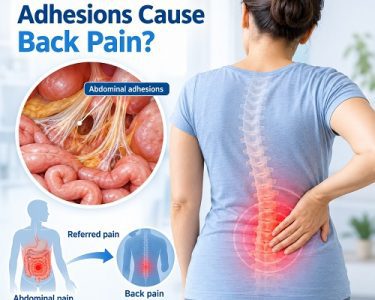
By Abdominal adhesions are bands of scar-like tissue that can develop inside the abdomen. They often form after abdominal or pelvic surgery, although inflammation, infection and other conditions can also contribute to their development. Many people have adhesions without experiencing any symptoms. However, adhesions can sometimes cause persistent abdominal discomfort or interfere with the normal movement of the intestines.
Knowing the Abdominal Adhesions Warning Signs can help you recognise when medical advice is appropriate. Some symptoms can be monitored with a healthcare professional, while others may indicate a bowel obstruction that requires urgent treatment.
This is particularly important if you have previously had abdominal surgery and suddenly develop severe abdominal pain, vomiting, swelling or difficulty passing stool or gas.
What Are Abdominal Adhesions?
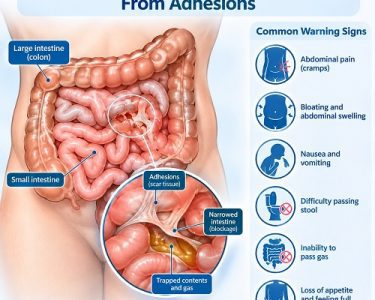
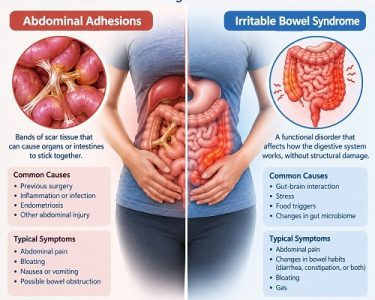
What Are Abdominal Adhesions? Abdominal adhesions are bands of scar-like tissue that form between organs, tissues or the abdominal wall. They can make structures that normally move freely inside the abdomen stick together.
Surgery is the most common cause. Adhesions can develop after both open and laparoscopic abdominal procedures, although they are more common after open surgery. They can also occur following inflammation or infection in the abdomen. Conditions such as Crohn’s disease, diverticular disease, endometriosis and peritonitis may contribute to adhesion formation.
Most adhesions do not cause symptoms and do not require treatment. However, some can pull, kink or compress parts of the intestine. In some cases, this can result in an intestinal or bowel obstruction.
What Are the Common Symptoms of Abdominal Adhesions?
Abdominal adhesions can be difficult to identify because they may not produce symptoms at all. When symptoms occur, chronic abdominal pain is one of the most commonly reported problems.
Possible Abdominal Adhesions symptoms include:
- Recurrent abdominal discomfort
- Cramping
- Bloating
- Changes in bowel movements
- Constipation
- Difficulty passing gas
- Nausea
- Vomiting
- Abdominal tenderness
The symptoms do not always mean that adhesions are responsible. Several digestive and abdominal conditions can cause similar symptoms. For this reason, persistent or unexplained symptoms deserve medical assessment rather than self-diagnosis.
If you have had abdominal surgery and develop recurring abdominal symptoms, tell your doctor about your surgical history. Symptoms can sometimes appear months or even years after an operation.
Abdominal Adhesions Warning Signs You Should Not Ignore
The most important reason to recognise Abdominal Adhesions Warning Signs is that an adhesion can occasionally cause an intestinal obstruction.
A bowel obstruction happens when food, fluids, gas or stool cannot move normally through the intestine. Adhesions are a common cause of small bowel obstruction. A complete obstruction can become life-threatening and requires immediate medical attention.
Warning signs can include:
Severe abdominal pain
Mild or occasional discomfort may have many causes, but severe abdominal pain should not be ignored.
Pain associated with an obstruction may be cramping and may come in waves. It can also become more persistent. Severe pain combined with vomiting, bloating or inability to pass gas or stool is particularly concerning.
Sudden, severe abdominal pain can also have causes unrelated to adhesions, so urgent assessment is important rather than assuming scar tissue is responsible.
Persistent vomiting
Vomiting can occur when the intestine becomes blocked and digestive contents cannot move normally.
Repeated vomiting can also cause dehydration and may occur alongside abdominal pain, bloating and constipation. Persistent vomiting with significant abdominal symptoms should be assessed promptly.
Significant abdominal swelling or bloating
A swollen or distended abdomen can occur when gas and digestive contents build up behind an obstruction.
Mild bloating is common and does not necessarily mean you have adhesions. However, significant or rapidly increasing abdominal swelling, particularly when accompanied by pain or vomiting, requires medical attention.
Inability to pass gas or stool
Difficulty passing stool can occur with ordinary constipation, but an inability to pass both stool and gas can be an important sign of bowel obstruction.
The National Institute of Diabetes and Digestive and Kidney Diseases advises people with symptoms suggesting a complete intestinal blockage to seek medical attention immediately.
Fever or a rapid heartbeat
A bowel obstruction can sometimes compromise blood flow to part of the intestine or contribute to peritonitis, an infection of the abdominal lining.
Fever or a fast heart rate in someone with significant abdominal symptoms can therefore indicate a complication requiring urgent assessment.
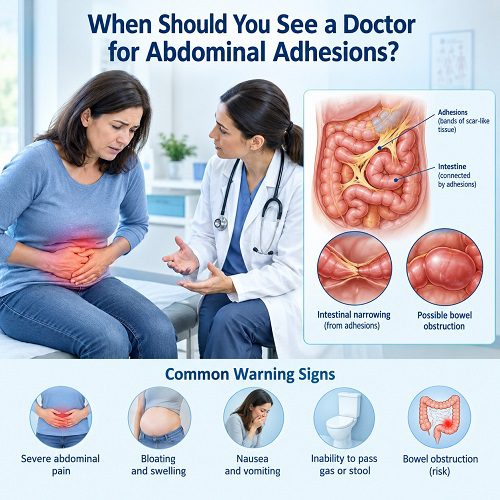
When Should You See a Doctor for Abdominal Adhesions?
You should arrange an appointment with a doctor if you have persistent or unexplained abdominal pain, especially if you have previously undergone abdominal or pelvic surgery.
A healthcare professional can assess your symptoms and determine whether adhesions, another digestive condition or a different abdominal problem may be responsible.
It is also sensible to seek medical advice if you repeatedly experience:
- Abdominal cramping
- Bloating
- Constipation
- Difficulty passing gas
- Nausea
- Unexplained abdominal discomfort
- Changes in your normal bowel habits
Do not assume that recurring symptoms are simply the result of old surgical scar tissue. Other conditions can cause similar symptoms and may require different treatment.
When Should You Go to the Emergency Department?
You should seek emergency medical care if you develop symptoms that could indicate a bowel obstruction.
These may include:
- Severe or worsening abdominal pain or cramping
- Significant abdominal swelling
- Persistent nausea or vomiting
- Inability to pass gas
- Inability to pass stool
- Fever alongside significant abdominal symptoms
- A rapid heartbeat or signs of serious illness
A complete bowel obstruction can prevent the passage of food, fluids, gas and stool. Without appropriate treatment, complications can include loss of blood flow to part of the intestine, tissue damage and peritonitis.
Do not wait for symptoms to become unbearable before seeking help if you suspect an obstruction.
Can Abdominal Adhesions Cause a Bowel Obstruction?
Yes. Adhesions can pull, twist, kink or compress sections of the intestine. This can interfere with the movement of intestinal contents and cause partial or complete obstruction.
A partial obstruction may still allow some stool or gas to pass. A complete obstruction can prevent stool and gas from passing altogether.
This distinction can be difficult to make at home. Passing a small amount of stool does not necessarily rule out an obstruction. If you have severe pain, vomiting, marked swelling or worsening symptoms, you should seek medical assessment.
Who Is More Likely to Develop Abdominal Adhesions?
Anyone who has undergone abdominal surgery can develop adhesions. They are particularly common following open abdominal procedures.
The risk may also be higher following emergency abdominal surgery, pelvic surgery and operations involving the lower digestive tract, including the colon and rectum.
Other potential Abdominal Adhesions causes include:
- Abdominal infections
- Peritonitis
- Crohn’s disease
- Diverticular disease
- Endometriosis
- Pelvic inflammatory disease
- Radiation therapy involving the abdomen
- Long-term peritoneal dialysis
Having a risk factor does not mean that you will develop symptoms or complications.
How Do Doctors Diagnose Abdominal Adhesions?
Diagnosing adhesions can be challenging because standard imaging tests often cannot directly show the adhesions themselves.
Your doctor may begin by reviewing your medical history, including previous abdominal operations, illnesses and the timing of your symptoms. A physical examination may also be performed.
Blood tests may help doctors look for other problems or assess the severity of a suspected obstruction.
Imaging tests such as X-rays or CT scans can help identify an intestinal obstruction and may provide information about its location, severity and possible cause.
In some circumstances, surgery may be required to directly identify adhesions.
This means that a person should not expect an imaging scan to always provide a simple answer such as “you have abdominal adhesions”. Doctors often use the combination of symptoms, medical history, examination and test results to determine the most appropriate Abdominal Adhesions diagnosis and treatment.
What Treatment Might a Doctor Recommend?
Abdominal Adhesions Treatment depends on whether adhesions are causing symptoms or complications.
If adhesions are not causing problems, treatment may not be necessary. Doctors generally avoid unnecessary surgery because operating on the abdomen can itself lead to new adhesions.
If adhesions cause a bowel obstruction, treatment may be required in hospital.
Depending on the severity and circumstances, treatment can include intravenous fluids and other supportive care. Doctors may also use a tube passed through the nose into the stomach to remove accumulated digestive contents above the obstruction.
If the obstruction does not resolve or there are signs of serious complications, surgery may be required to release the adhesions and restore normal intestinal passage.
Does Every Person With Abdominal Pain Need Adhesion Surgery?
No.
The presence of abdominal adhesions does not automatically mean that surgery is necessary. Many people have adhesions without symptoms or complications.
Surgery can sometimes be useful when adhesions cause a serious problem, particularly intestinal obstruction. However, surgery itself can result in additional adhesion formation, so doctors consider the potential benefits and risks carefully.
If you have chronic abdominal pain without an obstruction, your doctor may investigate other possible causes before considering an operation.
What Should You Tell Your Doctor?
When making an appointment, prepare information about your symptoms and medical history.
Tell your doctor:
- When your symptoms started
- Where the pain occurs
- Whether the pain is constant or comes and goes
- Whether eating makes symptoms worse
- How often you are passing stool
- Whether you can pass gas normally
- Whether you have experienced nausea or vomiting
- Whether your abdomen has become swollen
- Whether you have had previous abdominal or pelvic surgery
- Whether you have experienced similar episodes before
This information can help your healthcare professional decide whether you need further testing or urgent treatment.
Can You Prevent Abdominal Adhesions?
It is not always possible to prevent abdominal adhesions. They are part of the body’s healing response after tissue injury and commonly develop after abdominal surgery.
Surgeons may use techniques intended to reduce adhesion formation, such as gentle tissue handling, minimally invasive surgery when appropriate and adhesion barriers in selected circumstances.
However, having an abdominal operation does not mean you will necessarily develop symptoms from adhesions.
Abdominal Adhesions: When to Act Quickly
The key issue is not simply whether you have abdominal adhesions. The important question is whether they are causing symptoms or complications.
Occasional mild abdominal discomfort does not necessarily indicate an emergency. However, severe abdominal pain, repeated vomiting, significant swelling and an inability to pass gas or stool can indicate bowel obstruction.
Because bowel obstruction can become serious, these symptoms should receive urgent medical assessment.
If you have previously undergone abdominal surgery, keep your surgical history in mind when discussing new abdominal symptoms with your healthcare professional.
Final Thoughts
Knowing the Abdominal Adhesions Warning Signs can help you decide when to seek medical care. Most abdominal adhesions do not cause symptoms and never require treatment. However, some adhesions can interfere with intestinal movement and cause a bowel obstruction.
Persistent abdominal pain, recurrent bloating, constipation or difficulty passing gas deserves discussion with a doctor, particularly if you have a history of abdominal surgery.
Seek emergency medical attention for severe abdominal pain, persistent vomiting, major abdominal swelling or an inability to pass gas or stool. These symptoms can occur with bowel obstruction, which may require urgent hospital treatment.
Do not rely on home remedies or supplements to manage symptoms that could represent an obstruction. Prompt medical assessment is the safest approach when serious warning signs appear.
Medical Disclaimer
This article is for general educational purposes and does not replace professional medical advice, diagnosis or treatment. Abdominal pain and bowel symptoms can have many different causes. If you experience severe or worsening symptoms, persistent vomiting, significant abdominal swelling, inability to pass stool or gas, fever or other concerning symptoms, seek urgent medical care.