 By
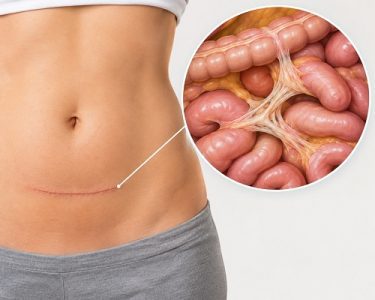
By Abdominal adhesions are bands of scar-like tissue that develop inside the abdomen and can cause organs or sections of the intestine to stick together. They are common after abdominal or pelvic surgery, although they can also develop after inflammation, infection, radiation therapy, or certain abdominal conditions. Many people with adhesions never develop symptoms and do not require treatment. However, in some cases, adhesions can cause persistent pain or a bowel obstruction that requires medical or surgical treatment.
This raises an important question: When is surgery needed for abdominal adhesions?
In general, Abdominal Adhesions Surgery is considered when adhesions cause significant complications, particularly intestinal or bowel obstruction, persistent symptoms that substantially affect quality of life, or other problems that cannot be adequately managed with nonsurgical treatment. Surgery is not automatically recommended simply because adhesions are present because the operation itself can create new scar tissue.
What Are Abdominal Adhesions?
What Are Abdominal Adhesions? Abdominal adhesions are internal bands of fibrous or scar-like tissue. They can form between abdominal organs, between loops of intestine, or between an organ and the abdominal wall.
Under normal circumstances, abdominal organs move relatively freely against one another. Adhesions can interfere with this movement by causing tissues to stick together. In some people, Abdominal Adhesions causes discomfort or chronic abdominal pain. In more serious cases, an adhesion can pull, twist, kink, or compress part of the intestine and interfere with the normal passage of food, fluid, and gas.
Previous abdominal surgery is the most common cause of adhesions. They can occur after both open and laparoscopic procedures, although adhesions are generally less common after laparoscopic surgery. Other potential causes include abdominal infection, inflammatory conditions, endometriosis, diverticular disease, Crohn’s disease, peritonitis, radiation therapy, and some other conditions affecting the abdomen.
Do All Abdominal Adhesions Require Surgery?
No. Most abdominal adhesions do not require surgery.
If adhesions do not cause symptoms or complications, doctors generally recommend observation rather than attempting to remove them. This is important because operating on adhesions can itself cause additional scar tissue to develop.
A person may have adhesions for years without knowing they exist. In fact, imaging tests often cannot directly identify adhesions. Doctors usually focus on the patient’s symptoms, medical history, physical examination, and tests that can identify complications such as intestinal obstruction.
Therefore, the presence of adhesions alone is usually not enough reason to undergo surgery.
When Is Abdominal Adhesions Surgery Considered?
The decision depends on the Abdominal Adhesions symptoms, severity of complications, overall health, previous surgeries, and findings from medical evaluation.
1. When Adhesions Cause a Bowel Obstruction
One of the most important reasons for Abdominal Adhesions Surgery is a bowel or intestinal obstruction.
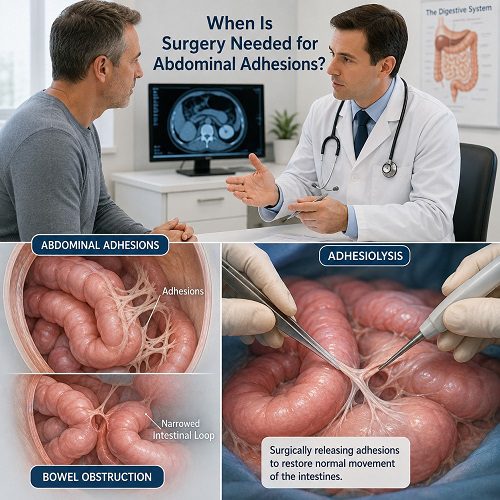
Adhesions are a major cause of small-intestinal obstruction. An adhesion can form a tight band around or between intestinal loops, causing the bowel to become narrowed, kinked, or trapped.
Symptoms of intestinal obstruction may include:
- Cramping or severe abdominal pain
- Abdominal swelling or bloating
- Nausea
- Vomiting
- Constipation
- Inability to pass gas
- Loss of appetite
A complete obstruction can become a medical emergency because pressure and restricted blood flow can damage the intestinal wall. In severe cases, the affected intestine may develop tissue death, perforation, or infection of the abdominal cavity.
For this reason, people with severe abdominal pain, persistent vomiting, marked abdominal swelling, or an inability to pass stool or gas should seek urgent medical attention.
2. When a Complete Bowel Obstruction Develops
A complete bowel obstruction is more concerning than a partial obstruction.
When nothing can pass through the intestine, surgery is commonly needed to relieve the blockage. Depending on the cause and condition of the intestine, surgery may involve releasing the adhesion and, if necessary, removing damaged or dead intestinal tissue.
Doctors may first stabilize the patient with intravenous fluids and other supportive measures. A tube placed through the nose into the stomach may also be used to remove accumulated fluid and gas and reduce pressure.
If the obstruction does not resolve or there are signs of complications, surgery may be necessary.
3. When a Partial Obstruction Does Not Improve
Not every adhesive bowel obstruction requires immediate surgery.
In selected patients with a partial obstruction and no signs of intestinal damage, doctors may initially use conservative treatment. This may include hospital observation, intravenous fluids, bowel rest, and decompression using a nasogastric tube.
If the obstruction resolves, surgery may not be necessary.
However, if the blockage persists or symptoms worsen, surgeons may recommend adhesiolysis to release the scar tissue responsible for the obstruction.
The exact timing depends on the patient’s condition and the clinical findings.
What Is Adhesiolysis?
Adhesiolysis is a surgical procedure used to separate or release abdominal adhesions.
During adhesiolysis, the surgeon carefully identifies the abnormal scar tissue and cuts or separates the adhesions so that affected organs or intestinal loops can move more normally.
There are two main surgical approaches:
- Laparoscopic adhesiolysis: The surgeon makes several small incisions and uses a camera and specialized instruments.
- Open adhesiolysis: The surgeon makes a larger abdominal incision to access the affected area.
The appropriate approach depends on the location and extent of the adhesions, previous surgeries, the presence of obstruction, the patient’s condition, and the surgeon’s judgment.
In some situations, minimally invasive surgery may be possible. In complicated cases, extensive adhesions or emergency conditions, open surgery may be necessary.
4. When Adhesions Cause Severe or Persistent Symptoms
Chronic abdominal pain can sometimes be associated with adhesions. However, determining whether adhesions are actually responsible for pain can be difficult.
Doctors generally consider other possible causes of abdominal pain before recommending surgery. Imaging studies and other Abdominal Adhesions diagnostic tests may be used to rule out conditions such as hernias, inflammatory disease, tumors, gallbladder problems, or intestinal obstruction.
If symptoms are severe, persistent, and strongly suspected to be caused by adhesions, a surgeon may discuss adhesiolysis as a possible treatment.
However, surgery for pain alone requires careful consideration because adhesiolysis can cause new adhesions and does not guarantee that chronic pain will disappear. NIDDK notes that surgery may release adhesions causing symptoms, but the procedure itself can lead to additional adhesions.
Can Abdominal Adhesions Be Seen on a CT Scan?
Adhesions themselves are often difficult to see directly on standard imaging.
However, Abdominal Adhesions Be Seen on a CT Scans can be useful when doctors suspect that adhesions have caused an intestinal obstruction. CT imaging may help identify the location and severity of an obstruction and help doctors look for other Abdominal Adhesions causes of the problem.
This means that a normal scan does not necessarily rule out abdominal adhesions.
Instead, doctors combine imaging results with symptoms, medical history, examination findings, and other tests when deciding whether surgery is appropriate.
Emergency Signs That May Require Surgery
Certain symptoms should not be ignored because they can indicate a serious obstruction or complication.
Seek urgent medical attention if you experience:
- Severe or worsening abdominal pain
- Persistent vomiting
- Significant abdominal swelling
- Inability to pass gas
- Inability to have a bowel movement
- Fever associated with severe abdominal symptoms
- Rapid heart rate or signs of serious illness
- Symptoms that suddenly become much worse
An intestinal obstruction can compromise blood flow to the intestine. If blood supply is interrupted for too long, intestinal tissue can die and potentially perforate, leading to peritonitis and a life-threatening infection.
What Happens During Abdominal Adhesions Surgery?
The exact procedure varies from patient to patient.
Before surgery, the medical team evaluates the suspected obstruction or other complication. Depending on the situation, blood tests and imaging may be performed.
During surgery, the surgeon identifies the adhesions and carefully separates them. If an adhesion is restricting an intestinal loop, releasing it may allow the bowel to return to a more normal position.
In emergency situations, the surgeon may also evaluate the intestine for signs of damage. If a section of bowel has lost its blood supply or has become severely damaged, removal of that section may sometimes be necessary.
The goal is not simply to remove every adhesion that can be found. Instead, the surgeon focuses on resolving the specific problem while minimizing unnecessary tissue injury.
Laparoscopic vs. Open Adhesiolysis
The choice between laparoscopic and open surgery depends on the circumstances.
Laparoscopic Surgery
Laparoscopic adhesiolysis uses small abdominal incisions and a camera. When appropriate, minimally invasive surgery can reduce the size of the incisions and may allow a shorter recovery.
However, extensive adhesions can make laparoscopic surgery technically difficult or unsafe. The surgeon may need to switch to an open operation if necessary.
Open Surgery
Open surgery provides the surgeon with wider access to the abdomen. It may be appropriate when there are extensive adhesions severe bowel obstruction, significant intestinal damage, or an emergency situation.
Your surgeon will determine the safest approach based on your individual condition.
What Are the Risks of Adhesiolysis?
Like any abdominal operation, adhesiolysis carries potential risks.
Possible complications can include:
- Bleeding
- Infection
- Injury to the intestine
- Injury to nearby organs
- Anesthesia-related complications
- Blood clots
- Leakage if bowel surgery is required
- Development of new abdominal adhesions
- Recurrence of obstruction
One of the biggest challenges is that surgery intended to treat adhesions can potentially create new adhesions. This is why doctors generally avoid operating on uncomplicated adhesions that are not causing significant symptoms or complications.
Can Abdominal Adhesions Come Back After Surgery?
Yes. Adhesions can form again after abdominal surgery.
Surgery involves handling tissues and creating a healing response, and that healing process can contribute to scar-tissue formation. Because of this, surgeons use techniques intended to reduce adhesion formation when possible.
NIDDK notes that measures may include gentle tissue handling, minimizing foreign materials in the abdomen, choosing laparoscopic surgery when appropriate, and using certain adhesion barriers in selected operations.
However, no technique guarantees that adhesions will never return.
How Doctors Decide Whether Surgery Is Necessary
The decision to perform Abdominal Adhesions Surgery is individualized.
Doctors may consider:
- Severity of symptoms – Mild or occasional symptoms may not justify surgery.
- Presence of bowel obstruction – Obstruction can significantly increase the need for medical or surgical treatment.
- Complete versus partial obstruction – Complete obstruction is generally more urgent.
- Signs of intestinal damage – Reduced blood flow, tissue death, perforation, or peritonitis may require urgent surgery.
- Response to conservative treatment – Some partial obstructions improve without surgery.
- Previous operations – Multiple abdominal surgeries can increase the complexity of adhesiolysis.
- Overall health – Age, medical conditions, medications, and surgical risk all matter.
- Potential benefits versus risks – Surgery should have a reasonable expected benefit because another operation can create additional adhesions.
There is no single rule that determines when every patient needs surgery.
What If Surgery Is Not Needed?
If adhesions are not causing obstruction or another significant complication, doctors may recommend monitoring rather than surgery.
For an acute partial obstruction, Abdominal Adhesions treatment may initially focus on allowing the bowel to rest, providing fluids, controlling symptoms, and decompressing the digestive tract when necessary. Some obstructions resolve without an operation.
The Abdominal Adhesions Treatment plan should be guided by a healthcare professional because symptoms of obstruction can become serious quickly.
Frequently Asked Questions
Is surgery always needed for abdominal adhesions?
No. Many abdominal adhesions cause no symptoms and require no treatment. Surgery is generally considered when adhesions cause significant symptoms or complications such as intestinal obstruction.
Is adhesiolysis the same as abdominal adhesions surgery?
Adhesiolysis is the surgical process of separating or releasing adhesions. It is one of the main procedures used when surgery is required to treat symptomatic abdominal adhesions.
Can adhesions cause a bowel obstruction years after surgery?
Yes. Adhesion-related complications can develop long after the original abdominal operation. NIDDK notes that symptoms and complications may begin even many years Abdominal Adhesions after surgery.
How serious is a bowel obstruction caused by adhesions?
It can be serious or life-threatening, particularly if the obstruction is complete or compromises the blood supply to the intestine. Prompt medical evaluation is important when obstruction symptoms occur.
Can abdominal adhesions be removed without surgery?
There is no routine nonsurgical procedure that simply removes abdominal adhesions. When adhesions themselves need to be released, adhesiolysis is performed surgically. However, some complications such as selected partial bowel obstructions may resolve with nonsurgical treatment.
Final Thoughts
Abdominal Adhesions Surgery is not automatically necessary for everyone with scar tissue inside the abdomen. Many adhesions remain harmless and never require treatment. Surgery becomes more important when adhesions cause significant complications, especially a persistent or complete bowel obstruction, intestinal damage, or severe symptoms that cannot be adequately managed through other approaches.
Adhesiolysis can release the scar tissue and restore the normal movement or passage of the intestine, but surgery also carries risks and may lead to additional adhesions. For that reason, doctors carefully weigh the potential benefits against the risks before recommending an operation.
If you develop severe abdominal pain, persistent vomiting, abdominal swelling, or an inability to pass stool or gas, seek urgent medical care rather than waiting for symptoms to resolve on their own.
This article is for educational purposes and is not a substitute for diagnosis or treatment from a qualified healthcare professional.